
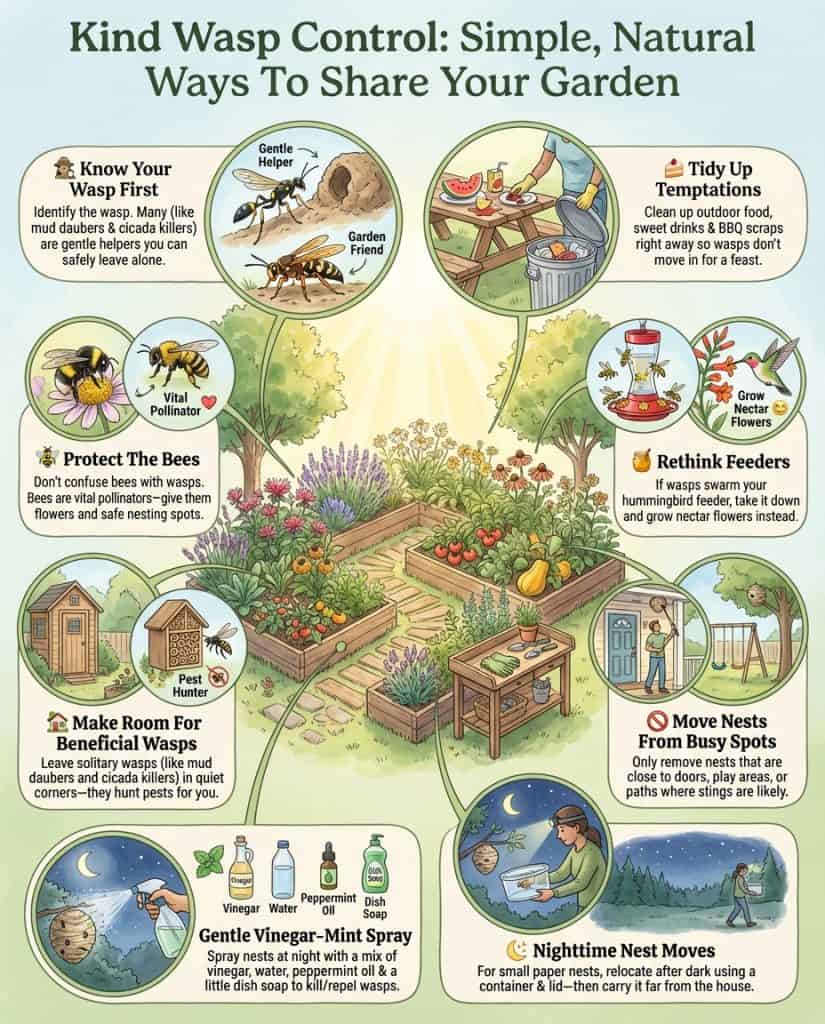
If you have a wasp problem, you are no doubt asking, “How to get rid of wasps?” and what to do about it.
Chemical wasp control is certainly less than desirable due to the negative impact it can have on the environment, your pets, children, and you.
In this article, we will share some interesting information about these common insect pests that may very well help you learn to live with them. We will also provide some smart tips for natural wasp repellent and removal. Read on to learn more.

#1 – Identify The Type Of Wasps
At the outset, you should determine what type of wasp you are dealing with. Different wasp and hornet species display different behavioral characteristics.
Some are more dangerous to handle than others, and some are more beneficial.
Understanding your “enemy” is key, and you may discover your particular species of wasps are not enemies at all.
Wasps: Identification And Help For Homeowners
Common Bees, Wasps And Hornets You May Encounter
In general, the many different varieties of wasps in the world can be sorted into two groups: social wasps and solitary wasps.
- Social wasps live in colonies and build nests.
- Solitary wasps (aka: digger wasps) live on their own and build burrows or nests of mud, which serve the purpose of housing their eggs and larvae. Solitary wasps typically stash the paralyzed body of an insect or spider in the burrow or nest to provide food for the growing larvae.
There are more than 30,000 different types of wasps in the world, and for the most part, they are more beneficial than they are harmful.
Here are a few common types you are likely to see. The specific characteristics of each type will vary from one place to another. [source]
Yellow Jacket
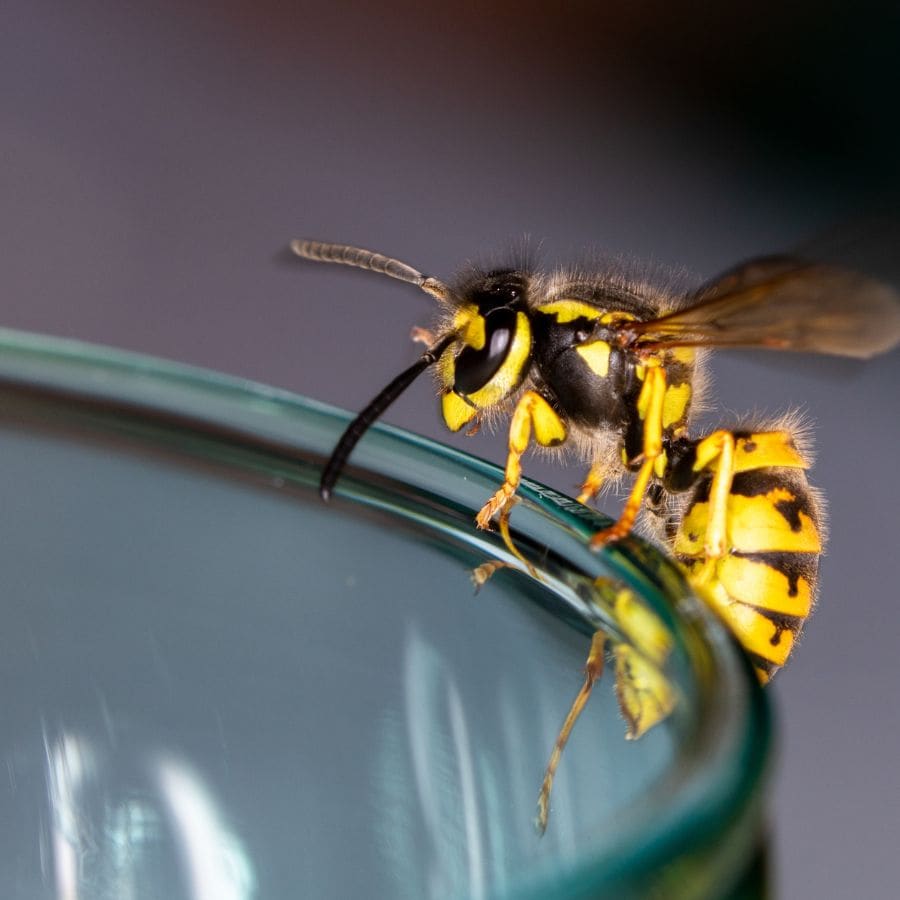
Yellow Jacket is a term applied to both wasps and hornets that have bright yellow and orange stripes.
Hornets
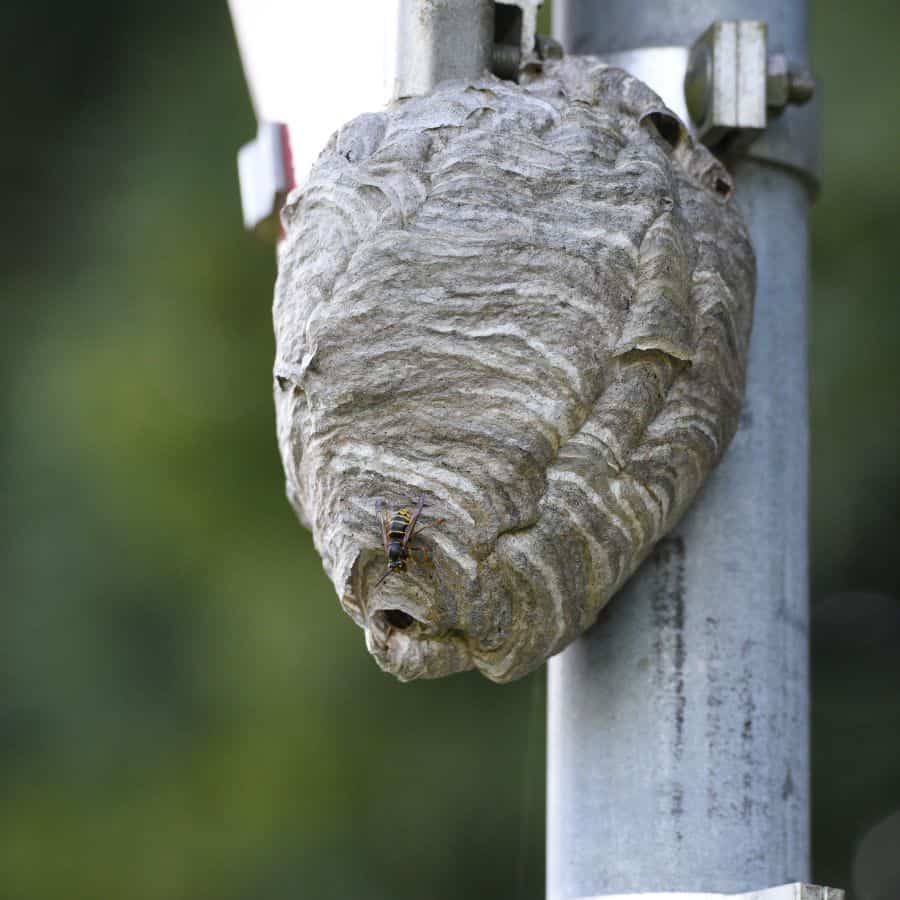
Hornets are large, irritable social wasps that build large, enclosed paper nests in trees. Stay far away from them and leave them alone if they are out in the woods or in another isolated area where encounters are unlikely.
If they are near your home or in a location where you may be mowing, playing or otherwise moving around and making noise, you will need to remove them or have them removed.
Bald-Faced Hornets
Bald-Faced Hornets are not true hornets. They are actually very aggressive little black-and-white wasps that are quite easily annoyed. Give them a wide berth, and call in a professional to handle them.
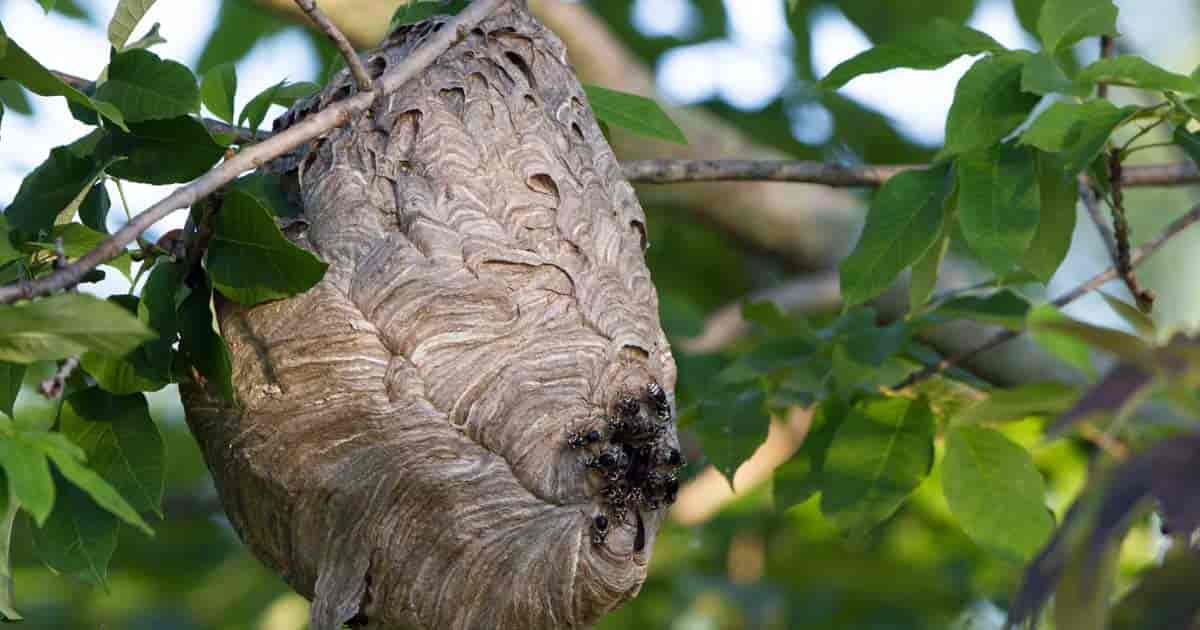
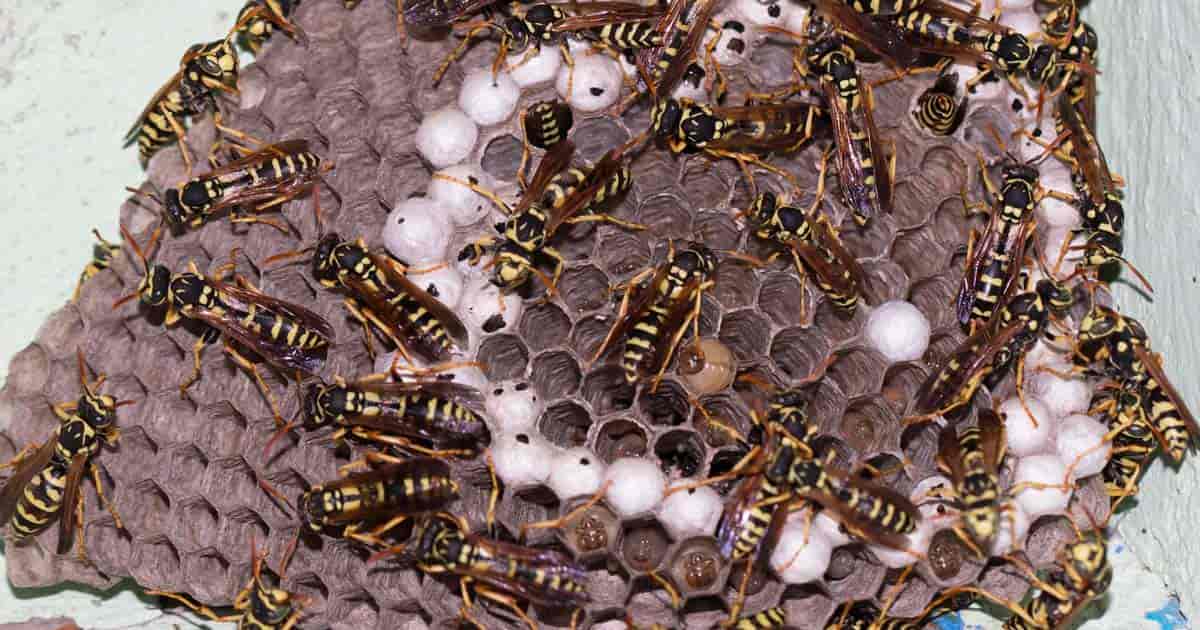
Paper Wasps
Paper Wasps are social wasps that build open paper nests which resemble an umbrella. The wasps make the paper from wood pulp, which they gather.
They are usually fairly aggressive and should be removed from high-traffic areas where you cannot avoid encountering them.
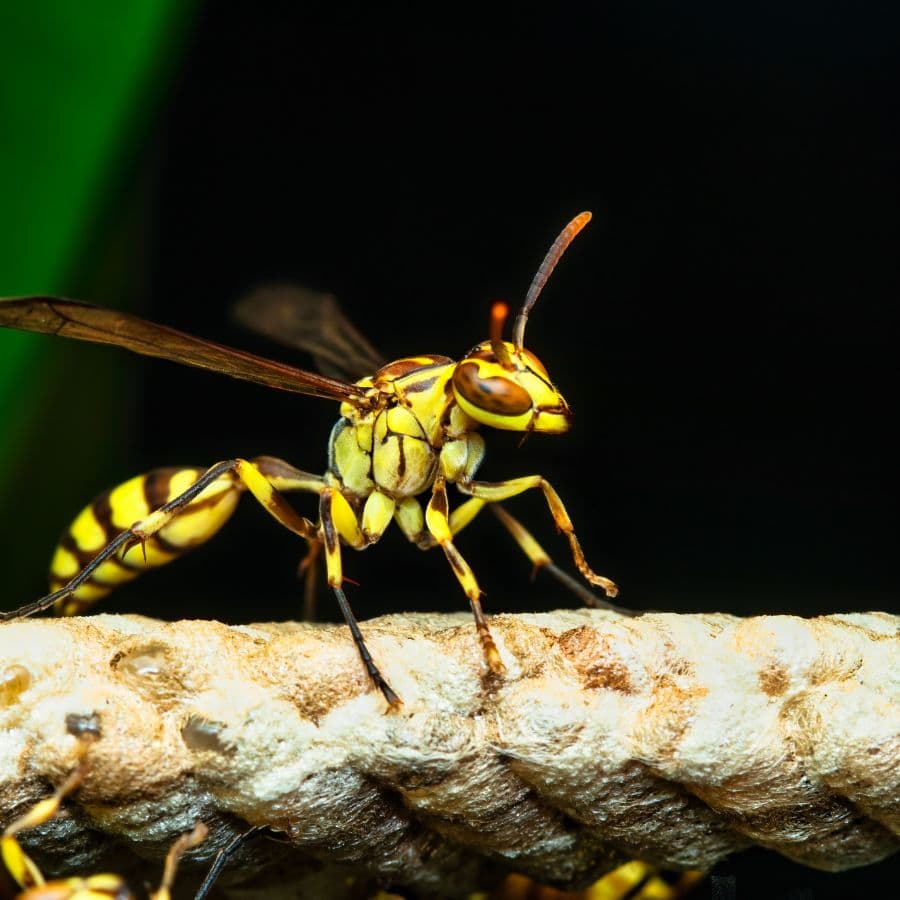
Red Wasps
Red wasps are paper wasps of a solid reddish-brown color with black wings. There are a couple of types in the United States, and they are widespread and fairly aggressive.
As with Paper Wasps, remove them from high-traffic areas to avoid encounters.
Cicada Killers
Cicada Killers are large, solitary wasps that are highly beneficial.
They kill cicadas (which cause massive damage to plants in both their larval and adult stages) and store them in their burrows to feed their young.
They are very intent on their cicada-killing duty, and typically ignore people and animals.
If you have a cicada killer in your yard, consider yourself lucky and leave it alone. They can sting, and it hurts a lot if they do, but if you get stung by a cicada killer, you were probably asking for it!
It takes a great deal of taunting to get one of these busy giants to sting you. [source]
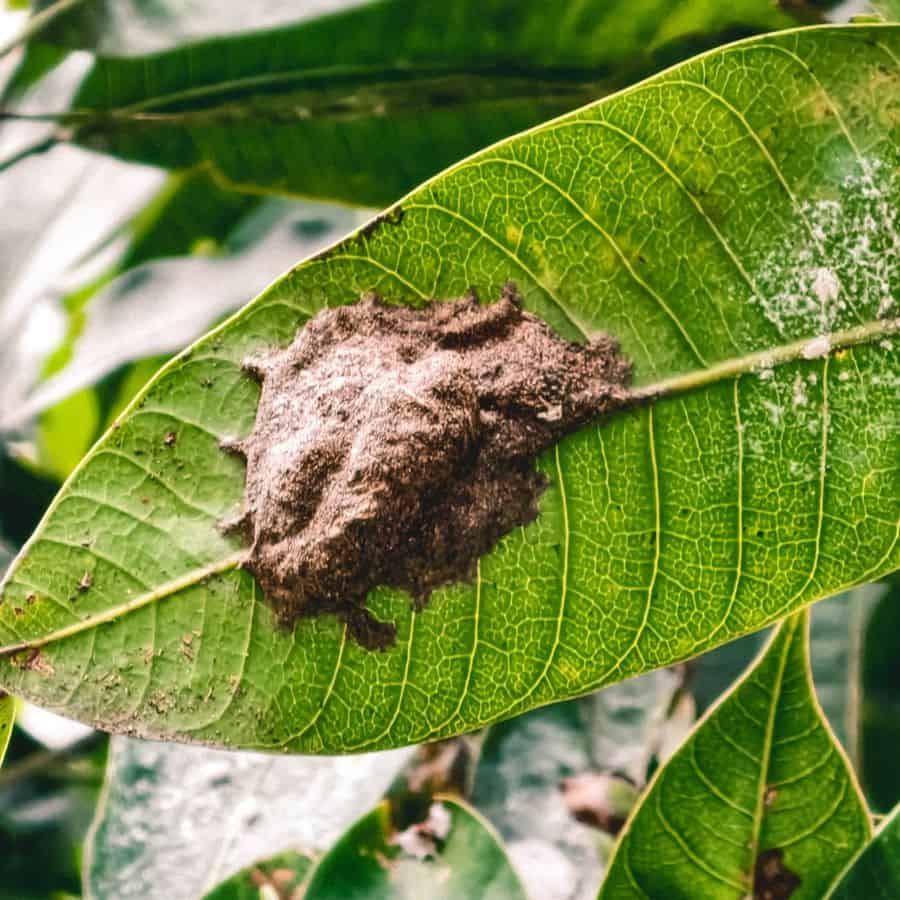
Mud Daubers
Mud Daubers are solitary wasps that build small nests made up of mud cylinders in which they stash away paralyzed spiders of all sorts (most notably black widows).
They lay their eggs on the unfortunate spider’s immobilized body, and when the wasp larvae hatch, they consume the (no doubt horrified) spider.
Mud daubers are non-aggressive, and having them around is clearly beneficial! If you have a few mud dauber nests in your outbuildings or under your porch eaves, there is really no need to get rid of them.
You are far wiser to learn to coexist with them and simply enjoy observing them.
Bees
Bees are not the same as wasps. They are typically brown and orange or black and yellow striped. They have shorter bodies and lack the long, thin “waist” typical of wasps.
Additionally, bees can only sting once. When they sting, they lose their stinger and die, so they are highly motivated not to sting.
Both honey bees and bumble bees are beneficial. They are super-pollinators, and we need them for our survival. Unfortunately, due to heavy pesticide use, they are now endangered.
If you have bees in your yard, it is wiser to establish a habitat for them and encourage them rather than get rid of them.
If you are allergic or they become pests, contact a beekeeper to see if they can be relocated.
If not, look for a “friendly” pest control company to remove and relocate them. Whatever you do, don’t kill them.
Note: If the bees in your yard are aggressive, they may be Africanized or “killer” bees. These are highly dangerous and should always be handled by a qualified technician. [source]
The Biggest Difference Between Wasps & Bees
#2 – Controlling Wasps
There are lots of natural ways to keep wasps under control. One of the best approaches is to simply remove wasp temptation from your environment.
For example, be careful not to attract them by leaving food or drink out.
When you have a party or eat a meal outside, be sure to clean up promptly and dispose of such temptations as leftover sodas, wine, fruit juices, birthday cake, and the like before they can attract wasps and other pests.
Keep your barbecue grill clean because many wasps are meat eaters.
If you find that your hummingbird feeder is drawing wasps, take it down and make a point of planting attractive bushes and flowers for your hummingbirds and butterflies.
If wasps are bothersome, consider relocating them. Use natural concoctions intended as wasp killers to kill them on contact, or you can use wasp traps like this to lure them in and kill them more passively.

#3 – How To Get Rid Of A Wasp Nests
Social Wasps live in nests, and sometimes this puts them in very inopportune places.
If you have a wasp infestation in a location you cannot avoid, or if the wasp colony is an aggressive type in your vicinity, you will need to get rid of it.
A small paper wasp nest is relatively easy to deal with in several ways. These nests are usually out in the open (e.g., under the eaves of houses or outbuildings) and relatively small.
If you catch it when the umbrella-shaped nest is tiny and only has a few wasps on it, you can either:
- Knock it down with a broom during the day when the wasps are all out
- Relocate it
- Spray it at night when the wasps are at home
Here’s how:
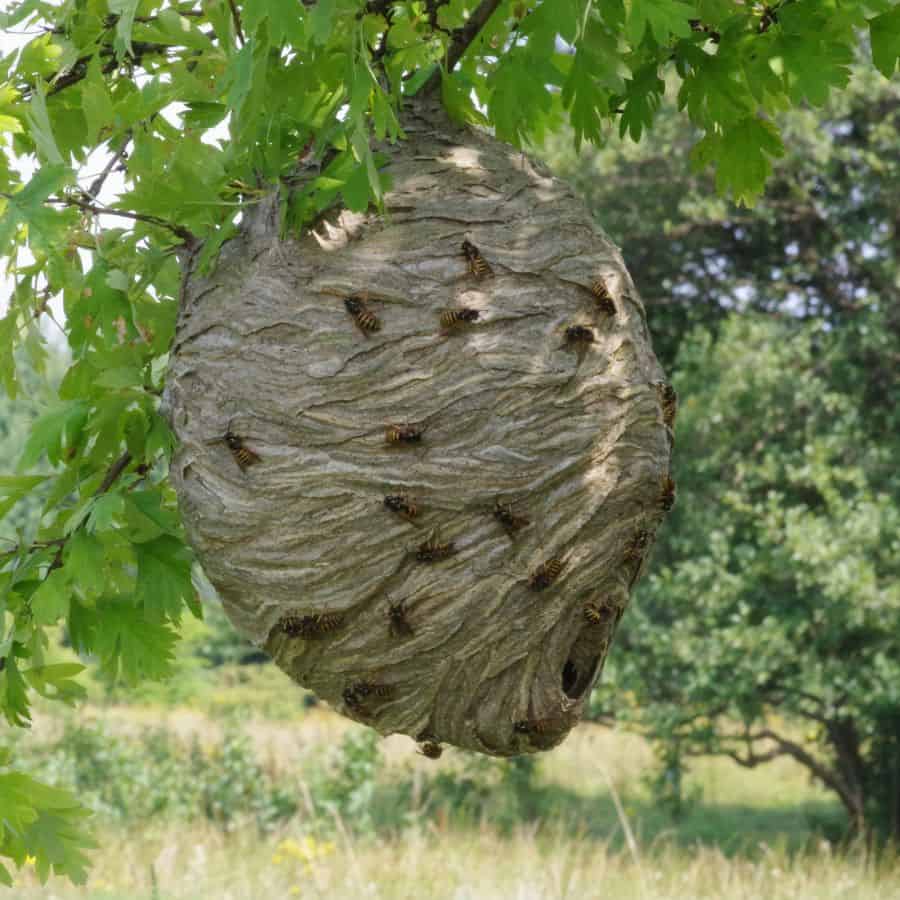
Relocate Small Nests
Relocate a small nest after dark when the wasps are sleeping. You’ll need a plastic container with a lid, such as a quart-sized yogurt container. You’ll also need a stiff piece of cardboard or plastic large enough to cover the container.
After dark, carefully approach the nest and place the container over it. Slide the plastic or cardboard between the top of the container and the surface to which the thin stem holding the nest in place.
Hold the cardboard or plastic in place, then set the lid on top. Slide the cardboard or plastic out and affix the lid firmly.
Carry the container to a location with a likely nesting site. Set it on the ground, remove the lid, and move away quickly. The wasps are likely to still be sleeping, but you never know!
Spray Nests As Needed
To make a wasp spray, mix a 50/50 solution of white vinegar and water. Add peppermint essential oil at 20 drops per ounce.
Add Dawn dish soap at a rate of one tablespoonful per cup. Decant this mixture into a spray bottle that delivers a powerful spray stream.
After dark, when the wasps are sleeping, spray the wasp nests liberally. This will kill them and leave a peppermint scent that repels them.
After they’ve dropped off the nest, knock it down and spray the area around the nest to help keep them away. You should spray daily for about a week to maintain a strong peppermint scent.
For small nests, put the mixture into a hose-end sprayer and spray the nest completely.
#4 – How To Kill Wasps: Trap Wasps
Trapping wasps is a good way to keep their numbers under control. You won’t get rid of all of them, but you can reduce their numbers so they will bother you less, or so you can deal with them easily by removing their nests.
Here are a couple of good ideas for creating wasp traps.
Soda Bottle Wasp Trap
Cut the top third off a 2-liter soda bottle. Remove the lid, and invert the top into the bottom of the bottle.
Secure it in place with duct tape and pour in about an inch of liquid bait (recipe below).
Glass Or Plastic Jar Wasp Trap
Using a good-sized jar (e.g., a pickle jar or a peanut butter jar), drill a hole in the lid just big enough to poke a pencil through.
This should be just about the right size for wasps to slip in. Pour about an inch of liquid bait into the jar, then spread the inside of the lid with jelly. Put the lid on the jar.
Place either of these traps in areas where you have seen wasps.
The idea is that the wasps will smell the bait and enter through the small opening. Then they will be unable to escape, and they will eventually drown in the bait.
Check every couple of days to see what you’ve caught. When the liquid fills with dead wasps, it’s time to start fresh.
With the soda bottle trap, you should just toss it. With the jar trap, you can clean it and reuse it. Be careful not to get stung by any of your prisoners! [source]
Wasp Trap Bait Recipe
Use beer or a 50/50 mixture of beer and water. Many people find this works very well.
Alternatively, you can make a sugar-water and apple cider vinegar (ACV) mixture to attract wasps, but it should not attract bees or other beneficial insects.
Here’s how:
Mix ACV and water 50/50, and then add sugar at half that rate. So, if you combine 2 cups of ACV and water, add 1 cup of sugar. Mix in Dawn dish soap at a rate of one teaspoonful per cup of solution.
Allow the sugar to dissolve and use the mixture as bait. This mixture will keep in a closed container in your fridge indefinitely.
#5 – Getting Rid of Wasps – Dust ‘Em!
Another effective way to keep wasp numbers under control and eliminate many of them is to use various powdered deterrents. Among them are:
- Diatomaceous Earth (DE)
- Talcum Powder
- Boric Acid
- Cinnamon
These are handy when you have a wasp nest hidden inside a wall, under a building or underground. Even though you cannot get to the nest, you can usually see where the wasps come and go.
Sprinkling these dry substances around the exit can kill and/or repel wasps. DE and boric acid are both toxic to insects. DE desiccates them, and boric acid poisons them. Talcum powder and cinnamon are both repellents.
You can sprinkle DE and/or boric acid around the entrance every few nights until you see that the wasps are no longer coming and going.
Seal the opening, then spray with peppermint water or sprinkle with talc or cinnamon to prevent wasps from returning. [source]
#6 – Stay Calm
The first thing you should do, especially if you are allergic to wasps, don’t panic. As we have seen, wasps are not always aggressive.
In fact, if you leave them alone, they won’t behave in an alarming or erratic manner; even the aggressive ones are unlikely to sting you.
If you see wasps outdoors, avoid them. Walk (don’t run) in a way that gives them a wide berth.
If you find yourself unexpectedly amidst a group of them, try to stay calm and just walk on to your destination.
If wasps are not agitated, they are unlikely to sting you. Naturally, if you accidentally blunder into their nest, you should run away as quickly as possible. Otherwise, just stay calm and move slowly.
Never wave your arms or swat at wasps, bees, or hornets. This upsets them and triggers pheromones that call for members of their colony to assist.
#7 – Avoid Attracting Wasps
When you are outdoors, be sure to dress for the occasion by avoiding bright colors that might attract insects.
Sweet-smelling perfumes and personal care products (especially hair spray) can also attract bees, wasps, and hornets.
If you are allergic to insect stings, it is always smart to wear a long-sleeved shirt and other protective clothing to limit the area of exposed skin.
How To Avoid Stinging Wasps, Hornets, And Bees
https://youtu.be/3jwHB1Tt_Ec
#8 – Be Prepared!
If you are very allergic, be sure to wear a medical bracelet indicating this danger and keep an EpiPen handy to counteract your allergic reaction.
#9 – How To Deter Wasps – Trick Them!
Early in the spring, before wasps are active, set up fake nests around your yard to make them think other wasps are already in residence.
Wasps are very territorial. If they find a rival’s nest already in place when they turn up in the springtime to build new nests, they will relocate.
It’s easy to make a fake nest by wadding up a couple of plastic bags inside a brown paper lunch bag.
Use a string or thread to tie your fake nests to porch railings, under the eaves, in bushes, etc., to trick wasps into thinking there’s no vacancy!
#10 – Co-Exist With Wasps!
When contemplating nature of any kind, learning to coexist with it is always preferable to getting rid of it, even wasps.
As we learn more and more about the natural world, we understand more deeply than ever that every creature has a purpose and a reason for being.
Wasps are minor pollinators and mighty predators. They help keep populations of certain pests, such as poisonous spiders, cicadas, crop-eating caterpillars, and other truly damaging and dangerous arachnids and insects under control.
While they can be potentially bothersome and dangerous, wasps can also be fascinating and educational to observe. When you learn to stay quiet around them and observe them, they may teach you things you never expected.
Wasps have significant symbolic meaning in many cultures worldwide. They are typically symbols of qualities such as hard work, persistence, productivity, cooperation, teamwork, communication, and order.
Taking time for quiet meditation in your garden gives you the opportunity to observe wasps and ponder questions about your work ethic, persistence, productivity, the ability to work and play well with others, and more!
If you are planning a big project, such as building a home or pursuing a dream, observing wasps hard at work can be an inspiration and help you focus, organize, and clarify your thoughts.
Certainly, there are times when you have no choice but to eliminate wasps. We hope this article has provided you with useful ideas to help you make the right decision and manage your wasps effectively.