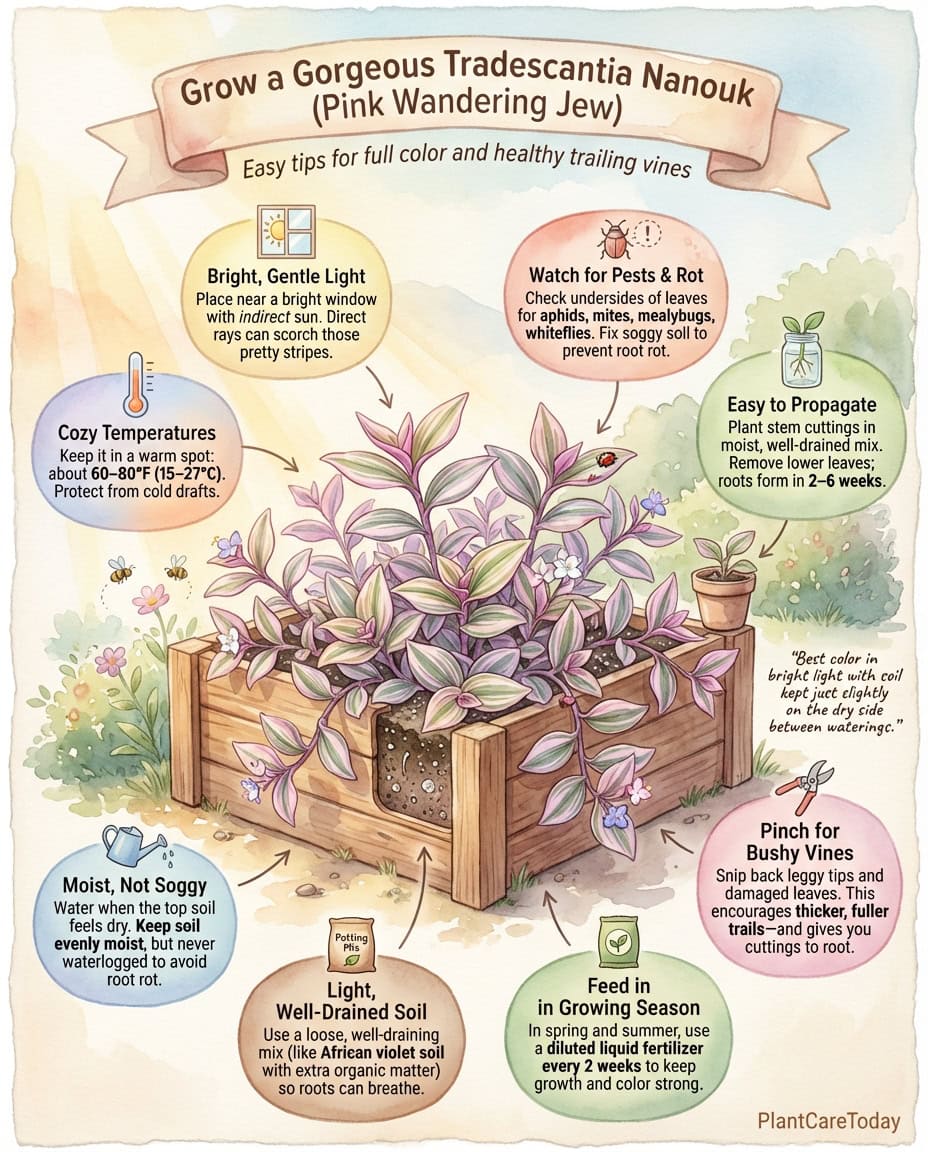
Tradescantia Nanouk (Trad-es-KAN-tee-uh, NAN- ou-k) is a trailing plant and belongs to the tradescantia family. Tradescantia also has prominent flowering members, such as:
- Tradescantia spathacea
- Tradescantia pallida (the Purple Heart)
- Tradescantia albiflora
- Tradescantia fluminensis
The handsome plant is a spiderwort species and is native to the United States, Mexico, South America, and Central America.
Also known as tradescantia zebrina, the houseplant has a few common names, which are as follows:
- Wandering Jew
- Purple Wandering Jew
- Inch Plant
- Purple Queen
Tradescantia Nanouk Care
Size and Growth
Tradescantia nanouk is a small plant, reaching a height of 6″ to 12″.
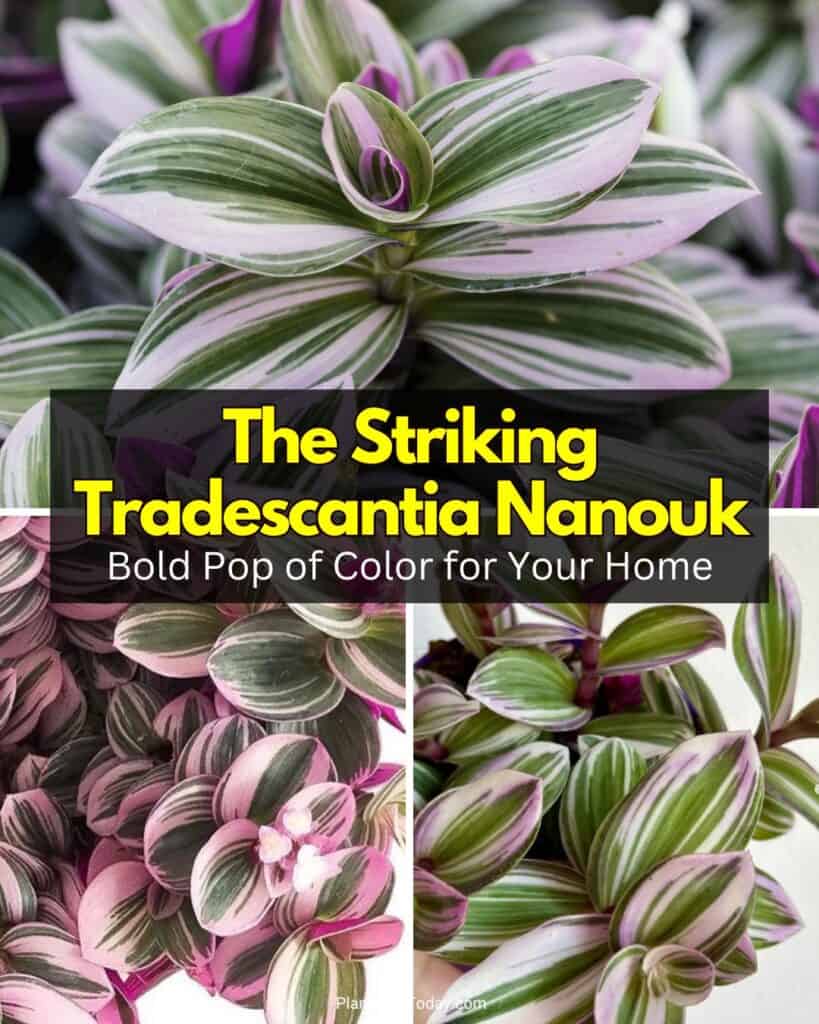
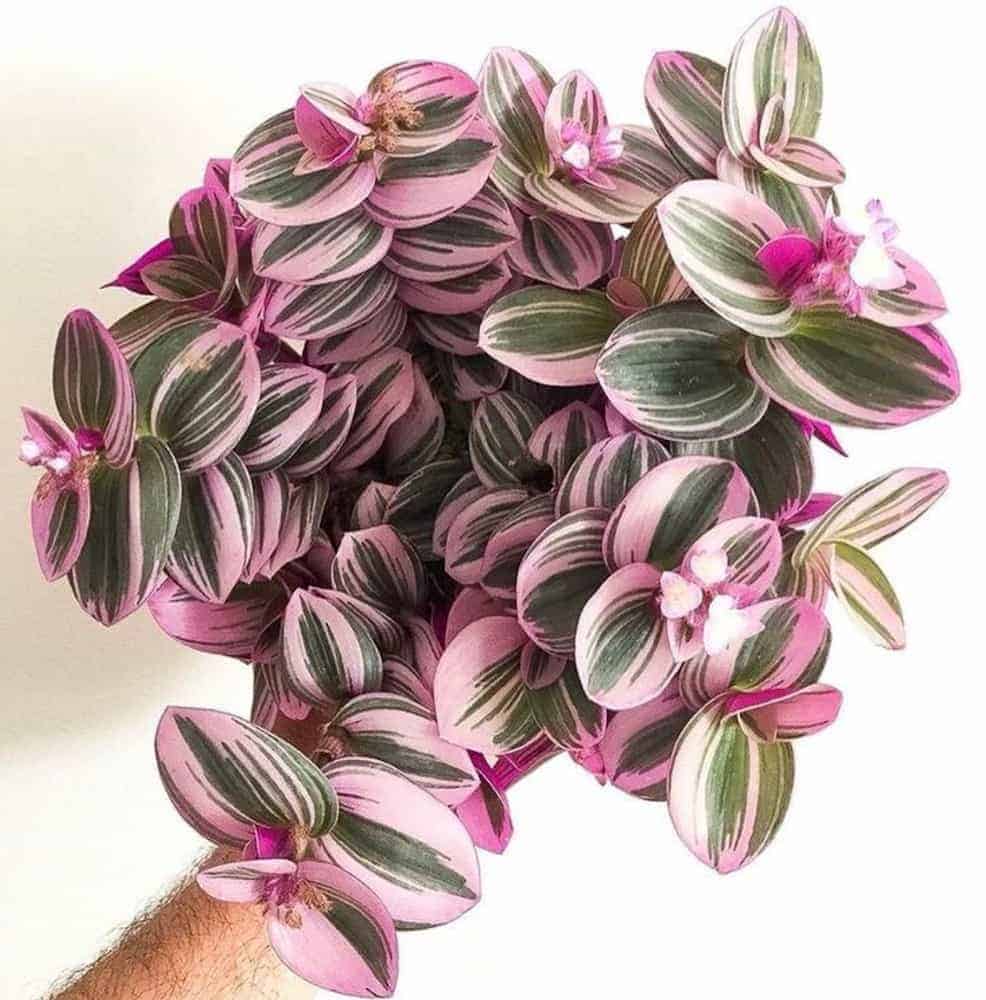
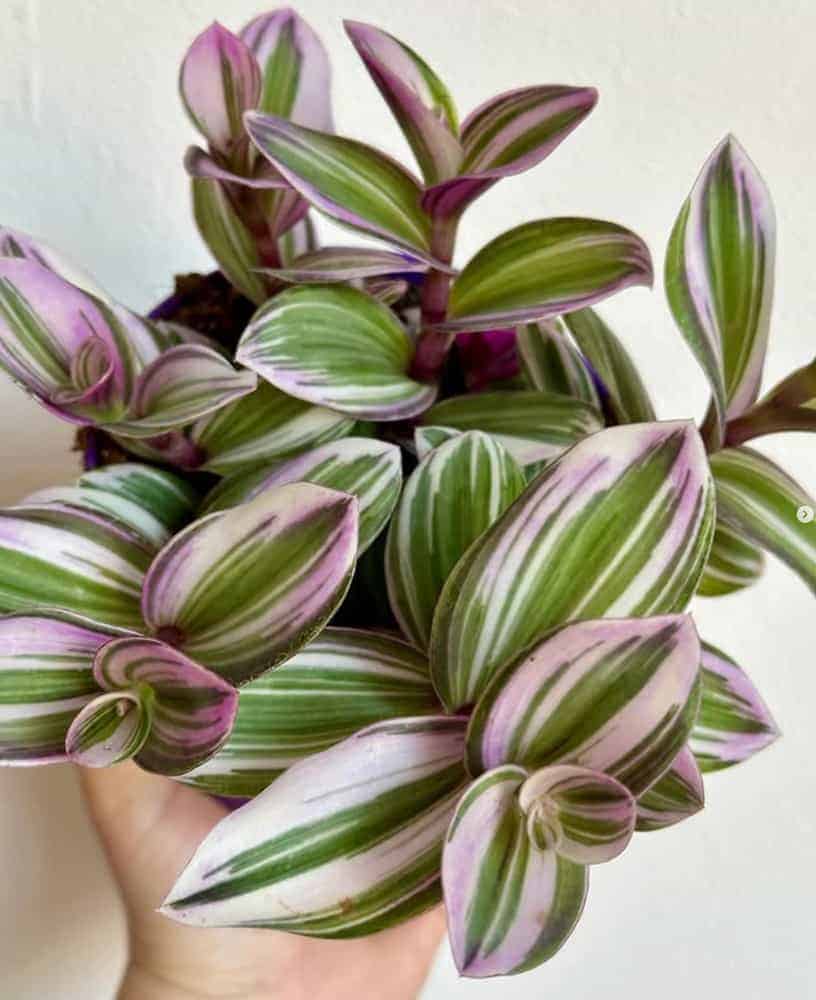
The characteristic plant is distinguished for its rich zebra-patterned leaves, growing up to 3” – 4” inches long and 1 1/2” – 2” inches wide.
The long, narrow leaves are beautifully variegated, with upper leaves having delicate purple and bright green longitudinal stripes.
The colorful plant prefers to grow in thickets in the Amazon rainforests, typically on stones in shady areas or on riverbanks at lower elevations.
Flowering and Fragrance
The Wandering Jew forms tiny wildflowers in tricolors: white, pink, or indigo.
The white flowers are more prominent than the others and grow in small clusters at the tip of the stems.
However, these flowers are not the most attractive feature of the houseplant.
The grass-like leaves remain the most attractive feature of the inch plant.
The solitary flowers are lightly scented and thus fill the space with pleasant aromas.

Bright Light and Temperature
Tradescantia nanouk prefers bright indirect light for healthy development.
Avoid placing the plant in direct sun to keep the gorgeous foliage full and alive.
Ideally, the tradescantia plant prefers warm daytime temperatures between 60° and 80°F (15°-27 °C).
However, the plant may thrive at temperatures as low as 54°F (12 °C).
The plant grows best in summer and spring.
However, its growth cripples in the cold, chilly season of late fall and winter.
It is cold-hardy in USDA zones 8–12.
Watering and Feeding
- When actively growing plants, water moderately, ensuring the soil is moist but not soggy. Excess moisture leads to root rot.
- Use potting mix and always wait for the soil to dry before watering.
- The plant produces more flowers when adequately watered.
- Lack of watering leads to dry and damaged leaves and flowers.
- When tradescantia is planted in a slightly dry, shaded area, it produces the best colors.
- Keep the plant moist by watering it sufficiently.
- In its growing season, feed the plant with liquid fertilizer once every two weeks.
Soil and Transplanting
- The Wandering Jew plant prefers consistently moist and well-drained soil.
- Never allow the soil to become too dry, or else it may hinder the plant’s proper growth.
- The best soil type for growing Tradescantia plants is a well-drained soil, such as the one used for African Violets.
- Mix it with other nutritious organics for additional nourishment.
- Transplant a Wondering Jew plant in a container filled with potting soil.
- Choose a pot size bigger than the current container.
- Make sure it is clean and sterilized.
- Remove the plant’s root ball and transfer it to the new pot.
- Fill the pot around the root ball with more potting soil.
- Water the newly-transferred plant slowly.
- Water until it drains from the bottom of the container.
Grooming and Maintenance
The maintenance needs of the evergreen perennial are considerably low.
Pinch off damaged leaves or stem tips to promote sturdy growth.
When pruning, make sure to use clean, sterilized tools and always wear gardening gloves to avoid being infected by dangerous sap.
How to Propagate Nanouk Wandering Jew
Purple Wandering Jews are quite easy to propagate and learn how to grow by cuttings.
- When pruning the plant, use the removed cuttings to start a new plant instead of discarding them.
- Fill a well-drained potting mix in a pot
- Make a hole in the middle to place the cutting.
- Remove any leaves from the cuttings on the stem before placing them in the soil.
- Once the cuttings are inserted in the soil, firm the soil around with your fingers.
- Water it sufficiently to moisten the soil and help encourage new growth.
- Roots will begin to show in 2 – 6 weeks.
Nanouk Wandering Jew Pests and Diseases
The inch plant is susceptible to several pests and diseases.
Watch out for aphids, spider mites, mealybugs, and whiteflies.
When the soil is poorly drained or is too heavy, the plant may suffer from root rot.
Tradescantia Nanouk Uses
The lovely succulent is often used as a garden plant, houseplant, or an indoor plant.
Owing to its stunning, bright foliage, the plant helps enliven any space, especially when used as ground cover or in a hanging basket.