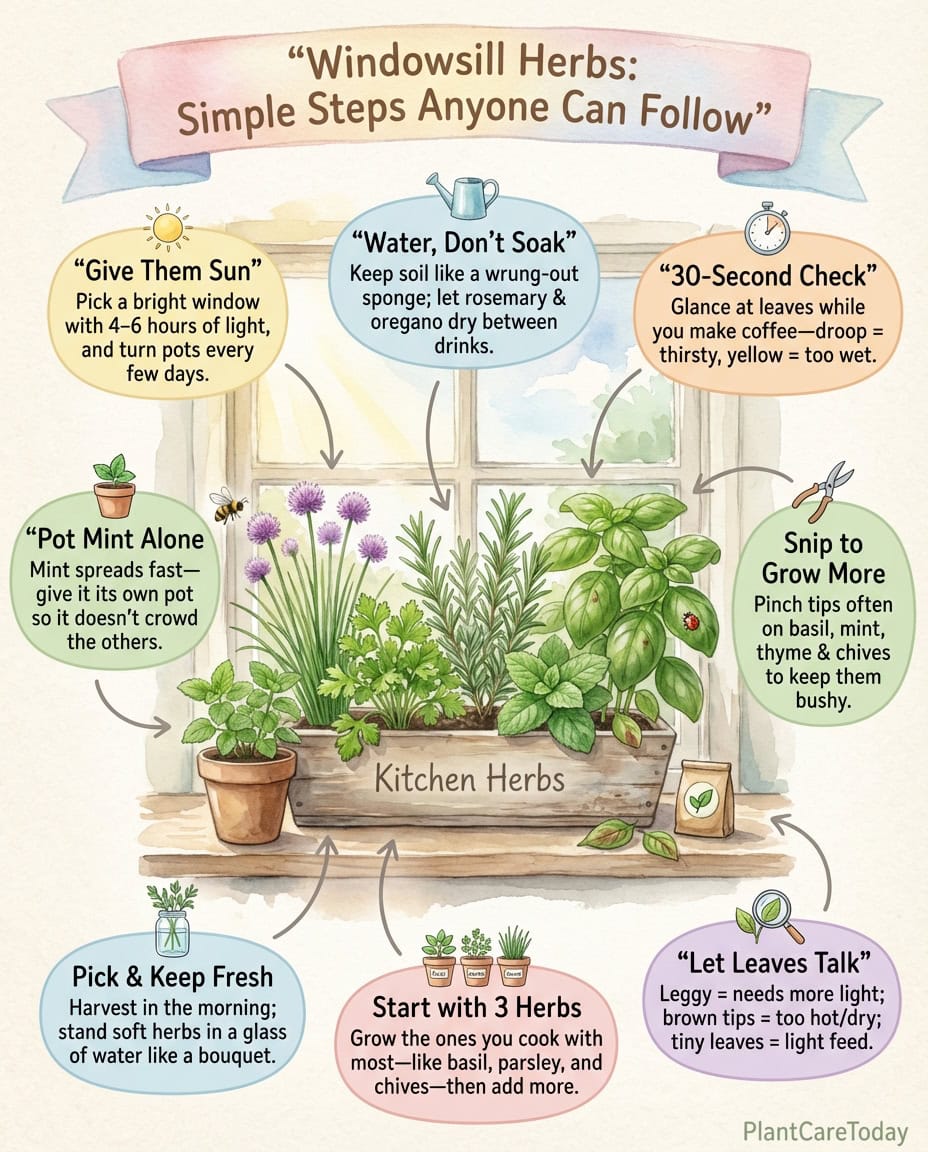
Did you know that 68% of herbs from grocery stores wilt within three days? The same varieties can thrive for months on your windowsill.
Herbs actually do well in the controlled environment of your home compared to unpredictable outdoor conditions.
Here’s how to turn that empty windowsill into a useful herb garden.
Why Your Windowsill Works Well for Herbs
Your windowsill offers consistent temperatures, protection from pests, and you’re right there to check on things. No more going out to a garden in the rain or forgetting about plants for days.
What matters most for your herb garden isn’t fancy equipment or natural talent. Its location and consistency.
Your kitchen windowsill provides sunlight and warmth, and it’s a daily reminder to care for your plants while you’re making coffee.
9 Herbs That Grow Well Indoors
1. Basil: Needs Plenty of Sun
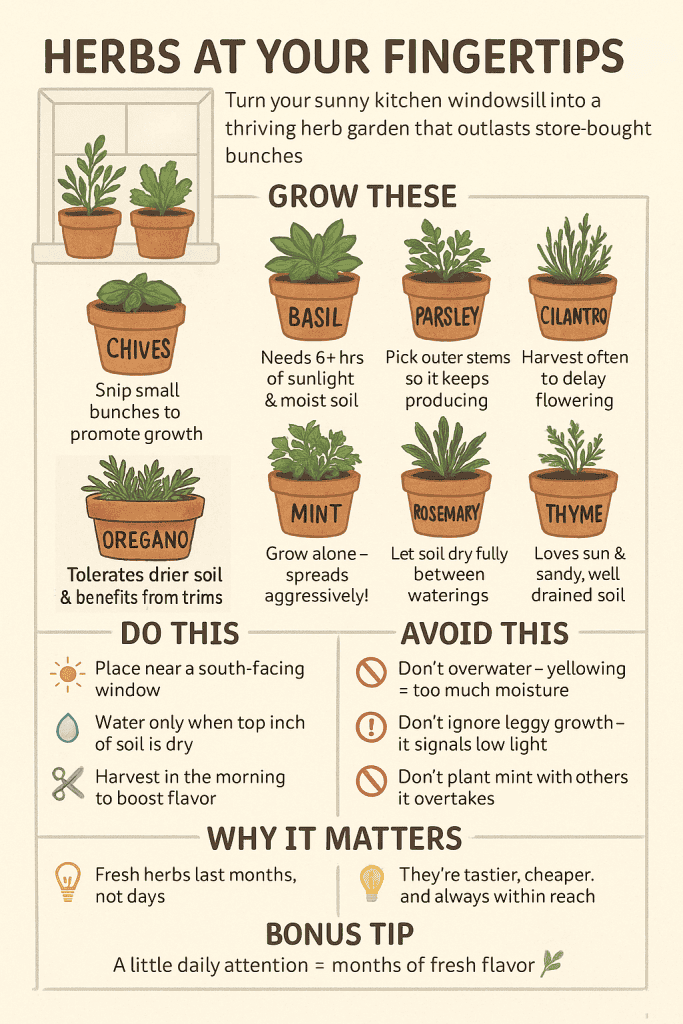
Basil loves sunshine. Give it at least 6 hours of sunlight daily, and it’ll grow thick and full. Keep soil slightly moist (like a wrung-out sponge) and pinch off leaves regularly to encourage bushier growth.
Here’s the thing about basil: it droops dramatically when it needs water, so it’s easy to tell when it wants water.
2. Parsley: Easy and Reliable
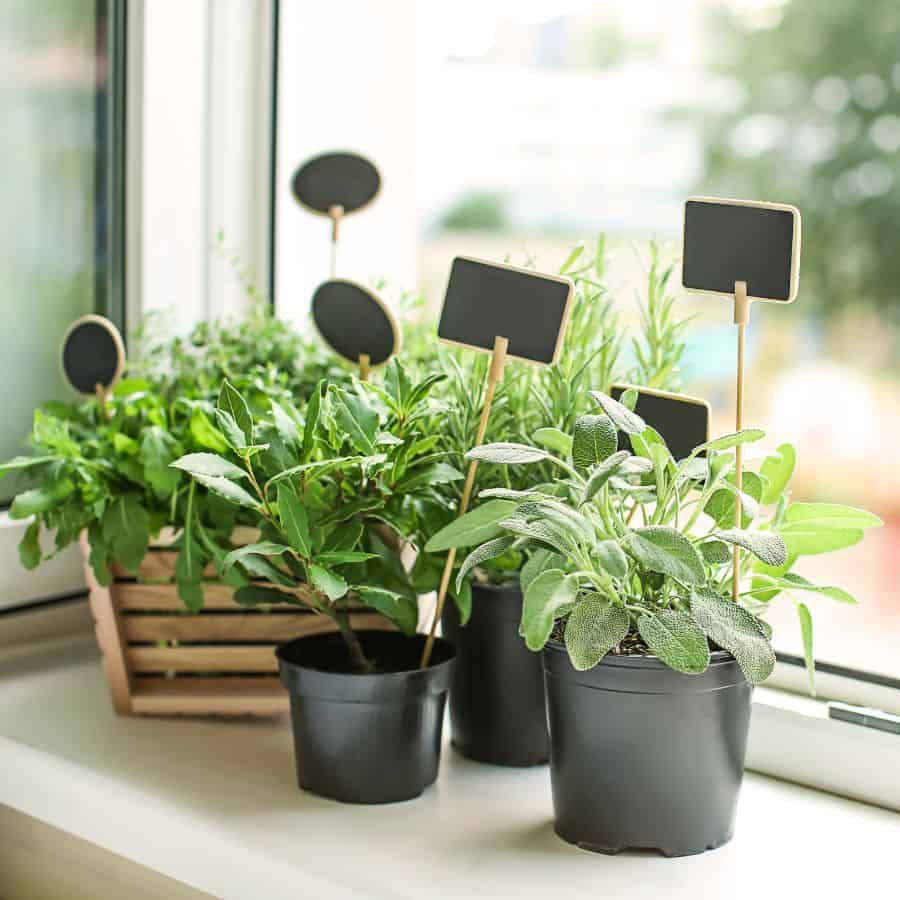
Parsley isn’t just a garnish. It’s packed with vitamins and grows well with moderate sunlight and consistent moisture. Harvest outer leaves first, and it will keep producing from the center out.
3. Cilantro (Coriander): Easier Than You Think
Cilantro isn’t as difficult as people say. The real trick is preventing it from flowering too quickly.
Give it bright light, keep the soil moist, and snip off any flower stalks that appear. You get two herbs in one: cilantro leaves and coriander seeds.
4. Chives: Nearly Impossible to Kill
Chives are tough and forgiving. These sun-lovers bounce back even after heavy harvesting. Just snip leaves about an inch from the soil, and they’ll regrow.
They even produce pretty purple flowers that you can eat.
5. Mint: Grows Like Crazy
Mint grows so fast it can break through garden barriers, which is why it’s perfect for containers.
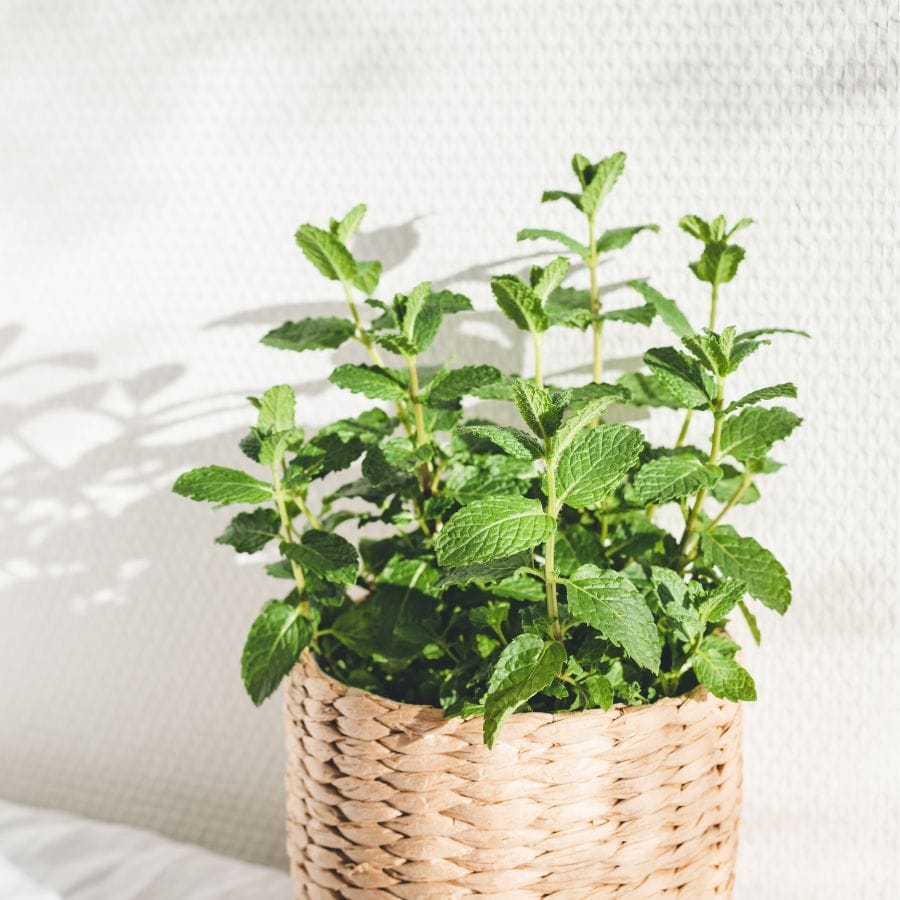
Give mint its own pot, moderate sunlight, and consistent moisture. It will take over quickly, so keep it contained.
6. Rosemary: Prefers to Be Left Alone
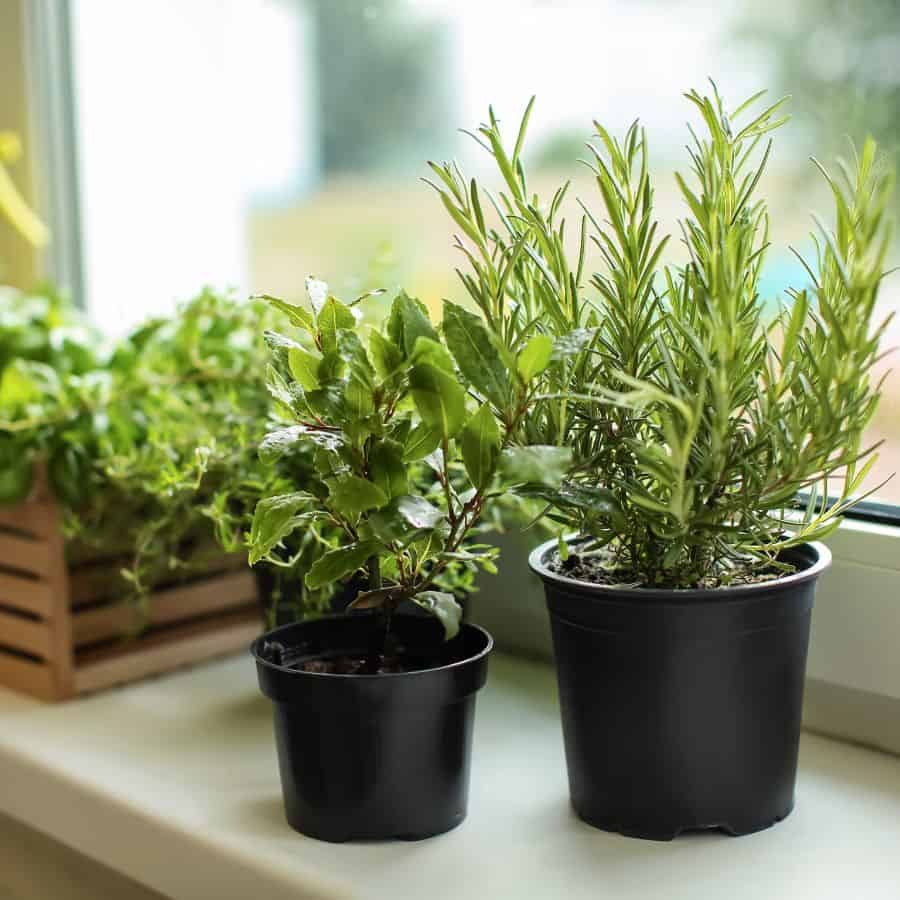
Rosemary is the low-maintenance option. It actually prefers to dry out between waterings.
Place it in your sunniest window, use well-draining soil, and don’t overwater. This woody herb can live for years. Some plants have survived for over 30 years.
7. Thyme: Small but Mighty
Thyme might be small, but it’s full of flavor. This sun-lover develops the most intense flavor when slightly stressed.
Harvest the upper branches often to encourage bushier growth and prevent them from getting woody.
8. Oregano: Less Water Is Better
Treat your oregano like it’s in the Mediterranean: lots of sun and minimal water. The most common mistake is overwatering.
Let the soil dry completely between waterings. The less you fuss over oregano, the more flavorful it becomes.
9. Dill: Tall and Distinctive
Dill brings feathery texture and unique flavor to your windowsill. It prefers moderate to direct sunlight and consistently moist (not soggy) soil.
At up to 3 feet tall when mature, dill can become the tallest plant in your collection.
4 Keys to Windowsill Success
Your herbs show you what they need through their appearance. Here’s what to look for:
• Yellowing leaves often mean overwatering—let the soil dry more between waterings
• Leggy, stretched growth means it needs more light—rotate the pot or move to a sunnier spot
• Brown leaf tips suggest too much direct heat or not enough humidity
• Stunted growth could mean it’s time to fertilize with half-strength liquid fertilizer
The difference between new and experienced plant owners is observation. Check your herbs daily while you wait for coffee to brew or for dinner to cook. This 30-second habit makes a big difference.
How to Harvest for Best Flavor
Timing matters when harvesting herbs. For most varieties, flavor peaks just before flowering, when essential oils are most concentrated. Harvest in the morning after dew has dried but before the sun gets too intense.
Here’s what many people don’t realize: regular harvesting actually stimulates more growth. The more you cut, the more the plant produces new leaves.
Store freshly cut herbs in a glass of water like a bouquet (basil, mint, cilantro) or wrap in damp paper towels inside a plastic bag (parsley, thyme, oregano) to keep them fresh longer.
Getting Started
Growing herbs on your windowsill is convenient and improves your cooking. With minimal investment and just minutes of care per week, you’ll have access to fresh flavors that make store-bought herbs seem bland.
Start with just three herbs you use most often, get comfortable with those, then add more. Before long, you’ll have a steady supply of fresh herbs and the experience to keep them thriving.