Ever grabbed a bag of lettuce at the store and thought, “I could grow this myself,” only to end up with either a sad little crop or way more lettuce than you know what to do with?
You’re not alone. Here’s the thing: growing the right amount of lettuce actually takes a little planning, but I’ve done the math for you.
The Best Part About Lettuce: Two Harvests from One Plant
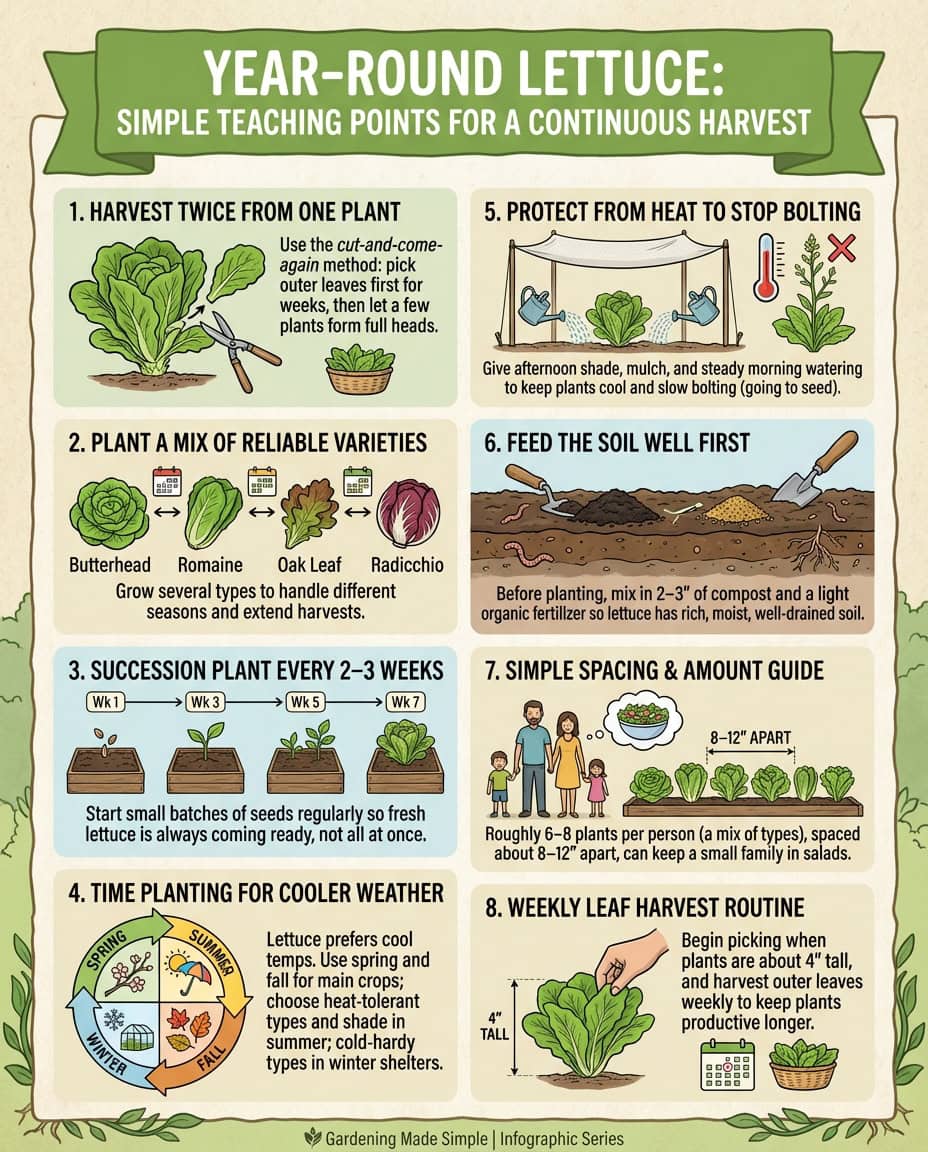
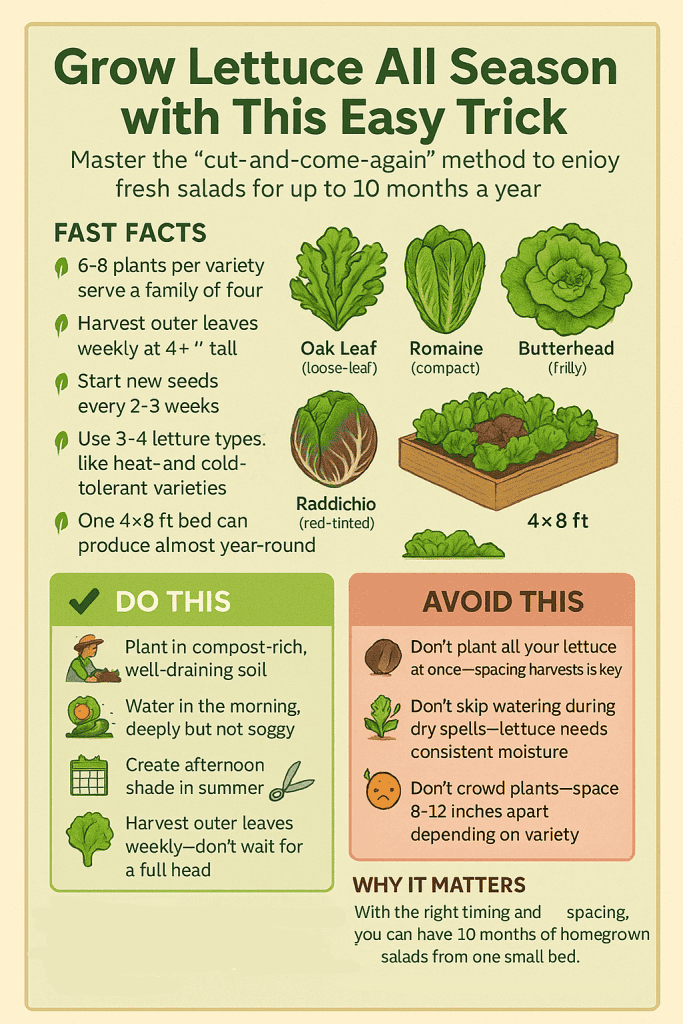
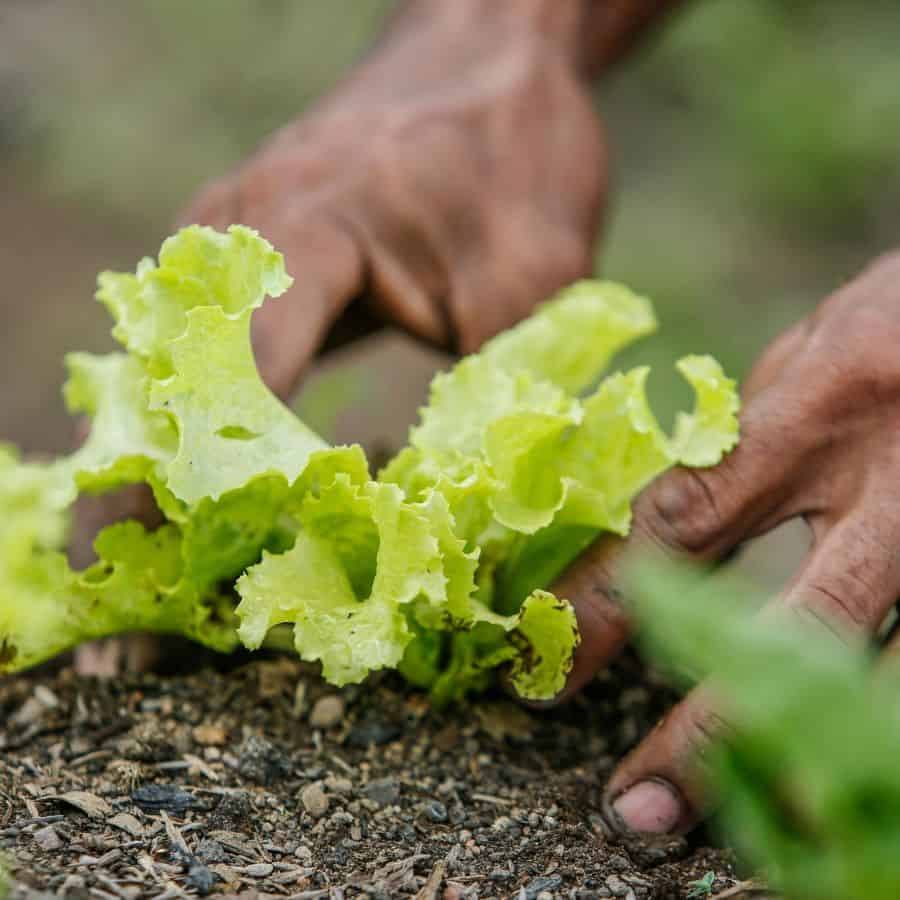
Here’s something you might not know about lettuce: wide varieties let you harvest the outer leaves for weeks while the plant keeps growing. Then you still get a full head later.
This approach is called “cut-and-come-again,” and it really changes how productive your garden can be.
The real difference between new and experienced gardeners is understanding this dual-harvest method. Most people wait for the full head and miss out on weeks of fresh salads.
7 Lettuce Varieties Worth Growing
Not all lettuces grow the same way. Some handle heat better, while others are quick to bolt.
The most reliable varieties for home gardens include:
• Butterhead: Provides soft leaves for months before forming a tender head
• Cos/Romaine: Sturdy leaves with good nutrition that hold up well to dressings
• Radicchio: Actually gets better flavor in cold weather and can grow through winter
• Iceberg: Needs more space but delivers satisfying crunch
• Lollo Rosso: Frilly leaves that keep producing for months
• Oak Leaf: Handles heat well and doesn’t turn bitter as quickly
I was surprised to learn that radicchio can grow through winter in most climates. It fills the “hungry gap” when most gardens aren’t producing much.
How Many Plants Do You Actually Need
Here’s where it gets practical. For a family of four eating salad 3-4 times weekly, here’s what to plant:
• Iceberg: 4-5 plants (12″ spacing) = 4-5 lbs total harvest
• Butterhead: 6-8 plants (10″ spacing) = 3-4 lbs plus cut-and-come-again leaves
• Romaine: 6-8 plants (8″ spacing) = 5-7 lbs total harvest
• Radicchio: 4-6 plants (8″ spacing) = 2-3 lbs plus cut-and-come-again leaves
The real trick is succession planting. Start new seeds every 2-3 weeks for continuous harvests. This turns your garden from “occasional salad” to “daily fresh greens.”
When to Plant for Non-Stop Harvests
Timing matters with lettuce. Plant at the wrong time, and you’ll watch your crop bolt before you get much of a harvest.
Here’s a year-round planting guide:
• Year-round: Radicchio, Lollo Rosso, and Oak Leaf can be started indoors anytime
• Spring: Direct sow Butterhead and Cos outdoors from March-April
• Summer: Plant heat-resistant varieties like Oak Leaf in May with afternoon shade
• Fall: Sow Radicchio and Romaine in July-August for fall harvests
• Winter: Start cold-hardy varieties in September for greenhouse or cold frame growing
With the right timing, you can have fresh lettuce for about 10 months of the year in most climates. That’s much better than the typical 3-month harvest most gardeners get.
How to Prevent Bolting and Get Better Yields
Lettuce has one main problem: heat. When temperatures rise, lettuce rushes to produce seed. That’s called bolting, and it makes your lettuce bitter and tough.
To keep your crop from bolting too early:
• Create afternoon shade with taller plants (peas, beans) on the south side
• Use shade cloth during heatwaves (30% shade works well)
• Water consistently in the morning to keep the soil cool
• Mulch around plants to maintain soil moisture
• Harvest outer leaves regularly to reduce stress on the plant
These simple steps make a big difference in how long your lettuce stays productive.
What Lettuce Needs from Your Soil
Lettuce might look delicate, but it’s actually a fairly hungry plant. What matters most isn’t just water. It’s rich, well-draining soil.
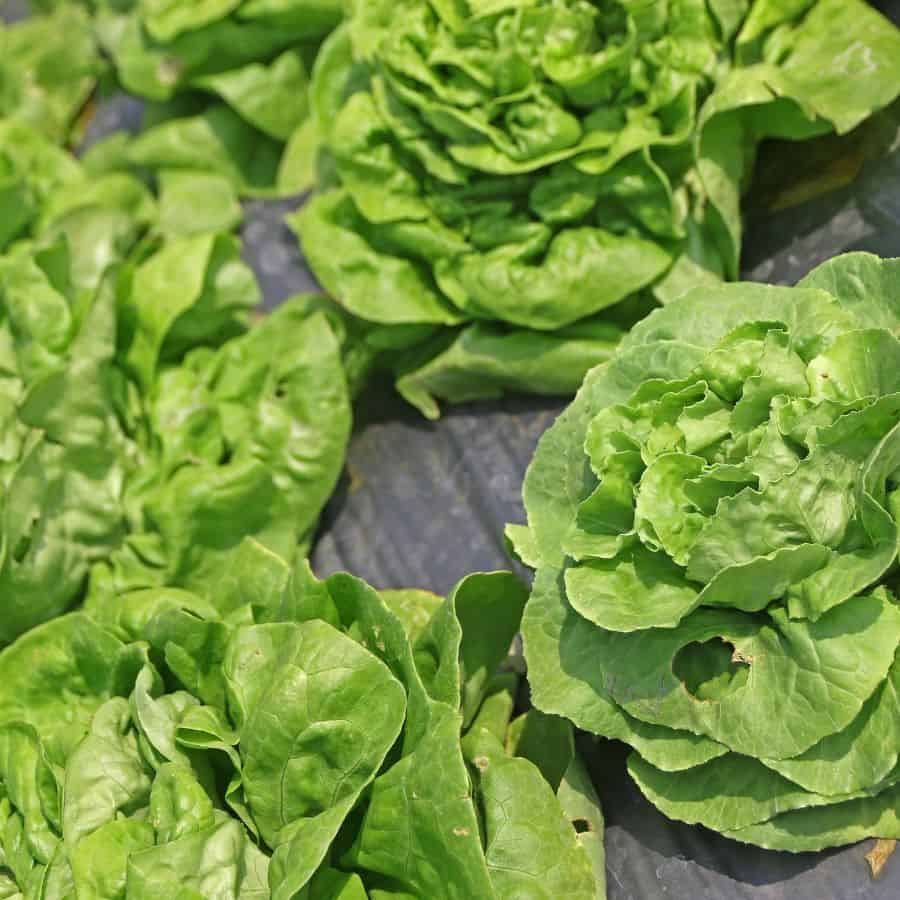
Before planting, mix in:
• 2-3 inches of compost or well-rotted manure
• A light dusting of balanced organic fertilizer
Unlike tomatoes or peppers, which handle heat and dryness, lettuce needs consistent moisture without becoming waterlogged.
Think of it as the Goldilocks of the garden: not too wet, not too dry, just right.
Your Action Plan
Ready to grow better lettuce? Here’s a simple plan:
Choose 3-4 varieties for diversity and extended harvests
Plant 6-8 plants per person of each type, staggered throughout the season
Harvest outer leaves weekly once plants reach 4″ tall
Let some plants develop full heads while continuing to pick from others
Provide afternoon shade during summer heat
With this approach, a family of four can enjoy fresh salads nearly year-round from just a 4×8-foot raised bed. That’s real garden-to-table independence.