Ever wondered why some gardeners end up with more cucumbers than they know what to do with, while you’re struggling to grow enough for a single salad?
I was surprised to learn that the difference between an okay and a great cucumber harvest often comes down to just a handful of simple techniques.
Here are 12 tips that can really help.
Choose Your Champion: Variety Matters More Than You Think
Selecting the right cucumber variety is like choosing the right tool for a job. It’s the foundation upon which everything else builds.
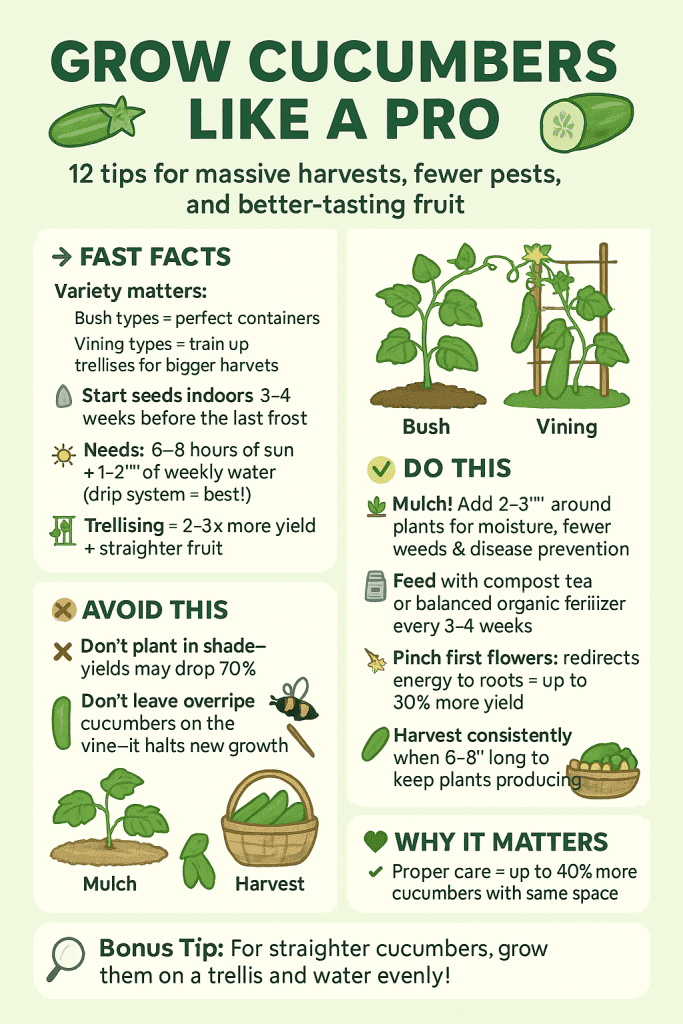
Bush varieties are compact and perfect for containers, small spaces, and even balconies. They’re efficient and productive without taking up much room.
Vining varieties need more space but reward you with bigger harvests. They’ll climb anything you give them and produce larger fruits.
Here’s something interesting: certain cucumber varieties can produce up to 20-30 fruits per plant. That’s enough for an entire summer of salads from just a few plants.
The Headstart Hack: Indoor Seeding Success
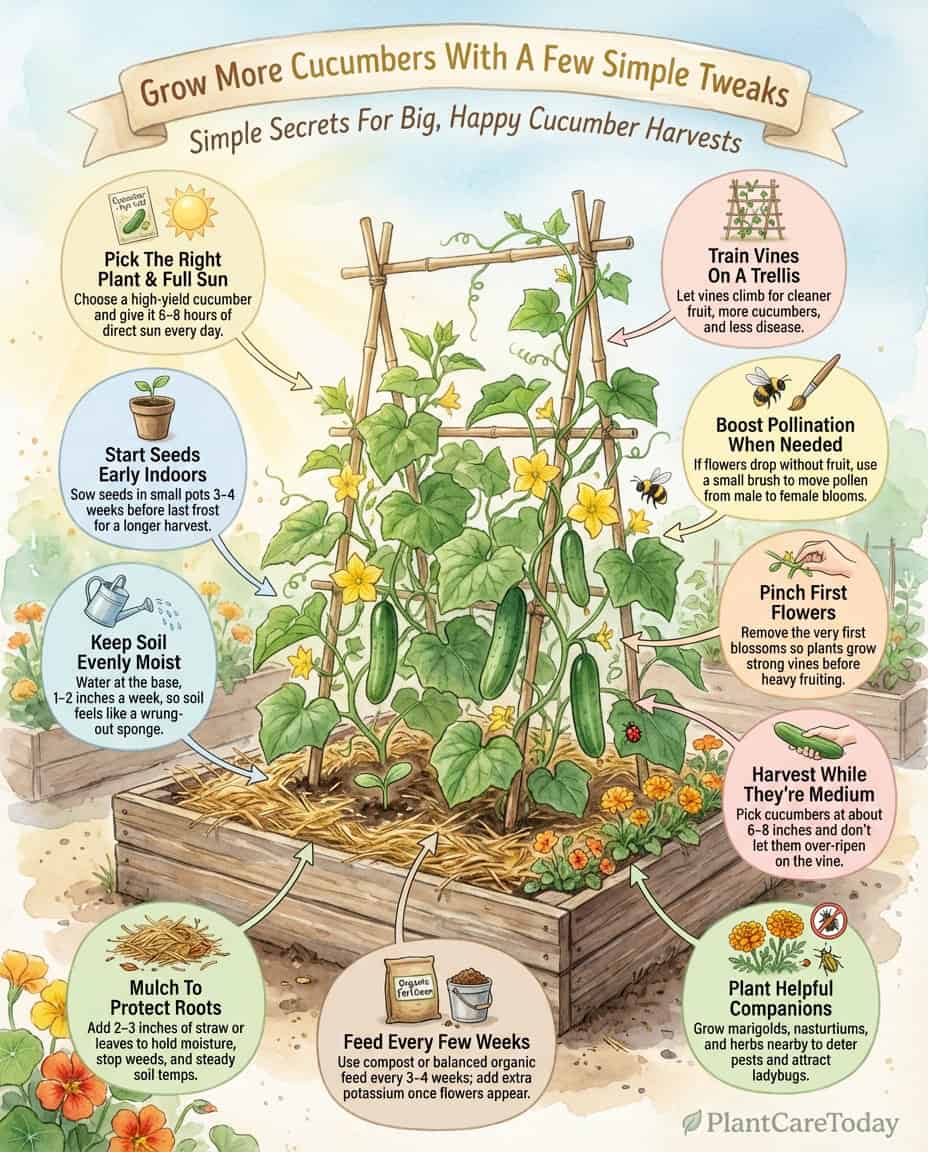
Starting seeds indoors gives your plants a 2-3 week advantage over direct sowing. Plant seeds in biodegradable pots 3-4 weeks before your last frost date.
This simple step can extend your growing season by nearly a month. That can mean up to 30% more cucumbers over the season.
Vertical Victory: Why Trellises Transform Everything
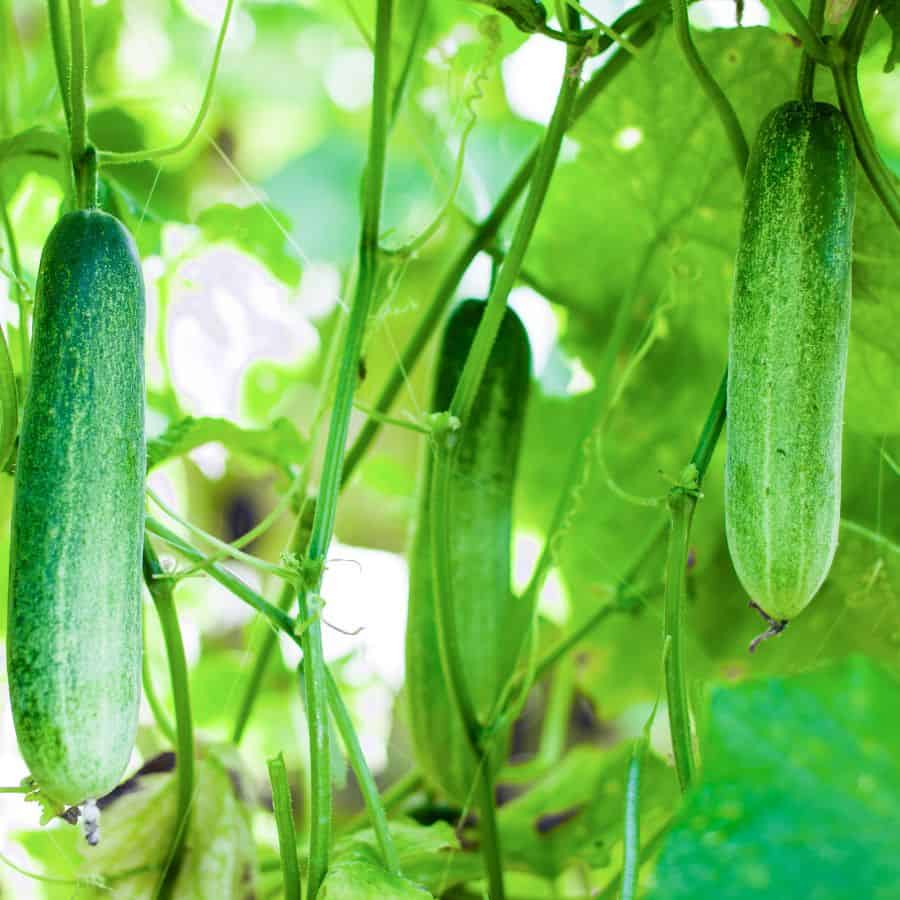
Cucumbers really don’t like sitting on the ground. Trellising isn’t just a space-saver. It actually improves your harvest.
Vining cucumbers grown vertically can produce up to 2-3 times more fruit in the same space as ground-sprawling plants.
Plus, they develop straighter, cleaner fruits with fewer disease issues. Think of your trellis as a cucumber high-rise: more plants in less space, with better growing conditions.
Sun-Worshippers: The Non-Negotiable Light Requirement
One of the most common mistakes is growing cucumbers in partial shade. These plants really need their sun.
Cucumbers need at least 6-8 hours of direct sunlight daily. Plants receiving less than this will produce significantly fewer fruits; sometimes up to 70% less.
Position them in your garden’s sunniest spot and watch them do their thing.
The Moisture Mystery: Finding the Perfect Balance
Cucumbers are 96% water, so consistent moisture is key for developing crisp, juicy fruits without bitter flavors.
• Aim for 1-2 inches of water weekly, depending on your climate
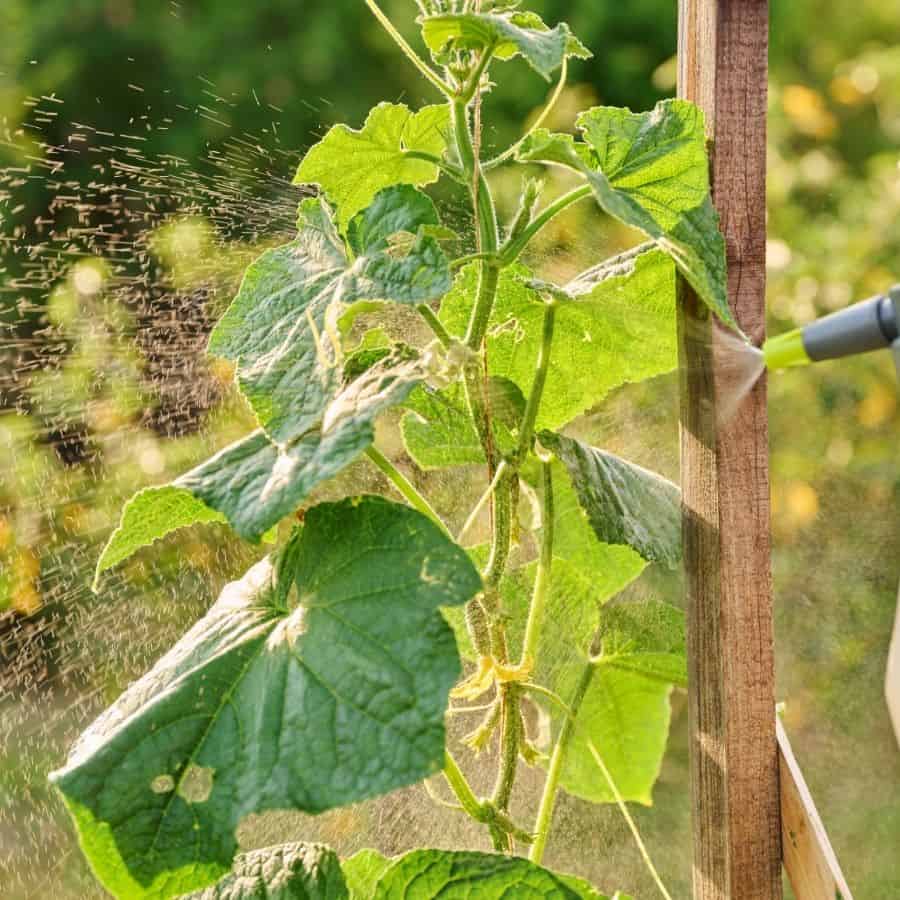
• Water at the base of plants, not from overhead
• The soil should feel like a wrung-out sponge: moist but not soggy
Installing a simple drip irrigation system can increase yields by up to 25% compared to irregular hand-watering. Consistency really pays off here.
Mulch Magic: Your Cucumber’s Best Friend
Think of mulch as a protective layer for your cucumber’s root system. A 2-3 inch layer of straw, leaves, or grass clippings helps by:
• Maintaining even soil moisture (reducing watering needs by up to 30%)
• Preventing soil-borne diseases from splashing onto leaves
• Suppressing weeds that compete for nutrients
• Regulating soil temperature for better growth
Pollination Power: Taking Control of Fruiting
Understanding pollination is what separates new gardeners from experienced ones. Without proper pollination, flowers drop without forming fruit.
If you notice plenty of flowers but few developing cucumbers, grab a small paintbrush and gently transfer pollen from male flowers (thin stems) to female flowers (with tiny cucumber-shaped swellings behind them).
This quick task can increase your yield by up to 40% when pollinator populations are low.
Feed to Succeed: The Nutrition Connection
Cucumbers are heavy feeders. Their rapid growth rate demands plenty of nutrients.
Apply compost tea or balanced organic fertilizer every 3-4 weeks throughout the growing season.
Adding a potassium-rich feed once flowering begins can increase fruit production by up to 35%.
The Counterintuitive Flower Pinch
Here’s a cucumber tip that feels wrong but works: pinch off the first flowers that appear on your plants. This forces energy into root and vine development before fruiting begins.
This simple step results in stronger plants that produce more consistently throughout the season, often yielding 20-30% more cucumbers overall. Sometimes short-term sacrifice leads to long-term rewards.
Harvest Secrets for Never-Ending Cucumbers
Your cucumber plant will keep producing as long as you keep harvesting. Regular picking signals the plant to make more.
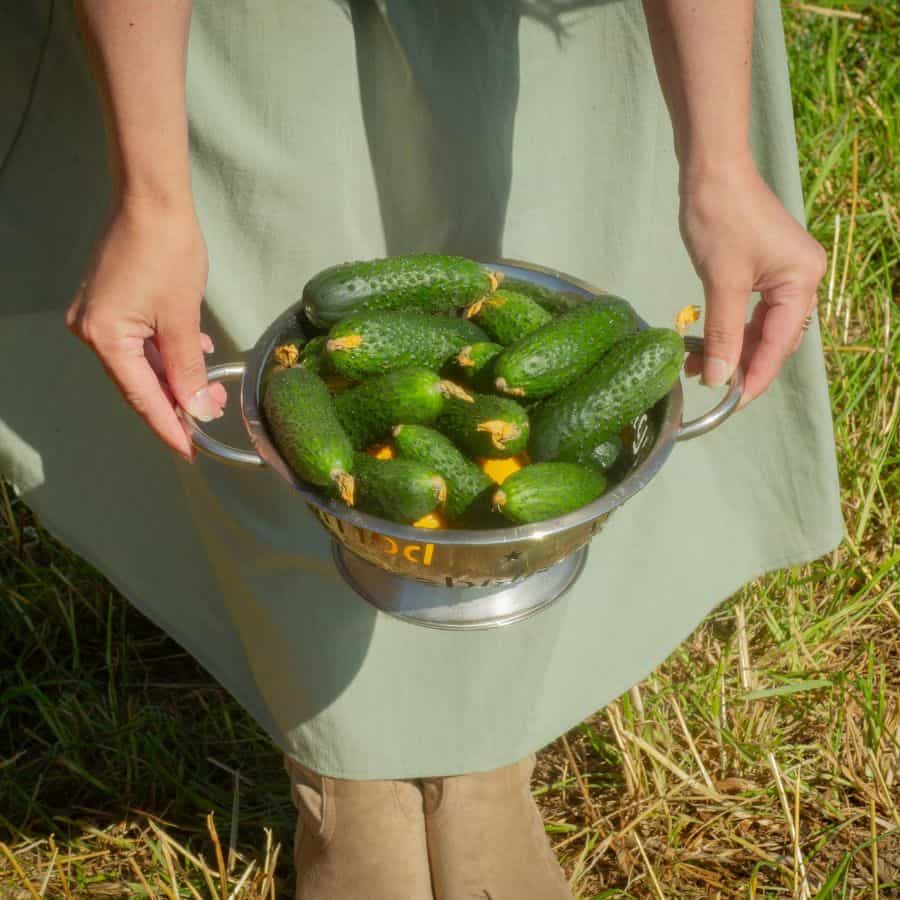
Pick cucumbers when they reach 6-8 inches long (or according to your variety’s specifications), even if you can’t use them all right away. Leaving overripe cucumbers on the vine tells the plant to slow down production.
Strategic Companions: Plant Partnerships That Work
Surround your cucumbers with helpful neighbors to create natural pest protection:
• Marigolds: Repel cucumber beetles and nematodes
• Nasturtiums: Act as trap crops for aphids
• Dill and oregano: Attract beneficial predatory insects
• Radishes: Confuse cucumber beetles with their strong scent
These companion plants can reduce pest damage by up to 60% without the use of chemicals.
Mildew Management: Preventing the White Death
Powdery mildew can turn your cucumber patch into a sad, white-dusted mess in just days. Prevention is your best approach:
• Space plants properly for air circulation
• Water at the base, never the leaves
• Prune excessive foliage, especially in humid climates
• Apply diluted milk spray (1:10 ratio with water) as a preventative
These strategies can reduce mildew issues by up to 80%, keeping your plants productive all season long.
Growing great cucumbers isn’t about magic. It’s about understanding what these plants actually need. Apply these 12 tips consistently, and you’ll be sharing cucumber bounty with everyone you know by mid-summer.