Peppers have a reputation for being tricky, but they’re actually pretty straightforward once you understand what they need.
Whether you want sweet bells or super-hot varieties, you can grow plenty of peppers with the right approach. Here’s what actually matters.
Why Your Peppers Might Be Struggling
Peppers need specific conditions to do well. They love warmth but get stressed easily when things aren’t quite right.
The key is creating balanced conditions: not too cold, not too dry, and enough space for each plant. Without these basics, peppers will drop their flowers or give you small, disappointing fruit.
The biggest mistake people make is planting too early. These are tropical plants, so they really need warm nights to grow well.
15 Practical Tips for Growing Better Peppers
1. Match Your Pepper to Your Climate
Choosing the right variety matters more than you might think. If you have a short growing season, go with fast-maturing types like ‘Early Jalapeno’ or ‘Ace’ sweet peppers.
In warmer areas, you can try slower varieties like ‘Ghost’ or ‘Carolina Reaper’ peppers.

2. Start With Healthy Plants
Look for transplants with 6-8 healthy leaves and thick stems. Strong starter plants can help you harvest up to 3 weeks earlier than weak ones.
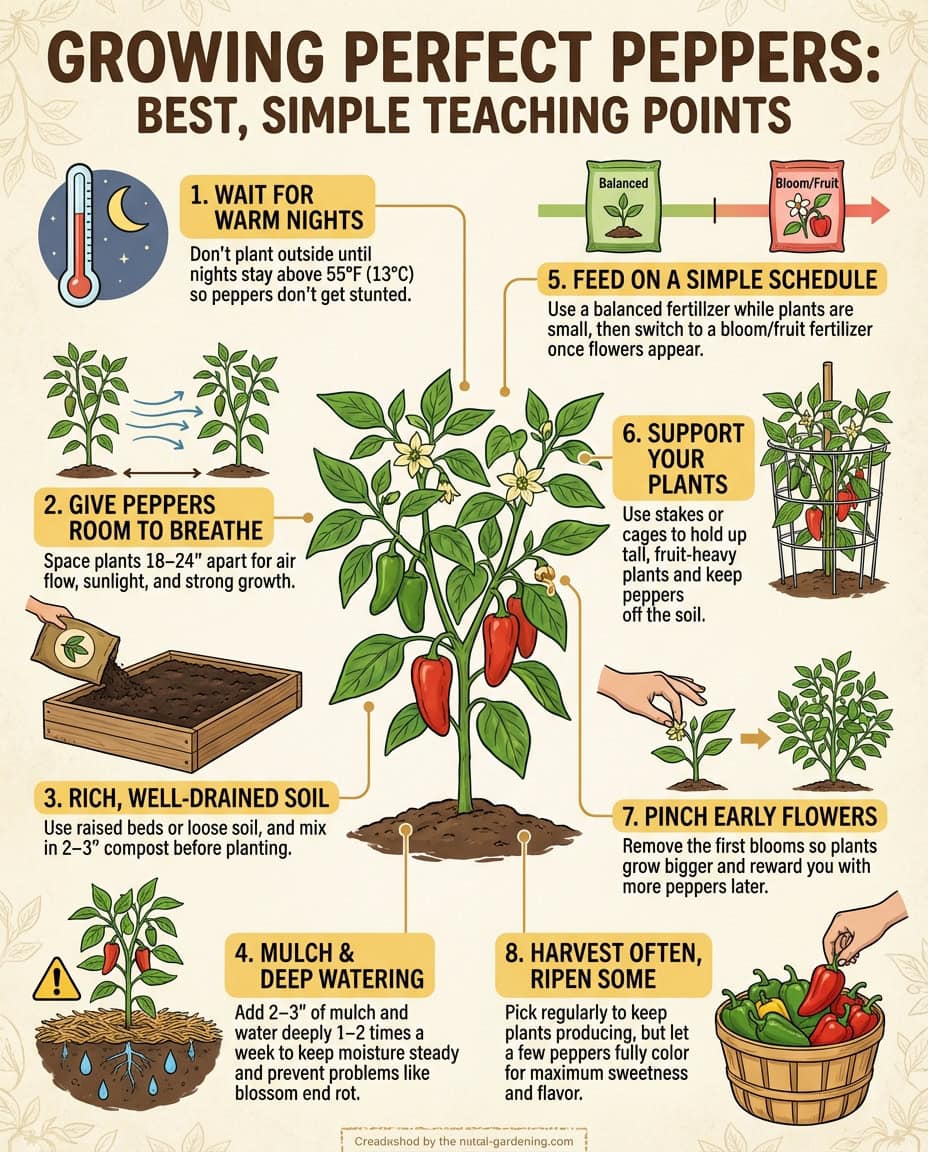
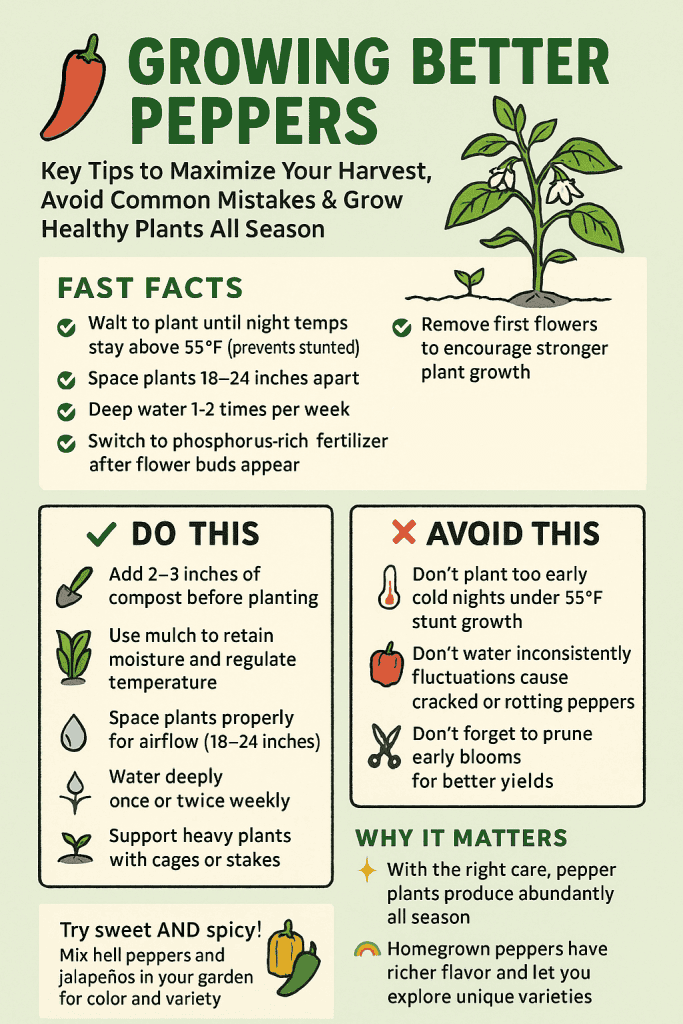
3. Wait Until Nights Stay Above 55°F (13°C)
Cold nights below 55°F don’t just slow growth. They can actually stunt your plants for the whole season. Warm soil helps roots establish properly. I know it’s tempting to plant early, but patience really pays off here.
4. Make Sure You Have Good Drainage
Peppers hate sitting in wet soil. Raised beds or fabric grow bags work great because they drain well and prevent root problems.
5. Add Compost Before Planting
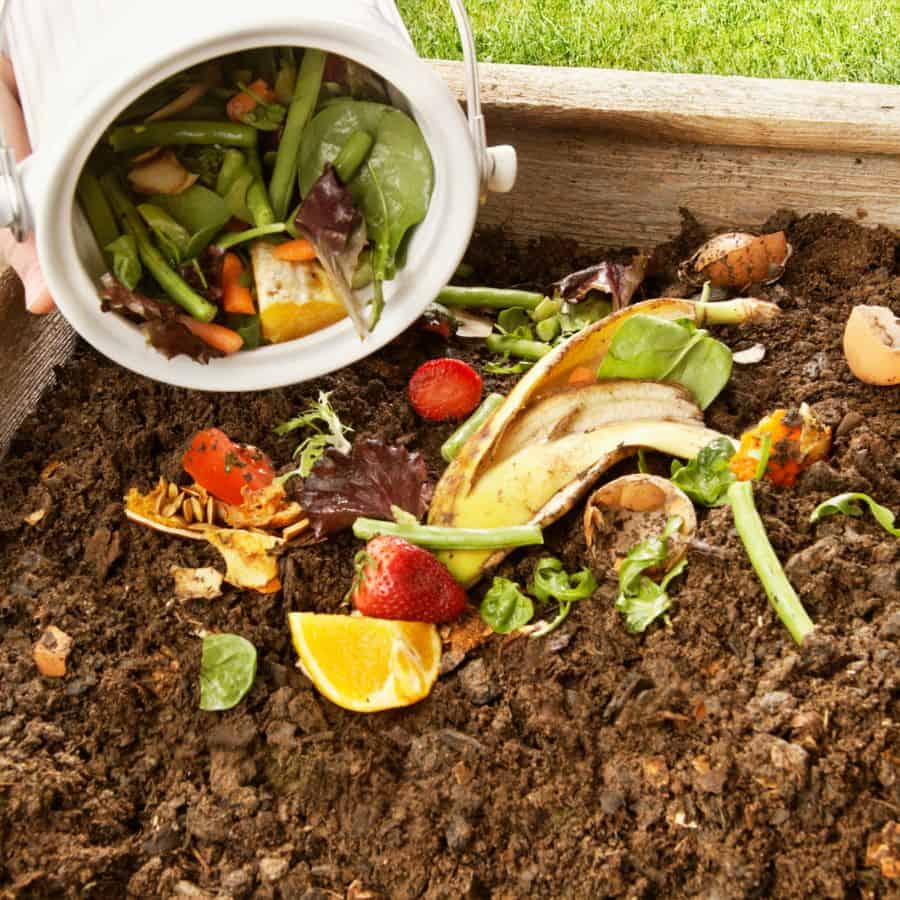
Work in 2-3 inches of compost or aged manure before you plant. This provides peppers with the nutrients they need and helps the soil retain moisture better.
6. Space Plants Properly
Give each plant 18-24 inches (45-60 cm) of space. This helps with:
• Better air circulation to prevent disease
• More sunlight reaching the leaves
• Less competition for nutrients
7. Use Mulch
A 2-3-inch layer of straw, shredded leaves, or grass clippings keeps soil temperature steady and holds moisture. It also cuts down on weeds.
8. Water Deeply, Not Often
Peppers need about 1-2 inches of water per week. It’s better to water thoroughly once or twice a week than to sprinkle a little every day. Inconsistent watering causes blossom end rot and cracked fruit.
9. Follow a Feeding Schedule
Start with balanced fertilizer (like 10-10-10) when plants are young. Once they start flowering, switch to a higher-phosphorus and potassium fertilizer (like 5-10-10) to support fruit production.
The real difference between new and experienced gardeners is sticking to a schedule.
10. Stake or Cage Your Plants
Tall varieties and heavily laden plants need support. Stakes or cages prevent broken stems and keep fruit off the ground, especially during storms.
11. Remove the First Flowers
This feels counterintuitive, but pinching off those early blooms helps the plant grow bigger and stronger before it starts making fruit. You’ll get more peppers overall this way.

12. Watch for Blossom End Rot
That dark, sunken spot at the bottom of peppers is caused by inconsistent watering and calcium deficiency.
Regular watering helps, and you can add crushed eggshells to the soil or use a calcium spray if needed.
13. Pick Peppers Regularly
Regular harvesting encourages plants to make more fruit. Even picking peppers while they’re still green can trigger more flowers and more peppers.
14. Let Some Peppers Ripen Fully
A fully red bell pepper has nearly twice the vitamin C of a green one. For sweet varieties especially, letting them change color really improves the flavor. It takes longer, but it’s worth it.
15. Save Seeds From Your Best Plants
If you’re growing heirloom varieties, save seeds from your healthiest, most productive plants.
Pick fully ripe peppers, dry the seeds completely, and store them in a cool, dry place. Over time, you’ll develop peppers that grow particularly well in your garden.
Growing Peppers That Actually Produce
With these tips, you can grow peppers that produce well all season. The key things to remember are consistency, warmth, and good spacing.
There’s something really satisfying about picking your first homegrown pepper—whether it’s a sweet bell or something with serious heat. They taste noticeably better than store-bought ones.
Your summer cooking is about to get a lot more interesting.