I was surprised to learn that those empty 5-gallon buckets sitting in my garage weren’t trash. They were actually perfect for gardening.
After my house repainting left me with a stack of these plastic containers, I decided to experiment.
Those buckets now produce enough vegetables to keep my kitchen stocked and my neighbors curious.
The Bucket Garden Basics (No Yard Required)
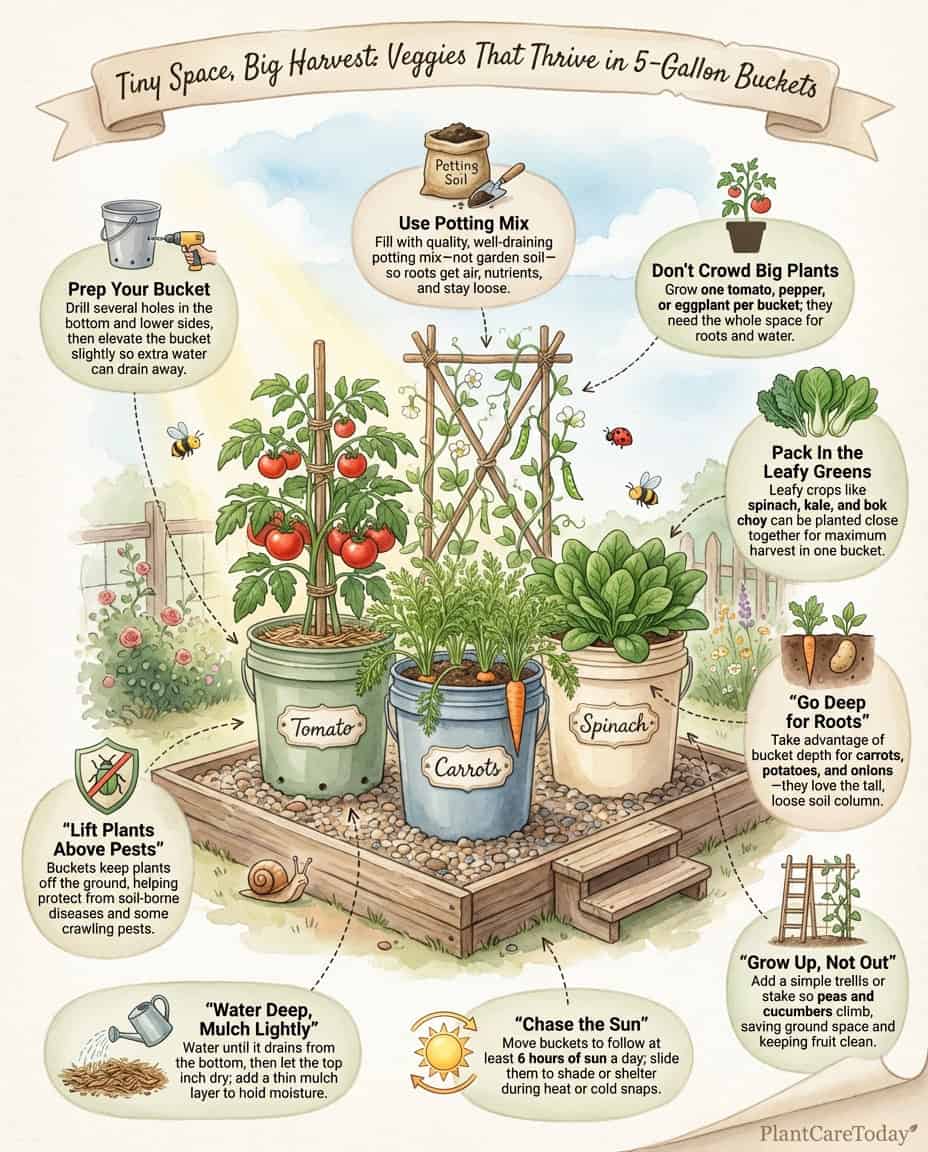
You don’t need acres of land to grow your own food. What I’ve learned is that 5-gallon buckets make a great environment for many vegetables.
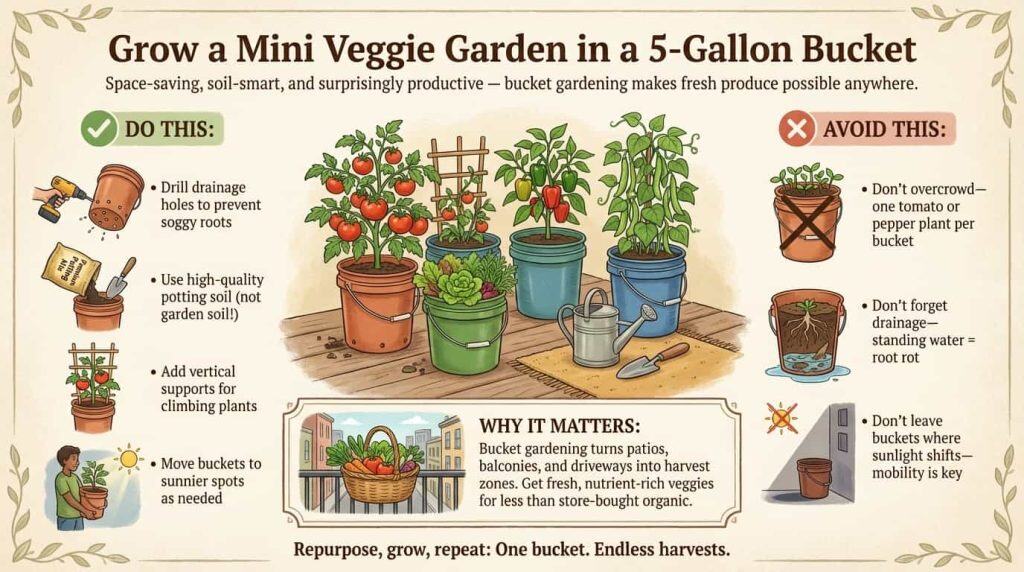
They provide good depth, drainage (with a few holes drilled in the bottom), and the ability to move them around as needed.
Think of these buckets as small but efficient growing spaces. When you set them up right, they work surprisingly well.
The best part? You can use them almost anywhere: balconies, driveways, patios, and even indoor spaces with good light.
Fruiting Vegetables: Big Flavors from Small Spaces
Tomatoes: These grow well in buckets with proper support. Plant seeds 8-10 weeks before the last frost date. They need regular watering and mulch to retain moisture. One bucket fits one plant.
Peppers: Perhaps the easiest bucket vegetable of all. These heat-loving plants do well once established. Direct sow after all frost danger has passed. The confined space actually helps concentrate their flavors, making bucket-grown peppers often more intense than garden varieties.
Eggplant: With quality, well-draining potting soil and regular feeding, these will do well in buckets. Start seeds 8-10 weeks before the last frost date, and keep them safe from any late cold snaps that could damage them.
Cucumbers: Up to 3 plants can grow in a single bucket. Plant 2-4 weeks before the last frost date or immediately after. The real trick for cucumber success? A simple trellis that lets them climb upward instead of sprawling outward.
Root Vegetables: Hidden Treasures Below
The 5-gallon depth works really well for vegetables that develop underground.
Potatoes: You can harvest 2-3 pounds of potatoes from just one bucket. That’s enough for several family meals from a container that takes up less than one square foot of space.

Carrots: The deep bucket environment allows these to develop fully. Plant in early fall, about 3-4 weeks before the first frost. The cold actually enhances their natural sweetness.
Onions: A single 5-gallon container can support up to 10 onion plants. Start bulbs 8-10 weeks before the last frost for a summer harvest.
Leafy Greens: Maximum Yield from Minimal Space
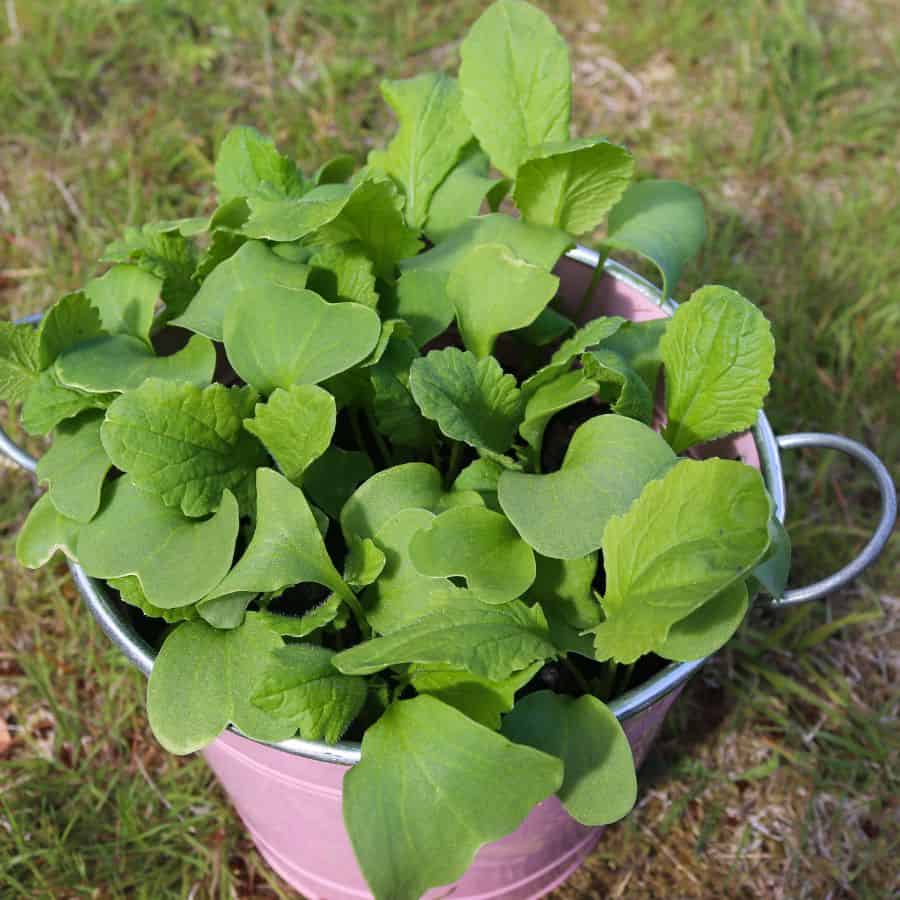
If you’re looking for the most produce from the least space, leafy greens in buckets are your answer. These plants produce a lot when harvested correctly.
Spinach: You can fit 18-20 plants per container when planted densely. Start 5-7 weeks before the last frost date. Cooler temperatures actually make them taste better.
Kale: This cold-loving green actually tastes sweeter after frost. Plant 3-6 weeks before the last frost, and you’ll get harvests that keep giving through multiple seasons.
Mustard Greens: These peppery, cabbage-like greens do well when planted in mid-spring. They prefer slightly cooler conditions. Their bold flavor adds a nice kick to salads.
Bok Choy: This Asian green likes the consistent moisture that bucket growing provides. The contained environment helps maintain the right hydration level for these plants.
Climbing Varieties: Vertical Solutions
Peas: These vertical climbers add height to your bucket garden while needing minimal attention. Plant 6-8 weeks before the last frost date. They actually prefer cooler growing conditions. Add a simple trellis and watch them climb.

Squash: While they need more space than some others, squash plants can grow in buckets. Plant after all frost danger has passed and give them room to spread.
Broccoli: Even this grows well in buckets. Plant 5-7 weeks before the last frost and position in full sun. Homegrown varieties often taste noticeably better than store-bought.
Why Bucket Gardening Works
The difference between new and experienced gardeners is often just working smarter, not harder. Bucket gardening has some real advantages:
• Perfect drainage control (no more overwatered plants)
• Ability to move them to follow sunlight throughout the season
• Protection from ground pests and soil-borne diseases
• Control over soil quality and nutrients
• Season extension by moving buckets indoors during cold snaps
• No weeding
Bucket gardening is efficient. Those plastic containers that would otherwise end up in landfills become productive growing spaces with minimal investment. When winter arrives, just stack them up until next season.
Grab those empty buckets, drill a few drainage holes, fill with quality potting soil, and start your compact garden. You’ll be harvesting fresh vegetables from spaces you never thought could be productive.