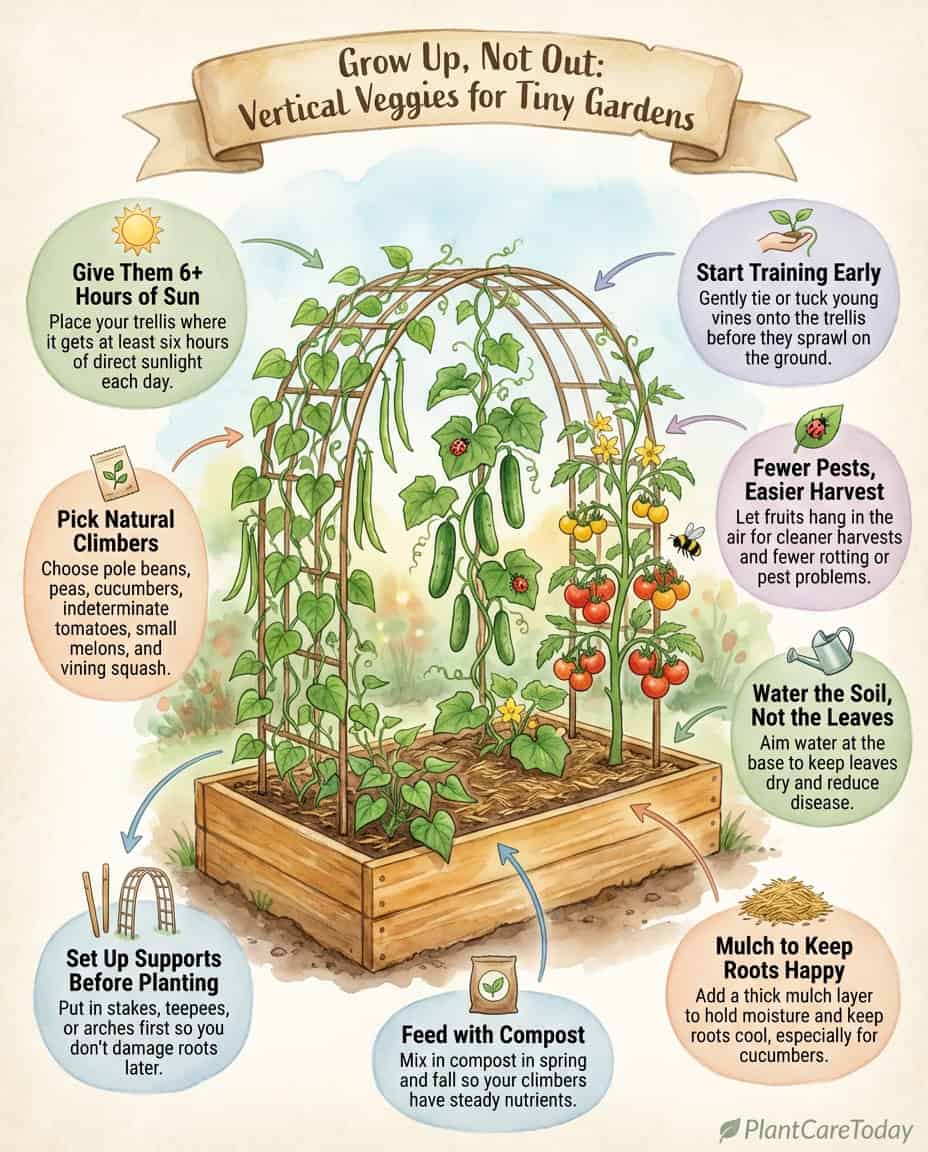
Think your tiny garden means tiny harvests? Here’s some good news: going vertical can double or even triple yields in the same footprint.
And you don’t need complicated structures or expert know-how to make it work.
Let me show you which vegetables naturally grow upward and how to help them thrive.
Why Your Garden Should Grow Upward
Growing vegetables flat on the ground works, but it takes up a lot of space. A garden with climbing plants uses that space more efficiently and can actually produce more food.
Here’s what makes vertical gardening worth trying: research shows it can increase yields by up to 30% while reducing pest problems by nearly half.
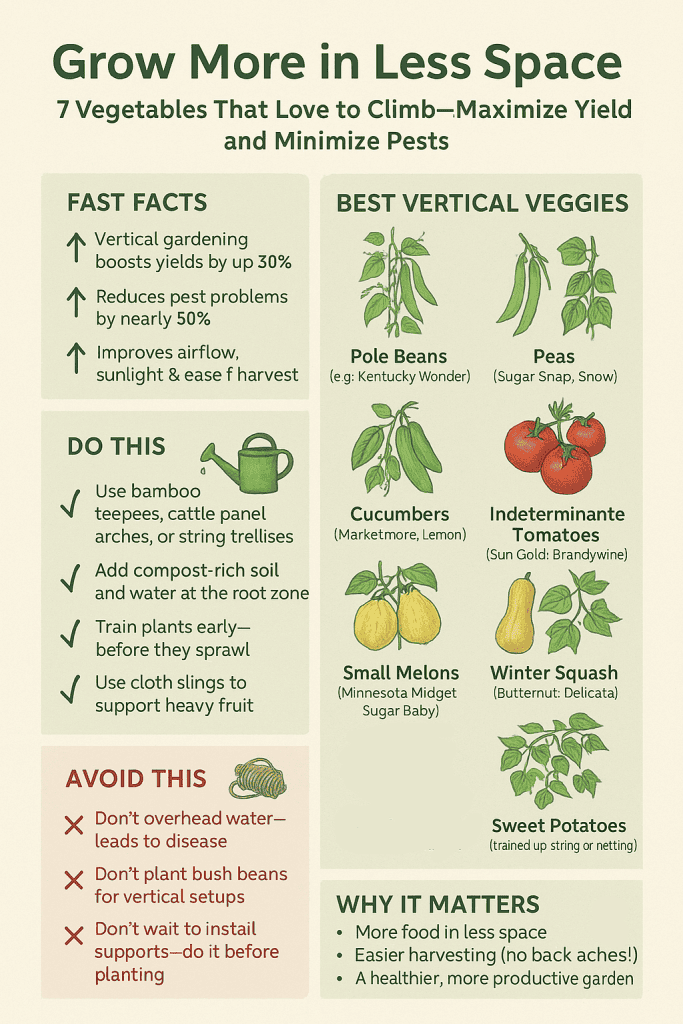
Your plants get better air circulation, more consistent sunlight, and you save your back from all that bending.
The benefits add up:
- Harvest more food from the same square footage
- Less time spent weeding and mulching
- Plants receive more consistent sunlight exposure
- Better air circulation means fewer disease issues
- Creates cool spots for heat-sensitive crops below
- Easier to spot and control pests
- Much easier on your back at harvest time
- Direct water to the roots instead of wasting it
Your neighbors will probably ask what you’re doing differently when they see the results.
The 7 Best Vegetables for Growing Vertically
Not all vegetables are suited for vertical growing. These seven do particularly well when given something to climb:
1. Beans: The Natural Climbers
Beans climb easily up almost any structure with very little help from you. The main thing is choosing pole varieties instead of bush varieties.
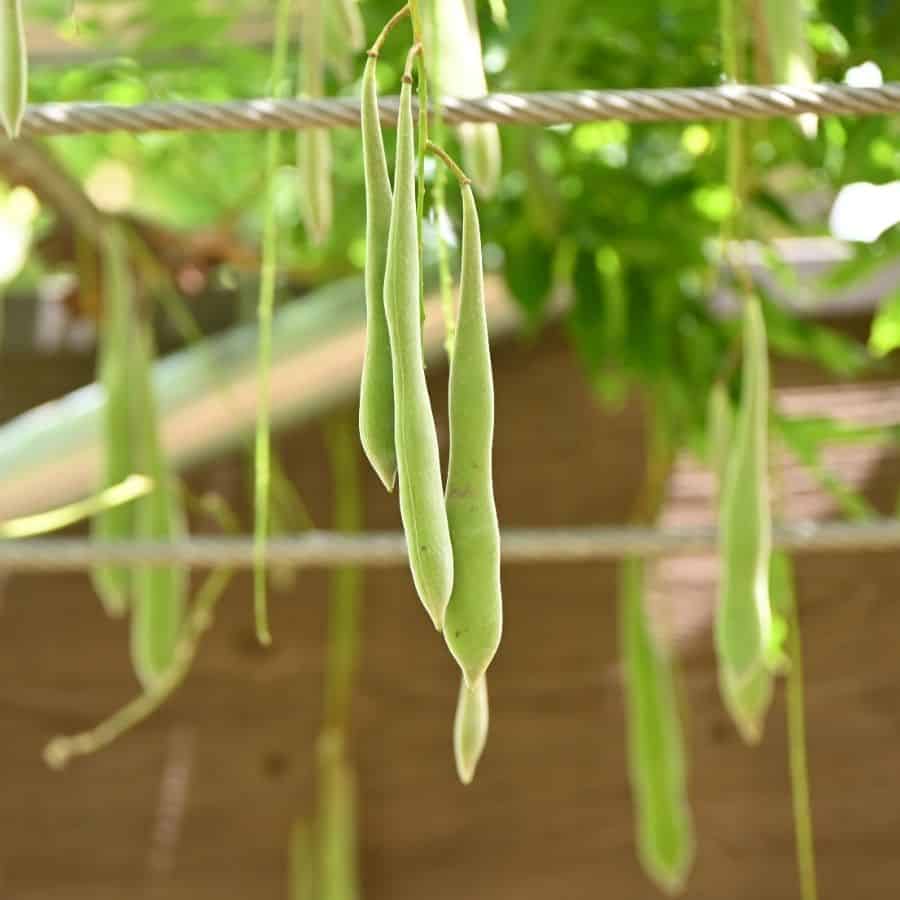
Best for vertical growing: Kentucky Wonder, Scarlet Runner, and Purple Pod pole varieties will grow vigorously and produce plenty of beans throughout the season.
2. Peas: The Tendrilled Wonders
Those tiny curling tendrils on pea plants are perfect for climbing. Peas will spiral their way up almost anything you provide.
One nice thing about peas: they actually prefer cooler temperatures and start to struggle above 75°F. Plant them early, and they’ll produce well before your summer crops really get going.
Good varieties: Alderman (reaches 6 feet tall), Super Sugar Snap, and Oregon Sugar Pod II
3. Cucumbers: The Prolific Producers
Cucumbers grown vertically produce straighter fruits and are less likely to develop bitter flavors. Studies back this up.
These plants need consistent moisture. Their shallow roots mean a good mulch layer helps keep them happy. Don’t let them dry out.
Reliable varieties: Marketmore (disease-resistant), Burpless (perfect for fresh eating), and Lemon cucumber (looks like a lemon, tastes like a cucumber)
4. Tomatoes: The Support Seekers
Tomatoes don’t climb on their own, but they do great with support. The key is choosing indeterminate varieties. The ones that keep growing all season rather than staying compact.
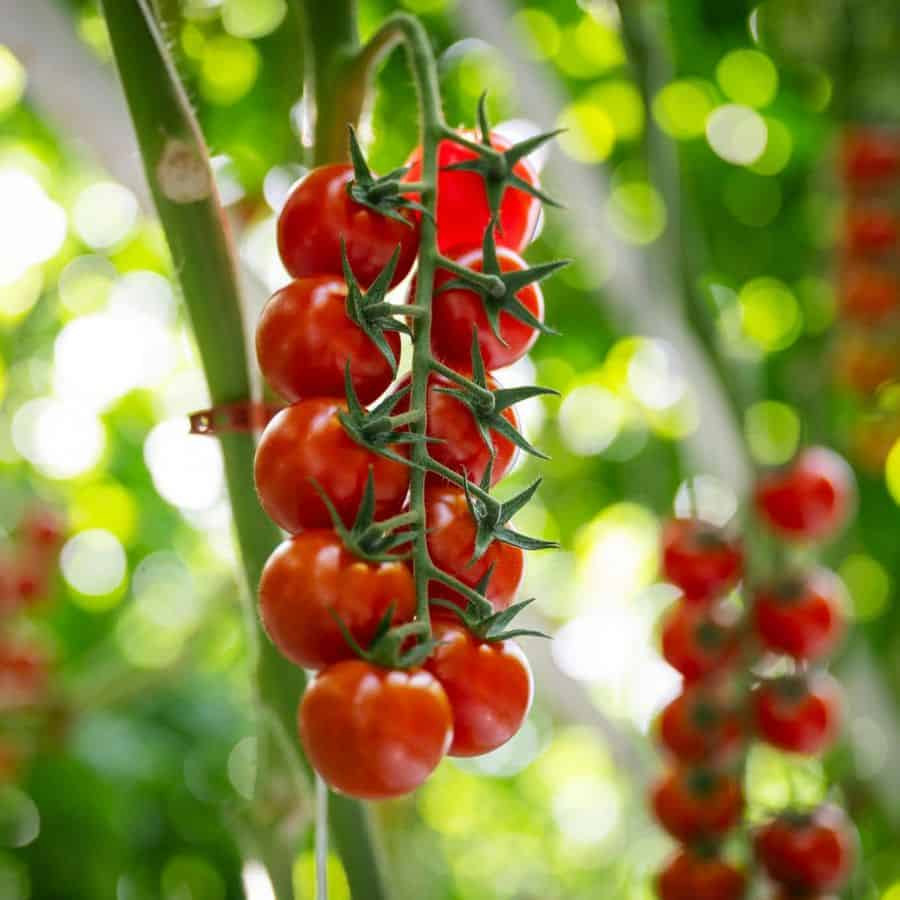
Given proper support, some varieties can reach 8-10 feet by season’s end. You’ll need to tie them to their supports as they grow since they won’t attach themselves.
Good vertical choices: Sun Gold (sweet cherry tomatoes), Brandywine (classic heirloom flavor), Better Boy (reliable producer)
5. Melons: The Surprising Climbers
Yes, you can grow melons vertically. The trick is creating slings from old t-shirts, nylon stockings, or mesh bags to support the developing fruits.
Growing melons this way saves space and can result in more uniform ripening, since the fruits receive consistent sunlight. They’re also much less likely to rot or get attacked by ground pests.
Best vertical varieties: Sugar Baby watermelon, Minnesota Midget cantaloupe, and Honey Rock melons. All smaller varieties that won’t break your trellis
6. Squash: The Space Hogs Gone Vertical
Squash plants will take over your entire garden if you let them sprawl. Training them upward saves a lot of space.
Summer squash, like zucchini, can grow vertically, but winter squash varieties are the real champions.
One tip: start training them upward when they’re young. They’ll adapt much better than if you wait until they’re already sprawling.
Worth trying: Tromboncino (an Italian variety that grows up to 3 feet long), Delicata, and Butternut squash
7. Sweet Potatoes: The Ground-and-Air Combo
You’ll harvest sweet potato tubers from the ground, but the vines are vigorous climbers that can create lush green walls. The leaves are edible too.
Sweet potatoes typically sprawl 6-8 feet in all directions, but training them vertically means you can grow them in much less space.
Solid varieties: Beauregard, Georgia Jet, and Vardaman (a more compact bush type)
Support Systems That Actually Work
You don’t need expensive or elaborate structures. Just sturdy, functional supports that can handle the weight.
Here are some options that work well:
- Bamboo Teepees: 5-7 bamboo poles secured at the top—perfect for beans and peas
- Cattle Panel Arches: These bend into nice arches that support even heavy fruits
- Simple Stakes: Work great for tomatoes. Just tie plants gently as they grow
- Repurposed Materials: Old ladders, bed frames, or sturdy branches all work
- String Trellises: Posts with horizontal supports and vertical strings create a simple growing wall
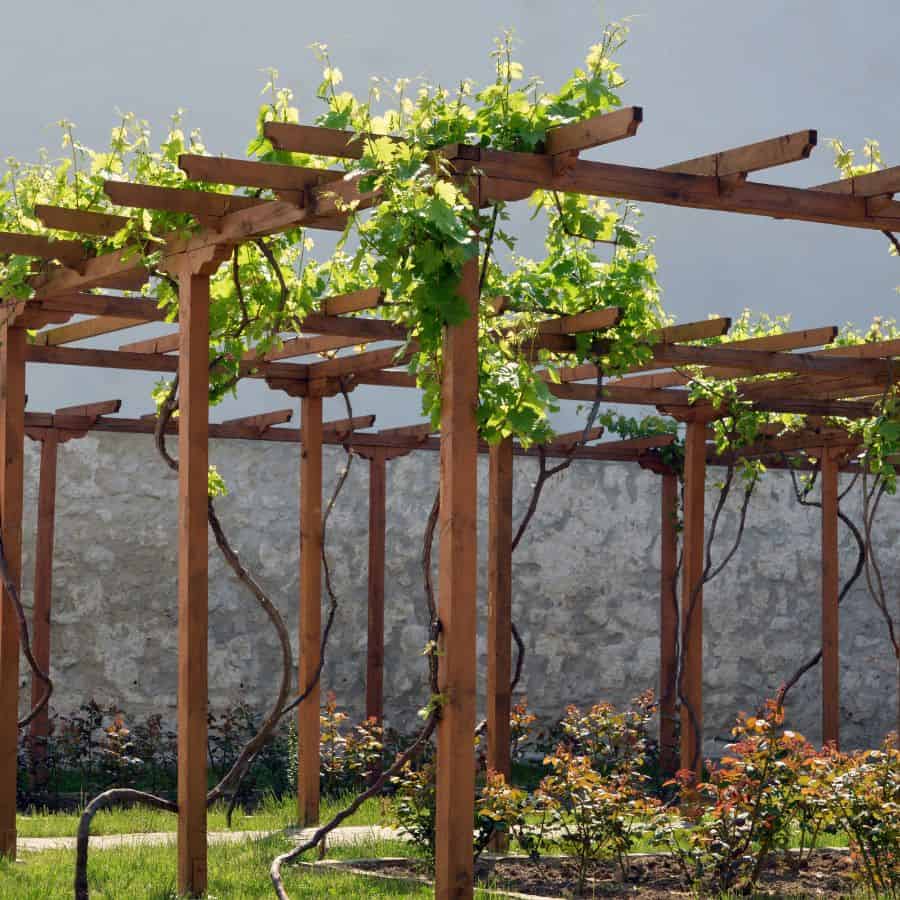
One important thing: install supports before planting or at the same time. Driving stakes through established roots can damage your plants.
Essential Growing Tips
Master these basics, and your vertical garden will do well:
- Build good soil: Rich, well-draining soil in raised beds gives the best results
- Add compost: Feed in spring and fall to fuel those hungry climbers
- Mulch generously: Keeps roots cool and moist
- Stay on top of weeds: Vertical plants still compete with weeds for nutrients
- Water at the roots: Not the leaves. This helps prevent disease
- Choose a sunny spot: Position trellises where plants get at least 6 hours of direct sun
- Train early: Guide plants upward when young, don’t wait until they’re sprawling
Growing your garden vertically gives you more food from the same space. It’s easier on your back, makes harvesting simpler, and helps prevent pest and disease problems.
Start with just one vertical element this season and see how it goes. You can always add more next year.