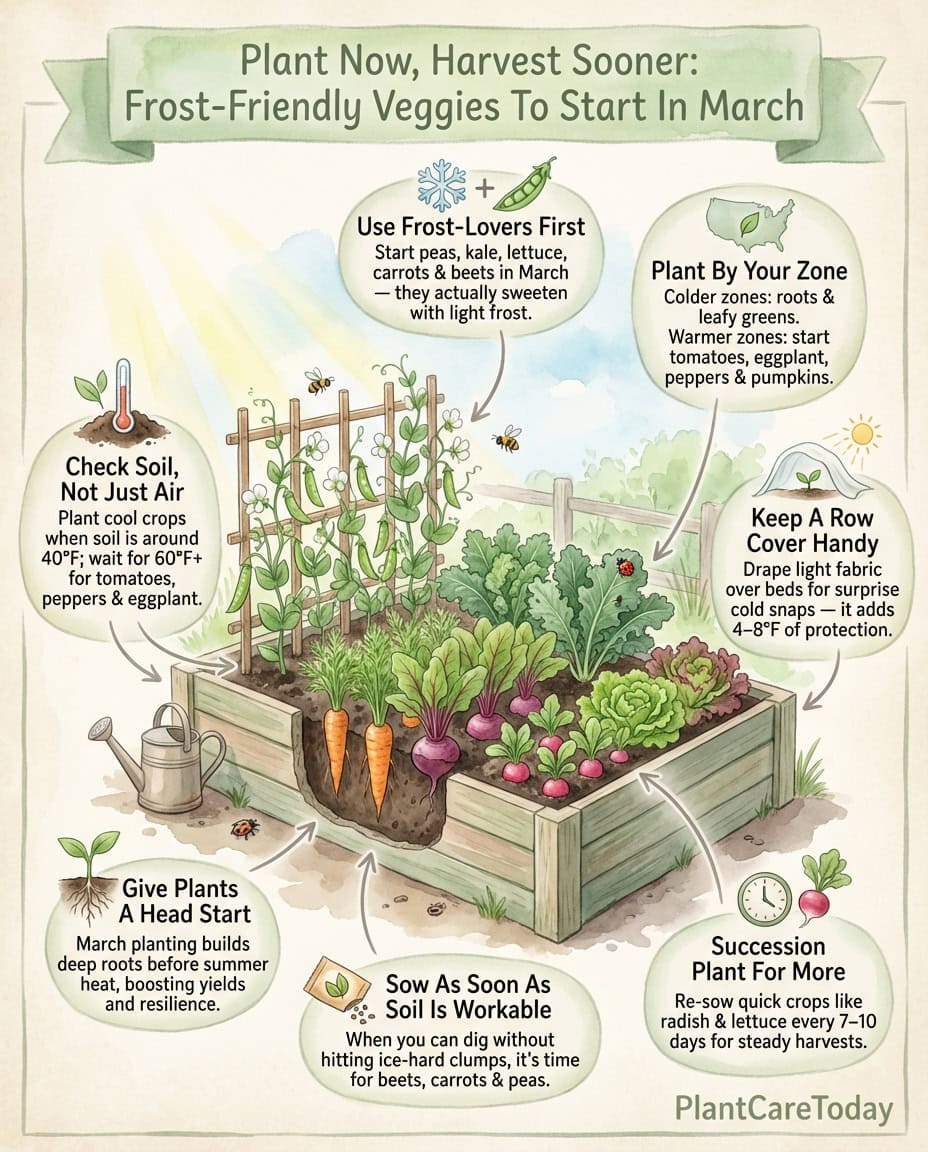
March marks the end of winter and the start of your garden’s growing season. While many people wait until it’s warmer, you can start planting now and get a jump on your harvest.
The best part? Some vegetables actually taste better after a bit of frost.

Why March Planting Works
March is a smart time to start your vegetable garden. As the ground thaws and the soil begins to warm, seeds can develop strong roots before summer heat arrives.
Vegetables planted in March often produce higher yields than those planted later in spring because they get that early head start.
The real trick to a successful vegetable garden isn’t expensive equipment or special fertilizers. It’s timing. Let’s look at what to plant in March based on your growing zone.
Zone 1-3: Cold-Climate Vegetables
Living in the coldest zones doesn’t mean you’re stuck waiting until May. These vegetables actually do well in cooler conditions:
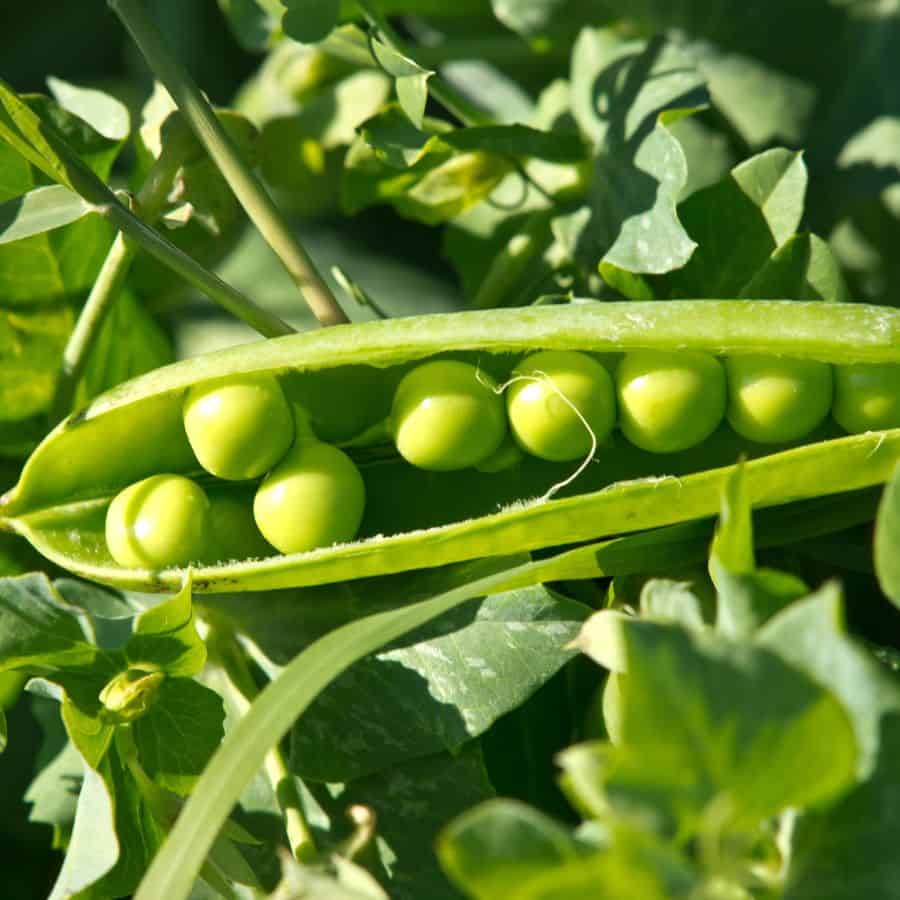
• Peas: These handle frost well and actually taste sweeter because of it. Direct sow outdoors for harvest in 8-10 weeks. Sugar snap varieties work especially well.
• Kale: Gets noticeably sweeter after frost exposure. Plant in late March for harvest in 8-10 weeks.
• Lettuce: Very cold-hardy, making it a good choice for early March planting in cold zones.
Zone 4-5: Root Vegetables
As March brings milder temperatures to these zones, focus on root vegetables:
• Radishes: These grow quickly and add nice color to your garden and plate. Their fast growth cycle means you’ll see results soon.
• Beets: Once your soil is workable, these can go straight into the ground. They develop deeper color and flavor as they mature.
• Asparagus: This perennial needs that early-season chill to develop its full flavor. Plant in mid to late March when the soil can be worked. These will produce for up to 20 years.
Zone 6-7: The Middle Ground
These moderate zones work well for a wide range of March plantings. Don’t wait until April. These vegetables are ready now:
• Spinach: Goes from seed to harvest in just 6-8 weeks when planted in March’s cool conditions.
• Potatoes: March planting gives these a good head start before summer heat. Wait until the harshest frosts pass, then plant.
• Carrots: Frost exposure actually makes carrots sweeter and crunchier. Plant 4-6 weeks before your last frost date for harvest in about 8-10 weeks.
Zone 8-9: Warm Climate Options
Your mild climate means you can start these summer vegetables earlier than most gardeners:
• Eggplant: Can go into the ground by mid-to-late March once frost risk has passed. Your early start means earlier harvests.
• Pumpkin: Late March planting in your climate gives pumpkins an advantage. Your October jack-o’-lanterns start their journey in March.
• Tomatoes: March-planted tomatoes establish strong root systems that help them handle summer heat better than later plantings.
Zone 10: Year-Round Growing
Your nearly frost-free climate means March is a great time for these vegetables:
• Celery: Does well in your zone’s mild March conditions. Plant after any unexpected frost threats.
• Broccoli: Prefers cooler conditions. Plant 6-8 weeks before your last frost date to take advantage of the remaining cool weather.
• Peppers: March’s gentle temperatures in Zone 10 work well for peppers of all varieties. While northern gardeners are dealing with snow, you’ll be planting for summer.
Tips for March Planting Success
Here’s how to make sure your early plantings do well:
• Test soil temperature, not just air temperature. Most cool-season vegetables germinate when the soil reaches 40°F, while warm-season varieties need at least 60°F.
• Use row covers for unexpected cold snaps. They can provide 4-8 degrees of protection, which can make all the difference.
• Start succession planting with fast-growing vegetables like radishes and lettuce. Plant small batches every 7-10 days for continuous harvests rather than a single big crop.

The difference between new and experienced gardeners often comes down to planning ahead. While others wait for “safe” planting times, you’ll be weeks ahead with established plants ready to grow as temperatures rise.
Check your zone, grab your seeds, and get started. Your summer self will appreciate it when you’re harvesting vegetables while others are just beginning to plant.