Forget everything you thought you knew about privacy plants. Those boring, boxy hedges that need constant trimming? They’re pretty outdated.
I was surprised to learn that some of the best autumn performers can also serve as privacy screens, creating boundaries with seasonal color rather than plain green walls.
Privacy That Transforms With the Seasons
Here’s what matters most: privacy doesn’t have to be permanent to be effective. While evergreens work year-round, deciduous plants that lose their leaves can create seasonal privacy screens that fill your garden borders with color.
Think of these plants as functional and colorful at the same time. Why settle for a static hedge when you could have a living boundary that transforms with each season?
A strategic mix of deciduous and evergreen plants can create privacy screens that change throughout the year while maintaining basic coverage. Your garden can look different all year long.
9 Privacy Plants That Shine in Fall
1. Oakleaf Hydrangea: The Seasonal Screen
This perennial grows up to 8 feet tall in zones 5-9, creating a nice mid-size privacy screen.

Summer brings showy blooms, but autumn is when this plant really shines. Its large, oak-shaped leaves turn deep shades of purple, crimson, and orange.
2. Fragrant Sumac: The Aromatic Boundary
Looking for a plant that creates both a visual and sensory barrier? Sumacs thrive in zones 3-9 and spread into dense thickets that easily fill garden gaps.
Their fall foliage turns bright reds and purples, releasing a pleasant fragrance that adds another dimension to your privacy border.
Watch out: these spread through suckers and can take over if you’re not careful. Give them space or be prepared to manage their growth.
3. Ninebark: The Tough Screen
This native, fast-growing plant is often overlooked as a privacy plant. Thriving in zones 2-7, ninebark displays golden and yellow autumn foliage (some varieties even have purple leaves year-round).
The best part about this privacy option is its ability to grow in poor soil conditions that would make other plants struggle.
4. Beautyberry: The Surprising Standout
Perfect for zones 5-11, beautyberry delivers exactly what its name promises. Its fall display combines nice foliage with clusters of bright purple berries that look almost too good to be real. Your neighbors will definitely notice when these catch the light.
Don’t panic when beautyberry leaves turn yellow or brown and drop. It’s completely normal for this plant.
5. Glossy Abelia: The Low-Maintenance Option
Reaching 8-10 feet tall in zones 5-9, glossy abelia is the privacy plant for busy people who still want good results.
With minimal care beyond occasional watering and trimming, you’ll get tubular flowers and richly colored foliage that creates a dense, living curtain around your outdoor space.

Semi-evergreen in warmer zones, this plant keeps some privacy intact even in winter, though it may shed more in colder regions.
6. Fothergilla: The Native Choice
This native shrub (zones 4-8) turns into a bright mix of red, orange, and yellow in fall after producing bottlebrush-like white flowers in spring.
Its dense, bushy growth creates natural privacy while remaining deer-resistant and pollinator-friendly.
This plant actually keeps out deer while attracting pollinators. Pretty smart choice for boundaries.
7. Red-Twig Dogwood: The Year-Round Performer
Red-twig varieties are surprisingly easy to grow in zones 2-8, with fall foliage in yellows, reds, purples, and oranges.
Here’s what makes them special: when other plants go dormant, these keep performing with bright red stems that look great against winter snow.
Pro tip: Prune older stems in late winter to encourage the brightest red twig color.
8. Virginia Creeper: The Vertical Solution
When you need privacy on vertical surfaces, this fast-growing vine (zones 3-9) transforms fences and walls into dense, colorful screens. Fall brings a big change as leaves turn brilliant shades of red.
The real trick is knowing when to skip certain options. Virginia creeper lives up to its name.
It’s aggressive and can damage structures if not managed carefully. New or busy gardeners should probably admire this one in other people’s yards.
9. Viburnum: The Tall Privacy Champion
Some viburnum cultivars can reach 20 feet tall in zones 2-9. These versatile shrubs make excellent informal hedges while giving you spring flowers and berries that attract songbirds.
Here’s what to know: research the specific variety’s growth habit before you buy. Some stay compact while others become small trees.
For year-round screening with seasonal interest, select evergreen varieties that maintain coverage through winter while still delivering seasonal changes.

Create Your Living Privacy Screen
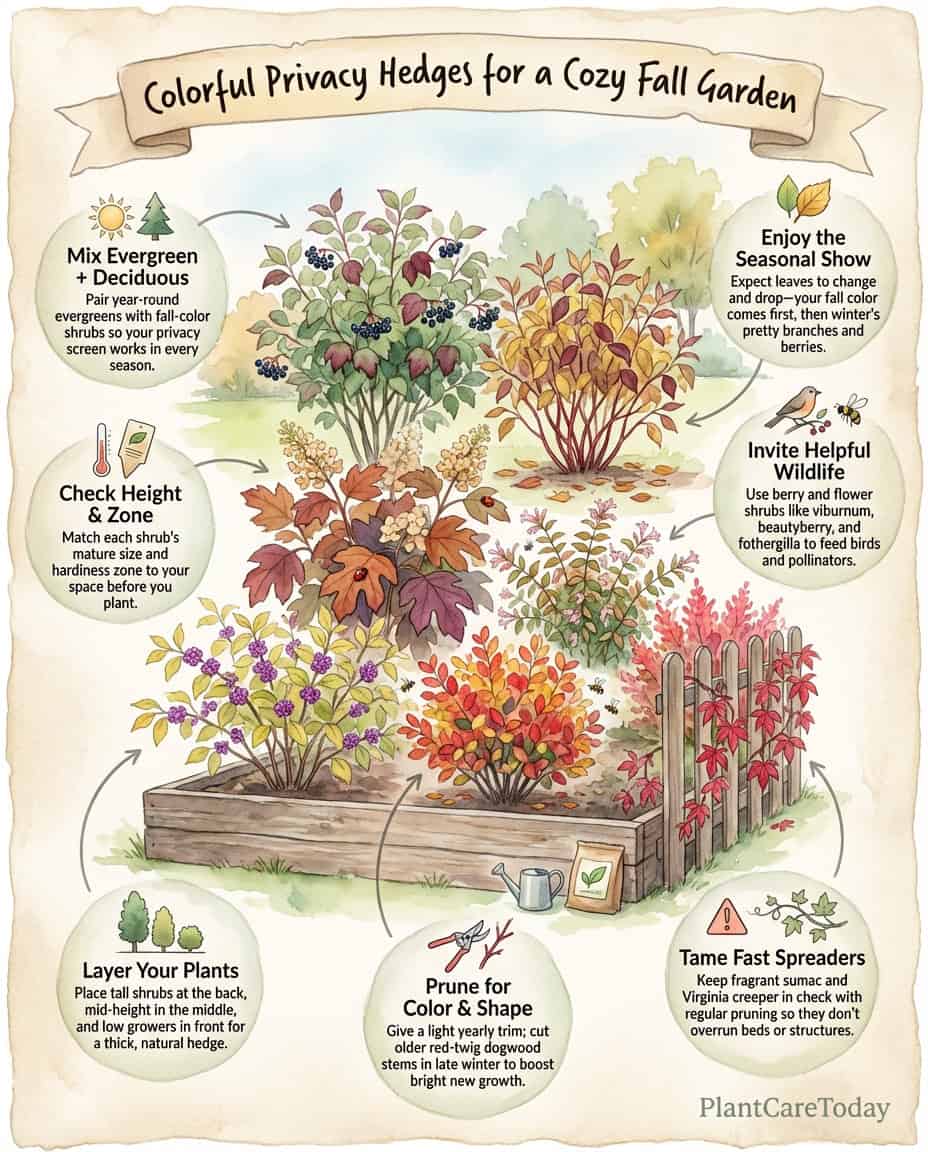
The best privacy borders combine several plant types for different heights, textures, and seasonal interest. Consider a layered boundary with:
• Tall viburnums create the backdrop
• Mid-height hydrangeas and dogwoods filling the middle
• Lower beautyberries and sumacs at the front
• Virginia creeper climbing strategically placed trellises
This layered planting creates not just privacy but a living border that transforms through the seasons, particularly in autumn when the entire screen fills with color.
Your garden is an extension of your home that deserves the same thought as any room in your home. These privacy plants create natural “walls” that deliver far more visual interest than any fence could.
The real benefit is that these plants do double duty, providing both the privacy you need and the fall color display that makes autumn gardens special. Why settle for one when you can have both?