Is your relationship with your roses on the rocks? Those gorgeous blooms are giving you the silent treatment for a reason. They’re hungry.
The difference between sad, wimpy roses and pretty, head-turning blooms comes down to just a few strategic feedings per year.
Why Your Roses Need So Much Food
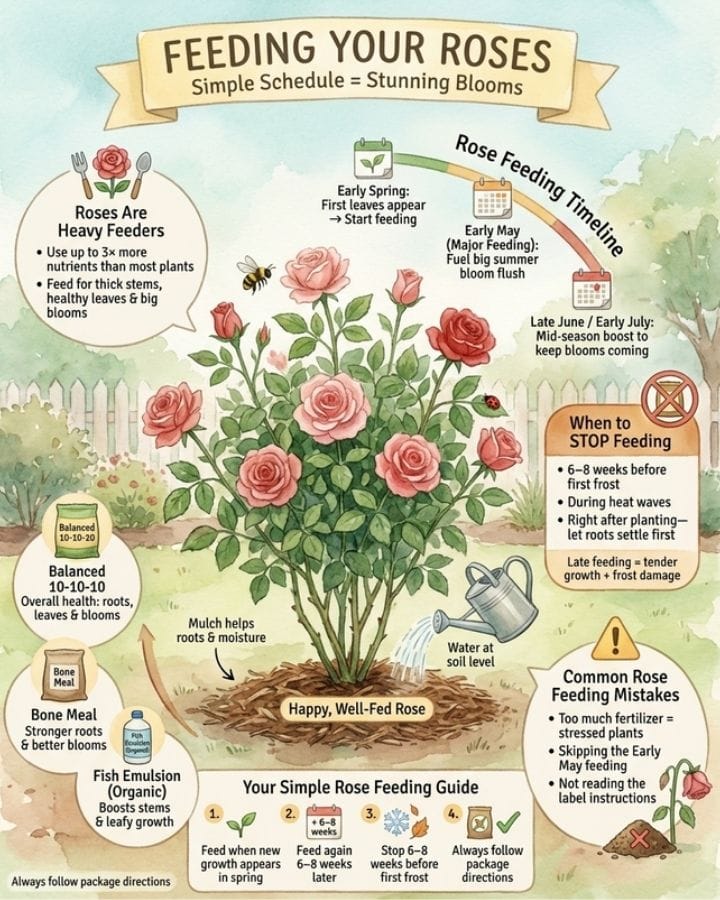
Forget what you’ve heard about roses being dainty or delicate. These flowering plants eat a lot. Roses actually consume up to 3 times as many nutrients as most garden plants.
That’s not just hungry. That’s seriously hungry.

Those science fair roses you grew in elementary school using plain dirt? They were just surviving. But in your garden, you don’t want roses that merely survive.
You want them to thrive with thick stems, healthy foliage, and blooms that actually look good.
The best part is that getting there is simpler than you might think.
The Feeding Timeline That Works
What really matters for your roses isn’t expensive products or complicated techniques. It’s timing. Here’s the schedule that works:
• Early Spring: Feed when you see the first fresh leaves sprouting. Your roses are waking up from their winter rest and need fuel.
• Early May: Your first major feeding fuels the big flush of summer blooms. Don’t skip this one.
• Late June/Early July: This second feeding keeps the show going through summer. Think of it as a mid-season boost.
I was surprised to learn that nearly 65% of home gardeners completely miss that early May feeding, and then wonder why their blooms are disappointing.
When to STOP Feeding
Here’s what matters most: knowing when to stop feeding is just as important as knowing when to start. Late-season fertilizing creates tender new growth that frost will kill.
Never fertilize when:
• Fall is transitioning to winter
• During extreme heat waves
• Right after planting (let those roots get established first)
When seasons change, your roses need to prepare for dormancy, not gear up for growth. Give them that chance.
3 Good Fertilizer Options for Roses
Not all plant food is created equal. These three options work well for roses:
• Balanced 10-10-10 Fertilizer: The reliable all-arounder. It provides everything roses need for overall health. Strong roots, healthy foliage, and nice blooms.
• Bone Meal: The root booster and bloom enhancer. This slow-release phosphorus option helps roses develop stronger foundations and better flowers over time.
• Fish Emulsion: The organic option. Yes, it smells pretty bad, but it delivers nitrogen that helps weak, leggy stems become sturdy and healthy. The difference is real.
Quick note: If your neighbors complain about the fish emulsion smell, offer them some cut roses as a peace offering.
Common Rose Feeding Mistakes
Most people make this mistake with their roses: they think more fertilizer equals more blooms. It doesn’t. Overfertilizing can actually harm your plants.
The difference between new and experienced gardeners is simple: following the instructions on the package. Those measurements aren’t suggestions. They’re formulas for success.
For younger roses, consider using a fertilizer with higher nitrogen content. It helps them build fundamental strength before they focus on blooming.
Your Simple Rose Feeding Guide
Here’s the simplest rose-feeding approach:
- Feed when new growth appears in spring
- Give a second feeding 6-8 weeks later
- Stop feeding 6-8 weeks before the first frost
- Always follow package instructions

That’s it. This isn’t rocket science. It’s just giving these plants what they need when they need it.
Roses don’t need complexity. They need consistency. Feed them right, and they’ll reward you with a show that keeps on giving.