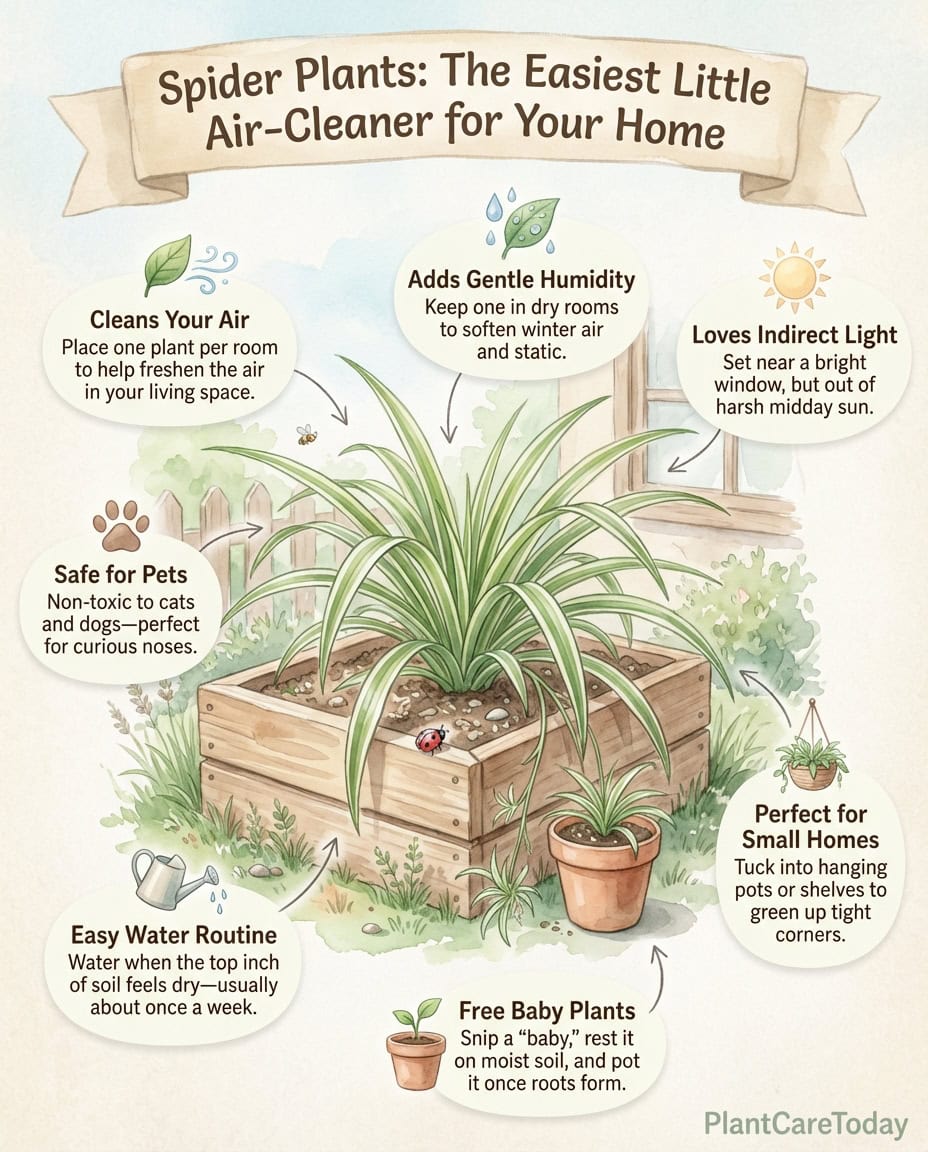
Forget everything you thought you knew about houseplants. That spider plant sitting quietly in your friend’s kitchen?
It’s not just a pretty face with striped leaves. It’s working hard to improve your living space.
I was surprised to learn that this simple plant, often overlooked in favor of trendier options, is actually an excellent solution for just about everyone.
Whether you kill every plant you touch or have a green thumb, here’s why your home could use at least one.
NASA’s Secret Weapon Against Indoor Air Pollution
Your home has invisible problems. Formaldehyde from furniture, benzene from cleaning products, and xylene from paints are contaminating your air.
But here’s the best part: spider plants are excellent air purifiers that NASA actually studied for their ability to remove these toxins.
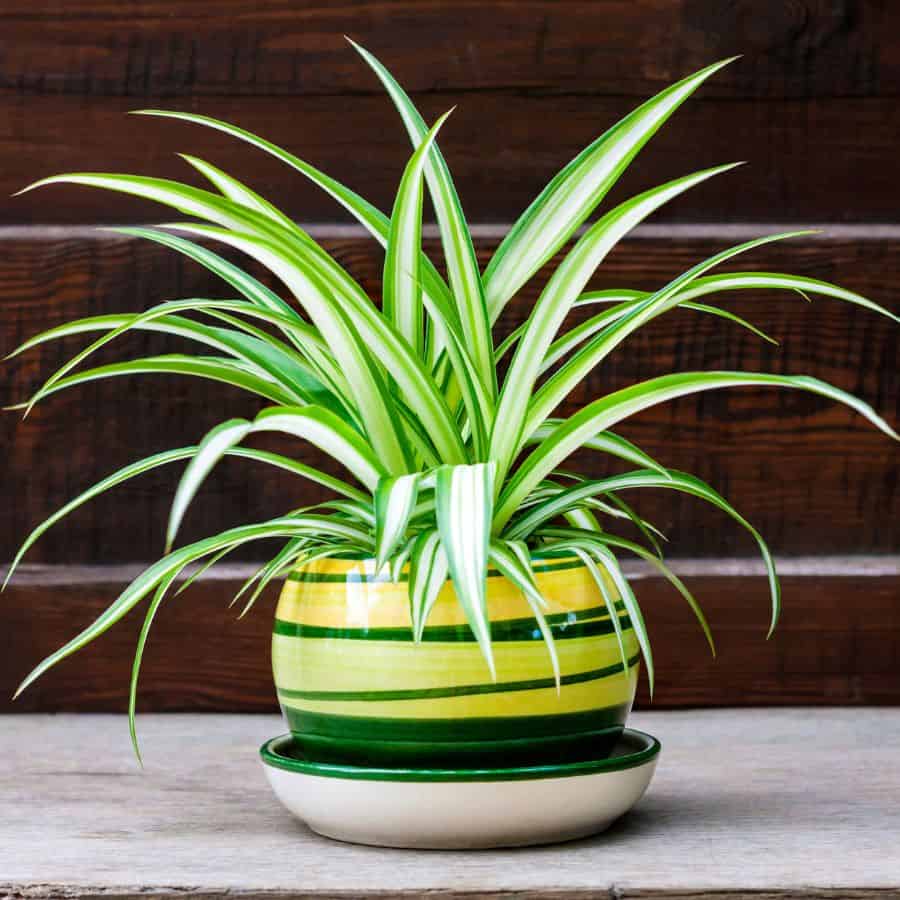
Through their leaves and roots, these plants absorb harmful compounds, convert them into harmless substances, and release fresh oxygen. It’s like having a living air filter that never needs replacing.
One medium-sized spider plant can clean about 100 square feet of air space. Not bad for such a simple plant.
The “Impossible to Kill” Champion
Most people make this mistake with houseplants: they choose high-maintenance varieties that die with the slightest neglect. Spider plants are different.
They need minimal attention and survive conditions that would kill other plants. Forget to water for a week? They’re fine. Less-than-perfect light? They’ll adapt.
Here’s what they need:
• Light: Bright indirect light is best, but they’ll tolerate low light
• Water: Wait until the topsoil feels dry (roughly once a week)
• Temperature: 65-75°F (18-24°C) – basically, if you’re comfortable, they are too
The Plant That Won’t Poison Your Fur Babies
The difference between new and experienced plant parents is knowing which plants are safe for pets . Spider plants are non-toxic to cats and dogs, making them a safe choice for animal lovers.
Your curious cat might get a mild tummy ache from chewing the leaves (they contain compounds that can have a slightly hallucinogenic effect in cats, which explains why felines find them so appealing). But there’s no serious risk of poisoning.
Compare that to lilies, which can kill a cat with just a few licked pollen grains.
Nature’s Humidifier (Your Skin Will Thank You)
Your spider plant is releasing moisture through a process called transpiration. This natural humidity boost helps prevent:
• Dry, flaky skin
• Irritated respiratory passages
• Static electricity zaps
• Dried-out wooden furniture
During the winter months, when indoor heating dries everything out, these plants become even more valuable. It’s like having a humidifier that never needs refilling.
Small Space? No Problem
Living in a tiny apartment doesn’t mean sacrificing greenery. Spider plants stay compact but look great in different displays.
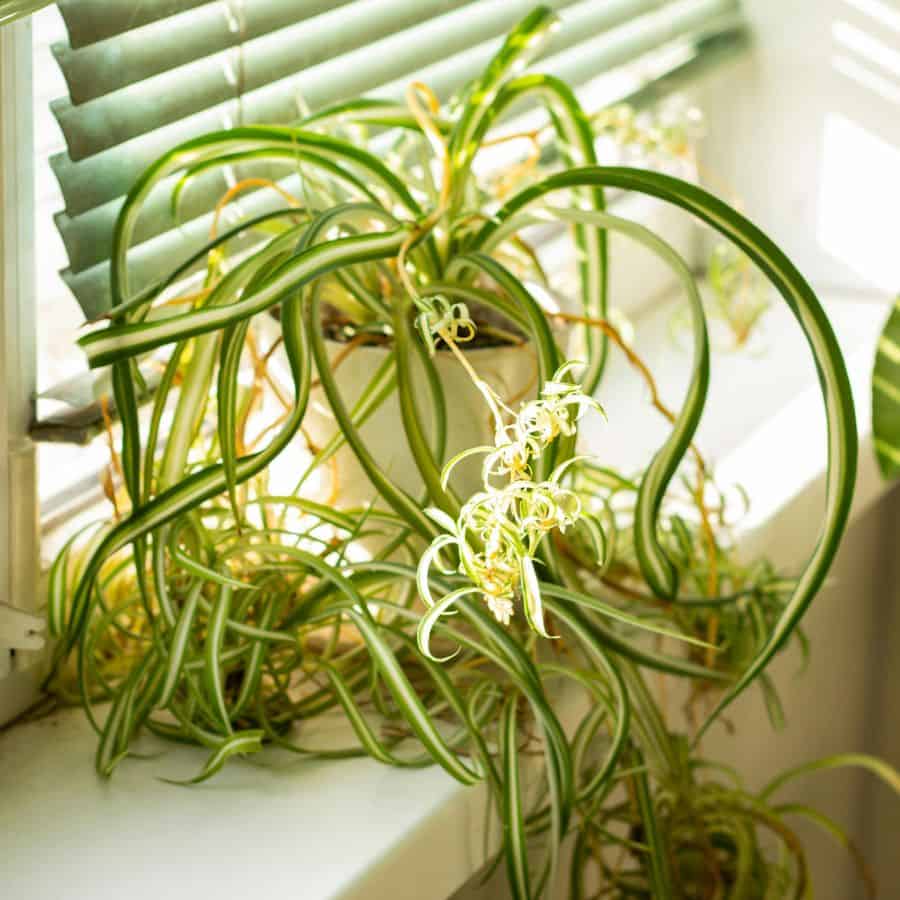
Their cascading growth habit makes them perfect for:
• Hanging in macramé holders near windows
• Perching on bookshelves where their arching leaves create a nice overflow
• Sitting atop cabinets where they can drape downward
They add dimension to even the smallest spaces, turning empty corners into appealing plant displays.
The Green Antidepressant
Research shows that interacting with houseplants reduces psychological and physiological stress. Spider plants’ gentle presence creates a connection to nature that can:
• Lower cortisol levels (the stress hormone)
• Boost concentration and productivity
• Elevate mood and promote a sense of well-being
In our screen-dominated world, these living stress-reducers provide a much-needed reset. Think of them as meditation partners that don’t require an app subscription.
The Plant That Makes Babies (For Free)
Here’s what matters most: you don’t need to buy multiple plants. Spider plants produce babies (called “spiderettes”) that dangle from long stems.
These ready-to-plant offspring mean you can:
• Expand your plant collection without spending money
• Give meaningful, living gifts to friends and family
• Trade with other plant enthusiasts for variety
Snip off these babies once they develop small roots, plant them in soil, and watch your plant collection grow. It’s like getting free plants from your original purchase.
The Budget-Friendly Botanical
While trendy houseplants can cost over $100, spider plants remain affordable – often under $15 for a good-sized plant. Factor in their long lifespan and self-propagating nature, and they might be the best value around.
They’re not the flashiest option, but they’re incredibly reliable, cost-effective, and still going strong when flashier varieties have died.
Ready to Transform Your Space? Here’s How to Start
Bringing spider plants into your life is easy. Please place them in bathrooms where they’ll enjoy the shower humidity.
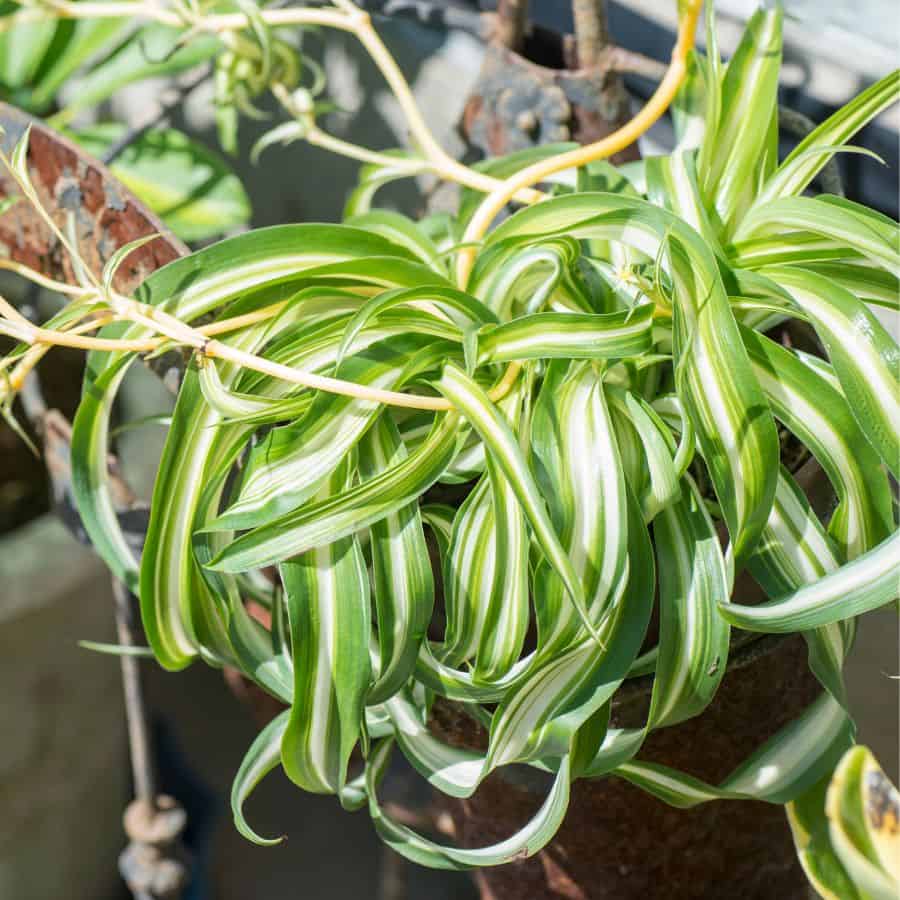
Add them to kitchen windowsills for a touch of life. Or let them work their air-purifying magic in bedrooms for better sleep.
If you notice brown leaf tips, switch to filtered water. Spider plants are sensitive to fluoride in tap water. Otherwise, give them a drink when the soil feels dry and enjoy watching them grow with minimal effort.
These plants aren’t just decorations. They’re hardworking helpers in creating a healthier, more comfortable home. Not bad for a plant that basically takes care of itself, right?