Did you know that herbs can thrive with nothing but water and a sunny windowsill? No potting soil, no pests, and no complicated fertilizers.
I was surprised to learn that some herbs actually grow better in water than in traditional gardens.
This technique, called water propagation, is making a comeback, and it’s easier than you might think.
Why Your Kitchen Needs a Water Herb Garden
Let’s be honest. Growing herbs can feel like a lot of work sometimes. But water propagation is different. It’s low-maintenance and surprisingly simple.
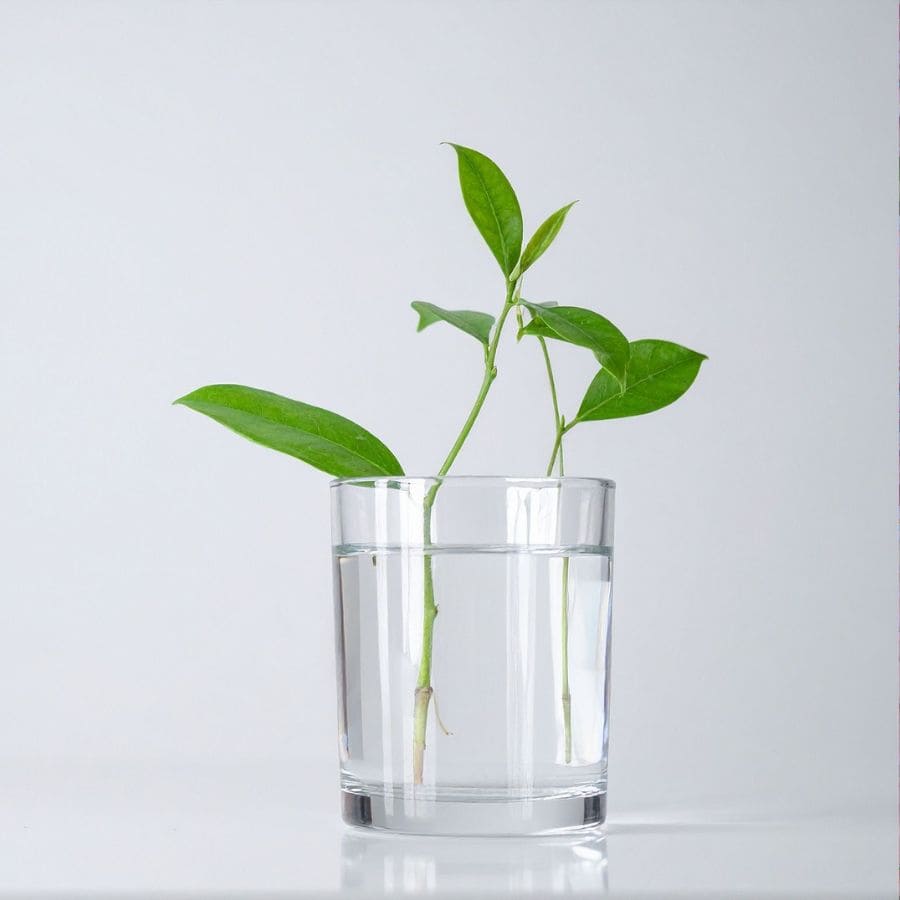
Here’s why it’s worth trying:
• No mess: No soil means no dirt under your fingernails or scattered across your countertops
• Apartment-friendly: Perfect for small spaces where traditional gardening isn’t an option
• Year-round harvest: Fresh herbs even in winter
• Budget-friendly: Americans spend over $2 billion annually on herbs and spices. This method costs pennies
• Sustainable: Reuse kitchen scraps and reduce waste while growing your own food
Your Water Garden Starter Guide: The No-Fail Method
The real trick is that water propagation is almost foolproof when you follow these simple steps. Here’s what matters most:
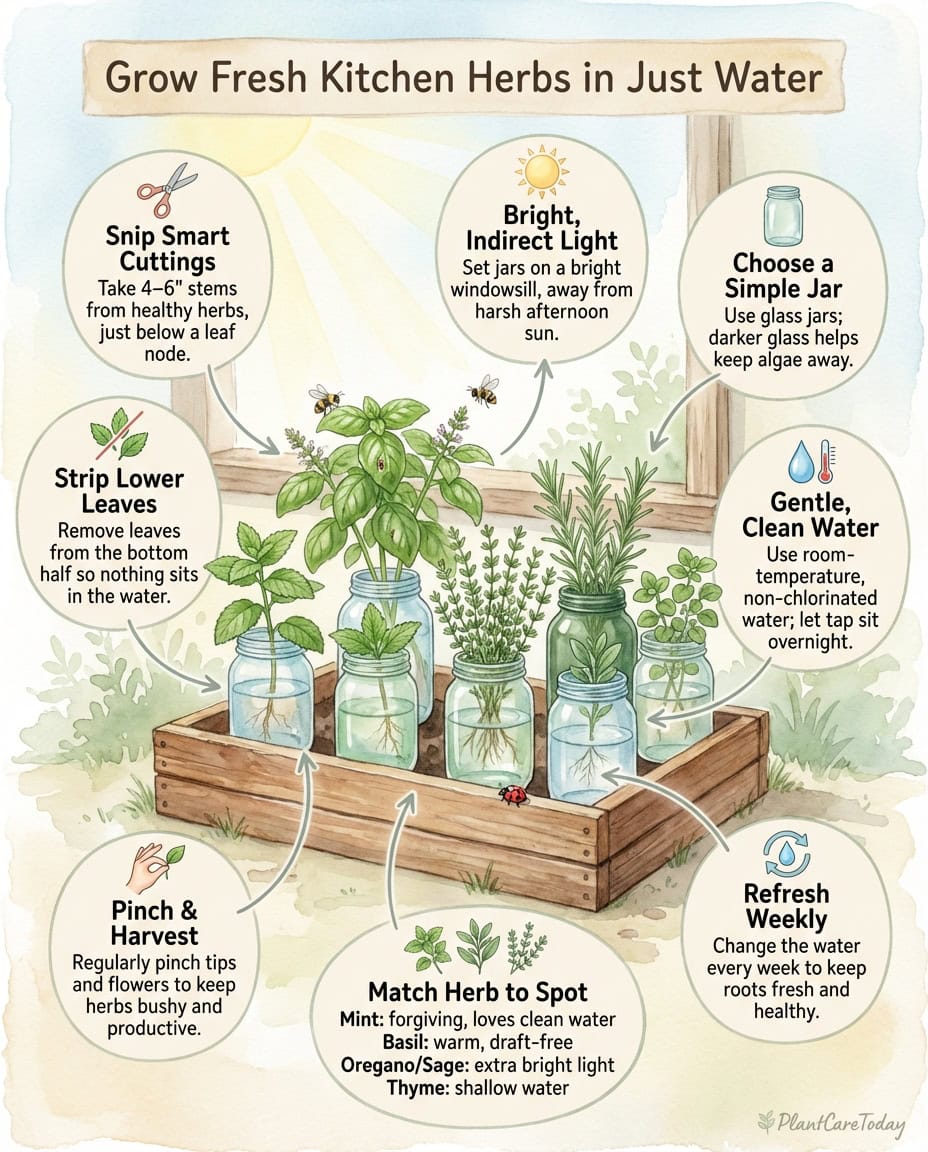
Snip strategically: Cut 4-6 inch sections from healthy herbs, just below a leaf node (where leaves meet the stem)
Strip the lower leaves: Remove leaves from the bottom half to prevent rot
Choose the right container: Glass jars work well. Dark-colored ones prevent algae
Water matters: Use room temperature, non-chlorinated water (let tap water sit overnight if needed)
Light it up – Place near a window with bright, indirect light. Think gentle sunlight, not harsh afternoon rays
Weekly water change – Refresh water weekly to keep things clean
The 12 Best Water-Loving Herbs
Not all herbs work equally well in water. These 12 varieties do exceptionally well. They’re reliable, forgiving, and productive.
1. Basil: The Speedy Grower
Basil sprouts roots within a week. It does well in warm, sunny spots and will keep producing for months if you harvest regularly.
Pinch off any flower buds and keep them away from cold drafts.
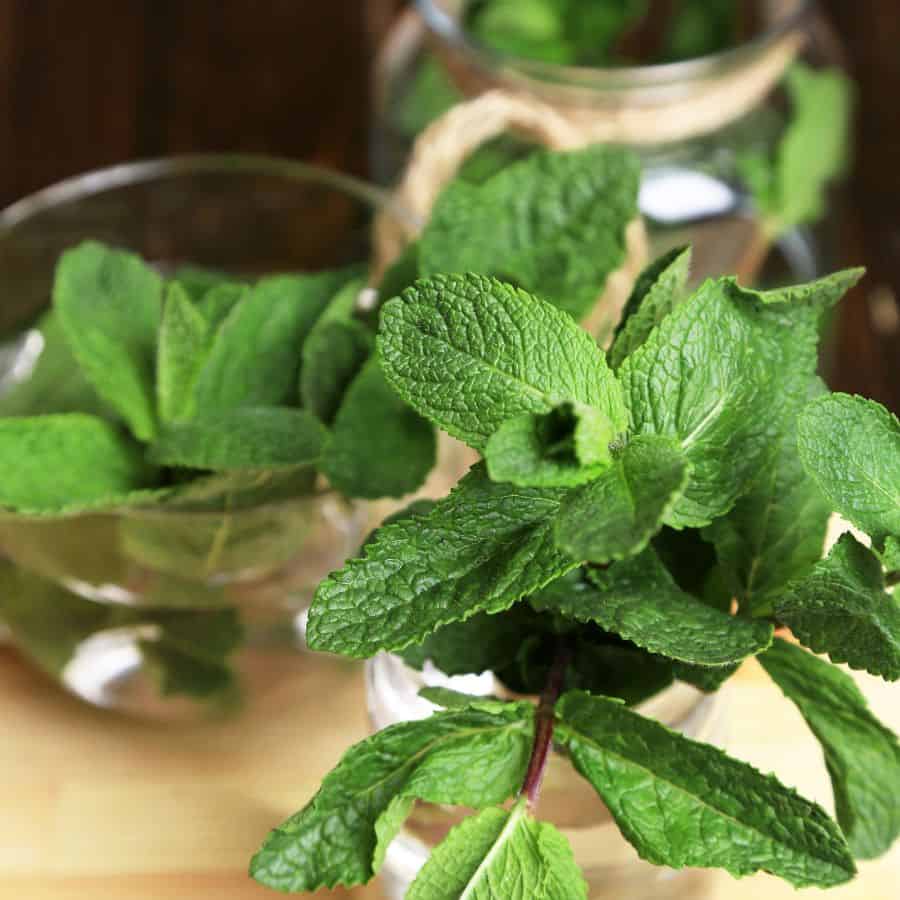
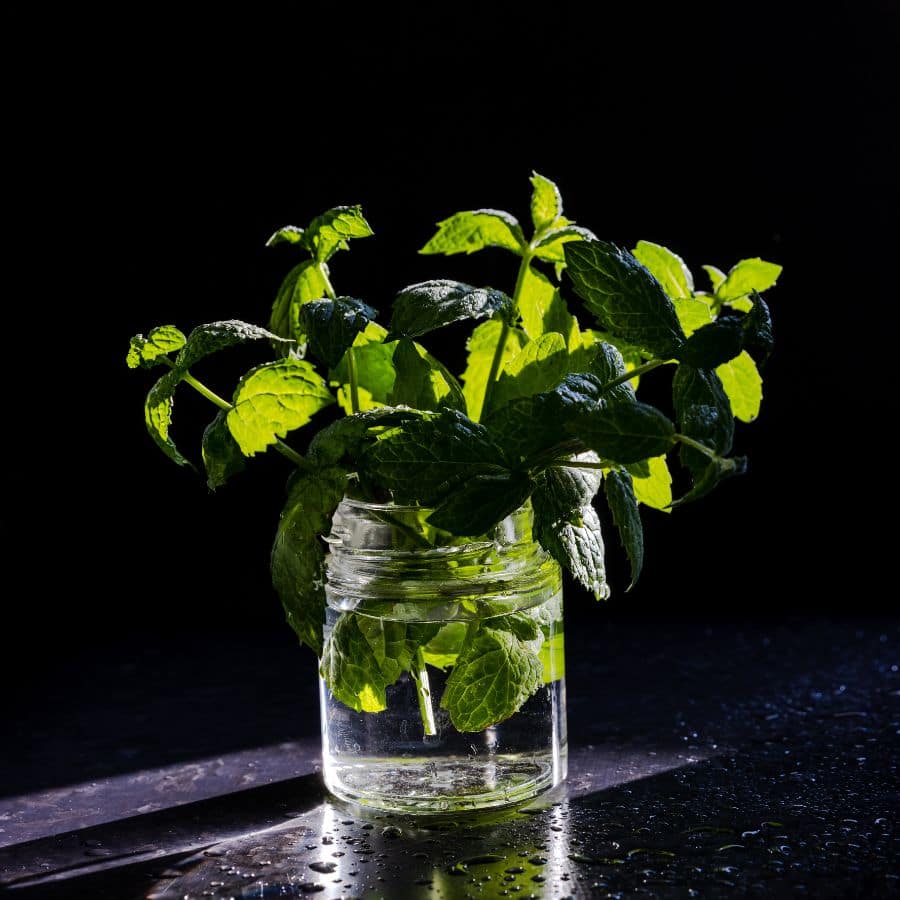
2. Mint: The Nearly Indestructible One
If you’ve ever killed a plant, mint will restore your confidence. It grows fast and does well in indirect light. The key is changing the water often. Do that, and this herb will flourish.
3. Oregano: The Mediterranean Favorite
This flavor powerhouse adapts well to water growing. Give oregano at least 6 hours of bright light daily. For even better results, add a few drops of liquid seaweed fertilizer monthly.
4. Thyme: The Low-Maintenance Choice
Thyme roots well in water and keeps producing for months. Here’s what helps most: keep the water shallow. This herb doesn’t like sitting in too much water, even when grown this way.
5. Rosemary: The Slow-But-Steady One
Rosemary takes 3-4 weeks to root, but once established, it does well. Use young, green stems rather than woody ones. If your home is dry, mist the leaves regularly.
6. Sage: The Aromatic Healer
Sage grows more slowly in water but rewards patience with a strong flavor. It likes bright light and does better with filtered water to prevent spotty leaves. Use it for cooking or even as a throat soother.
7. Stevia: The Sweet Surprise
Stevia is actually simple to grow in water. This natural sweetener develops roots in just 7-10 days and can replace sugar in your drinks and recipes with zero calories.
8. Tarragon: The French Delicacy
French tarragon is hard to grow from seed, but water propagation gets around that problem entirely.
Take cuttings in spring or early summer and enjoy its subtle licorice flavor year-round. Unlike other herbs, tarragon actually prefers cooler indoor temperatures.
9. Chives: The Rapid Regrower
Chives are probably the easiest herb to grow this way. Simply place the white root ends in water and watch them regrow again and again. They keep producing after each cutting.
10. Lemon Balm: The Stress Reliever
This mint cousin offers a nice citrus scent and grows well in water. Beyond cooking, lemon balm can help with stress and sleep. Harvest regularly before it flowers for the best flavor.
11. Cilantro: The Love-It-Or-Hate-It Herb
Cilantro in water is great if you use it often in cooking. It prefers cooler conditions (unlike many herbs), so keep it away from hot afternoon sun. Change the water regularly and it’ll keep producing.
12. Parsley: The Patient Powerhouse
Parsley takes its time (3-4 weeks) to develop roots, but its nutritional value makes it worth the wait.
Rich in vitamins A, C, and K, it’s like growing your own multivitamin. Harvest the outer stems first, and watch them continue to produce new growth.
Take Your Water Herb Garden to the Next Level
Want better results? These tips will help your water garden produce even more:
• Rotate regularly: Turn your containers every few days to prevent plants from leaning toward the light
• Boost nutrition: After a month, add a drop of liquid fertilizer to the water weekly
• Control temperature: Keep herbs away from drafts, AC vents, and radiators that cause temperature swings
• Prevent algae: Use amber glass jars or wrap clear containers with paper to block light from reaching the water
• Humidity helps: Group containers together to create better humidity for your herbs
With nothing more than some water, recycled jars, and a sunny window, you can create an indoor herb garden that produces fresh herbs year-round.
It’s cheaper than buying them at the store, and that empty windowsill will finally have a purpose.