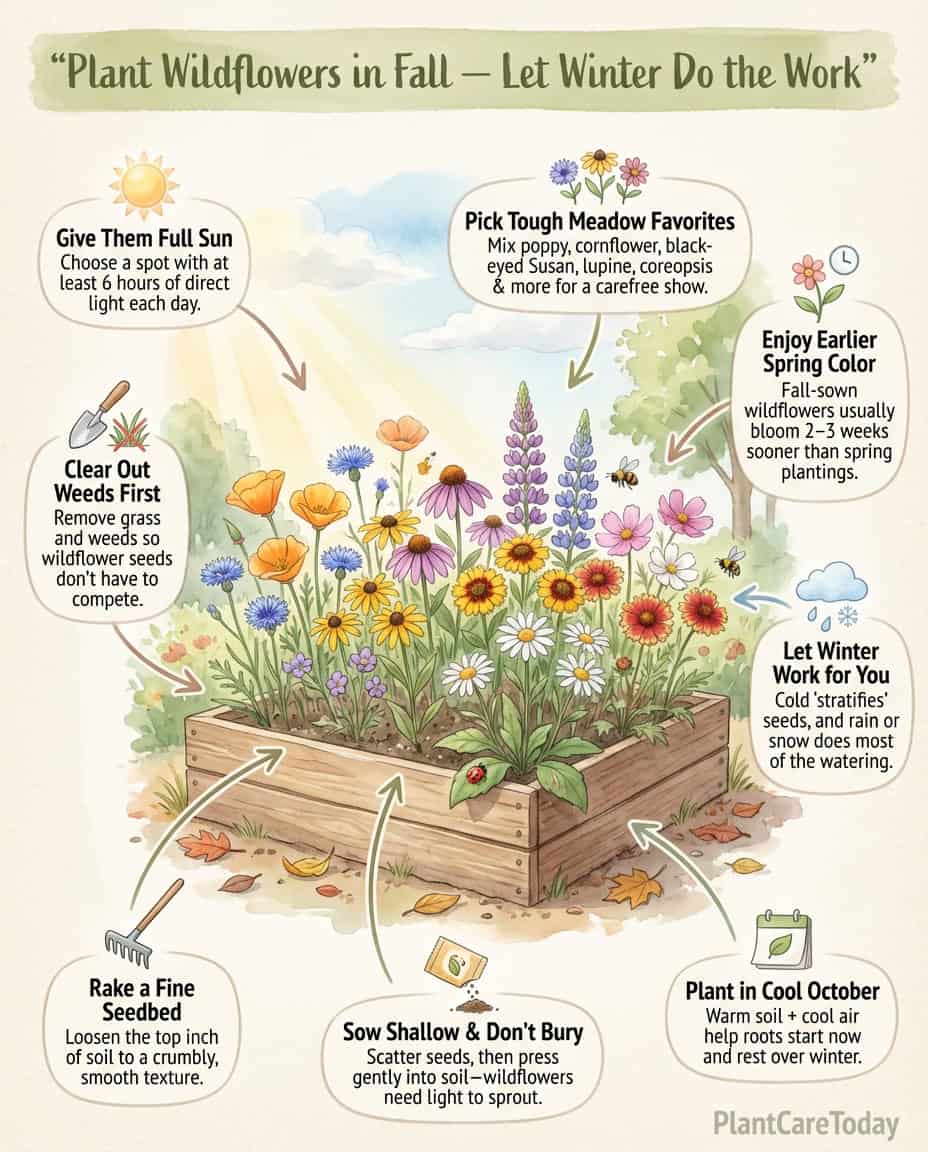
Did you know that the prettiest spring meadows aren’t created in spring at all? October is actually one of the best times for sowing wildflower seeds.
The soil’s still warm, but the air is cool, creating good conditions for germination. It’s like setting your garden up for success months in advance.
Why October Planting Works So Well
October wildflower planting makes it easier to create beautiful meadows with less effort. When you plant in the fall, winter does much of the work for you.
Fall planting mimics what happens in nature. Wildflowers naturally drop their seeds in late summer and fall, not in spring.
These seeds need that cold winter period (called stratification) to germinate properly. Think of it as their alarm clock.
• Seeds planted now develop stronger root systems before winter dormancy
• Winter precipitation does most of the watering for you
• Weeds are less active in the fall, giving your wildflowers a better start
• Fall-planted wildflowers often bloom 2-3 weeks earlier than spring-planted ones
Before You Scatter: Prep Your Wildflower Bed
I was surprised to learn that most wildflower planting failures come from poor soil preparation, not the seeds themselves. Your wildflower seeds aren’t picky, but they do need the right environment to grow well.
The key is creating conditions that help seeds make good contact with the soil. Here’s what that looks like:
• Location: Most wildflowers need at least 6 hours of direct sun daily
• Clear the Competition: Remove existing weeds and grass (smother with cardboard or use light tilling)
• Create a Seedbed: Rake to create a fine, crumbly soil texture
• Shallow Sowing: Wildflower seeds need light to germinate, so press them into the soil but don’t bury them
The Best 15 Wildflowers for Fall Planting
Not all flowers do well with fall planting. These 15 wildflowers are your best bet for creating a beautiful spring meadow.
1. California Poppy
These tough plants transform even poor soils into a bright display of orange, yellow, or red. They’re very drought-tolerant once established. Zones 6-10, height 12-18″.
2. Cornflower (Bachelor’s Button)
With their bright blue blooms (also available in pink, purple, and white), cornflowers create that classic meadow look. Bumblebees love these flowers. Zones 2-11, height 12-36″.
3. Black-Eyed Susan
These cheerful golden flowers with dark centers are reliable and easy to grow. Birds love the seeds in the fall. Zones 3-9, height 18-36″.
4. Lupine
Those tall spikes of color aren’t just pretty. Lupines actually improve soil by fixing nitrogen, which helps them and neighboring plants grow. Zones 4-8, height 1-3′.
5. Coreopsis
Also called “tickseed,” these sunny bloomers keep flowering for a long time. They’re one of the longest-blooming perennials you can grow. Zones 3-10, height 12-36″.

6. Cosmos
If flowers could dance, cosmos would. Their delicate blooms sway in the slightest breeze, creating movement and attracting butterflies to your meadow. Zones 2-11, height 2-6′.
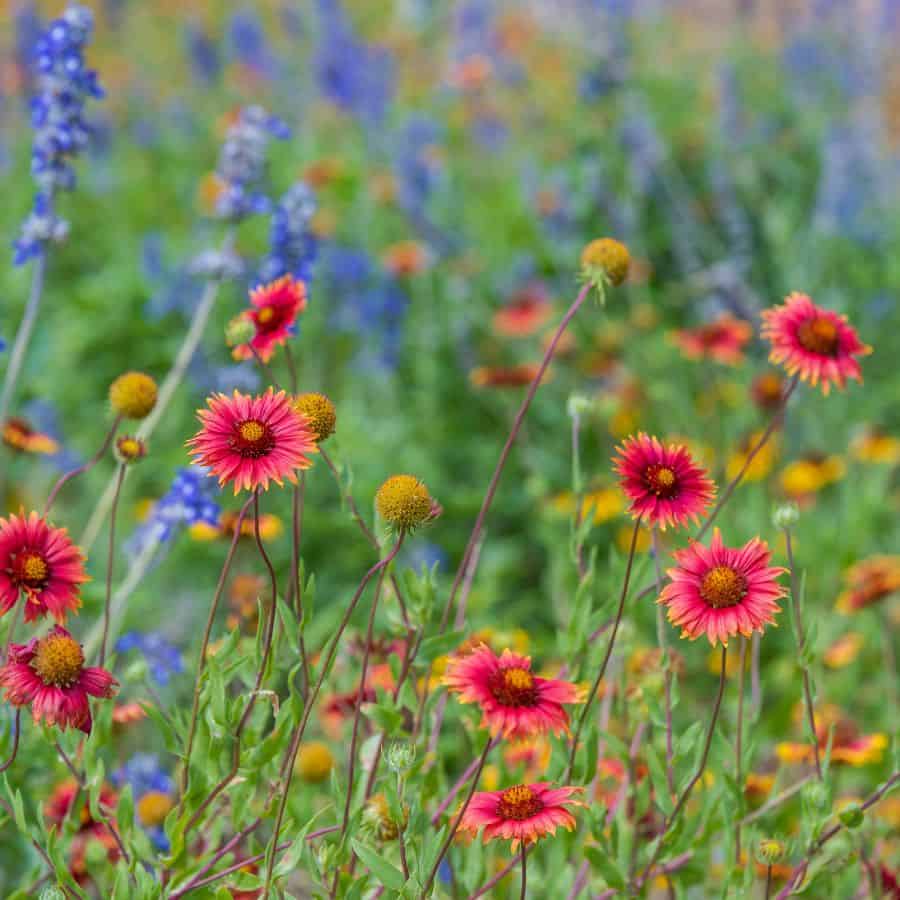
7. Blanket Flower
With bright sunset colors and serious drought tolerance, blanket flowers thrive in harsh conditions. They’ll do well where other flowers struggle. Zones 3-10, height 12-24″.
8. Shasta Daisy
The classic white daisy brings that meadow feel to your garden. Deer avoid them, pollinators love them. Zones 4-9, height 1-3′.
9. Purple Coneflower
Not just pretty, these native flowers are also medicinal. Echinacea is both ornamental and functional, plus goldfinches love their seeds. Zones 3-9, height 2-4′.
10. Larkspur
These tall spikes of blue, pink, purple, or white bring a cottage garden look to your meadow. They add nice vertical interest. Zones 2-11, height 1-4′.
11. Nigella (Love-in-a-Mist)
With delicate blue flowers surrounded by feathery foliage, nigella has an almost ethereal look. The seedpods are decorative, too. Zones 2-11, height 12-24″.
12. Phacelia
This often-overlooked flower attracts more beneficial insects than almost any other plant. It has pretty lavender-blue flowers and helps your whole garden ecosystem. Zones 3-10, height 1-3′.
13. Wallflower
Despite their shy name, these fragrant bloomers are actually some of the first to flower in spring. Their sweet scent and early timing make them valuable additions. Zones 3-9, height 12-24″.
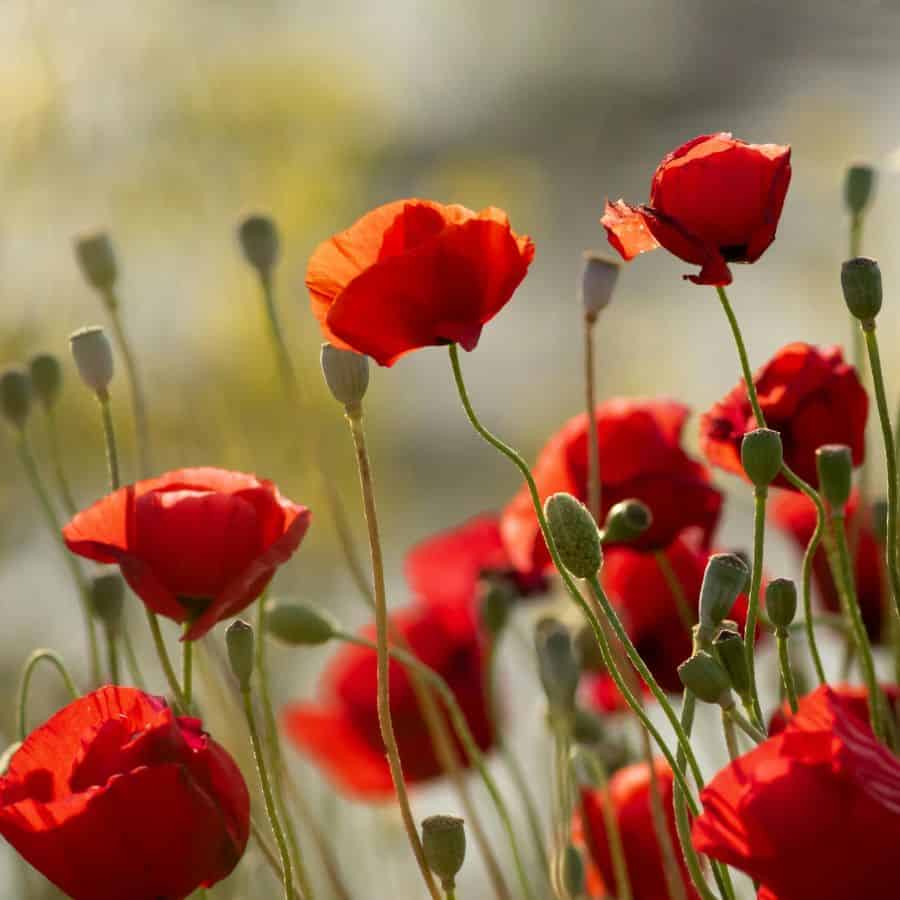
14. Red Poppy
Also called Flanders poppy, these bright red blooms create that classic European meadow look. Their paper-thin petals catch the light beautifully. Zones 3-9, height 12-30″.
15. Foxglove
Foxgloves create tall spires of tubular flowers that bumblebees love. They self-seed easily, creating displays that return year after year. Zones 4-9, height 2-5′.
Design Your Meadow Naturally
The best wildflower meadows look natural, not arranged in neat rows. Here’s how to get that look:
• Think in Waves: Mix early, mid, and late bloomers for continuous color
• Plant in Drifts: Scatter seeds in natural-looking patches, not evenly distributed
• Mix Heights: Combine tall, medium, and short flowers for a layered look
• Add Grasses: Include 10-20% native grasses for structure and winter interest
The Low-Maintenance Secret to Success
The real trick with wildflower meadows isn’t what you do. It’s what you don’t do. Most people make the mistake of overwatering, over-fertilizing, and fussing too much with their wildflowers.
Wildflowers do better with less care. Water only during the first few weeks and during severe drought.
Never fertilize; rich soil actually favors grasses over flowers. And resist the urge to deadhead everything. Those seed heads feed birds and ensure next year’s display.
Simply mow your meadow once a year in late fall, after the seeds have dropped. That’s it.
Your October-planted wildflower meadow will become a beautiful, low-maintenance space that gets better with each passing year.