I was surprised to learn that the fix for struggling houseplants often isn’t expensive fertilizer. It’s a couple of rusty nails from your junk drawer.
This old gardening trick has been around for centuries, and it works really well on plants that have lost their color.
Here’s how to bring those yellowing leaves back to life.
Why Your Plants Are Secretly Iron-Starved
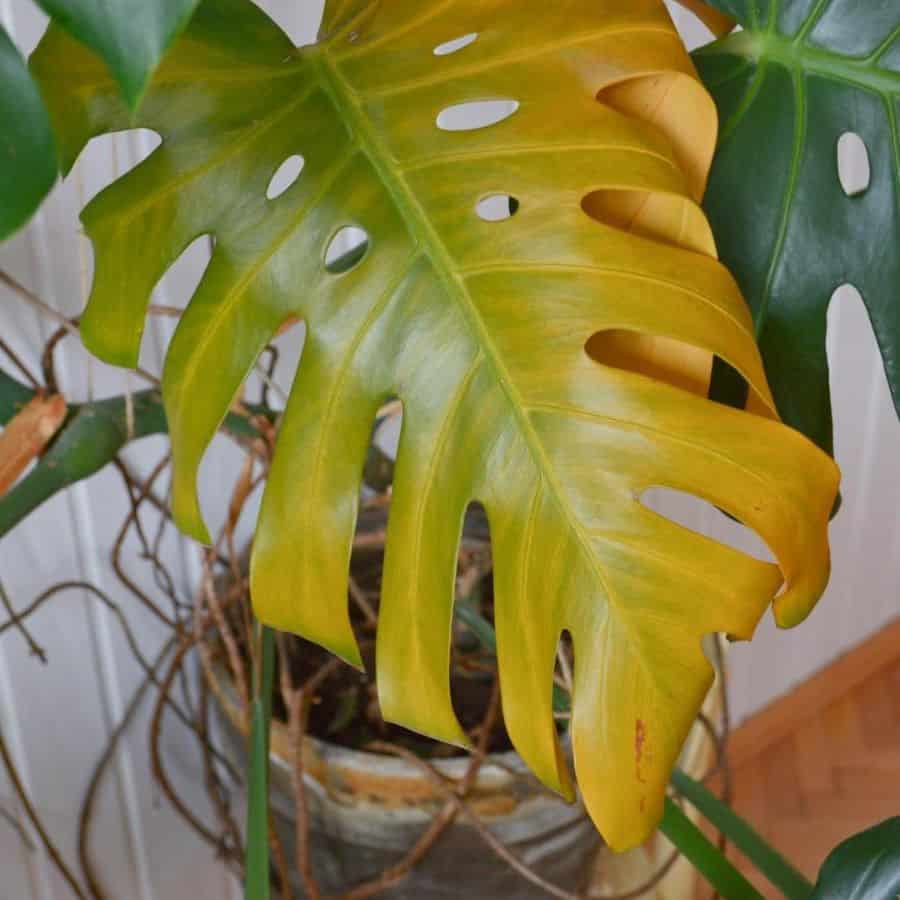
When leaves turn yellow between the veins, your plant is usually trying to tell you something. Just like us, plants need minerals to function, and iron is one they often lack.
Iron isn’t just another nutrient. It’s essential for chlorophyll production: the stuff that makes plants green and powers photosynthesis. Without it, your plant is trying to make energy without the right tools.
When potted plants run low on iron, they show clear signs:
• Yellowing leaves (especially while veins stay green)
• Stunted, weak new growth
• Poor or failed flowering
• General tired appearance despite regular care
Over 80% of yellowing houseplants actually have nutrient deficiencies rather than watering issues. Iron deficiency is one of the most common problems, but it’s often overlooked.
The Science Behind the Nail Trick
Here’s the interesting part: rusty metal is basically slow-release plant food. When iron nails rust in soil, they gradually release iron oxide, exactly the form your plants can use.
Think of it as nature’s time-release capsule. As you water your plant, the moisture activates the rusting process and releases small amounts of iron directly to the roots.
What makes this approach work well:
• No risk of over-fertilizing (unlike chemical iron supplements)
• Continuous supply that lasts months
• Completely natural and chemical-free
• Slightly acidifies the soil, which most houseplants prefer
Not All Plants Are Created Equal: Who Needs This Most?
Some houseplants show iron deficiency more dramatically than others. They’ll develop yellow leaves at the first sign of mineral depletion.
These iron-loving plants respond especially well to the nail trick:
• Peace Lilies: Those droopy, pale leaves turn glossy, deep green
• Ferns: Yellow, crispy fronds improve
• Philodendrons & Pothos: New leaves emerge richer and darker
• Spider Plants: Yellow streaks disappear
• Indoor Palms: That bottom-up yellowing stops
• African Violets: More flowering and stronger leaves
Is your fiddle leaf fig looking sad? This iron boost might be what it needs.
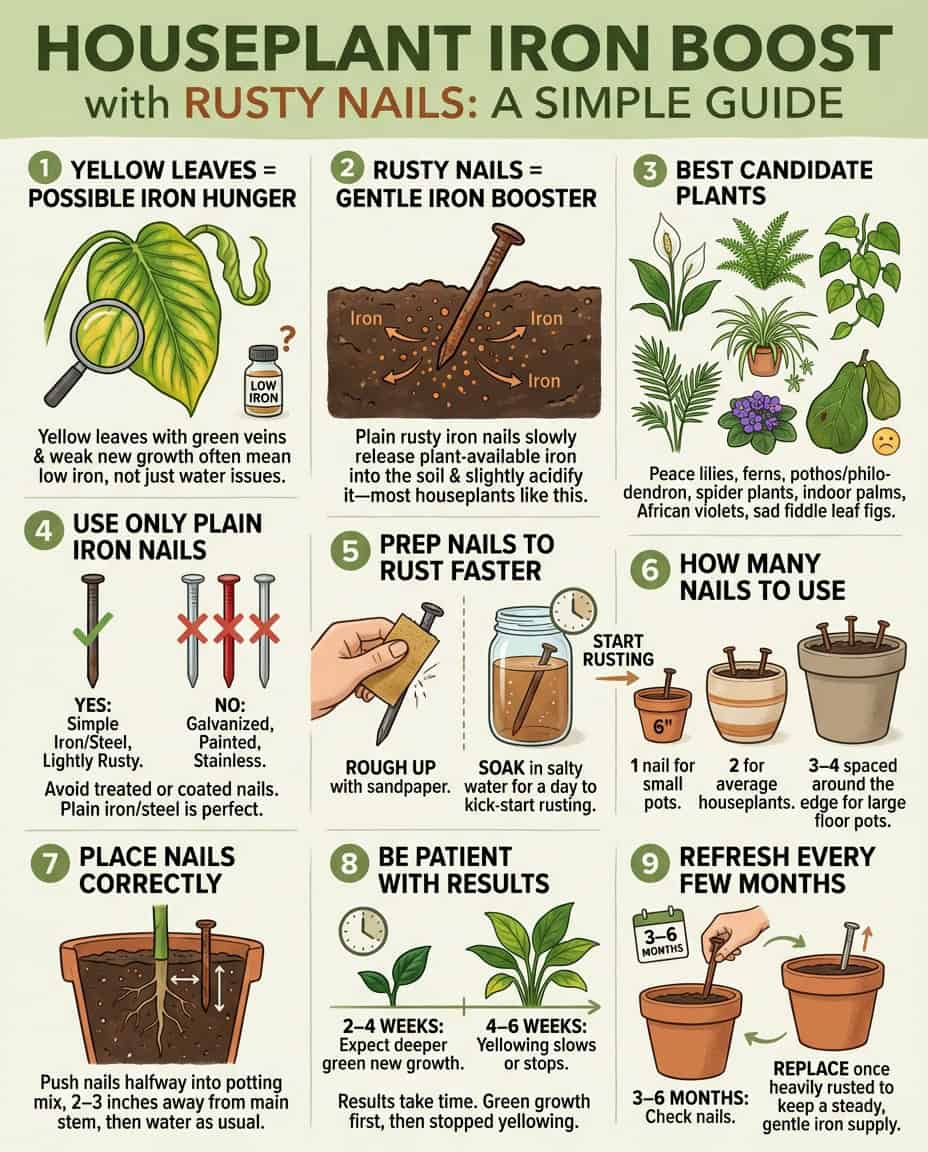
The 5-Step Nail Method That Actually Works
Here’s how to do the nail trick right:
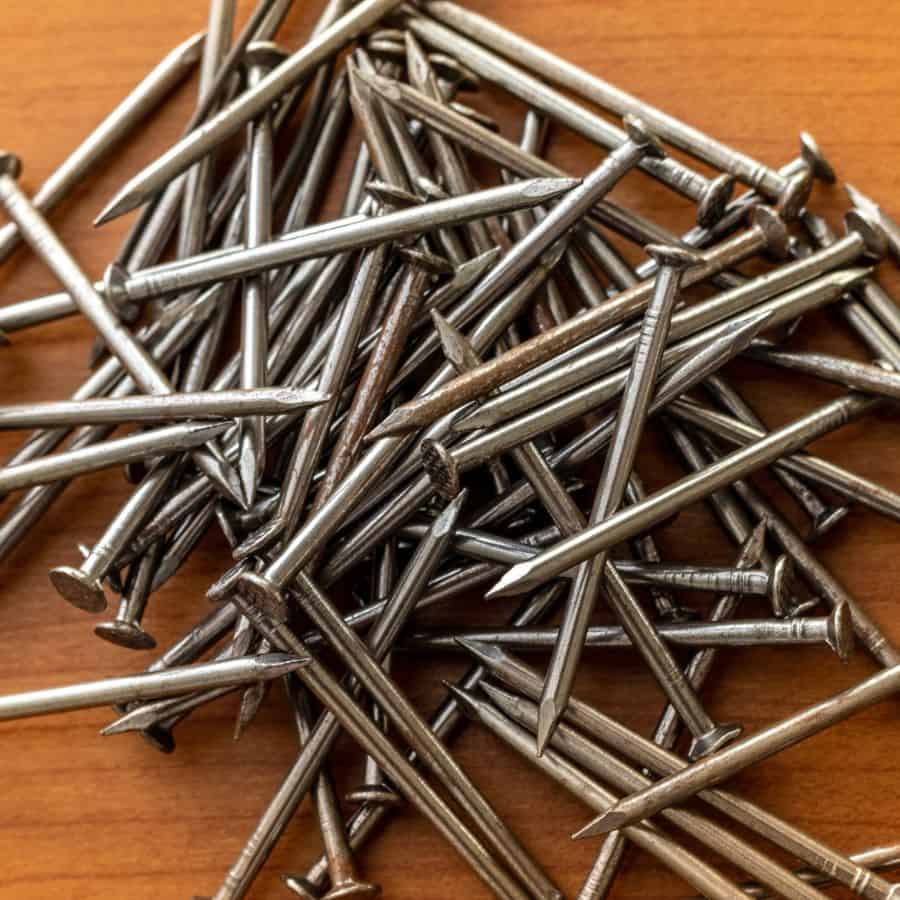
Step 1: Choose Plain Iron Nails
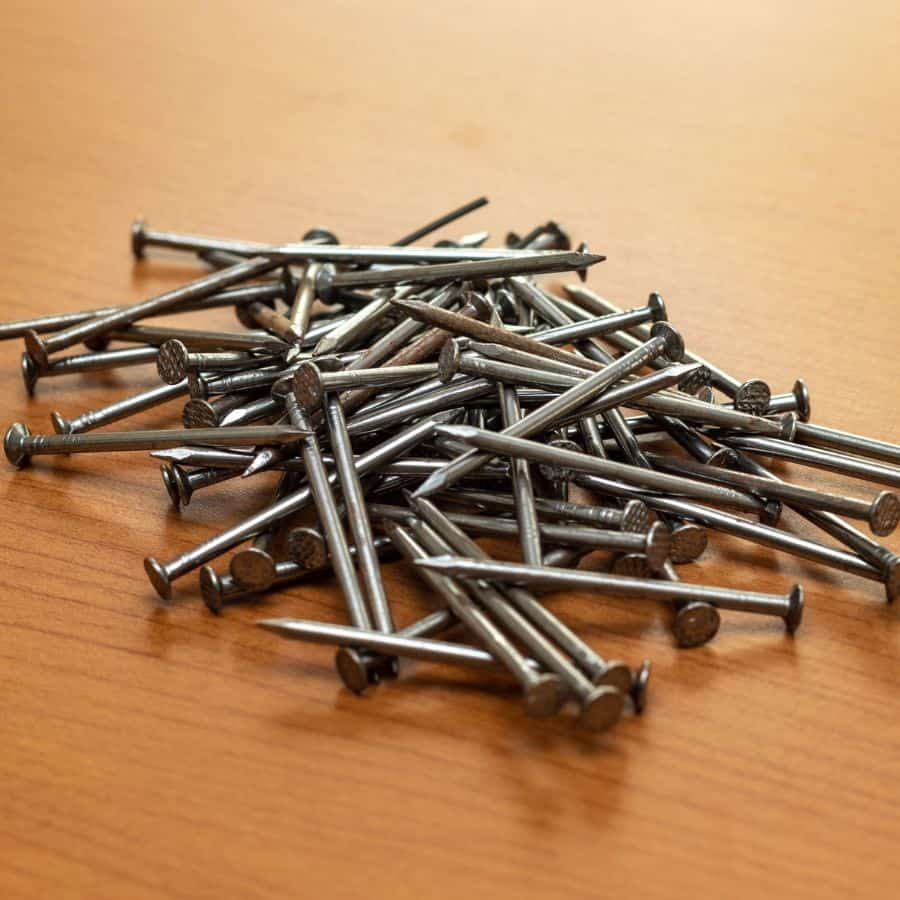
Not all nails work. Skip anything galvanized, painted, or stainless steel. You want plain, preferably slightly rusty iron or steel nails that can oxidize properly.
Step 2: Prep Your Nails
New nails? Rough them up with sandpaper or soak them in salt water for a day to jump-start the rusting process. This step speeds up results by weeks.
Step 3: Strategic Placement
Push 2 nails halfway into the soil about 2-3 inches from the stem. For small pots (under 6″), one nail is enough. For large floor plants, use 3-4 spaced around the pot’s edge.
Step 4: Water Normally
No special care needed. Just water as usual and let chemistry do its thing. Each watering activates a bit more iron release.
Step 5: Replace Every Few Months
After 3-6 months, check your nails. If they’ve rusted away significantly, it’s time for fresh ones. This maintains a steady iron supply without overdoing it.
Patience Pays Off: Timeline for Results
The nail trick isn’t instant. It’s more like a slow revival. Here’s your timeline:
• Weeks 2-4: New growth appears deeper green
• Weeks 4-6: Yellowing slows or stops completely
• Months 2-3: Clear difference in overall color and health
The real trick for struggling plants isn’t speed, it’s consistency. This slow-release approach mimics how plants naturally receive minerals in the wild, which is why it produces such natural-looking results.
Beyond The Nails: Creating Your Plant Food System
Want to take your plants from surviving to thriving? Pair the nail trick with these natural additions:
• Crushed Eggshells: Sprinkle on soil for calcium (helps prevent root rot)
• Coffee Grounds: Small amounts mixed into topsoil add nitrogen and improve soil structure
• Banana Peel Water: Soak peels for 48 hours to create a potassium-rich watering solution
• Cinnamon Dust: Light sprinkle prevents fungus and deters pests naturally
Together, these kitchen scraps create a complete nutrition system that rivals expensive commercial products.
Common Nail Trick Mistakes That Kill Results
The biggest mistake people make is pushing nails too close to delicate roots or using coated nails that can harm plants.
Avoid these fails:
• Using galvanized or zinc-coated nails (toxic to plants)
• Overcrowding with too many nails (can over-acidify soil)
• Placing nails right against the main stem (can damage roots)
• Expecting overnight results (this takes time)
This is about creating balance, not forcing rapid growth. The best plant care mimics nature’s own rhythms.
The Indoor-Outdoor Connection
This rusty nail trick isn’t just for houseplants. Your garden plants, especially heavy feeders like tomatoes, roses, and hydrangeas, respond well to strategic nail placement.
For outdoor gardens, push 4-6 nails around each plant’s drip line and replace annually. Garden plants with access to natural minerals often show even faster results than houseplants.
Those lush plants at garden centers? Many professional growers have been using iron-enrichment techniques for decades. They just don’t advertise it.
Your Two-Nail Takeaway
Two rusty nails might seem too simple to transform your struggling plants, but sometimes the most helpful solutions are the simplest ones. This old gardening method has stood the test of time because it addresses a basic plant need in a gentle, natural way.
Before you toss that yellowing houseplant, give it the iron boost it needs. Those two nails from your toolbox might be exactly what your plant needs to come back to life.