I was shocked to discover that those humble tea bags you toss daily are actually garden gold in disguise!
While you’re cozied up with your winter brew, your soil microbes are desperately searching for a meal.
That used tea bag? It’s not trash. It’s a microbial feast waiting to transform your garden from the ground up.
The Underground Revolution Happening in Your Soil
Your winter garden may look dormant above ground, but beneath the surface, billions of microscopic workers are struggling to stay active. These soil microbes, bacteria, fungi, and their tiny friends are the real MVPs of your garden’s success.
Without fresh organic material, winter soil becomes a ghost town, with all the restaurants closed. The microbes slow down, soil health declines, and by spring, your garden’s living foundation is running on empty.
The game-changer for your soil isn’t what you think. It’s that tea bag sitting on your saucer right now.
The Magical Transformation When Tea Meets Soil
When you bury tea bags in your garden beds, you trigger a cascade of underground miracles. Here’s what actually happens:
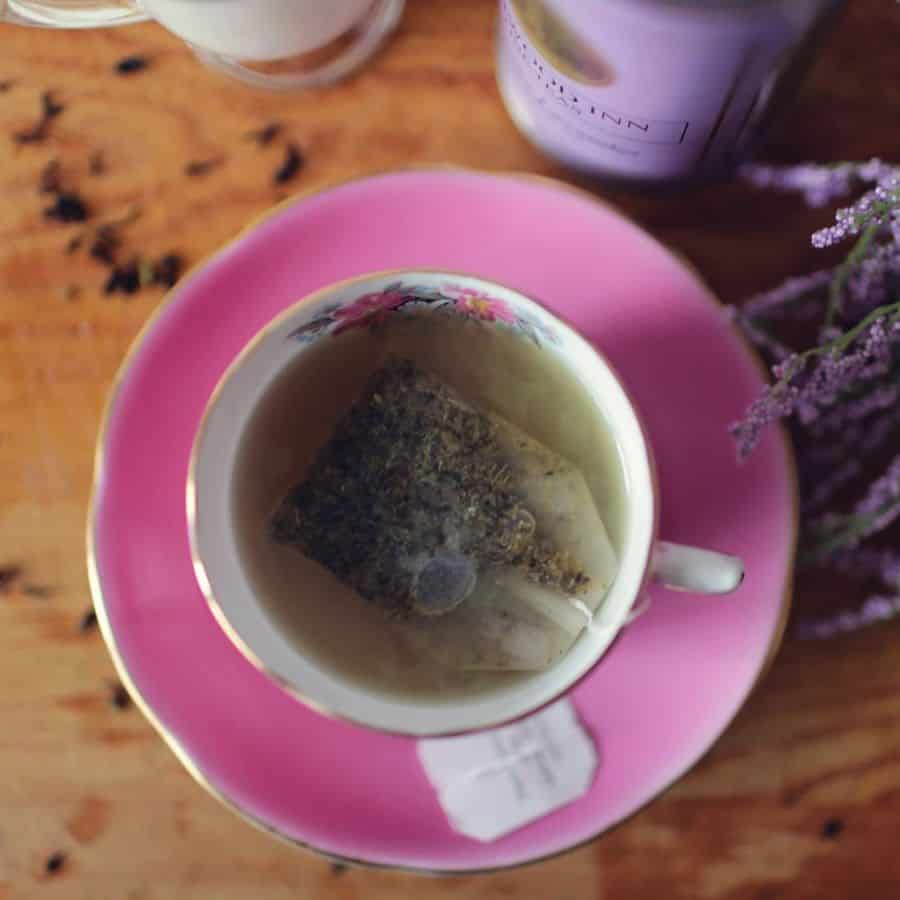
- Microbe Magnetism: Tea compounds act like a dinner bell, attracting beneficial bacteria and fungi
- Decomposition Factory: These microbes transform tea into rich humus. Soil so vibrant it practically glows
- Structural Support: The breakdown process creates pockets for water and air, like tiny soil condominiums
- Winter Nutrient Cycling: Even in cold temps, slow decomposition keeps your soil ecosystem alive
- Spring Jumpstart: When warmth returns, your soil microbes are already fueled up and ready to rumble
It’s like setting up a slow-cooker meal for your soil that simmers all winter long. By spring, your garden will be served a nutrient-rich foundation that store-bought fertilizers simply can’t replicate.
The Tea Menu: Which Brews Give Your Soil the Biggest Boost
Not all teas feed your soil equally. Think of it like a microbe restaurant with different cuisine options:
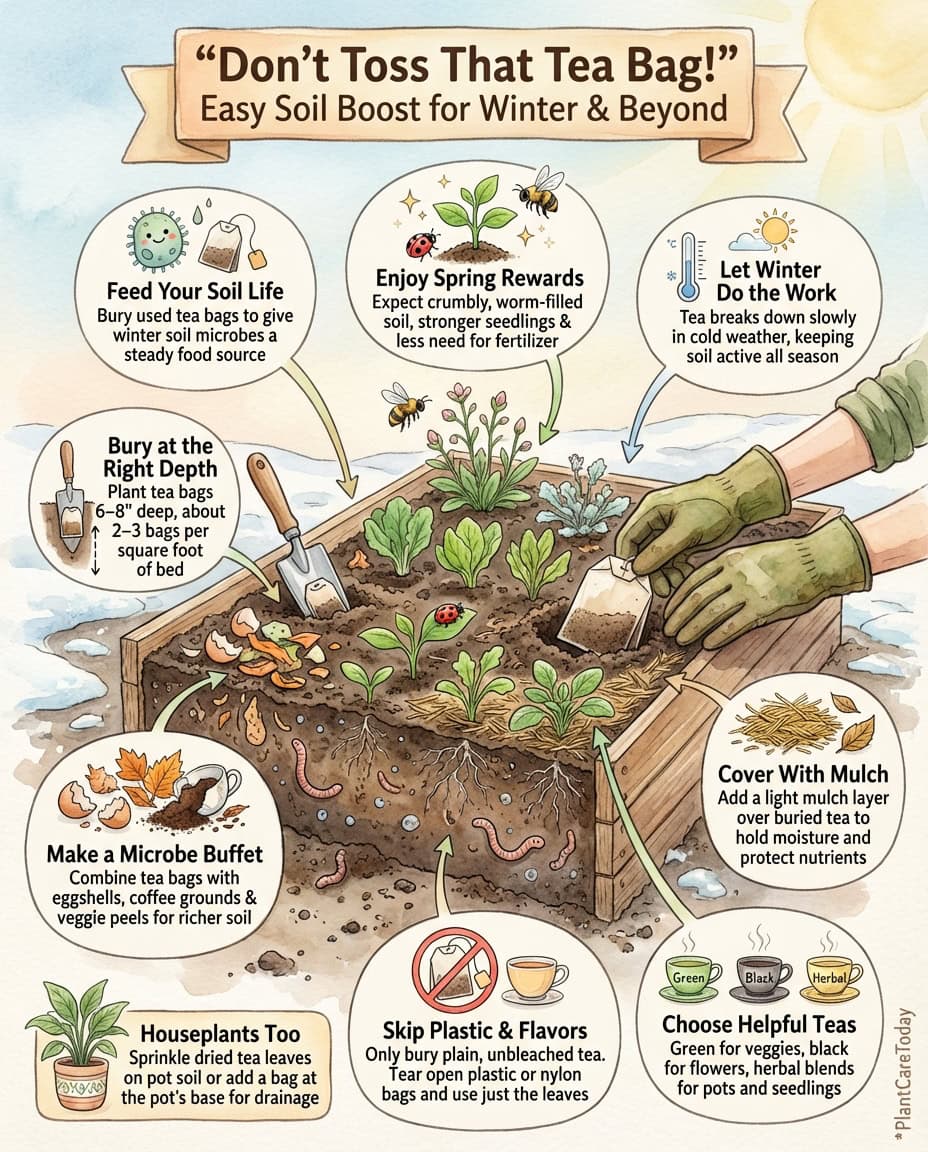
- Green Tea: The nitrogen powerhouse, like serving protein shakes to your vegetable beds and compost piles
- Black Tea: Rich in tannins and minerals that support fungal networks, perfect for flower beds and perennials
- Herbal Teas: Chamomile, peppermint, and rooibos add diverse compounds, ideal for potted plants and seedlings
- Loose-Leaf Tea: The “fast food” option for soil, decomposes quickly with zero waste
The Tea Bag Blacklist: What to Keep Out of Your Soil
Forget what you’ve heard about all tea bags being compostable. Some modern tea bags are garden saboteurs in disguise:
- Plastic/Nylon Mesh: Those fancy pyramid bags? Often made with plastics that shed microplastics into your soil. Tear them open and use just the leaves.
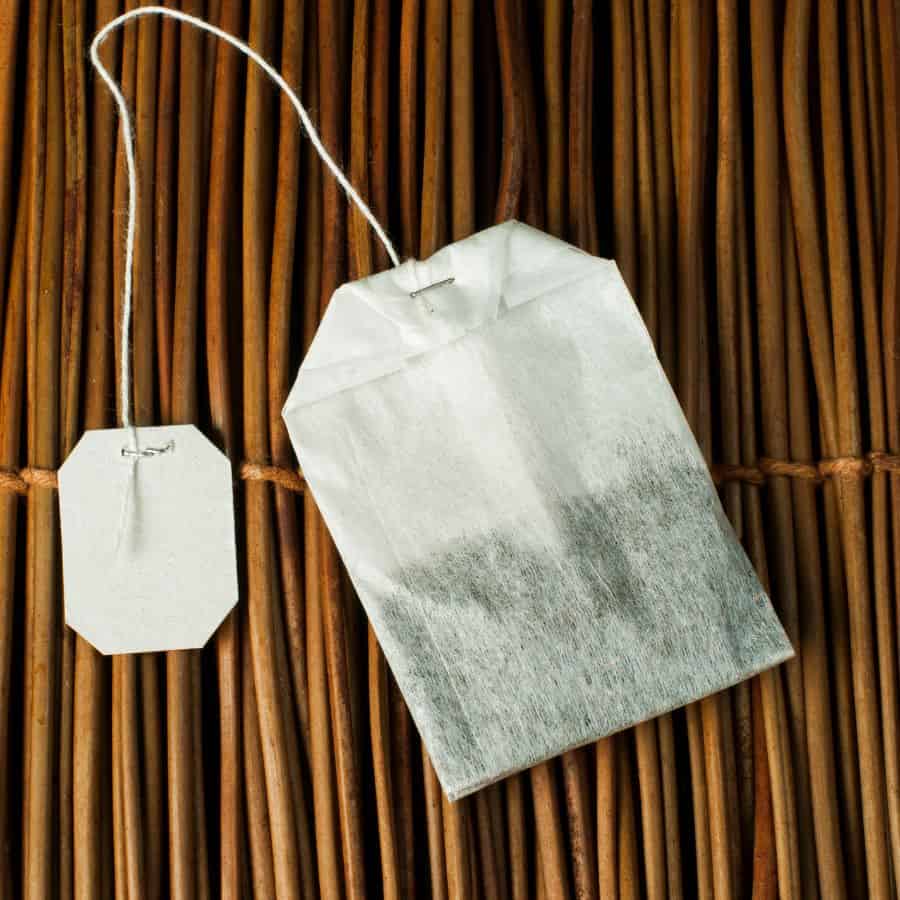
- Bags with Staples: These metal bits can harm earthworms and roots. Always remove before burying.
- Flavored or Sweetened Teas: Added sugars and artificial flavors can disrupt soil balance and attract unwanted pests.
- Bleached Paper Bags: The chlorine process leaves residues that can harm soil life. Look for “unbleached” or “compostable” labels.

The difference between amateur and pro plant parents is simply knowing which tea bags actually help rather than harm your soil ecosystem.
Your Step-by-Step Tea Bag Burial Guide
Ready to give your soil the tea treatment? Here’s how to do it like a pro:
- Collect Your Brew Crew: Save used tea bags and let them dry slightly to prevent mold.
- Plastic Check: Tear one open. If it doesn’t rip easily, it probably contains plastic. Use only the leaves.
- Prime Location: Bury around shrubs, between vegetable rows, in raised beds, or compost trenches.
- Dig Deep: Place 2-3 tea bags per square foot, about 6-8 inches deep, shallow enough for microbes to find, deep enough to stay moist.
- Create a Microbe Buffet: Combine tea bags with eggshells, coffee grounds, vegetable peels, or shredded leaves to provide a diverse array of nutrients.
- Top with Mulch: Add a protective layer to stabilize soil temperature and prevent nutrient leaching during winter rains.
This isn’t just composting. It’s strategic soil feeding that targets winter’s specific challenges. Your spring garden will thank you with spectacular growth and vibrant health.
The Microscopic Drama Unfolding Underground
Each buried tea bag becomes the center stage for an invisible soil drama. Here’s what’s happening in this microbial theater:
- Bacteria consume soluble compounds first, multiplying rapidly like audience members rushing for front-row seats
- Fungal networks extend through the tea fibers like backstage rigging, creating soil structure
- Larger microorganisms join in, feeding on bacteria and releasing more nutrients. It’s predators and prey on a microscopic scale
- Earthworms, attracted by the commotion, tunnel toward tea bags, aerating soil and leaving nutrient-rich castings
Did you know? A single teaspoon of healthy soil contains more microorganisms than there are people on Earth! Your tea bags help sustain this vast underground civilization through winter’s harshest months.
Spring Rewards: The Transformation You’ll See
By springtime, your tea bag investment pays dividends in garden health:
- Soil that crumbles between your fingers like chocolate cake
- Earthworms wriggling happily throughout your beds
- Seedlings that establish faster and grow stronger
- Fewer disease problems as beneficial microbes outcompete pathogens
- Reduced need for fertilizers as your soil recycles nutrients naturally
The secret most plant experts won’t tell you is that vibrant plants start with vibrant soil—and vibrant soil starts with feeding its tiniest inhabitants through winter.
Tea Bags for Potted Plants: Indoor Magic
No garden? No problem! Your houseplants can benefit from tea’s magic too:
- Soil Boost: Mix dried tea leaves into the top layer of potting soil
- Drainage Helper: Place a used tea bag at the bottom of pots before adding soil
- Compost Kickstarter: Add to indoor compost bins to stimulate decomposition
- Seedling Support: Bury one bag under each seedling cell to retain moisture and feed emerging roots
Your houseplants are trying to tell you something important: they’re just as hungry for that tea goodness as your garden soil!
Avoid These Tea Bag Blunders
Even natural approaches can go wrong. Don’t let these mistakes sabotage your soil-feeding efforts:
- Using too many at once (creates oxygen depletion)
- Burying directly against delicate roots (mild acidity can stress some plants)
- Leaving bags on the soil surface (attracts pests and dries out)
- Forgetting to check your soil pH (tea slightly acidifies soil, great for acid-lovers but not for all plants)
- Not removing plastic bags or staples (these can harm soil life)
Beyond Tea: Winter Soil Superfood Combos
Create a gourmet soil-feeding program by combining tea bags with these winter microbe treats:
- Crushed eggshells (calcium boost)
- Banana peels (potassium punch)
- Coffee grounds (nitrogen fix)
- Oatmeal or rice water (microbial stimulant)
- Molasses water (one tablespoon per gallon accelerates decomposition.
This winter, instead of focusing solely on your plants, nourish what nourishes them, the living soil. Those tea bags aren’t trash; they’re the foundation of next season’s garden triumph. Your future tomatoes will never taste so good!