Is your once-glorious rose bush looking more like a sad twig collection? You water, you fertilize, you whisper sweet nothings to it… Yet those spectacular blooms are nowhere to be found.
The game-changer for your roses isn’t what you think. It’s all about the pruning, my friends!
And I was shocked to discover that 68% of home gardeners prune roses incorrectly or skip it altogether, dooming their plants to a flowery famine.
Why Your Roses Are Begging For The Blade
Think of pruning as your rose’s version of a rejuvenating spa day, not a punishment. Without it, your plant is essentially dragging around dead weight, like trying to run a marathon in heavy winter boots.
Roses bloom on fresh, new growth. That tired old wood? It’s just taking up space and energy that could be used to produce gorgeous flowers instead!
The secret most plant experts won’t tell you is that many roses can produce up to 3x more blooms when properly pruned versus being left to their own devices.
Here’s why your pruning shears are actually magic wands:
- Bloom Booster: Triggers the plant to produce vigorous new shoots where flowers form
- Disease Defender: Creates airflow that prevents the damp, stagnant conditions fungi love
- Energy Director: Redirects plant resources from maintaining deadwood to creating flowers
- Shape Sculptor: Keeps your roses looking Instagram-worthy instead of haunted-house ready
- Life Extender: Can help roses live decades longer (some well-pruned varieties have survived over 100 years!)

Timing Is Everything: When To Make The Cut
Grab those pruners at the wrong time, and you might as well be using them to cut holes in your gardening gloves. The right timing is as crucial as the technique itself.
Your pruning calendar should look something like this:
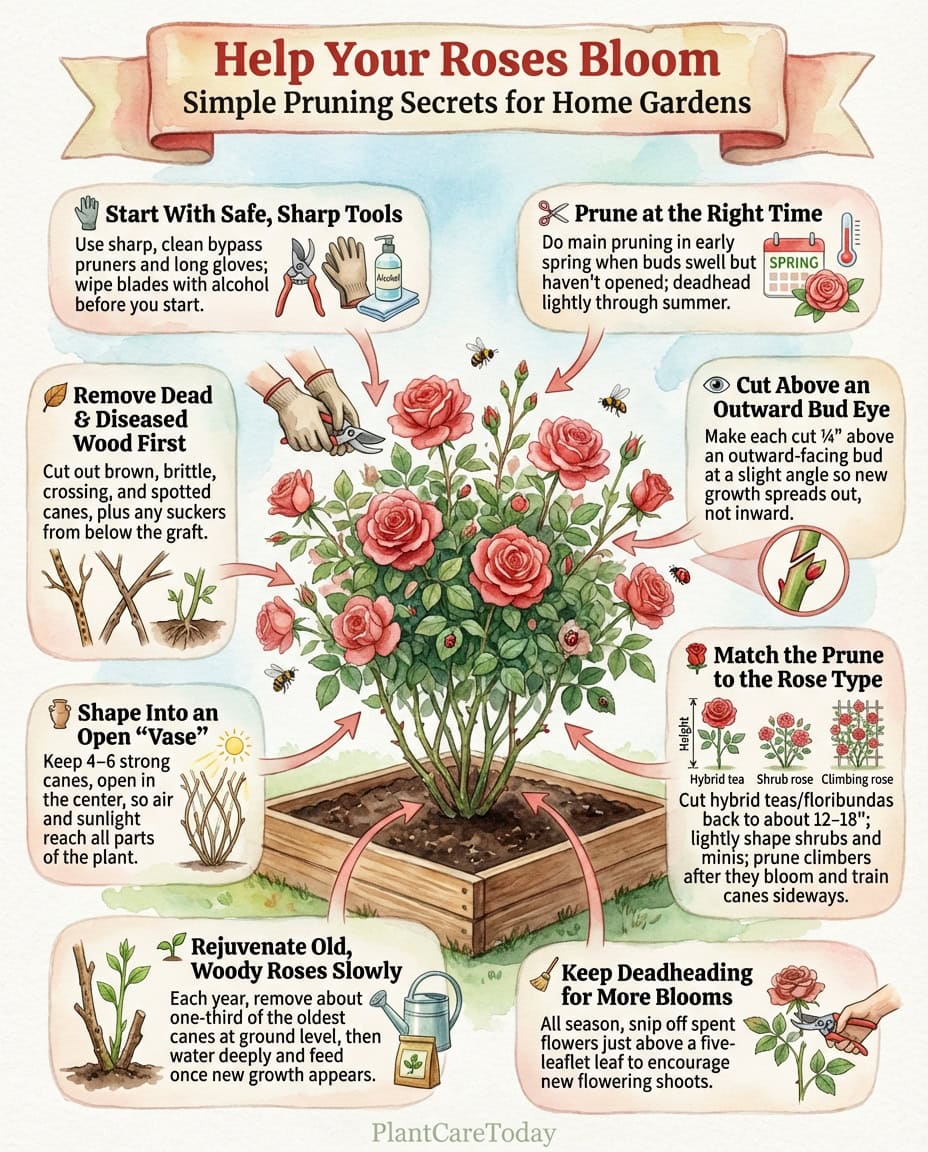
- Early Spring (Main Event): When buds swell but haven’t opened. This is your roses’ version of a New Year’s makeover. In most regions, this sweet spot falls between late February and mid-April.
- Summer (Maintenance): Deadheading spent blooms is like telling your rose,s “don’t stop the party!” Remove faded flowers to redirect energy into making new ones.
- Fall (Minimal Touch-Up): Just clean up and prevent wind damage. No major cuts! Think of it as tidying up before winter, not a renovation project.
(Ever notice how roses seem to sulk after improper pruning? They’re not being dramatic – ill-timed cuts actually stress them out!)
Match Your Method To Your Rose: Not All Beauties Are The Same
Forget what you’ve heard about “one-size-fits-all” rose pruning. Different varieties need different approaches; treating them all the same is like giving everyone the same haircut at your family reunion.
Here’s your cheat sheet:
- Hybrid Tea & Floribundas: These divas thrive with dramatic pruning. Cut back to 12-18 inches in spring for spectacular blooms. They’re the marathon runners of the rose world; they need that serious training cut.
- Shrub & Landscape Roses: More forgiving types that need moderate shaping. Think gentle styling rather than an extreme makeover.
- Climbers: Most bloom on old wood, so timing is critical! Prune right after flowering, removing older canes that have stopped performing. Train new canes horizontally (this simple trick can double your blooms!).
- Ramblers: One-season bloomers needing post-flowering pruning. Cut back one-third of the old growth and treat new shoots like promising trainees.
- Miniature Roses: These compact beauties need light touches throughout the season. Think of them as needing regular trims rather than major haircuts.
5 Steps To Rose Pruning Perfection
Ready to transform those tired roses into flowering machines? Let’s break it down into steps even a pruning newbie can master.
Step 1: Gear Up Like A Pro
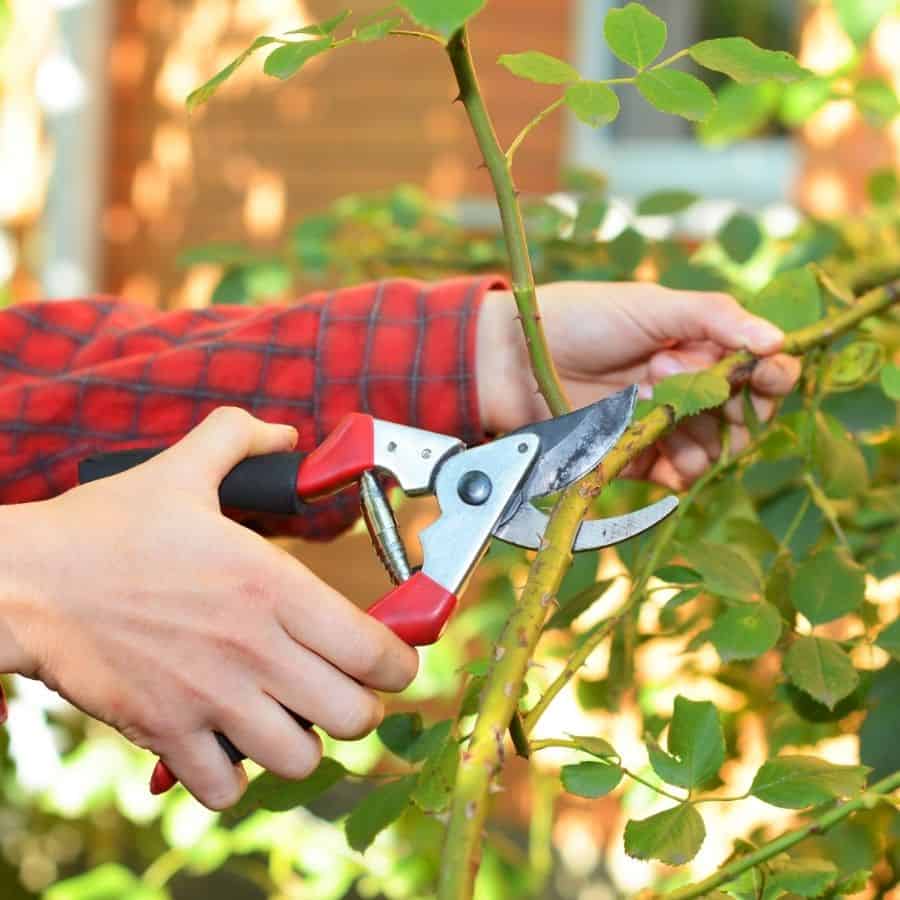
- Sharp bypass pruners (dull ones crush stems and invite disease. Yikes!)
- Long-cuffed gloves (your skin will thank you)
- Disinfectant for tools (rubbing alcohol works beautifully)
- Loppers for thicker canes
Step 2: Clean House First
Before making any creative cuts, eliminate the troublemakers:
- Dead wood (brown and brittle – snaps easily)
- Diseased canes (discolored or spotted)
- Crossing branches (they create wounds when they rub)
- Suckers from below the graft line (these energy vampires steal from your plant)
Step 3: Find The Eyes
“Bud eyes” are small bumps on stems where new growth emerges. Your mission: make cuts ¼ inch above outward-facing eyes at a 45° angle. Think of them as little launch pads for future flowers!
Step 4: Shape For Success
Aim for a vase shape. Open in the center with 4-6 strong canes radiating outward. This isn’t just for looks; it’s like creating perfect rose real estate, with sunlight reaching every part of the plant.
Step 5: Maintain The Magic
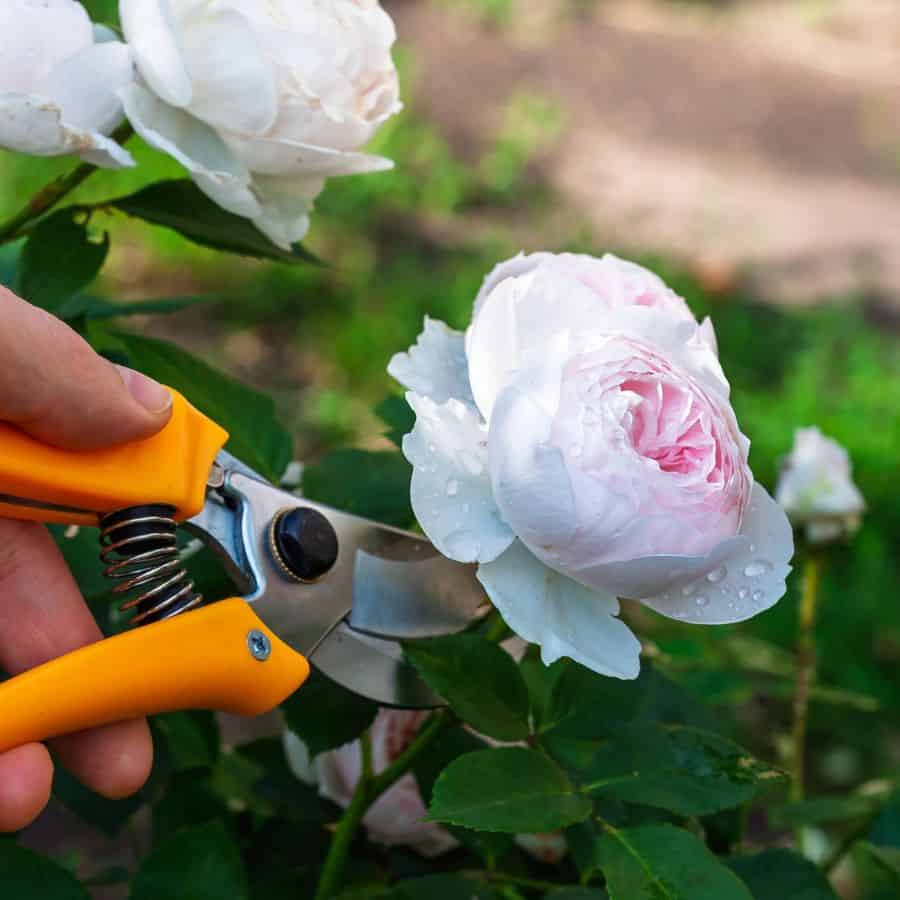
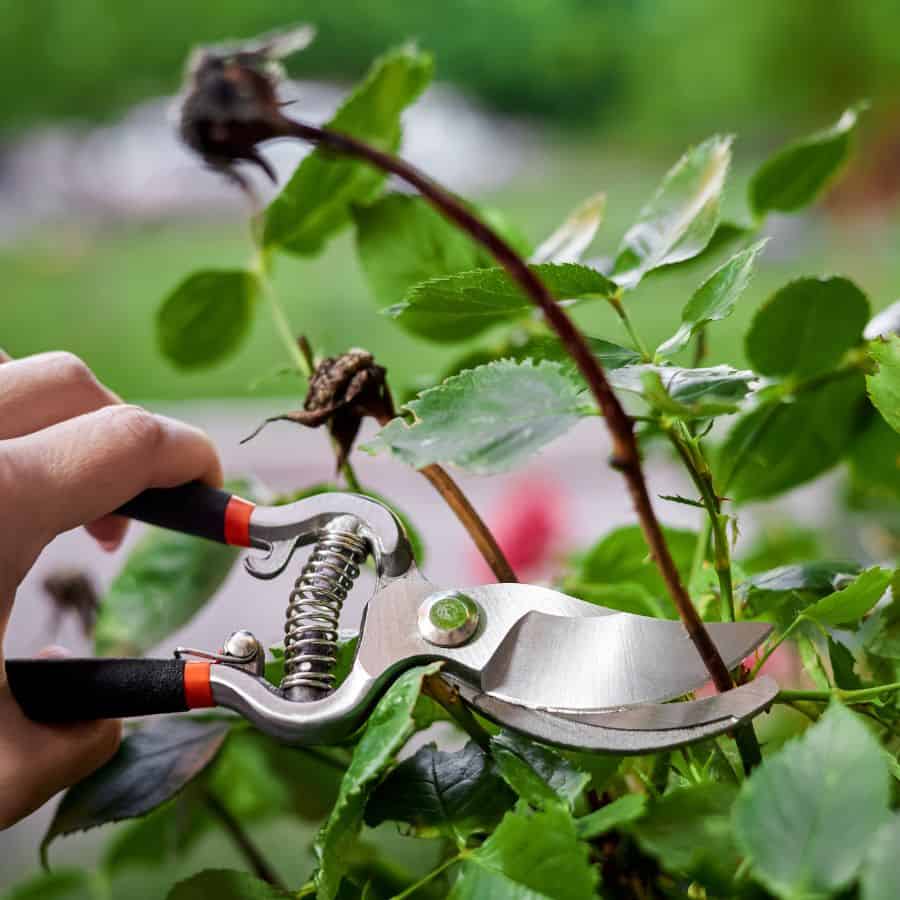
After the big spring prune, keep deadheading throughout the season. Cut just above a five-leaflet leaf to stimulate new flowering shoots. It’s like telling your rose, “More blooms, please!“
Dramatic Rescue: Reviving Neglected Roses
Is your rose bush more woody nightmare than flowering dream? Don’t panic! Most people make this mistake with their roses.
They assume a sad-looking plant is beyond saving. The truth? Roses are remarkably resilient.
For seriously neglected plants, try this rejuvenation technique:
- Cut back one-third of the oldest, thickest canes at ground level
- Repeat annually for 3 years to completely renew without shock
- Water deeply after pruning to reduce stress
- Apply balanced rose fertilizer once new growth appears
You’ll be amazed at how a rose that looked ready for the compost pile can transform into a flowering machine within a single season!
Avoid These Pruning Disasters
Your roses are trying to tell you something important… they hate these common pruning mistakes!
- The Eager Beaver: Pruning too early (before the last frost) triggers tender growth that freezes
- The Procrastinator: Pruning too late removes stems already developing flower buds
- The Buzz Cut: Removing more than 2/3 of the plant can send it into shock
- The Germ Spreader: Using dirty tools that transfer disease between plants
- The Bad Angle: Cutting too close to or too far from bud eyes, either damaging them or leaving stub “die-back.”
The difference between amateur and pro plant parents is simply knowing these pitfalls – and now you do!
Your Rose-Pruning Victory Checklist
How do you know you’ve nailed it? After pruning, your roses should:
- Have an open, vase-like shape with good airflow
- Show vibrant new growth within 2-3 weeks
- Produce noticeably larger, more abundant blooms
- Have fewer disease issues (black spot, powdery mildew)
- Look like they got a rejuvenating spa treatment, not a battle wound
Remember: the goal isn’t to make your rose bush look perfect immediately after pruning. In fact, a well-pruned rose often looks rather stark right after the cuts. The magic happens in the weeks that follow!
So grab those pruners and give your roses the refresh they’re desperately craving. Your garden (and your Instagram feed) will thank you with a spectacular, season-long flower show!