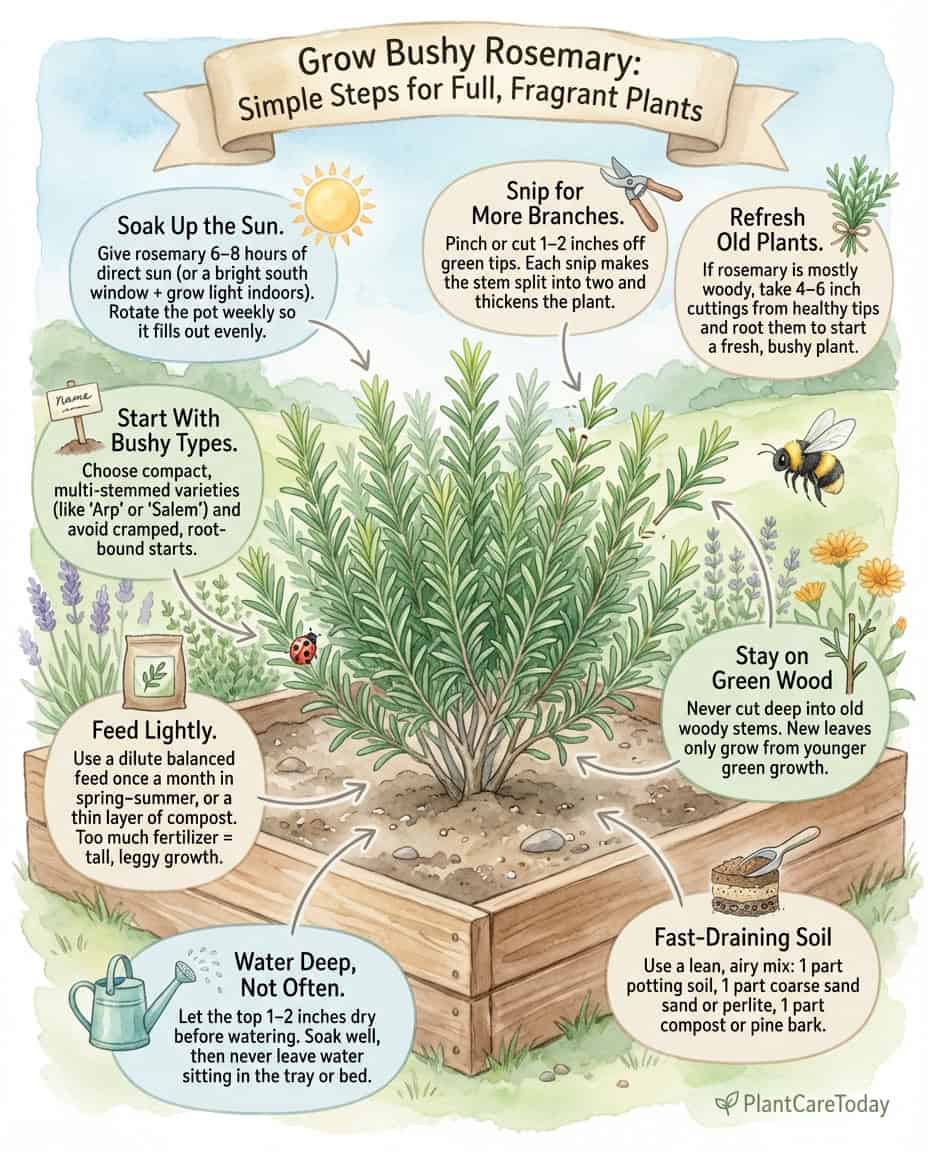
Is your rosemary reaching for the sky instead of spreading its aromatic wings? You’re not alone.
I was shocked to discover that the difference between those Instagram-worthy rosemary bushes and the spindly specimens many of us grow comes down to a few simple techniques that most garden centers never mention.
Get ready to transform your leggy herb into the lush, fragrant powerhouse it was born to be!
The Mediterranean Secret to Bushy Rosemary Glory
Before we dive into transformation tactics, let’s understand our herb. Native to Mediterranean coastlines, rosemary naturally grows woody over time, focusing energy upward rather than outward.
Like a teenager going through a growth spurt, it gets all gangly without proper guidance.
But here’s what changes everything: rosemary only produces new leaves from young stems. The game-changer for your rosemary isn’t what you think.
It’s understanding that woody parts won’t regenerate, but you can coax fresh growth from younger sections.
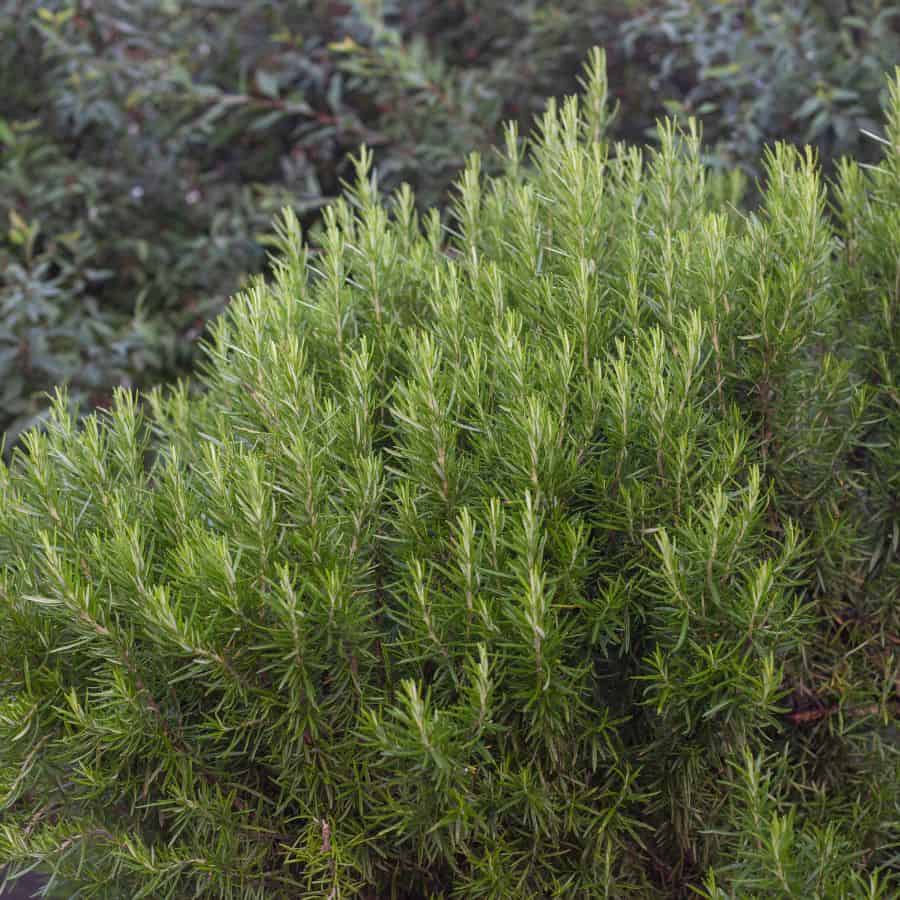
Did you know? In its natural habitat, rosemary can live over 30 years and grow to 6 feet tall. But don’t worry. We’re not aiming for a rosemary tree!
Choose Your Champion: Starting with the Right Rosemary
If you’re starting fresh, picking the right variety is like choosing between a sprinter and a gymnast; both impressive, but built differently.
- Go compact: Varieties like ‘Arp,’ ‘Blue Boy,’ and ‘Salem‘ naturally grow bushier than upright types like ‘Tuscan Blue.‘
- Multi-stemmed is best: Look for plants with several branches at the base (they’ll fill out faster)
- Check those roots: Root-bound plants struggle to branch out properly
(Already have a lanky rosemary? No worries. The next sections will still work miracles!)
Light: The Unsung Hero of Bushy Rosemary
Your rosemary is trying to tell you something important: “Feed me light!” Without it, it’s like a plant stretching desperately toward a distant sun, growing tall and sparse in the process.
For that show-stopping bushiness, rosemary needs a sunbathing schedule that would make a beach lover jealous:
- Outdoors: At least 6-8 hours of direct sunshine daily
- Indoors: A south-facing window or grow light for 12-14 hours
- Rotate weekly: Give all sides equal light exposure (prevents that awkward lopsided look)
Forget what you’ve heard about rosemary being super adaptable – while it might survive in partial shade, it will never develop that lush, full form without proper sunlight. Think of light as the plant’s protein shake for muscle development!
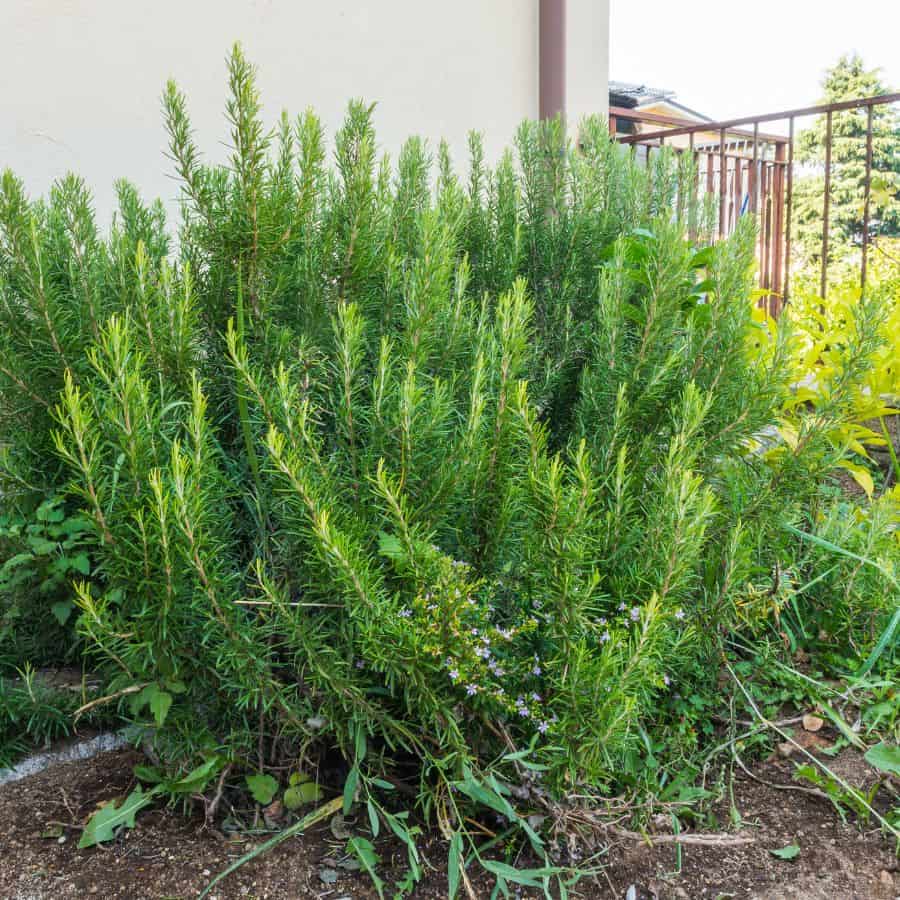
The Pruning Revelation: Snip Your Way to Fullness
Here’s where the magic happens. The secret most plant experts won’t tell you is that rosemary responds dramatically to regular pruning, but timing and technique matter more than you’d think.
Every time you cut a stem tip, the plant responds by producing two new growth points below the cut. It’s like rosemary mathematics: 1 snip = 2 new branches!
The Pruning Power Calendar:
- Spring: Major shaping after last frost (remove up to 1/3 of the plant)
- Summer: Light trims to encourage continual branching
- Fall: Minimal pruning (plant needs foliage for winter protection)
The Bushiness Technique:
- Use sharp, clean shears (crushing stems is a no-no)
- Cut just above leaf nodes (those bumpy parts where leaves meet stems)
- Focus on trimming green growth, never deep into woody sections
- Regularly pinch 1-2 inches off new tips (your fingers work perfectly)
Pro Ninja Move: Every few months, remove 1-2 of the oldest stems near the base. This creates space for fresh growth from below, reviving your plant from the ground up!
The Mediterranean Soil Mix That Changes Everything
Most people make this mistake with their rosemary: planting it in rich, moisture-retaining soil. That’s like forcing a desert-dwelling camel to live in a rainforest!
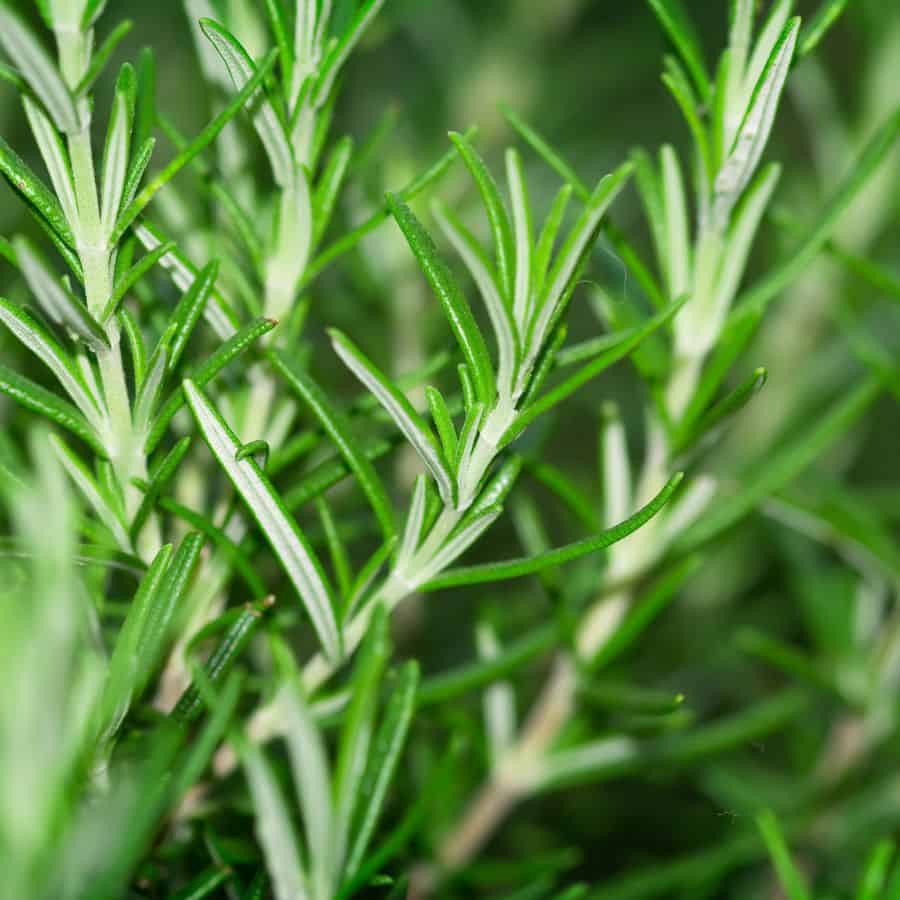
Rosemary evolved in poor, rocky coastal soils. The perfect mix mimics these conditions:
- 1 part regular potting soil
- 1 part coarse sand or perlite
- 1 part compost or pine bark
This lean, well-draining blend creates just enough stress to trigger the plant’s survival response: bushier growth and more essential oils (hello, fragrance!).
The Watering Paradox: Less Is More for Fullness
Rosemary has trust issues with water. Overwater it, and the roots suffocate. Underwater it, and growth stalls. Finding that sweet spot is crucial for bushiness.
Follow these rules religiously:
- Let the top 1-2 inches of soil dry completely before watering
- Water deeply but infrequently
- Never let roots sit in standing water
- In humid climates, water even less often
Watch for signals: Yellow leaves scream “too much water!” while crispy brown tips whisper “I’m thirsty.”
Think of watering rosemary like dating, being too eager scares it away, but complete neglect isn’t the answer either.
The Fertilizer Truth No One Tells You
Here’s a revelation: overfertilizing causes that leggy, sparse growth you’re trying to fix! Rosemary is the monk of the herb world. It thrives on disciplined restraint.
For bushy, compact growth:
- Use diluted balanced fertilizer (10-10-10) monthly duringthe growing season
- Stop feeding in late summer
- Consider a spring application of compost instead of chemical fertilizers
- If leaves look pale, a touch of seaweed extract can help without promoting legginess
Remember: excess nitrogen is the sworn enemy of bushiness. When in doubt, underfeed!
The Rejuvenation Reset: When All Else Fails
If your rosemary has gone full woody with minimal green growth, it might be time for the ultimate reset through propagation. Think of it as cloning the best parts of your plant to start fresh!

Take 4-6-inch cuttings from healthy stems, remove lower leaves, plant in a well-draining medium, and keep moist until roots develop (usually 4-6 weeks).
This technique transforms one struggling plant into multiple vibrant, bushier specimens.
The difference between amateur and pro plant parents is simply knowing when to start over. Sometimes a fresh start is the fastest path to that gorgeous, bushy rosemary you’ve been dreaming of!
Your 3-Minute Rosemary Bushiness Routine
Transform your rosemary maintenance into a simple habit:
- Weekly: Pinch 2-3 stem tips while checking moisture levels
- Monthly: Light all-over trimming to encourage branching
- Seasonally: Refresh soil’s top layer and evaluate the overall shape
This quick routine will dramatically transform your rosemary over just a few months. The best part? Those trimmings make your kitchen creations absolutely spectacular!
The Transformation Timeline
Patience, dear herb lover! Rosemary isn’t a miracle overnight plant, but the results are worth waiting for:
- 2-4 weeks: First signs of new branching after initial pruning
- 2-3 months: Noticeably fuller appearance with regular pinching
- 6+ months: Complete transformation into a lush, bushy specimen
Remember, we’re working with nature, not manufacturing widgets! Your dedication will be rewarded with a rosemary plant so vibrant and full that friends will be begging for your secrets.