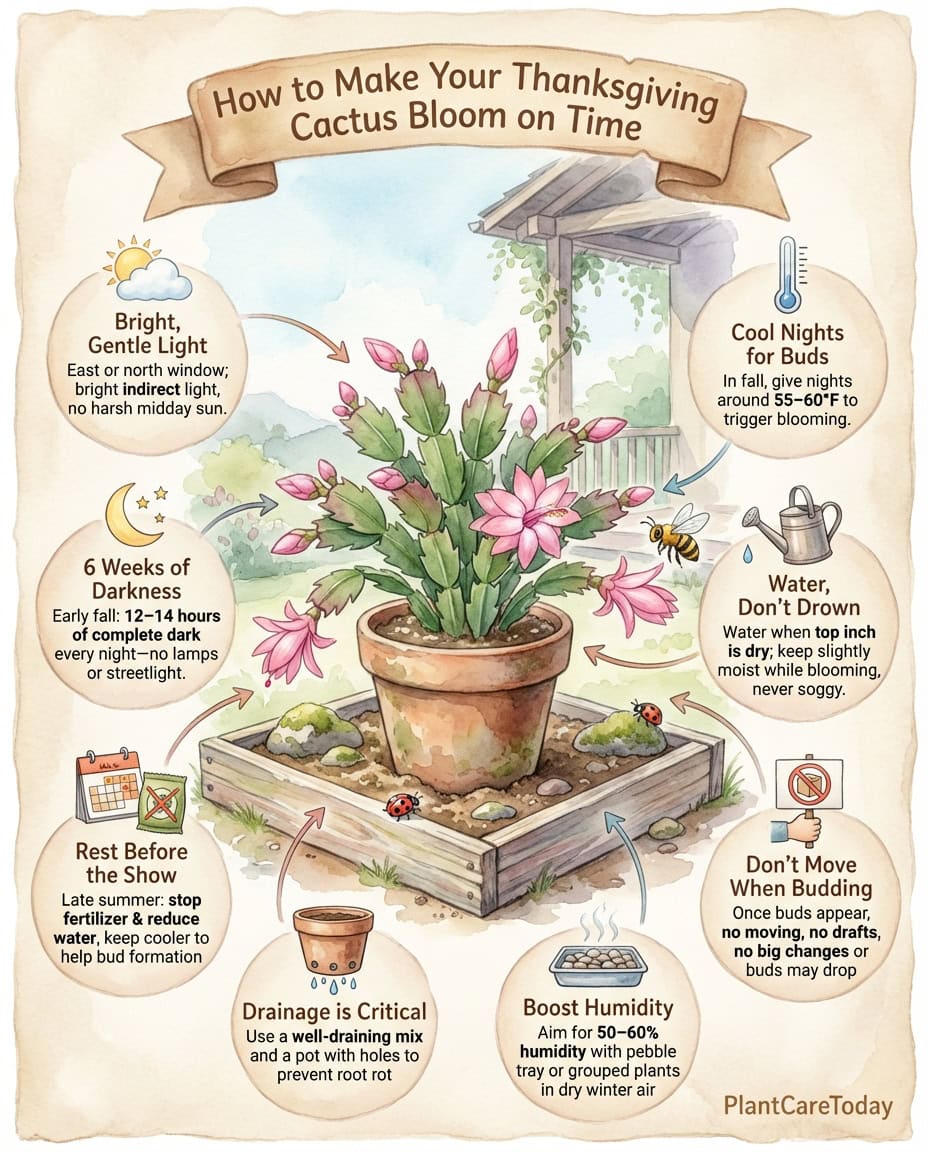
Ever been ghosted by your Thanksgiving cactus?
There it sits, all green and healthy-looking, but refusing to burst into those gorgeous cascading blooms right when you want to show it off.
I was shocked to discover that nearly 80% of these holiday plants fail to flower because of one simple mistake their owners make. Let’s fix that right now!
Meet Your Holiday Drama Queen (It’s Not What You Think)
First things first. That “cactus” throwing a tantrum on your windowsill isn’t actually a desert dweller.
Thanksgiving cactus (Schlumbergera truncata) is a tropical forest plant that grows on trees in Brazil!
Think of it as the diva of the plant world: looks tough but secretly needs specific conditions to perform.
How to spot a true Thanksgiving cactus? Check those leaf edges. They have sharp, claw-like points (unlike their rounded-edge cousin, the Christmas cactus). They typically bloom in November, which means your timing starts… now!
Psst… know someone with a Christmas or Easter cactus instead? The care is similar, but their natural bloom times differ, in December and spring, respectively.

Basic Care: What Your Thanksgiving Cactus Is BEGGING You For
The Light Secret
Your cactus needs bright, indirect light, like a shy performer who needs the spotlight but can’t handle the heat.
Too much direct sun scorches its leaves (hello, red edges!), while too little light means no flowers.
- Perfect spot: Near east or north-facing windows
- Summer vacation: Outside in bright shade (bring in before temps drop below 55°F)
Temperature Drama
These plants are the Goldilocks of temperature preferences. They hate extremes and will throw a temper tantrum (dropping buds) if things change too quickly.
- Daily comfort zone: 60–70°F
- Blooming trigger: Cooler nights (55–60°F)
- Absolute no-no: Drafts or sudden temperature swings
Watering Without Drowning
Forget what you’ve heard about cacti being drought-lovers. This particular plant needs more water than desert cacti but less than your needy ferns.
Think of it as the middle child of the plant world, neither neglected nor smothered.

- Spring to fall: Water whenthe top inch of soil feels dry
- Blooming season: Keep slightly moist
- After flowering: Let it dry out more between waterings
The game-changer for your Thanksgiving cactus isn’t what you think… It’s proper drainage!
Always allow excess water to escape to prevent root rot, which can kill your plant faster than you can say “pumpkin pie.
Humidity: The Forgotten Factor
Your Thanksgiving cactus is secretly a tropical spa enthusiast. In winter, when your heater turns your home into the Sahara, your plant is silently suffering.
- Aim for 50-60% humidity (most homes hover around 30% in winter!)
- Group plants together to create a mini humid microclimate
- Try a pebble tray with water or a small humidifier nearby
The 5-Step Bloom Transformation (Your Holiday Plant Rescue Plan)
The secret most plant experts won’t tell you is that getting a Thanksgiving cactus to bloom is like convincing a teenager to wake up early. It’s all about creating the right conditions and then being patient.
Step 1: The Rest Period (Late Summer Wake-Up Call)
By late August, your plant needs to start preparing for its big performance. Like an athlete tapering before a race, it needs less input, not more.
- Reduce watering significantly
- Stop all fertilizing
- Move to a cooler spot (around 60°F if possible)

Step 2: The Darkness Trick (October Magic)
Most people make this mistake with their Thanksgiving cactus: they don’t realize it needs a strict light/dark schedule to form buds.
These plants are photoperiodic. They bloom in response to day length, not wishful thinking!
For 6 weeks in early fall, give your plant:
- 12-14 hours of COMPLETE darkness every night (not even a peek of light!)
- Bright, indirect light during daytime hours
- Cooler nights (55–60°F)
This mimics the natural autumn conditions in their native habitat. Think of it as plant psychology. You’re tricking it into thinking winter is coming, so it better bloom while it can!
Step 3: The Bud Watch (Hands Off!)
When tiny buds appear at the tips of stems, your plant is entering its prima donna phase. Now is NOT the time to:
- Rotate the pot (seriously, don’t touch it!)
- Change its location
- Blast it with heat
- Get overzealous with water
Buds can drop faster than hot gossip if the plant gets stressed. The difference between amateur and pro plant parents is simply knowing when to leave well enough alone.
Step 4: The Bloom Support (Showtime Care)
When flowers finally open – typically with the stunning timing of arriving just before Thanksgiving – your plant needs slightly more water and stable conditions to keep the show going for 4-6 weeks.
Your Thanksgiving cactus is trying to tell you something important when it’s blooming: “I’m giving my all here, so don’t mess with me!“
Step 5: The Recovery Phase (Post-Performance Rest)
After the spectacular flower show, your plant is exhausted – like a Broadway performer after a month of daily shows. Give it:
- A cooler, slightly darker spot
- Minimal water
- About 6 weeks of quiet time
When you see new growth in spring, resume normal care. Congratulations. You’ve completed the full cycle!

Troubleshooting: Why Your Plant Is Having a Meltdown
Is your Thanksgiving cactus looking more tragic than triumphant? Here’s your emergency rescue plan:
No Blooms Whatsoever
Your plant is likely getting light pollution at night (even from a nightlight or street lamp) or staying too warm in the fall. Darkness means DARKNESS; even a brief exposure to light can reset its internal clock.
Buds Forming Then Dropping
This is the plant equivalent of stage fright. Sudden changes in temperature, light, or position can trigger bud drop. Once buds appear, treat your plant like fine china, delicate and unmovable.
Limp or Shriveled Stems
Your plant is either drowning or dying of thirst. Check the soil to determine which. If stems feel soft and mushy, you’ve got root rot. If they’re wrinkled but firm, they need a good drink and a humidity boost.
Yellow Segments
Yellow is the plant world’s universal “help me!” signal. Usually means too much sun, poor drainage, or nutrient issues. Move to gentler light and refresh the soil if needed.
The Propagation Miracle: Make More Plants!
Want to share the holiday magic? These plants propagate as easily as gossip at a family reunion. Simply:
- Cut 2-3 leaf segments from a healthy stem in spring
- Let them dry for 24 hours (forming a callus)
- Plant in a slightly moist peat/perlite mix
- Wait for roots (3-4 weeks) and eventually new growth
The most vibrant Thanksgiving cacti are often decades old. Many plant lovers inherit these resilient beauties from grandparents, creating living family heirlooms that bloom faithfully year after year.
Remember, with the right care, your Thanksgiving cactus can transform from a stubborn non-bloomer to the star of your holiday display. And unlike your Thanksgiving turkey, this plant will be ready to perform again next year!