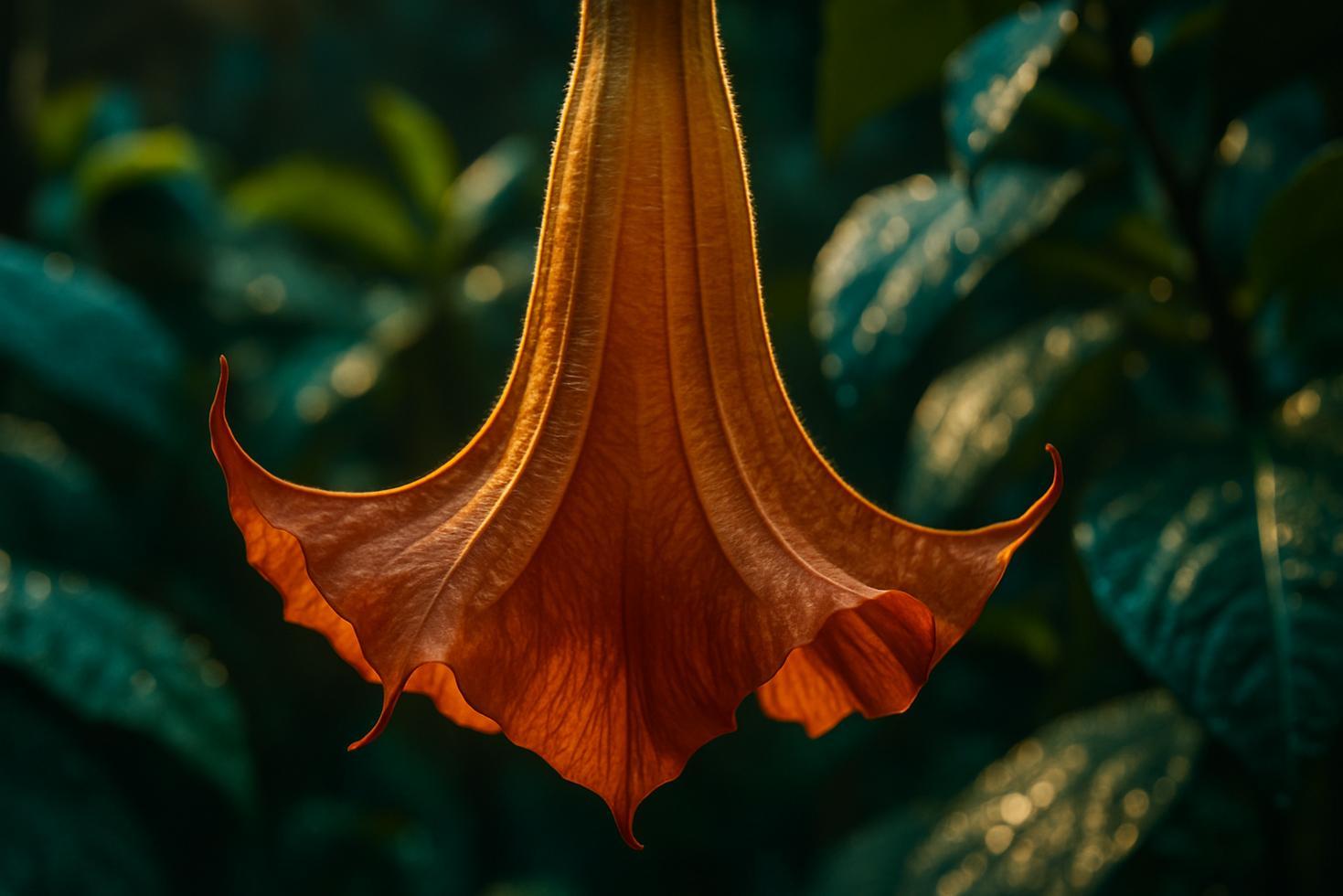
Older Brugmansia flowers average 1.81 mg total alkaloids per bloom — nearly double a younger plant’s load — and organic fertilizer measurably pushes that number higher.
A single angel’s trumpet flower from an older Brugmansia plant can contain up to 3 mg of scopolamine per bloom. That figure comes from a German toxicology study examining 66 flowers across plants of varying ages — not an outlier estimate, but a documented ceiling in measured specimens. The blooms hang wide open and pale, which is part of what makes the chemistry inside them so striking.
Scopolamine blocks muscarinic acetylcholine receptors, disrupting the signals that regulate heart rate, memory formation, and sensory perception. The result is a clinical anticholinergic toxidrome: dilated pupils, tachycardia, hyperthermia, hallucinations, and delirium. Fatalities in humans have been reported at atropine doses around 10 mg, and ingesting roughly 10 flowers can approach that threshold.
How Alkaloid Load Changes as Brugmansia Ages
The age gap in alkaloid content is substantial. Younger plant flowers average around 0.94 mg total alkaloids per blossom. Older plants nearly double that, averaging 1.81 mg, with some individual flowers reaching 3 mg of scopolamine alone.
This pattern aligns with how plants allocate chemical defenses. Reproductive structures accumulating higher toxin loads than vegetative tissue is a documented pattern across the Solanaceae family. Flowers in related Datura arborea show roughly three times the scopolamine concentration of leaf tissue on a dry-weight basis.
How Fertilization Affects Scopolamine Concentration in Flowers
One study on Brugmansia suaveolens found that organic fertilization at 6 kg/m²/year increases alkaloid concentrations in the flowers. The mechanism reflects a broader pattern: nutrient availability fuels secondary metabolite production, including the tropane alkaloid pathway.
Flower nectar also carries the chemistry. Scopolamine concentration in Brugmansia nectar has been measured at approximately 149 µg/mL, which creates exposure risk beyond simple ingestion of plant tissue.
Why Flowers Dominate Angel’s Trumpet Poisoning Cases
Flowers account for 77% of poisoning cases. Leaves account for 13%, fruits 4%, stems 2%, and roots 2%. The flowers are the most handled and most visually prominent part of the plant.
All parts contain tropane alkaloids, but seed capsules and flowers carry the heaviest loads. Alkaloid concentration also shifts with season, maturation stage, and hydration, which makes any single exposure unpredictable in outcome.
Medical management guidelines recommend gastric lavage and activated charcoal within 48 hours of ingestion, reflecting how persistent the anticholinergic effects can be.
The chemistry inside a Brugmansia flower isn’t static. It compounds with age, responds to soil inputs, and concentrates precisely where human hands are most likely to reach. The bloom that looks most ornamental is often the one that’s been accumulating alkaloids the longest.
Frequently Asked Questions
How much scopolamine is in one angel’s trumpet flower?
A typical bloom contains approximately 0.65 mg scopolamine, but flowers from older plants can carry up to 3 mg per blossom.
How many angel’s trumpet flowers are dangerous to a human?
Ingestion of roughly 10 flowers has been identified as potentially fatal, based on per-flower alkaloid content and documented human lethal doses near 10 mg of atropine.
Does fertilizing angel’s trumpet make it more toxic?
One study found that organic fertilization at 6 kg/m²/year measurably increases alkaloid concentrations in the flowers of Brugmansia suaveolens.
Which part of angel’s trumpet is most toxic?
Seed capsules have the highest alkaloid concentrations, followed by flowers. Leaves contain lower but still significant levels.