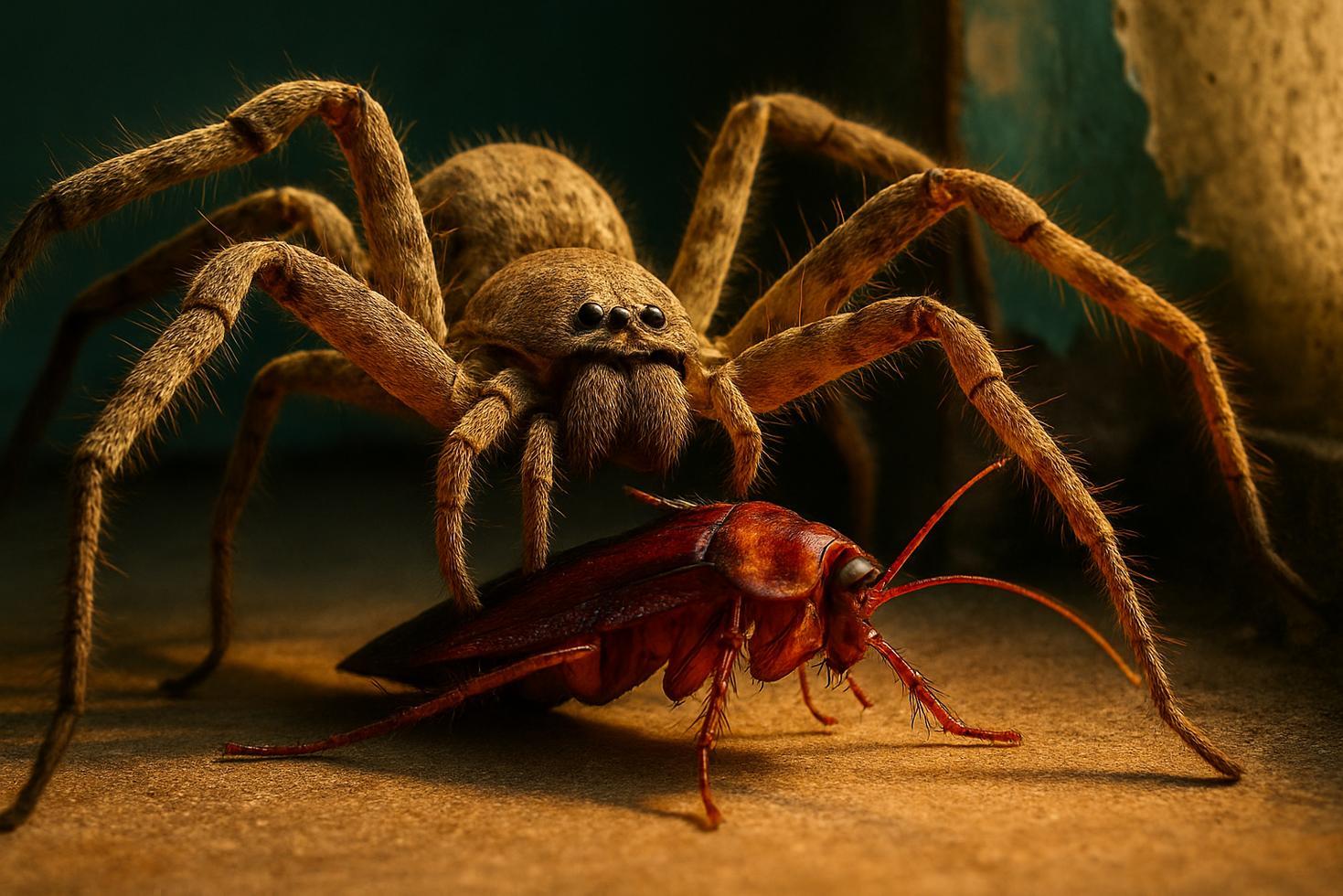
A huntsman spider shares a wall with cockroaches, moths, and flies every night — not because it wandered in randomly, but because the prey arrived first.
A huntsman spider found roaming an indoor wall at night is a direct indicator of an established insect population inside that structure. That fact reframes the whole encounter. The spider did not choose the home for its own sake — pest-control and natural history sources agree its indoor presence is closely linked to prey availability, particularly cockroaches, moths, and flies already living in the walls, kitchen, or bathroom.
Huntsman spiders belong to the family Sparassidae, a group of large, flat-bodied, fast-running spiders found across warm temperate and tropical regions worldwide. They build no prey-catching webs. Instead, they leave daytime refuges — wall cracks, the backs of curtains, gaps behind furniture — each evening to actively chase down insects using speed and vibration-sensing through their legs.
How Huntsman Spiders Actually Hunt Indoors at Night
These spiders are cursorial hunters — they rely on rapid bursts of movement rather than ambush traps. Australian Geographic reports that huntsman spiders detect prey through a combination of eyesight and vibrations transmitted through surfaces via their legs. Once a target moves, the spider closes the distance fast, using venom to immobilize rather than a sticky thread to hold.
Their flattened bodies let them slip through the same narrow gaps that cockroaches use. Bathrooms are a documented hotspot: Florida pest specialists note that huntsman spiders enter bathrooms at night seeking both moisture and prey — specifically drain flies and small roaches already present.
What a Huntsman Spider’s Presence Reveals About Insect Populations
Pest-control sources are explicit on this point: repeated indoor sightings indicate a well-established insect population in or around the structure. The spider does not create the infestation. It responds to one already running.
Australian Geographic calls them “your friendly neighbourhood insect control” and notes they help manage cockroaches and insects that damage plants. Pest reduction from a single spider remains qualitative, not precisely measured — no robust data quantifies exact nightly prey consumption in domestic settings — but the directional effect is consistently described as real and meaningful by both pest professionals and naturalists.
Huntsman Spider Venom and Bite Risk
Huntsman spiders are consistently classified as low medical concern. Their venom immobilizes insect prey and is not considered medically significant for humans. A bite typically produces local pain, mild swelling, or redness similar to a bee sting, resolving within one to two days.
Bites are defensive and almost always occur when the spider is trapped in clothing, pressed against skin, or grabbed directly. The spider’s default response to disturbance is rapid retreat, not confrontation. Australian Geographic notes one huntsman researcher was bitten multiple times only while spiders were actively defending themselves.
Closing
A huntsman spider on the wall at night is doing exactly what its biology requires — following prey that moved in quietly long before the spider appeared. The cockroaches and flies were the first arrivals. The spider is the consequence, not the cause.
Frequently Asked Questions
Why do huntsman spiders come inside houses?
Their indoor presence is tied to prey availability and shelter. Cockroaches, flies, and moths already living inside a structure draw huntsman spiders in.
Are huntsman spiders dangerous to humans?
No. Bites cause local pain and redness lasting one to two days, similar to a bee sting, and are almost always the result of the spider being grabbed or trapped.
Should a huntsman spider found indoors be killed?
Pest specialists in both Australia and Florida recommend relocating them outdoors, where they continue controlling insect populations without entering the home.
How do huntsman spiders hunt without a web?
They detect prey through vibrations picked up by their legs and short-range vision, then chase it down using rapid locomotion and immobilizing venom.