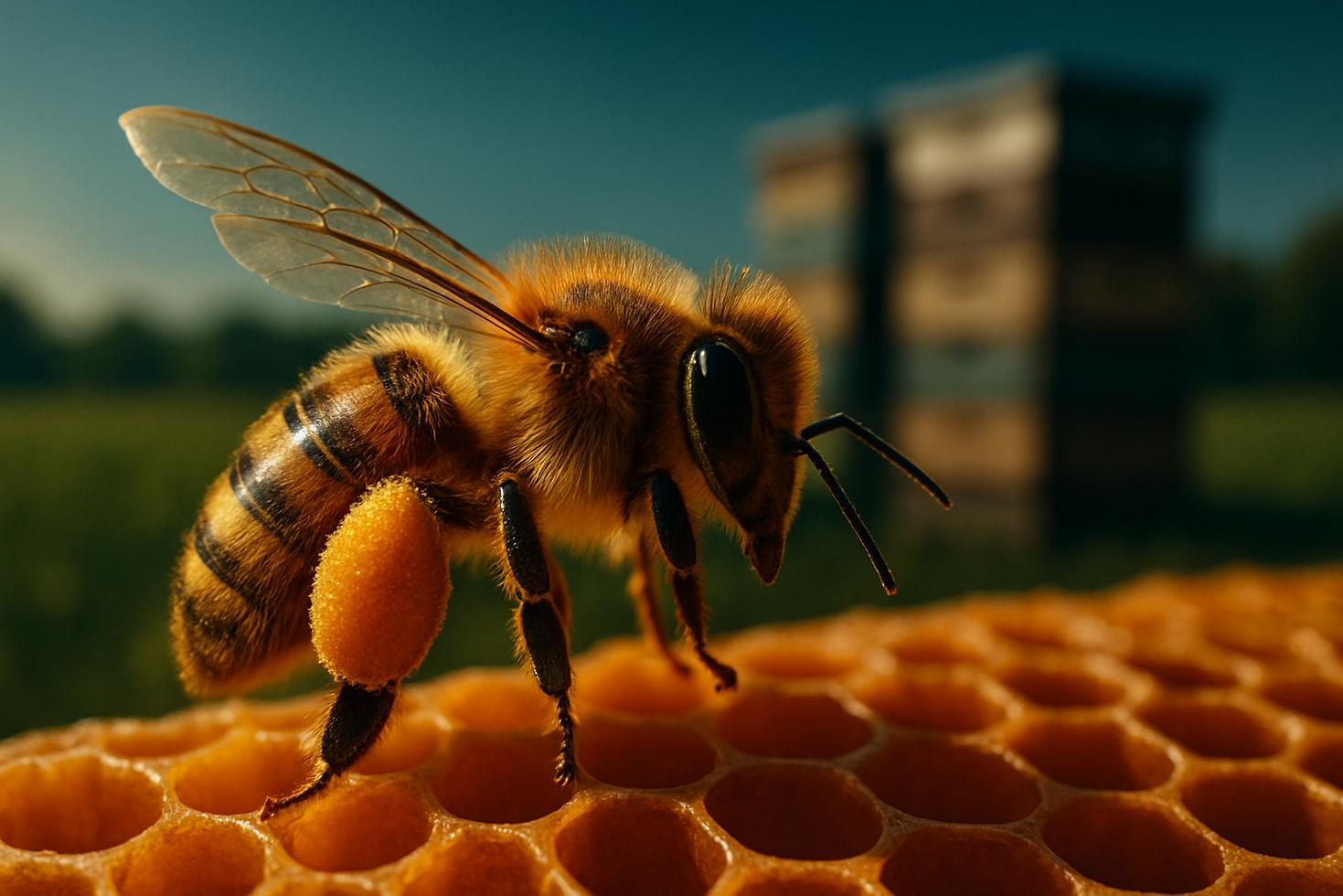
Ten honeybee colonies per acre — not income records, not the beekeeper’s résumé — is the single threshold Maryland uses to confirm a parcel is in genuine agricultural production.
Maryland’s agricultural use assessment program taxes land at its farm value rather than its market value, and beekeeping qualifies — but only if the apiary reaches exactly 10 colonies per acre. That number isn’t symbolic. It’s the line Maryland drew between a working landscape and land sitting idle while its owner waits for a developer’s offer.
What makes the standard quietly fascinating is its unit of measurement. Most tax systems want receipts. Maryland looked at bees and decided the colony count is the proof.
What Maryland’s Agricultural Use Assessment Actually Measures
The program’s legal foundation is Maryland Tax-Property Code §8-209, implemented through COMAR 18.02.03.02. The state looks at actual and primary continuing agricultural use — not the owner’s identity or personal income in most cases.
For general qualification, a parcel needs at least 5 acres of land actually devoted to agricultural activity. Parcels between 3 and under 5 acres must satisfy an income test. Maryland’s minimum gross income threshold is $2,500 per year for those smaller parcels unless the land is part of a family farm unit.
Parcels under 20 acres face the most scrutiny and qualify only under specific conditions. Once land is declared, Maryland guidance in some counties requires it to remain in agricultural use for at least five consecutive taxable years.
How the 10-Colony Rule Functions as Documentation
For beekeeping specifically, Maryland’s Assessment Procedure Manual sets the 10-colony-per-acre standard as the qualifying density. A signed declaration isn’t sufficient on its own.
Each reassessment cycle, the Supervisor of Assessments must receive yearly apiary inspection recertification from the Maryland Department of Agriculture. The hives must be physically present and actively managed. The inspection record, not the beekeeper’s word, is what stands as proof.
This makes colony density a land-use qualification mechanism. A sufficiently dense, documented apiary signals continuing agricultural production rather than speculative holding.
The Tax Consequence of Meeting the Threshold
Land that qualifies is assessed at its agricultural use value rather than at the “highest and best use” rate that would reflect residential or commercial development potential. In Maryland’s land market, that gap between agricultural value and market value can be substantial.
The practical effect is that active beekeeping can shield acreage from speculative tax escalation, provided the colony count and inspection records stay current every cycle.
—
Meeting the threshold annually is what keeps the classification alive. Miss an inspection cycle, let colony counts fall, and the agricultural rate disappears with the bees.
Frequently Asked Questions
What is the minimum number of beehives per acre for Maryland agricultural use assessment?
Maryland requires at least 10 honeybee colonies per acre for beekeeping to qualify as an agricultural land use.
Does Maryland require income records for beekeeping to qualify?
Not for the colony-count test itself, though parcels under 20 acres may face a separate $2,500 average gross income requirement depending on acreage.
How does Maryland verify that beekeeping is actually happening?
The Maryland Department of Agriculture conducts apiary inspections, and the Supervisor of Assessments must receive recertification of those inspections each reassessment cycle.
How long must land stay in agricultural use after qualifying?
Some county-level Maryland guidance requires at least five consecutive full taxable years of continuing agricultural use after the initial declaration.