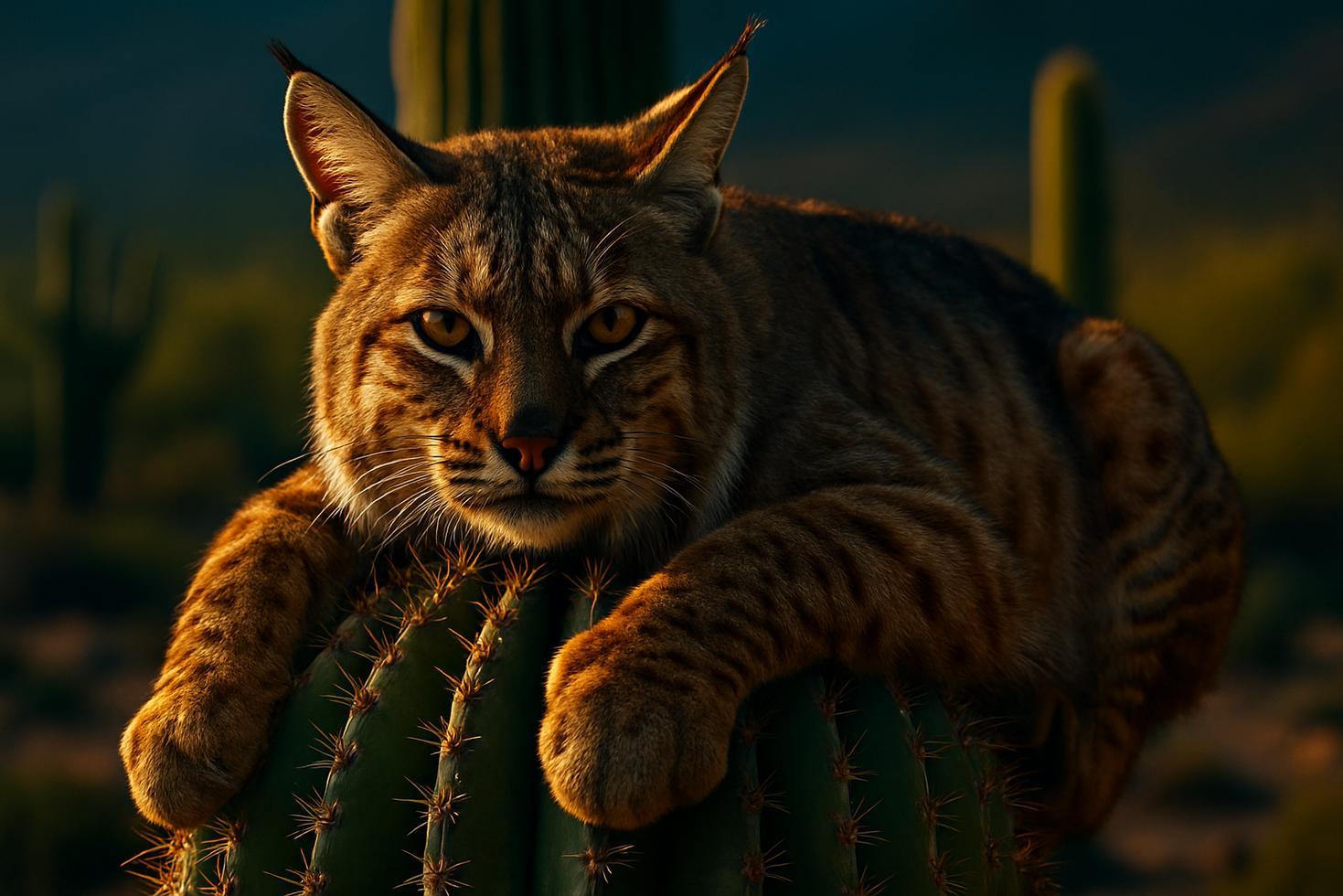
A bobcat sprawled across a saguaro top spreads its weight across dozens of spines at once — no single point can pierce through. Coyotes below can’t climb a single inch. The sharpest bed in the desert is also the safest.
Bobcats have been photographed and filmed resting on top of tall saguaro cacti in the Sonoran Desert, apparently using the elevation as a refuge from ground-based threats. What looks like an act of masochism turns out to be straightforward mechanics. The combination of thick digital paw pads, body fur, and distributed weight across dozens of spines reduces the pressure any single spine exerts to a level that doesn’t cause obvious distress.
That biomechanical reality unlocks something remarkable. Saguaros commonly reach 12–15 meters at full maturity, and coyotes — the bobcat’s primary competition on the desert floor — cannot climb them. The most hostile-looking surface becomes a barrier nothing else can cross.
How Bobcat Paw Anatomy Makes the Saguaro Surface Tolerable
Felid digital pads are fibrofatty cushions built for load distribution and shock absorption. When a bobcat lies flat, weight spreads across multiple contact points, so no single spine concentrates enough pressure to drive through pad tissue and fur. Bobcats also carry fur between their toes, adding another layer between skin and spine tip. This isn’t immunity — cactus spines can penetrate soft tissue if angle and force are right — but the geometry of lying flat changes the math significantly.
Why Saguaro Height Matters as a Predator Barrier
A mature saguaro’s smooth, spine-covered column gives coyotes and similar ground predators nothing to grip. The elevation isn’t just distance; it’s an effectively unclimbable vertical surface. Viral footage documented one bobcat remaining atop a tall saguaro for hours, consistent with using it as a refuge rather than a brief transit point. Elevated positions also offer unobstructed sightlines across the desert floor — a functional advantage for an animal monitoring threats below.
Frequently Asked Questions
Can cactus spines actually hurt a bobcat?
Yes. Bobcat pads and fur are protective but not impenetrable — cactus spines can pierce skin if force and angle are sufficient, so claims of full immunity are exaggerations.
How tall are the saguaros bobcats climb?
Mature saguaros commonly reach 12–15 meters (roughly 40–50 feet); the heights described in documented bobcat sightings fit this upper range.
Do bobcats prefer saguaro tops over other resting spots?
No preference data exists. Bobcats also use rock ledges, brush, and tree branches; cactus use is visually striking but appears to be situational rather than a routine choice.
What keeps coyotes from following a bobcat up a saguaro?
Saguaros have no usable handholds, and their dense spine coverage makes gripping impossible for a coyote’s paws. Elevation on a cactus column is a physical barrier, not just a height advantage.