
Chlorophytum comosum (kloh-roh-FY-tum kom-OH-sum) is one of the most resilient plants out there. So when something goes wrong, it can catch you off guard.
These South African natives were among the first plants tested by NASA for air-purification capabilities. They are a favorite among homeowners for their ease of care and non-toxicity to cats and dogs.
But your spider plant can get sick, and two of the most common symptoms are yellow or brown leaves.
Yellow leaves can indicate a serious issue, so it’s important to identify the cause quickly.
Why Is My Spider Plant Turning Yellow?
Yellow leaves can indicate pest problems, disease, or care deficiencies.
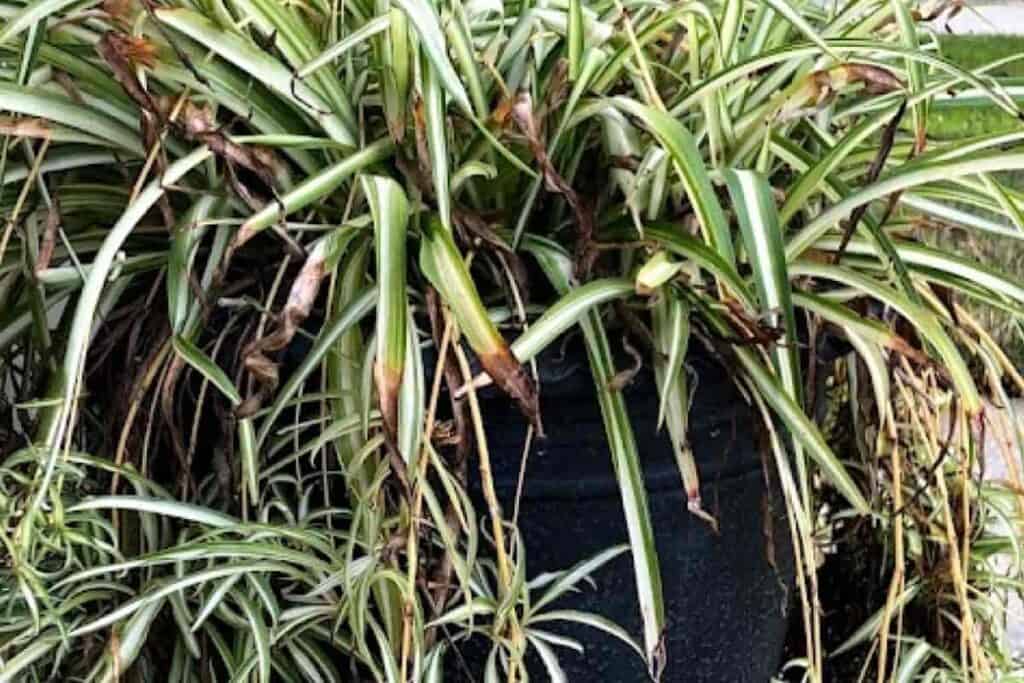
Check each problem as soon as you notice yellowing to prevent lasting damage to your plant.
Problem #1: Pest Issues
One reason spider plant owners notice yellowing leaves is a pest infestation.
Several pests attack spider plants, such as aphids, mealybugs, and spider mites.
These pests hide on the undersides of leaves and pierce the surface. They drain sap and leave honeydew deposits, which can lead to powdery mildew and other issues.
You can use neem oil, hydrogen peroxide, or another pet-safe, natural product to eliminate the infestation so your plant can heal.
Problem #2: Disease
Discoloration of spider plant leaves is often the first warning sign of an infection.
The most common of these diseases is root rot, a fungal infection caused by excessive water.
Failing to treat the rot promptly can kill your plant, so it’s important to use treatments if you believe you’ve been overwatering it.
The best treatments are neem drenches or soaks, neem cakes, and hydrogen peroxide drenches.
Problem #3: Care Deficiencies
Even though they’re not picky, the most common reason spider plant leaves turn yellow is too much or too little care.
The following factors can all cause leaf yellowing and are usually easy to remedy.
Light
Your spider plant can handle a wide range of lighting conditions, from shade to bright light.
Avoid direct sunlight, which can cause sunburn.
The plant will grow more slowly in the shade, and the leaves will darken. But when it gets too much direct sunlight, the leaves can turn yellow.
The yellowing results from different chloroplast types in the leaves reacting to specific light levels or intensities, as the leaves attempt to achieve the optimal amount of light for photosynthesis.
If too much light is the issue, move the plant to a location with more indirect light.
You can also occasionally rotate the plant to ensure all sides get equal lighting if you notice one side is a darker green than the other.
Moisture
Spider plants prefer low moisture and can turn yellow when there’s too much or too little water.
Insert your finger into the soil to check the moisture. The first 1″ to 2” inches of soil should be damp to the touch, and it’s best to water when the top inch of soil is almost dry.
If you encounter dry soil, your plant is probably dehydrated.
Likewise, excess water can cause yellowing and lead to root rot.
If the soil is still moist or your pot has poor drainage, you’ll want to reduce how often you water your spider plant.
Remember, spider plants are somewhat drought-tolerant and can withstand low humidity levels, so too little is better than too much.
The best thing is to set a consistent watering schedule to ensure you water indoor plants when they need it.
This simple method can prevent overwatering or underwatering. Keep the soil moist as needed with a spritz or two of water from a spray bottle between scheduled waterings.
Finally, there may be an issue with the quality of the water you’re using.
Tap water contains many chemicals that can be harmful to plants. Switch to distilled water when watering the plant again.
Soil and Food
Good potting soil is usually all your spider plant needs. Excessive fertilizer or high salt levels can cause chemical burns and yellow leaves.
To prevent salt buildup and excess minerals, and ensure your plant’s soil has enough nutrients to maintain its health, repot or replace the soil each spring.
Another benefit of repotting is to reduce binding. Spider plants don’t mind being root-bound, but this can slow growth and deplete the soil of nutrients more quickly as the root ball fills the pot.