Mention the word “garden,” and the first image that comes to most people’s minds is a tomato! Big juicy beefsteak tomatoes, small cherry tomatoes, plum, yellow, orange, heirloom, and even ones called “ugly”!
We’ve put together a resource on tomato growing, from planting to harvesting, with lots of guidance along the way. Read on to learn more about tomato growing secrets
When the tomato was first introduced into cultivation from South America, it was grown only as an ornamental in European and North American gardens under the name love apple.
Belonging to the nightshade family and having several poisonous relatives, the fruit was long regarded with grave suspicion.
But, some unbeliever must have eaten one without dire results. It is said to have been mentioned as a vegetable in North America as early as 1781, and several references to planting “tamatas” are found in Thomas Jefferson’s Garden Book.
Nevertheless, it was slow to gain popularity. Today, the tomato is widely regarded as a highly nutritious and delicious food and is grown on a large scale.
Recommended Tomato Varieties: The University of Illinois Extension has a list of recommended tomato varieties (determinate and indeterminate) for you to evaluate for your use and culture.
Growing Tomatoes From Seed: Some “in the dirt” experience, lots of images and info from starting tomato seeds to transplanting, and even some troubleshooting.
When Should You Sow Tomato Seedlings: With growing tips and tricks ranging from the seasonal time to do the job, and what to look for when you get to start your tomato growing season!
Now, we continue with tips for growing tomatoes.
Growing Tomatoes
Grow Tomatoes Upside Down: Pros and Cons: Truth is, the tomatoes will grow “upside down,” but are they really better grown that way?
Tomato Gardening 10 Must Know: The dream of every tomato grower is to have a bounty of the reddest, tastiest, juiciest, perfect-looking tomatoes in the neighborhood, which puts the ones in the grocery store to shame.
Growing Heirloom Tomato Plants: Many gardeners today are drawn to heirloom tomatoes for their unusual shapes, diverse colors, flavors, plant types, leaves, and non-GMO status. Learn about saving heirloom seeds here…

The Alaska Grow Bucket System: A wonderful solution for people who assume they don’t have enough room to garden, or it is just too time-consuming.
How To Build A 5 Gallon Self-Wicking Tomato Watering Container: If you’re looking for an easier way to water these fruits in your garden, check out this self-wicking tomato watering container.
Advanced Tomato Care
13 Tomatoes Growing Do’s and Do Not’s: 13 things you should do and others you should not do in growing great tomatoes from Gardening Jones.
How A Professional Plants Tomatoes: Find out how and what these pros do, from digging a hole, providing a well-drained soil, potting mix or potting soil, prepping the bed, spacing, mulch, pots, fertilizers, epsom salt, fish heads, compost, and lots of other stuff.
How to Deep Water Tomato Plants: While drip watering is effective, it may not be enough. See how Rebecca deep waters her plants – excellent solution.
10 Steps To High-Yielding Tomatoes: By following a few tips, including selecting the right tomatoes for your area, you can harvest 50 to 80 pounds per plant.
How to Prune Tomatoes for Better Harvest Pruning can maximize yields and improve flavor. Check out this step-by-step process.

Speed up Tomato Ripening: Desperate Gardener shares how to pick early and accelerate the ripening process.
Why Tomatoes Crack When Growing: For helpful info on ways to handle the cracking tomato problem!
21 Common Problems Growing Tomato Plants: There is something special about picking a fresh, juicy tomato from your own garden. Beyond the process itself, fungal diseases such as blossom-end rot and pests such as tomato hornworms pose challenges for tomato growers. GardenHarvestSupply has a list of the 10 most common tomato growing problems.
Tips and Tricks for Ripping Tomatoes: These tips will help tomatoes ripen a little faster.
Tomato Blossom Drop and How to Control It: Tomato blossom drop is a common issue for tomato growers and can be extremely frustrating for home gardeners.
How To Plant 11 Tomato Plants Using The Square Foot Gardening Method: John from growingyourgreens.com shows you how to maximize your tomato plant yield even when your garden space is at a premium.
Sweet Tomatoes: Try Epsom Salt. Here is a helpful tip to get the sweetest tomatoes each year.
Coffee Grounds + Egg Shells = No Blossom-end rot
Tomato Cages
Build The Stake-A-Cage For Under $2: At the Old World Garden Farms blog, they show and discuss their “Stake-A-Cage” tomato cage. Simple, smart, and does the job.
Make the Ultimate Tomato Hoop House Trellis and allow your tomatoes to reach their full potential.
Build a Super Sturdy Tomato Cage: Providing the support your tomatoes need only enhances their safety and growth.
More uses for tomato cages besides growing tomatoes
Tomato Ideas
How To Make Perfect Sun-Dried, Dashboard-Dried, Homegrown Tomatoes?: Check out this unusual trick on how to make your own perfect sun-dried or roasted tomatoes.
Make Olive Oil-Packed Sun-Dried Tomatoes with Basil: The tomatoes and basil infuse the olive oil, which is lovely on salads, for dipping bread, or drizzled over grilled peppers and eggplant.
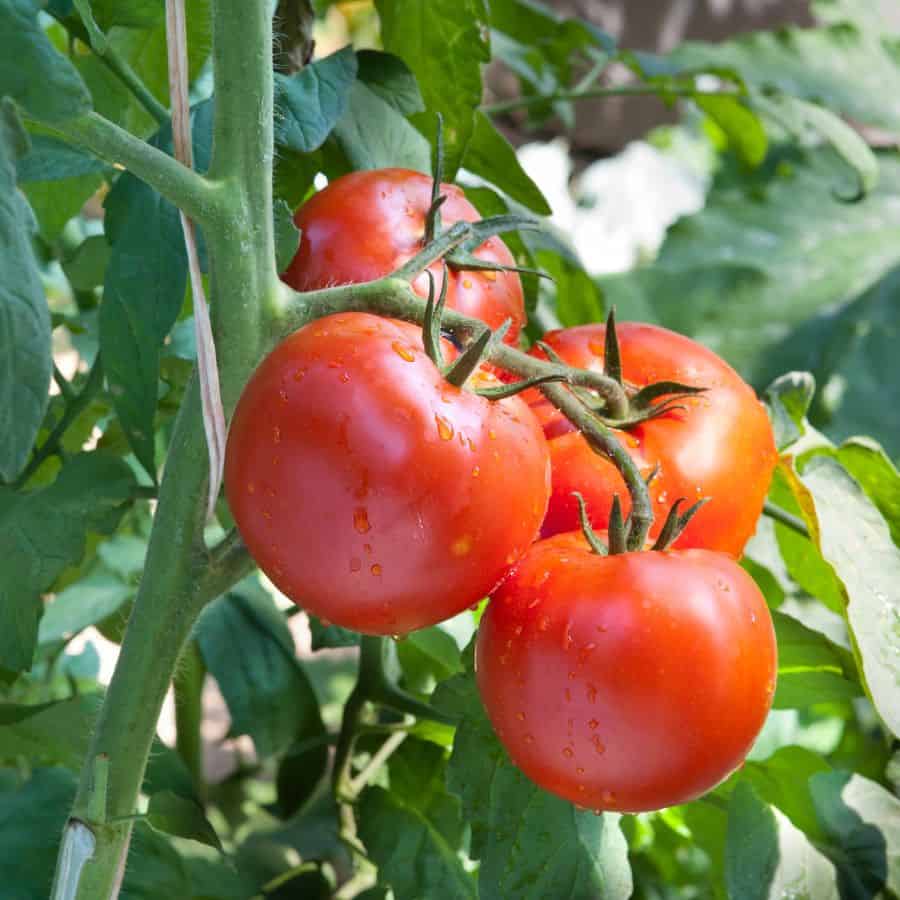
You Can’t Beat Tomatoes For the Small Garden
For home gardens, tomatoes are among the most productive and satisfying vegetables and are never as delicious as when ripened on the plants.
Things have not changed much over the years. Yes, there are new fertilizers, chemicals, and fancy tomato cages, but the basics have remained the same for decades.
Read below (with minor edits) how “Tomato Growing” was described back in 1961 in a popular gardening magazine.
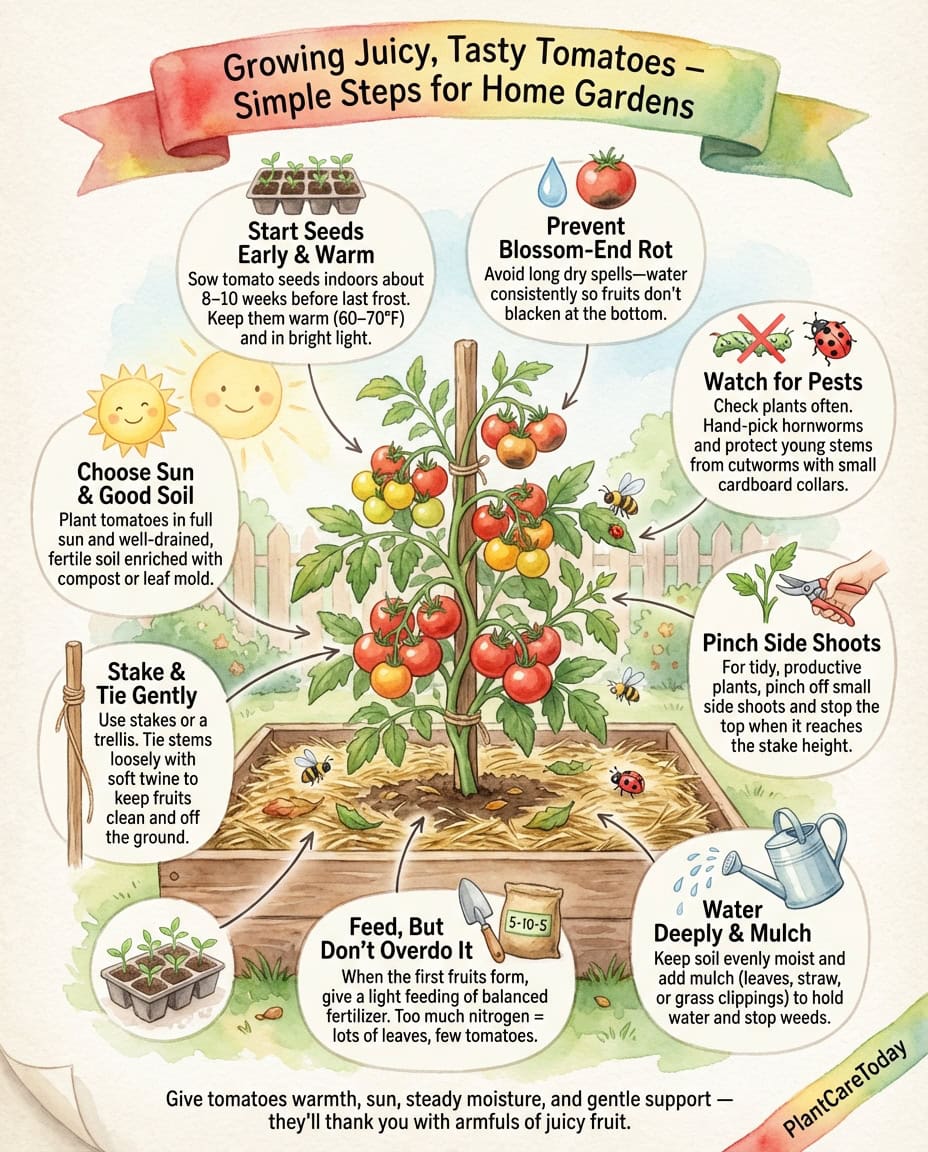
Sowing Tomato Seeds
To get an early crop, especially in the North, seeds are sown about 10 weeks before it is safe to set the plants outside.
Those fortunate enough to have a greenhouse can raise sturdy seedlings in a mixture of equal parts soil, leafmold, or peatmoss, and sand, kept moist at 60-70 degrees.
It is easy enough to get seedlings started indoors. The problem is to find enough sunny space for the plants when they need to be transplanted.
If you start them indoors, place them in flats with a slightly heavier soil mixture, spaced 2 inches apart, or plant them singly in 3-inch pressed peatmoss pots.
Since plants in peat pots can be set out, pots and all, they suffer no setback at that time.
Planting Tomatoes in The Garden
Tomatoes thrive best in a well-drained, fertile soil and a sunny location. Stir the soil a foot or more, mixing in some leafmold or other humus, plus a sprinkling of superphosphate to get the plants off to a good start.
Tomatoes root readily along the main stem, so leggy plants can be set deeper than many other plants. But don’t be in a hurry to distribute them.
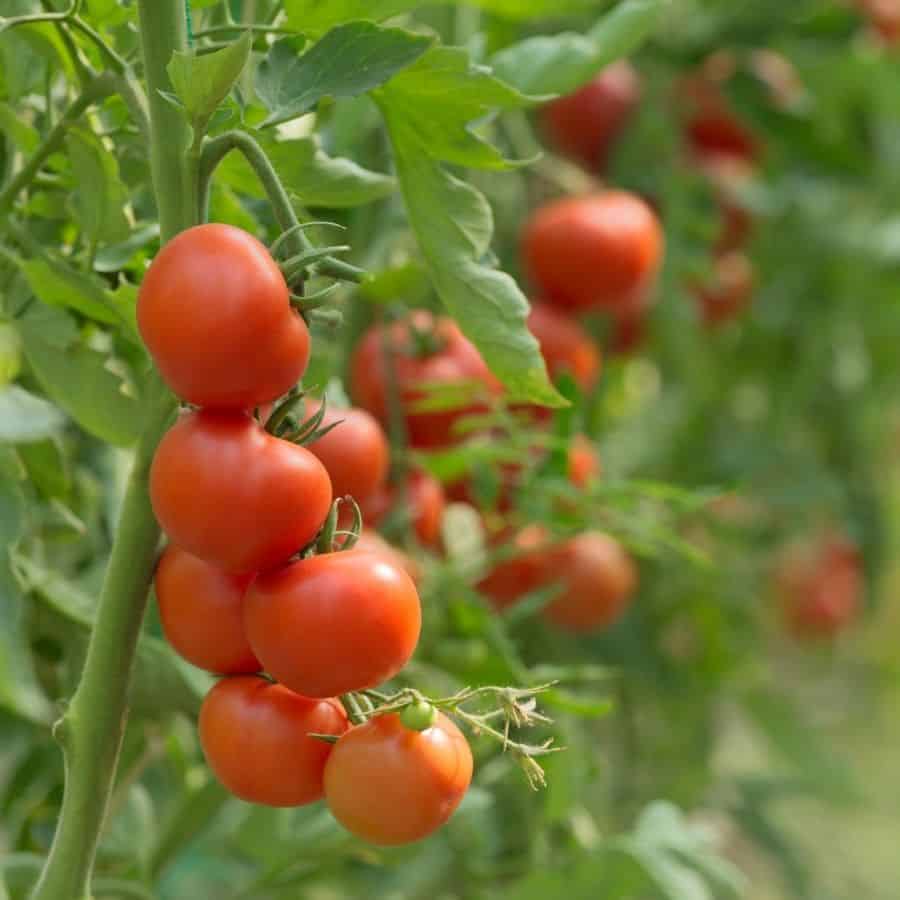
The plants make better progress if they are not exposed to cold, even though a covering may be provided against late frosts. Ensure the plants are well-soaked before setting them out to settle the soil.
In the home garden, it pays to train the main stems on stakes or trellises (now we use tomato cages) rather than to allow them to sprawl over the ground.
Space is saved, and cleaner, unblemished fruits are obtained. I train mine to a single stem on stakes set 20 inches apart within the row, with 30 inches between rows.
I prefer 5 to 6 feet of stake above ground. Another support method is an A-shaped trellis, 4 to 5 feet high, to support a double row of plants set 3 to 3 1/2 feet apart, with 2 or 3 stems trained from the base of each plant. All side shoots should be pinched out as they appear.
Tomato Pruning, Staking, and Fertilizing
As growth proceeds, tie promptly. A soft binder twine works well, as do Twist-ems or strips of old sheeting. There will be no slipping or strangulation if the tying material is passed twice around the stake, then crossed over and tied around the stem.
When the first cluster of fruit shows, sprinkle a handful of 5-10-5 fertilizer around each plant and water it in. In light soils, make another application if the plants show a need, as indicated by slow growth.
However, too much nitrogen should be avoided as it produces lush vegetative growth at the expense of fruit.
When growth is well underway, a mulch of half-rotted leaves, old hay, or cut grass can be spread after a rain to conserve soil moisture and suppress weeds.
When the plants reach the tops of the supports, stop further upward growth by pinching off the tips.
Tomato Pests and Disease
Cutworms always seem to be waiting for tasty young tomato plants, but their evil work can be thwarted by placing 3-inch collars of thin cardboard around each and pressing them about an inch into the soil, by sprinkling chlordane around and on the stem at the soil line, or by scattering poison bait between the plants.
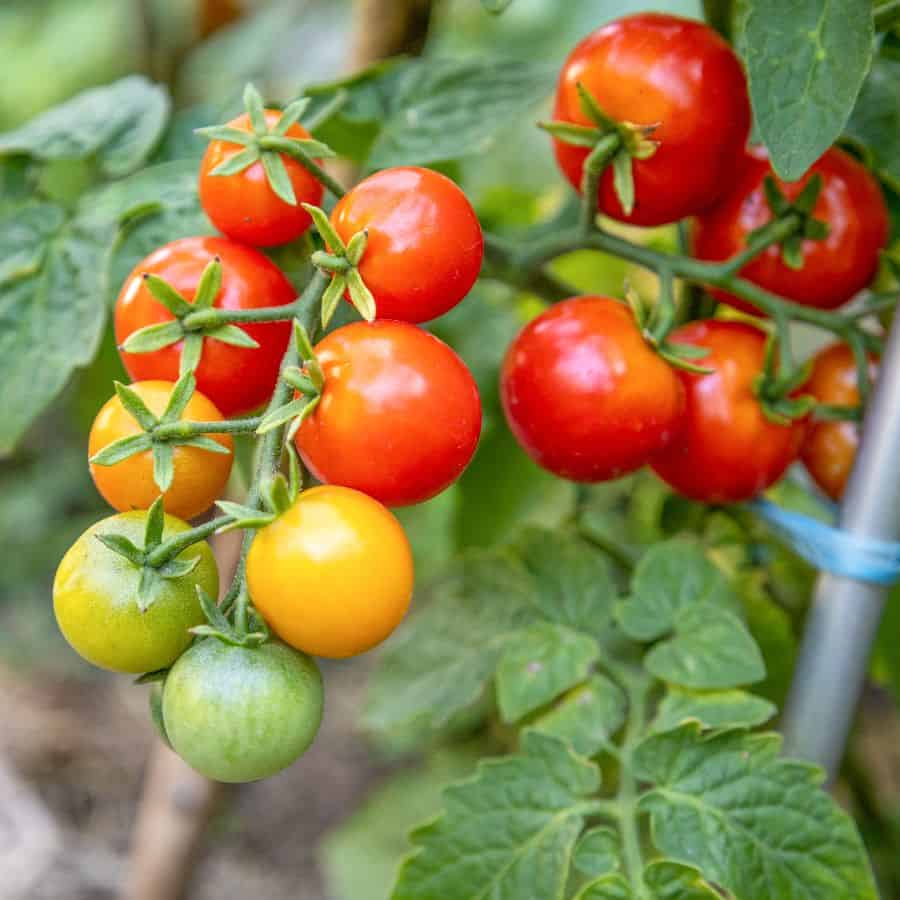
If someday you see leaves eaten, look for the big tomato hornworm, which is fearsome to look at but easy to find and dispose of any way you want.
Blossom-end rot, which shows as a blackened area opposite the stalk, is a physiological trouble likely to appear during dry spells, especially after periods of lush growth.
The remedy is sufficient water at all times. In rainy weather, blight may appear, indicated by unnatural leaf yellowing.
Keep tomato dust on hand and apply it at the first sign of the disease. Mosaic or mottling disease is transmitted from tobacco, so “no smoking” should be the rule when working with tomatoes.
Wash your hands thoroughly if you have handled tobacco before going near your tomato plants. Above all, do not sow the seeds in cigar boxes in early spring.
For those who wish, there are also small-fruited varieties. All are very productive and decorative in the garden, as well as tasty and pretty when used in the salad bowl.
As you can see, growing tomatoes is a time-honored process followed for decades, with the “secret” of giving them exactly what they need.