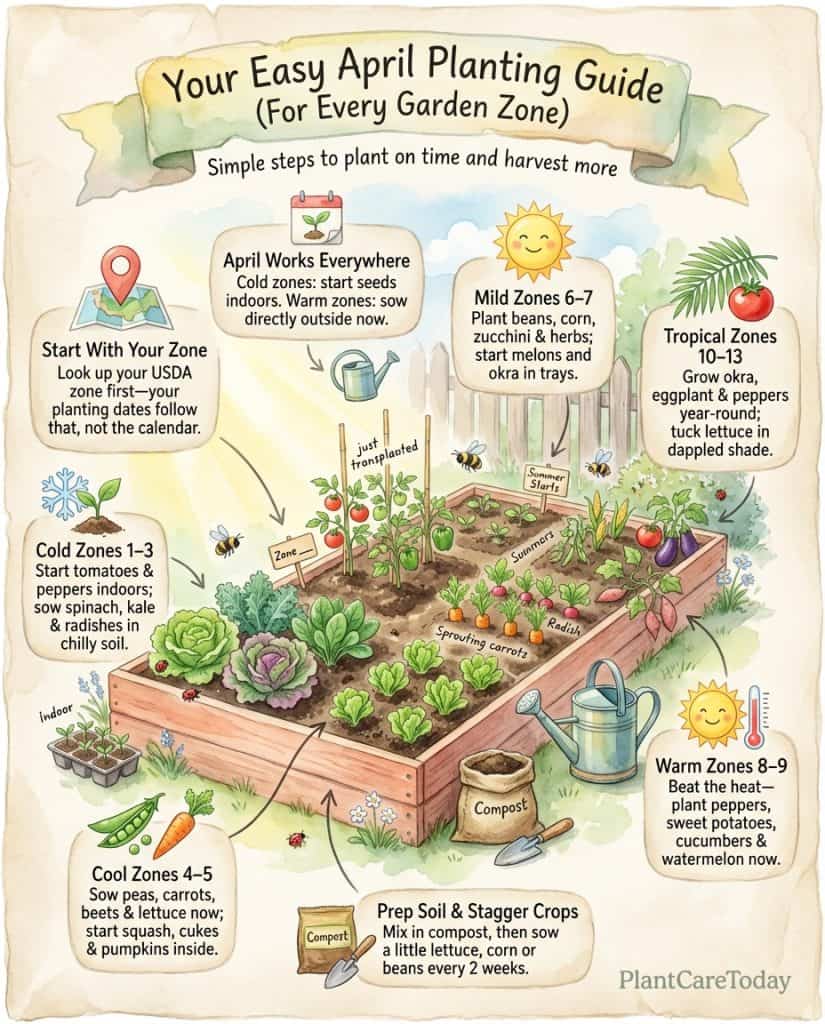
Think April isn’t prime planting time? It actually is. While your neighbors are still planning their gardens, you could be weeks ahead with a healthy vegetable patch.
I’m going to share the zone-specific vegetables that do best when planted this month.
April offers a good window for planting, whether you’re dealing with frozen ground or already feeling warm weather.
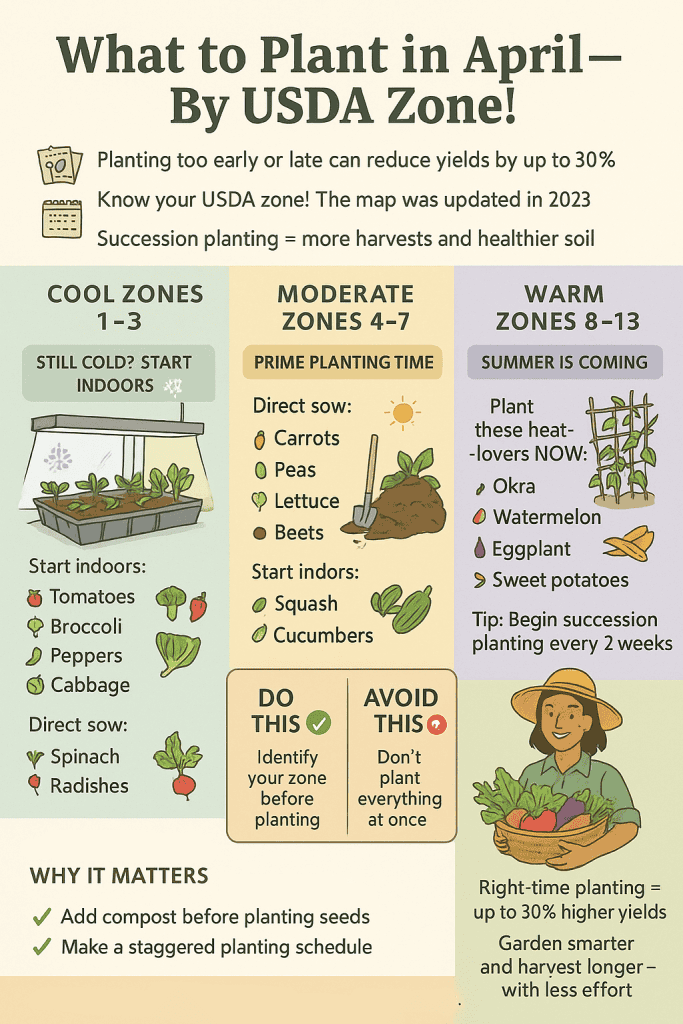
Your USDA Zone: The Garden Tool You Might Be Ignoring
Universal planting calendars don’t work for everyone. Your USDA hardiness zone is the most useful tool for helping your garden do well.
Planting just two weeks too early or too late can reduce your vegetable yields by up to 30%. That’s why I’ve put together this zone-by-zone April planting guide.
Zones 1-3: Working with the Final Frost
Living in these northern zones means you need to be strategic. Your soil might still be waking up from winter, but that doesn’t mean you can’t get started.
Start These Indoors:
• Broccoli: Develops sweeter flavor when grown in cooler temperatures
• Tomatoes: Give these 6-8 weeks indoors before transplanting
• Cabbage: Pretty frost-resistant once established
• Cauliflower: Needs a long growing season to develop properly
• Peppers: Need extra time in cold zones
Starting seeds indoors gives your vegetables a better chance to establish before going outside.
Ready for Direct Sowing:
• Spinach: Can germinate in soil as cold as 35°F
• Kale: Actually gets sweeter in tougher conditions
• Radishes: From seed to harvest in as little as 3 weeks
Zones 4-5: The Cool Climate Sweet Spot
April is your transition month, where planning makes a real difference.
Start These Indoors First:
• Cucumbers: Need warm soil to do well
• Pumpkins: Get these started early for fall harvest
• Squash: Both summer and winter varieties benefit from an indoor start
• Eggplants: Don’t like cold soil
Direct Sow These:
• Carrots: Cool soil actually helps germination
• Peas: Plant these as soon as the soil can be worked
• Beets: Produce both roots and greens that you can eat
• Swiss chard: A cold-hardy green that looks nice in the garden
• Lettuce: Plant every two weeks for continuous harvests
Cool-climate gardeners actually have an advantage with certain crops. Your extended spring means sweeter carrots and more tender greens.
Zones 6-7: The Goldilocks Gardens
April opens up many possibilities in these zones.
Start These Indoors:
• Melons: Need long, warm growing seasons to develop sweetness
• Okra: Needs warm conditions
• Pepper varieties: From sweet bells to hot peppers, they all need a head start
Direct Sow These:
• Beans: Wait until soil warms to at least 60°F
• Corn: Plant in blocks for proper pollination
• Zucchini: One plant can produce up to 10 pounds of fruit
• Cabbage: Direct sowing works in these milder zones
• Herb varieties: Basil ❤️, Tomatoes, cilantro, dill, and parsley all do well now
Zones 8-9: Beating the Heat Rush
For warm-climate gardens, timing matters most. April is your best month before summer heat sets in.
Direct Sow These Heat-Lovers:
• Peppers: All varieties do well in your warm spring soil
• Sweet potatoes: Plant slips now for fall harvest
• Watermelon: Needs 80-95 days to reach maturity
• Basil: Works well as a companion plant for tomatoes
Succession Planting Options:
• Corn: Plant new rows every 2 weeks for summer-long harvests
• Beans: Quick 60-day turnaround means multiple crops
• Cucumbers: Stagger plantings to avoid too much at once
Succession planting helps spread out your harvest, so you’re not overwhelmed all at once.
Zones 10-13: Tropical Paradise Planting
One common mistake in tropical zones is planting as if you’re in a cooler climate. Your growing season never really stops – it just shifts focus.
Direct Sow These Heat Champions:
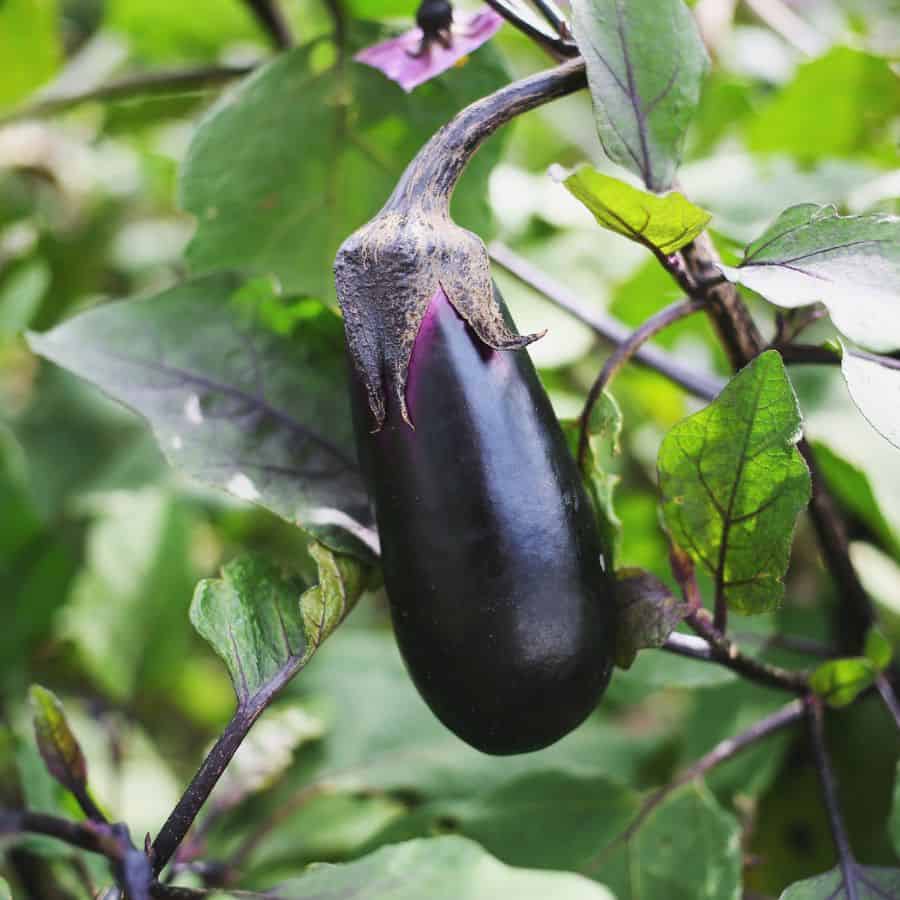
• Okra: Actually prefers hot temperatures
• Eggplant: Will produce for months in warm conditions
• Sweet potatoes: Can yield 5-10 pounds per plant in hot zones
• Peppers: Both sweet and hot varieties do really well

Shade-Seekers:
• Lettuce: Plant in dappled shade to prevent bolting
• Spinach: Morning sun and afternoon shade extend harvest
• Arugula: Grows faster and tastes less bitter with some shade
Your Year-Round Options:
• Tomatoes: Can produce for 9+ months in zones 10-13
• Basil: Will grow into small shrubs in tropical zones
• Herbs: Rosemary, thyme, and oregano become perennials
• Peppers: Can live for years as productive plants
Your tropical garden can function more like a perennial food system than a seasonal one.
Your April Planting Action Plan
The difference between new and experienced gardeners is following their zone’s guidance. This month:
- Identify your exact USDA zone if you haven’t already (the USDA updated its map in 2023)
- Start your indoor seeds this week if you’re in zones 1-7
- Prepare your soil for direct sowing with compost and organic matter
- Create a succession planting calendar to extend your harvests
There’s something satisfying about watching those first seedlings push through the soil, knowing you’re on schedule thanks to smart zone-based planning.
Now get planting. Your future self will thank you with plenty of homegrown produce.