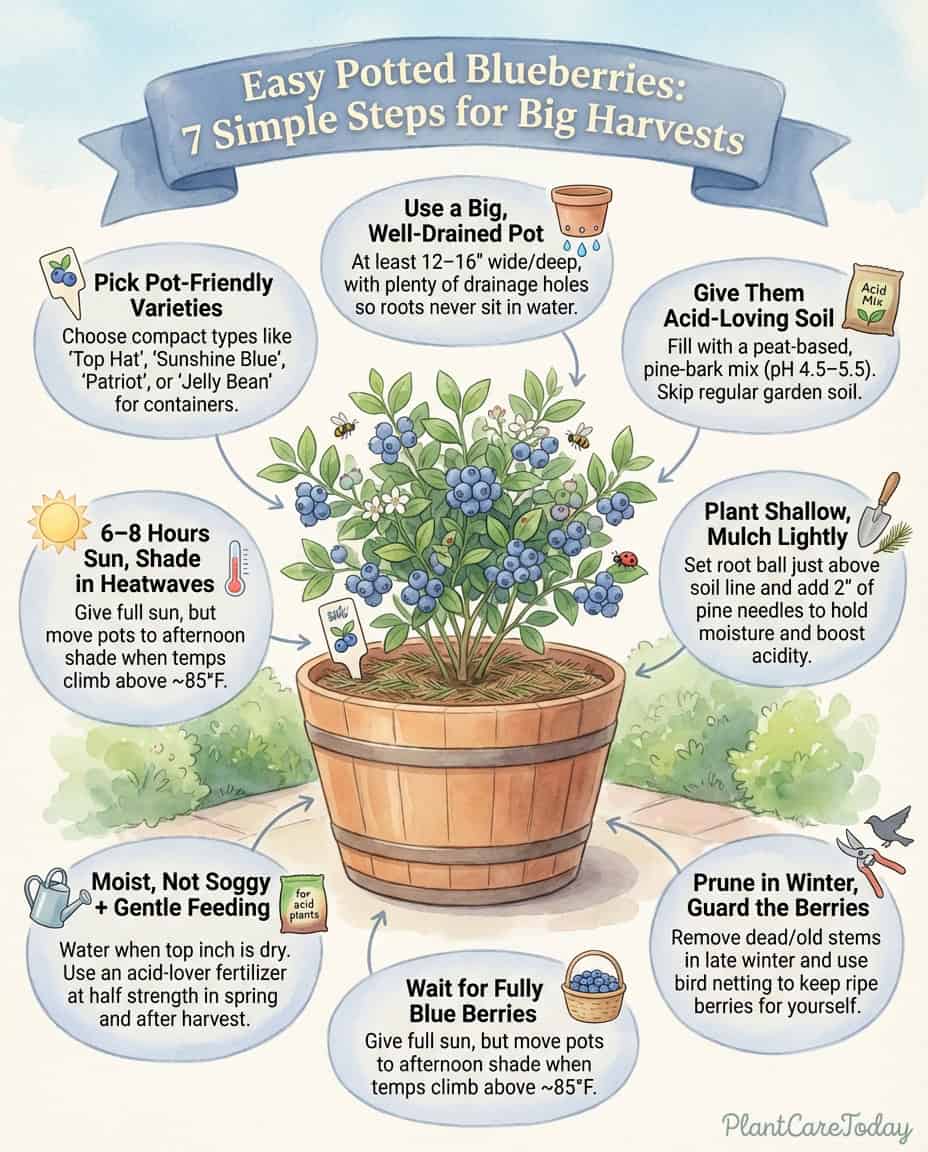
Did you know that a single potted blueberry plant can produce up to 2-3 pounds of berries per season?
That’s enough for dozens of pancake breakfasts and smoothies. But here’s the thing. Most container blueberries die within the first year because of simple mistakes you can easily avoid.
Here’s how to turn your patio into a berry-growing spot.
Blueberry Variety Matters More Than You Think
Forget what you’ve heard about blueberries being difficult to grow in containers. The real trick is picking the right variety.
Just as choosing the right dog breed for apartment living makes all the difference, selecting the right blueberry for container growing does too.
Not all blueberries are created equal when it comes to pot life. Some varieties need sprawling estates, while others do fine in cozy apartments.
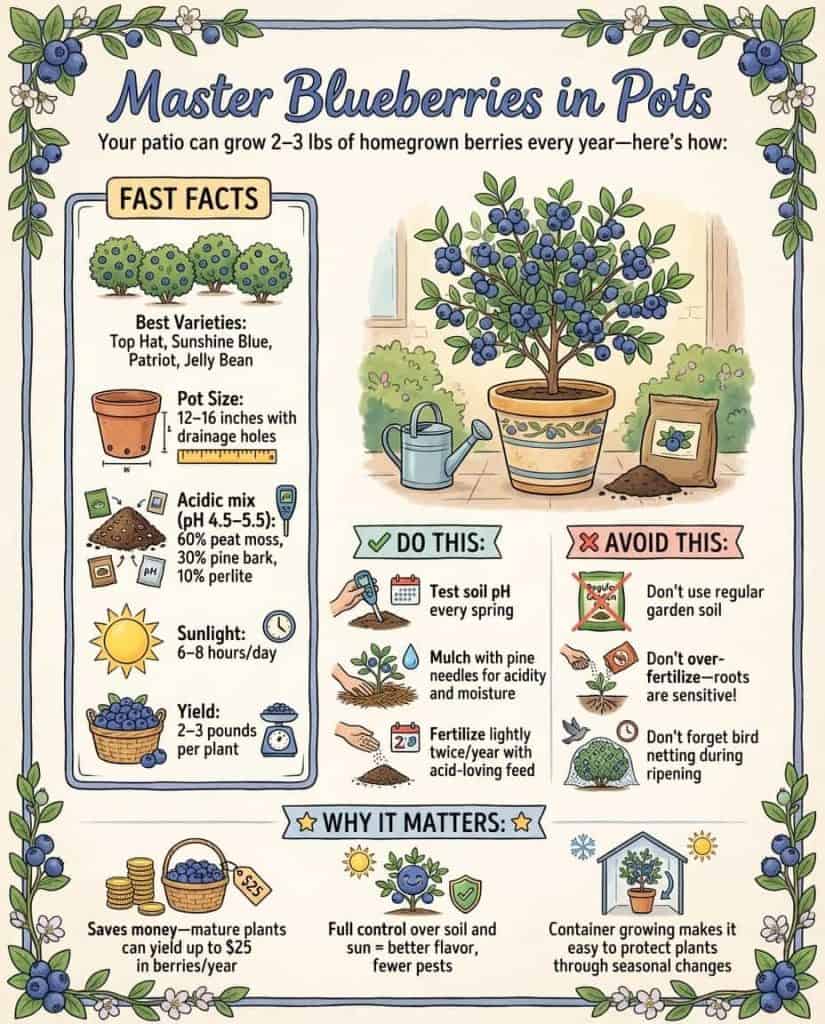
• Top Hat: Compact and perfect for balconies
• Sunshine Blue: Self-pollinating and handles heat well
• Patriot: Cold-hardy with berries the size of quarters
• Jelly Bean: Tiny plant that delivers big flavor
The Container Conundrum: Size DOES Matter
Your blueberries need room to grow, but also clear boundaries. The ideal pot should be at least 12-16 inches wide and deep. Anything smaller and your plant will become root-bound quickly.
What matters most for your blueberry containers is drainage. Those little holes at the bottom are the difference between life and death for your berries. Without proper drainage, your blueberry roots will suffocate.
Material matters too. Plastic retains moisture (great if you sometimes forget to water), while fabric pots allow roots to breathe and prevent root circling that can stunt growth.
The Soil Secret That Makes or Breaks Your Harvest
Here’s where most people struggle. Blueberries are particular about soil. They need acidic soil with a pH of 4.5-5.5, which is significantly more acidic than most plants prefer.
I was surprised to learn that using regular garden soil for blueberries just doesn’t work. They’ll struggle and refuse to produce. Instead, create a custom mix:
• 60% peat moss (for acidity)
• 30% pine bark (for structure and slow-release acidity)
• 10% perlite (for drainage and aeration)
Pro tip: Test your soil pH yearly. It’s the single most important factor in turning a struggling plant into a berry-producing one.
Planting for Success: Timing Is Everything
The difference between new and experienced gardeners is knowing when to plant. Early spring or fall gives your blueberries the gentle start they need before extreme temperatures hit.
When planting, position the root ball slightly above the soil line. Blueberries don’t like being buried too deep. Then apply a 2-inch layer of pine needle mulch to retain moisture and gradually add acidity as it breaks down.
The Water-Fertilizer Balance: Walking the Tightrope
These plants like consistent moisture, but will show yellow leaves if left standing in water. The “knuckle test” works well.
Stick your finger about an inch into the soil. If it’s dry, water thoroughly until it runs from the drainage holes. If it’s still moist, check back tomorrow.
As for fertilizer, less is more. Blueberry roots are sensitive. Use about 1/3 as much as you’d use for other plants.
Use an acid-loving plant food (like rhododendron fertilizer) at half-strength twice a year, once in spring and once after harvest.
Sunshine & Temperature: Finding the Sweet Spot
Blueberries need 6-8 hours of direct light daily to produce sweet berries. But even sun-lovers can get stressed when temperatures soar above 85°F, especially in pots.
The best part? You can move your containers. That’s the beauty of container growing. During heatwaves, offer afternoon shade. During frost, bring them to a protected area.
Pruning: The Art of Tough Love
Most people make this mistake with their blueberries: they’re too nice to them. Pruning isn’t punishment. It’s a treatment that rejuvenates growth and boosts production.
In late winter (while the plant is still dormant), remove any dead, damaged, or crossed branches. Then cut out about 1/4 of the oldest stems completely to the ground. This renovation stimulates new growth that will be your berry producer next season.
Defending Your Berry Treasure from Thieves
Nothing is more frustrating than waiting all season for berries only to have birds harvest your crop first. These birds can strip a bush bare in hours.
Bird netting is your best defense. Drape it over the plant or create a simple cage structure. For pests like spotted wing drosophila, regular harvesting is key. Don’t leave ripe berries hanging around.
Harvesting Blueberry Bliss: Patience Pays Off
The secret to perfectly sweet blueberries? Patience. Unlike some fruits, blueberries won’t continue ripening after picking.
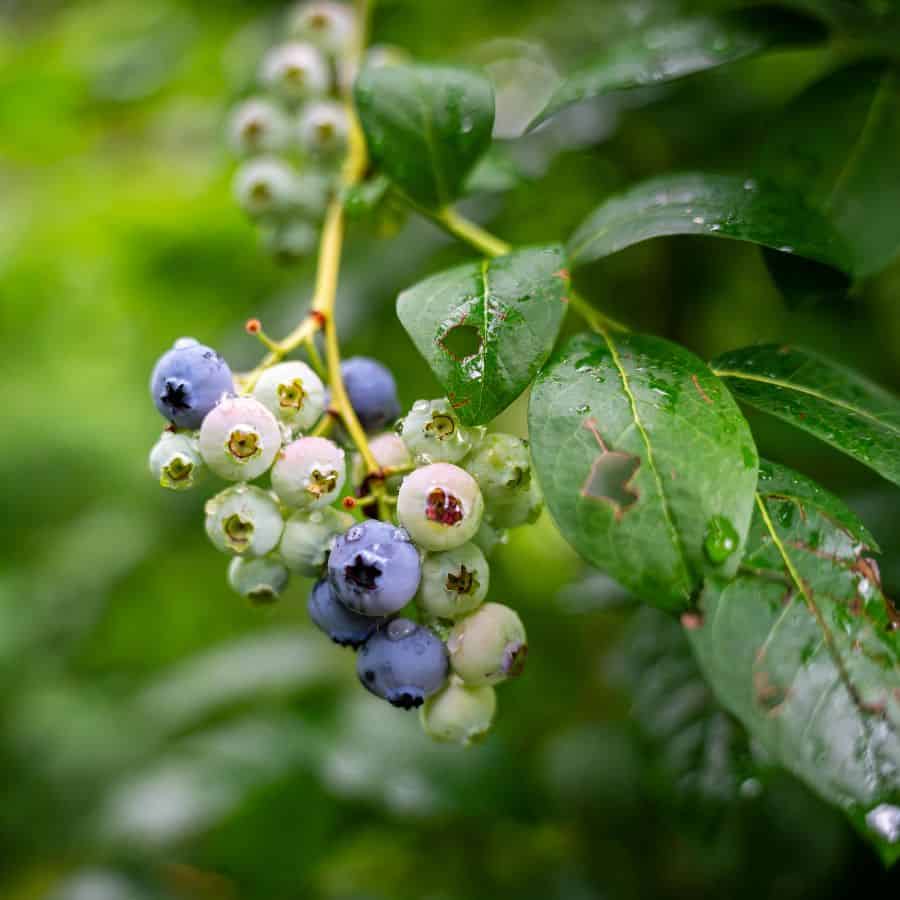
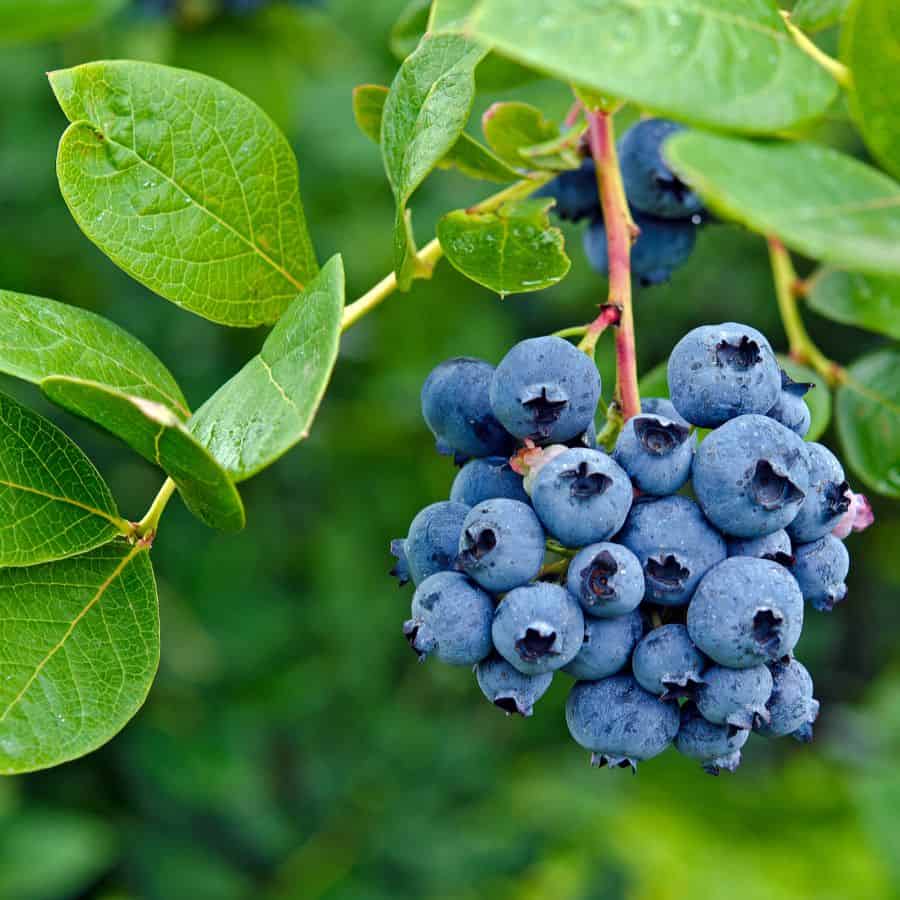
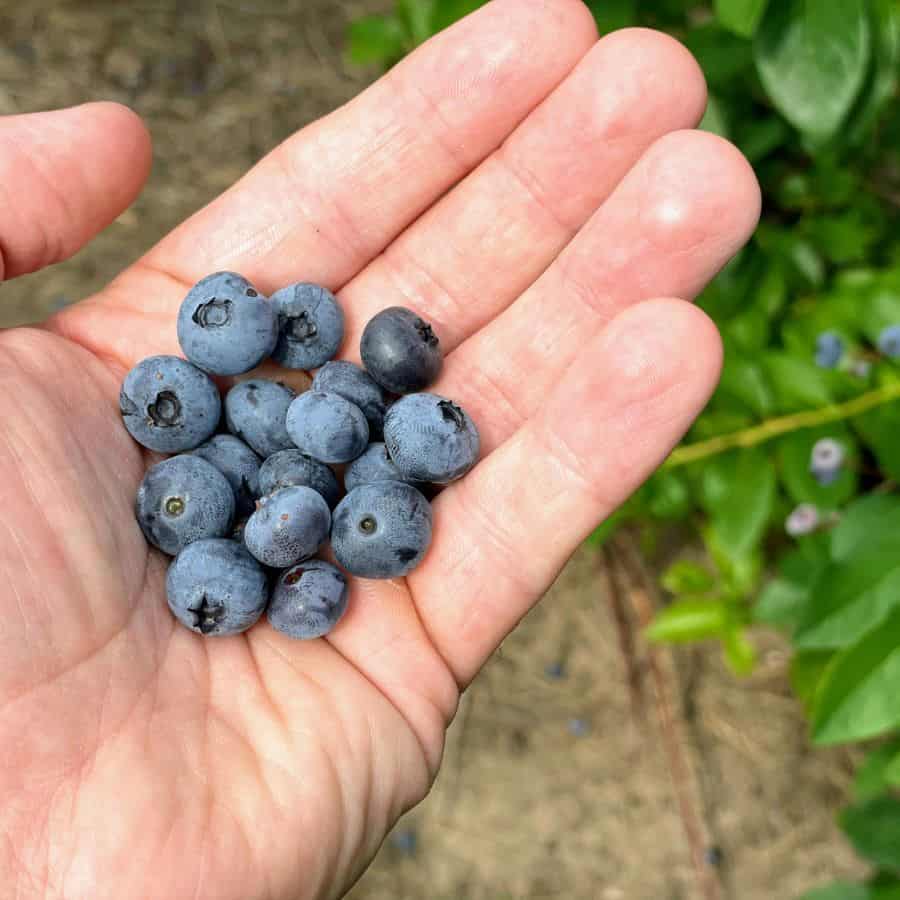
Wait until they’re completely blue with no hints of red or purple, and they detach with a gentle roll between your fingers.
A single mature potted blueberry plant can produce 2-3 pounds of fruit annually. That’s about $15-25 worth of organic berries from your own patio. Harvest in the morning when flavors are most concentrated, and refrigerate unwashed berries for up to two weeks.
The best part? Freezing fresh blueberries at peak ripeness means you can enjoy summer flavor all year long. Spread them on a baking sheet to freeze individually, then transfer to containers; no more clumpy frozen berry blocks.