I was buying Oreo cupcakes at the grocery store last week when I saw the vegetable prices. $4 for a bunch of radishes seemed pretty steep.
My mom’s backyard garden has been saving our family a lot each month, and it got me thinking about which vegetables actually give you the best return on your investment.
Some can give you 5-10 times the value of store-bought produce for just a few dollars in seeds.

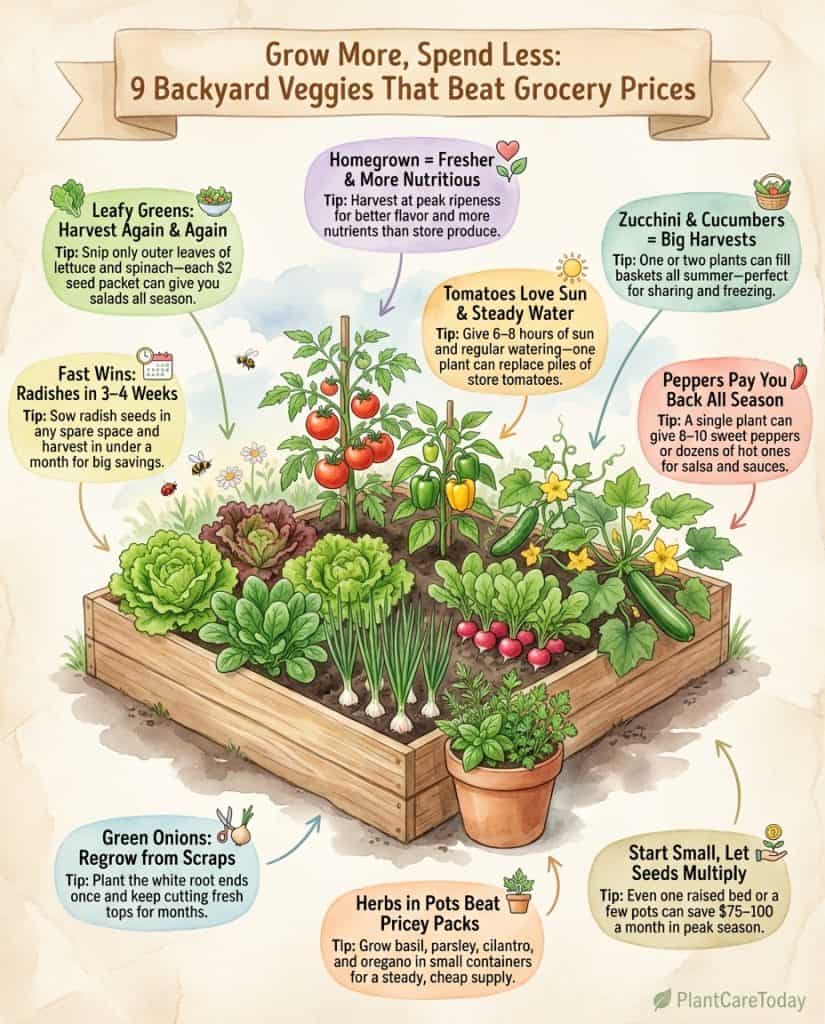
Leafy Greens: The Best Place to Start
Lettuce and spinach are at the top of the money-saving list because they keep producing throughout the season.
Stores charge up to $5 for a small bag that wilts quickly, but a $2 seed packet can produce enough greens for 30+ salads.
With lettuce, you can harvest multiple times from the same plants by taking just the outer leaves. Most varieties go from seed to salad in about 30 days.
Spinach works the same way. When you trim only the outer leaves, the center continues to grow for weeks. One study found that spinach plants can give you 3-5 harvests before you need to replant, which really adds up over time.
The “Plant Once, Harvest Forever” Champions
Green onions are surprisingly easy to keep going. After you buy them once, you can regrow them by planting the white bulb with roots.
I was surprised to learn that one $1.50 bunch can basically become a lifetime supply.

Herbs are worth mentioning because they’re so expensive at stores. Those tiny $3-4 plastic containers hold just a fraction of what a single plant produces. Basil, parsley, cilantro, and oregano grow well in pots, even in apartments.
My windowsill garden produces about $15 worth of fresh herbs weekly from $10 worth of plants I bought once.
Store herbs are usually half-wilted anyway. When you grow your own, you get much better flavor, and they last longer.
The “Big Payoff” Producers
Tomatoes might be the clearest example of grocery store markup. A single heirloom tomato can cost $3-4, but one $4 plant can produce 20+ pounds of tomatoes throughout the season. That’s close to a 2000% return.
Cherry tomatoes produce even more. One plant can yield hundreds of tomatoes that would cost $4-5 per container at stores. The real trick for a good tomato harvest is just giving them enough sun and consistent watering.
The “Embarrassment of Riches” Vegetables
Zucchini and cucumbers have a reputation among gardeners: you’ll end up with so many that you’ll be giving them away. These are heavy producers that really show you how much stores mark up their prices.
One zucchini plant (from a $3 seedling) can yield 6-10 pounds of fruit over a season. When stores charge $1.50+ per zucchini, your single plant could produce $30-50 worth of vegetables.
Cucumbers follow the same pattern. A well-tended plant yields 10-15 cucumbers that would cost $1-2 each at the store.
The Premium Producers Worth Growing
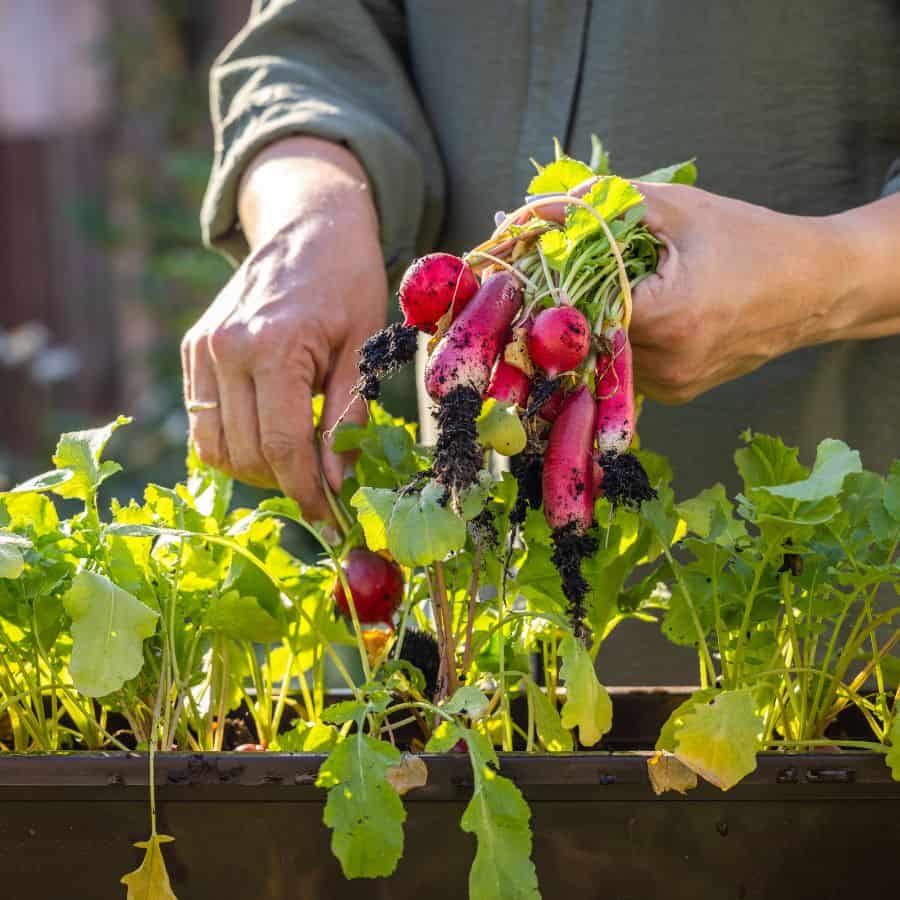
Radishes might seem basic, but they’re great for your budget. They go from seed to harvest in just 3-4 weeks, making them the fastest money-saving vegetable you can grow.
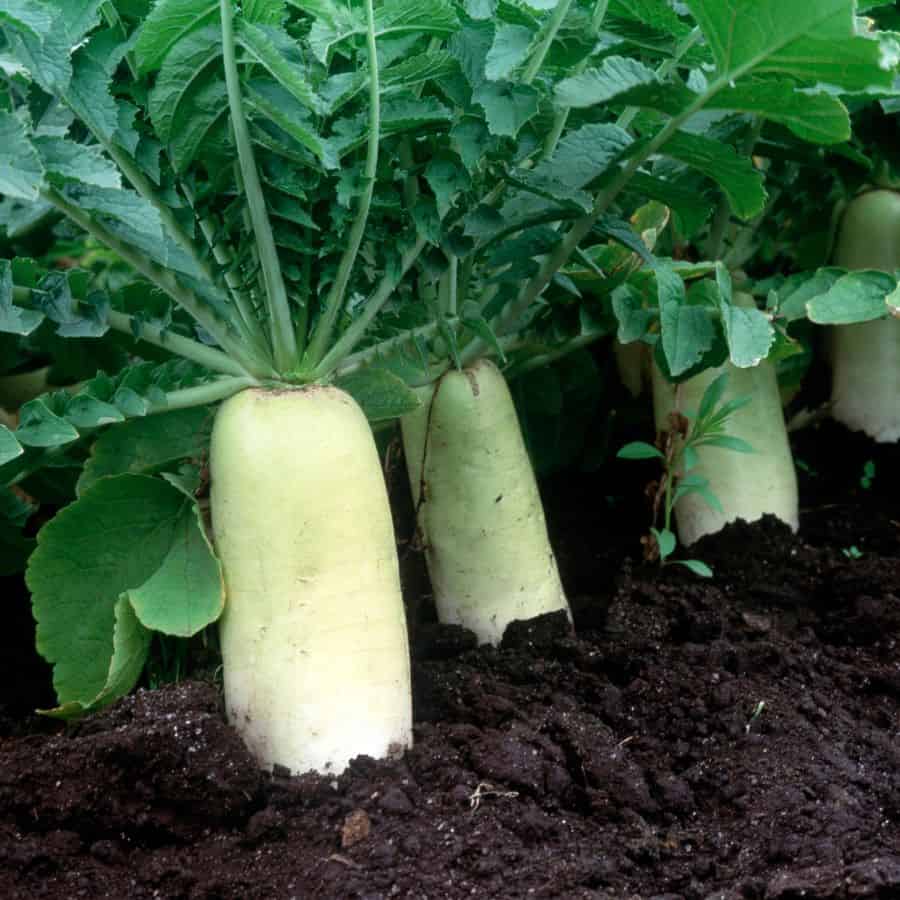
One $2 seed packet can produce 50+ radishes, which would cost $20+ at today’s prices.
Peppers, both sweet and hot varieties, offer some of the best savings. Bell peppers often cost $2 each at stores, sometimes $3 for colored varieties. A single plant costing $4 can produce 8-10 peppers in a season.
Hot pepper plants often yield 20-30 fruits, which would be expensive if bought individually.
The Financial Harvest: More Than Just Savings
The difference between new and experienced gardeners often comes down to understanding the economics. My mom’s garden saves our family about $75-100 monthly during peak season. That’s potentially $600+ annually.
But there are other benefits too. Home-grown vegetables contain up to 40% more nutrients than their store counterparts, according to research from the University of California. They’re harvested at peak ripeness rather than picked early for shipping.
With grocery prices going up, a garden becomes more than a hobby. It’s a practical way to cut costs. Even apartment dwellers can grow herbs, lettuce, and cherry tomatoes in containers.
Here’s something to think about: seeds are designed to multiply your investment. A single tomato contains enough seeds to grow dozens of plants worth hundreds of dollars in produce.
Starting small with a few of these vegetables can make a real difference in your grocery bill.