Ever watched your cherry tomato plants transform from innocent seedlings into wild, untamed beasts that take over your entire garden? You’re not alone.
While some gardeners let nature take its course, those tiny-but-mighty fruits actually respond really well to pruning. With the right approach, you can get a better harvest that’s easier to manage and less prone to disease.
The Great Cherry Tomato Debate: Should You Really Prune?
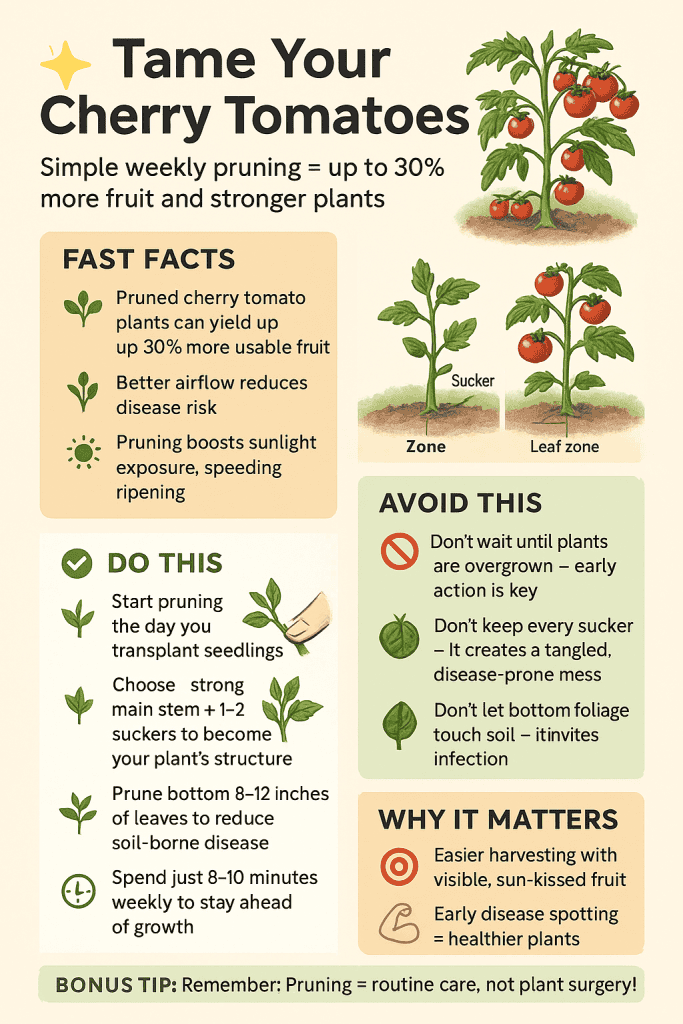
A properly pruned cherry tomato plant can produce up to 30% more usable fruit than its unpruned counterparts. The reason is simple: pruning directs energy where it matters most.
Unlike their larger tomato cousins, cherry tomatoes grow like crazy. Every single sucker (those small shoots between the stem and the branches) will happily grow into a new stem loaded with fruit.
The real issue with unpruned plants isn’t the amount of fruit they produce. It’s what comes with all that growth:
- A dense jungle that traps moisture (perfect for fungal diseases)
- Lower quality, slower-ripening fruit hidden from sunlight
- Sprawling stems that break under their own weight
- A thick tangle that makes harvesting difficult
Transform Your Tomato Jungle Into a Fruit-Producing Machine
Forget what you’ve heard about complex pruning schedules. The difference between new and experienced gardeners is simply consistency.

Think of pruning like giving your plant a regular haircut. Small, frequent trims are better than one dramatic chop.
Here’s your basic plan:
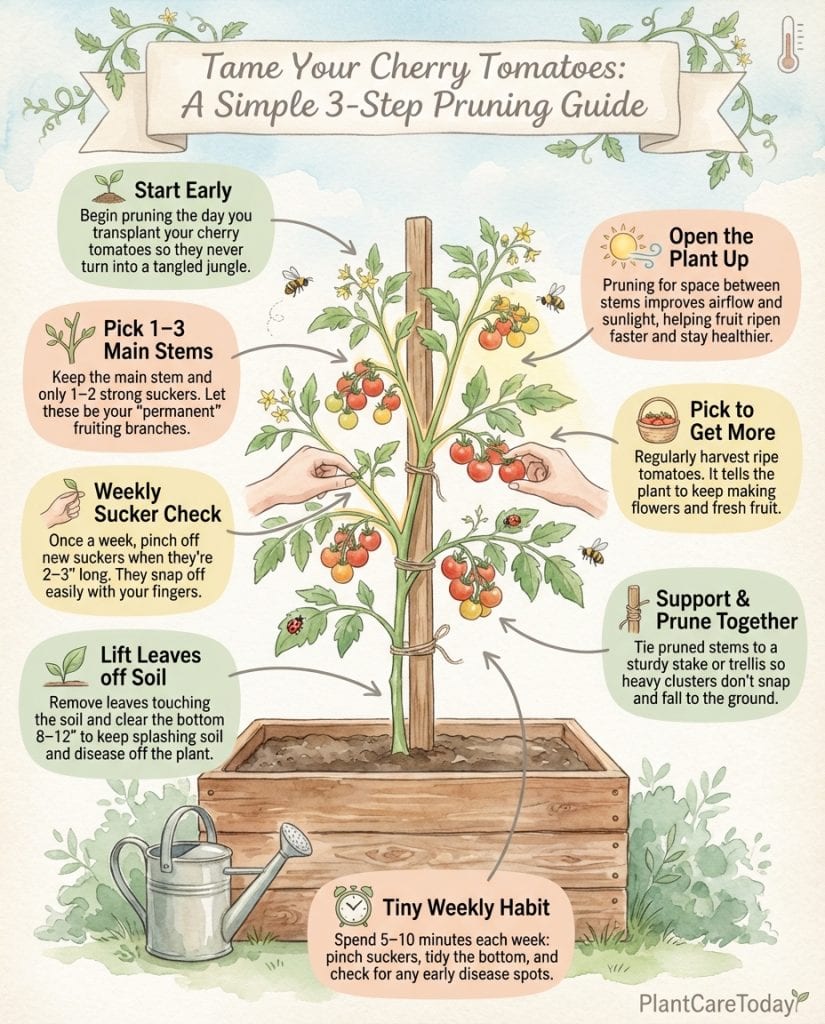
- Start Early: Begin pruning the day you transplant seedlings
- Choose Your Structure: Keep the main stem and just 1-2 strong suckers
- Weekly Maintenance: Remove new suckers when they’re 2-3 inches long
- Bottom Cleanup: Remove leaves that touch the soil to prevent disease splash
Think of those suckers like uninvited guests. They’ll use up your plant’s energy and leave little for fruit production. A weekly five-minute pruning session keeps them in check.
The Benefits You’ll See After Proper Pruning
Most people wait until the plant is already out of control. Start early, and you’ll enjoy:
- Disease Detection: Spot problems before they spread to your whole crop
- Better Airflow: Good air circulation keeps plants dry and disease-free
- Sun-Kissed Fruit: More exposure means faster ripening and sweeter tomatoes
- Continuous Production: Regular harvesting signals the plant to produce more flowers
- Stronger Stems: No more broken branches and fruit rotting on the ground
The best part is that cherry tomatoes actually produce better when you limit their growth.
By choosing which stems to keep, you’re telling the plant to focus on fruit quality rather than plant size.

Your Simple 3-Step Pruning System
Pruning doesn’t have to be complicated. Think of yourself as a plant architect, designing the perfect structure:
- Early Decision: Select your main stem and 1-2 strong suckers to keep
- Weekly Patrol: Remove new suckers when they’re young (they snap off easily with fingers)
- Bottom Maintenance: Clear leaves from the bottom 8-12 inches of each stem
Remember: pruning is like training a puppy; consistent, gentle correction yields the best results. Your plants will respond by producing accessible fruit clusters that are easy to harvest.
From Pruning Novice to Cherry Tomato Pro
Worried about the time commitment? Here’s the good news: a little effort goes a long way. Just 5-10 minutes each week will keep even the most vigorous cherry tomato plants in check.
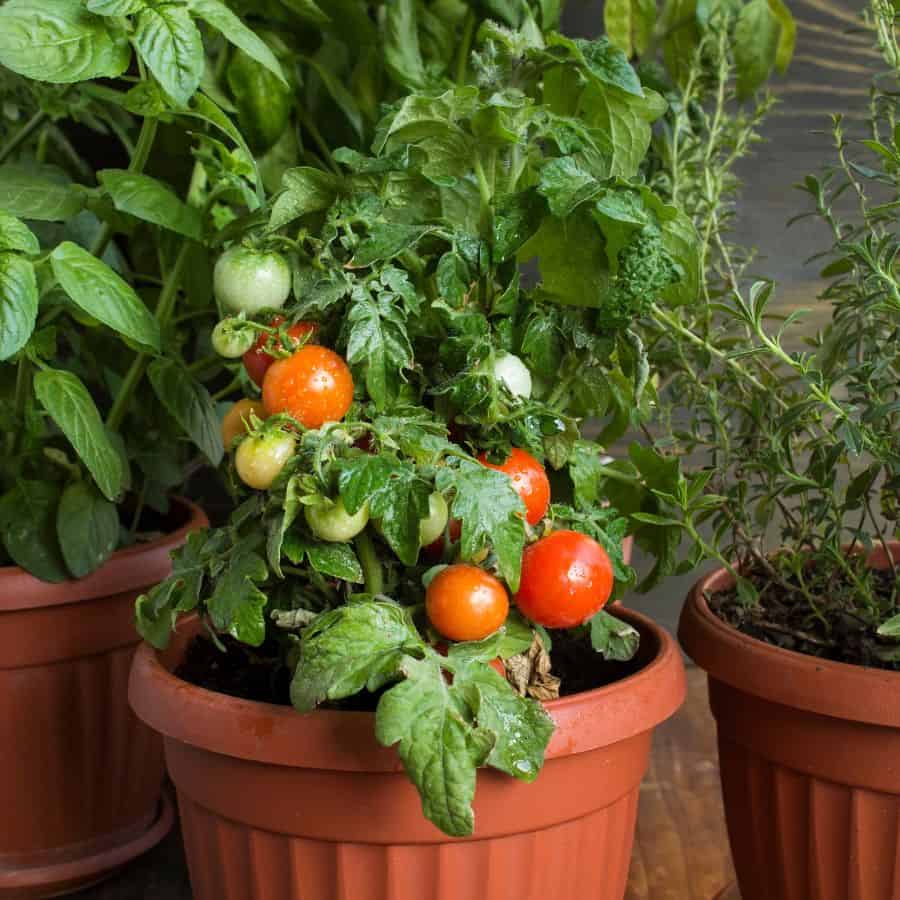
Your first pruning session might feel uncertain, but by midsummer, you’ll be spotting suckers and snipping with confidence.
Your reward? A solid harvest of sweet, sun-ripened cherry tomatoes while your neighbors struggle with tangled plants.
The bottom line: pruning transforms wild tomato plants into productive, manageable ones that deliver better fruit with less disease. Your future self (with baskets of perfect cherry tomatoes) will thank you.