
Is your Christmas cactus being a total drama queen, refusing to put on its holiday flower show?
You’re not alone! A staggering 70% of Christmas cactus owners report disappointing blooms. But here’s the kicker: the problem isn’t your plant… It’s what you’re doing to it!
I was surprised to discover that everything I thought I knew about caring for these festive blooms was incorrect.
Ready for some plant parenting redemption? These 7 game-changing secrets will transform your stubborn cactus into a flowering sensation!
1. The Surprising Light Secret: LESS Sun = MORE Flowers!
Forget what you’ve heard about cacti needing tons of light! Your Christmas cactus is the introverted cousin of the cactus family, preferring the shadows to the spotlight.
Too much direct sun is like forcing an introvert to host a party. It shuts down completely!
The difference between amateur and pro plant parents is simply understanding that these plants need 10-12 hours of indirect light daily.
Put your Christmas cactus in direct sunlight, and those delicate leaves will crisp faster than cookies in an overheated oven!
(And between us? That “Christmas cactus” might actually be a Thanksgiving or Easter cactus. They’re commonly mislabeled but have the same lighting needs!)

2. Turn Down the Heat to Turn Up the Blooms
Your Christmas cactus is trying to tell you something important: “I’m too hot to bloom!”
These plants are the polar bears of the plant world. They actually need a cool period to trigger flowering.
The secret most plant experts won’t tell you is that temperatures between 50-65°F (10-18°C) at night create the stress signal that tells your cactus it’s time to flower.
Find that naturally cool corner of your home (maybe that drafty spot you usually avoid?) and watch the magic happen!
3. Darkness: The Unexpected Bloom Trigger
Christmas cacti are like teenagers. They need their alone time in the dark to develop properly!
As short-day plants, they require 12-14 hours of complete darkness each night for about 6-8 weeks before blooming.
That means no artificial light whatsoever. Even a tiny LED from your TV, or a quick flip of the light switch, can disrupt the blooming cycle.
Think of your plant as a vampire; the smallest light exposure at night can ruin everything!
- Keep it in a room you don’t use at night
- Consider covering with a box or placing it in a closet from 6 pm-8 am
- Be consistent, even one night of light disruption can set you back

4. Hands Off! The Pruning Mistake That Kills Blooms
Most people make this mistake with their Christmas cactus: over-pruning just before the blooming season. This is like giving someone a haircut right before their wedding – terrible timing!
Only prune when absolutely necessary, and never during the pre-blooming period (September-November).
Your plant needs all its energy focused on flower production, not healing from your enthusiastic trimming session!
5. The Watering Sweet Spot: Not Too Much, Not Too Little
Finding the perfect watering balance for your Christmas cactus is like dating; overwatering (too clingy) is just as bad as underwatering (too distant).
The soil should feel like a wrung-out sponge, slightly moist but never soggy.
During the pre-blooming period, let the top inch of soil dry out completely before watering again.
Once buds appear, keep moisture slightly more consistent. And always, always drain excess water; nothing kills romance (or roots) faster than sitting in a puddle!
6. Skip the “Miracle” Hacks and Use What Actually Works
I was surprised to discover that those viral baking soda and Epsom salt “tricks” for boosting blooms are largely garden myths.
While Epsom salt does provide magnesium (which can support overall plant health), it’s not the flowering miracle some claim.
The game-changer for your Christmas cactus isn’t what you think. What these plants actually need is a fertilizer high in phosphorus (the middle number on fertilizer labels).
Apply a 10-30-10 formula monthly from April to September, then stop completely during the blooming cycle. This scientifically-proven approach delivers dramatically better results than kitchen pantry “hacks.”

7. Humidity: The Missing Link to Spectacular Blooms
Your Christmas cactus may be dressed for winter, but it’s dreaming of tropical rainforest conditions!
These plants naturally grow in humid Brazilian forests, not in desert conditions, as their name suggests.
Transform your plant’s flowering potential by boosting humidity to 50-60%. You can:
- Group plants together to create a humid microclimate
- Set the pot on a tray of pebbles with water (keep the water level below the pebbles)
- Mist the air around the plant (not directly on it)
- For extreme cases: tent your plant under a clear plastic bag for a few weeks (with some air holes)
This humidity boost can be the difference between a few sad blooms and a spectacular flowering display with 100+ vibrant blossoms!
Your Christmas Cactus Transformation Awaits!
With these 7 scientifically-backed techniques, you’ll be the proud plant parent of a Christmas cactus that flowers so dramatically, your friends will demand to know your secrets!
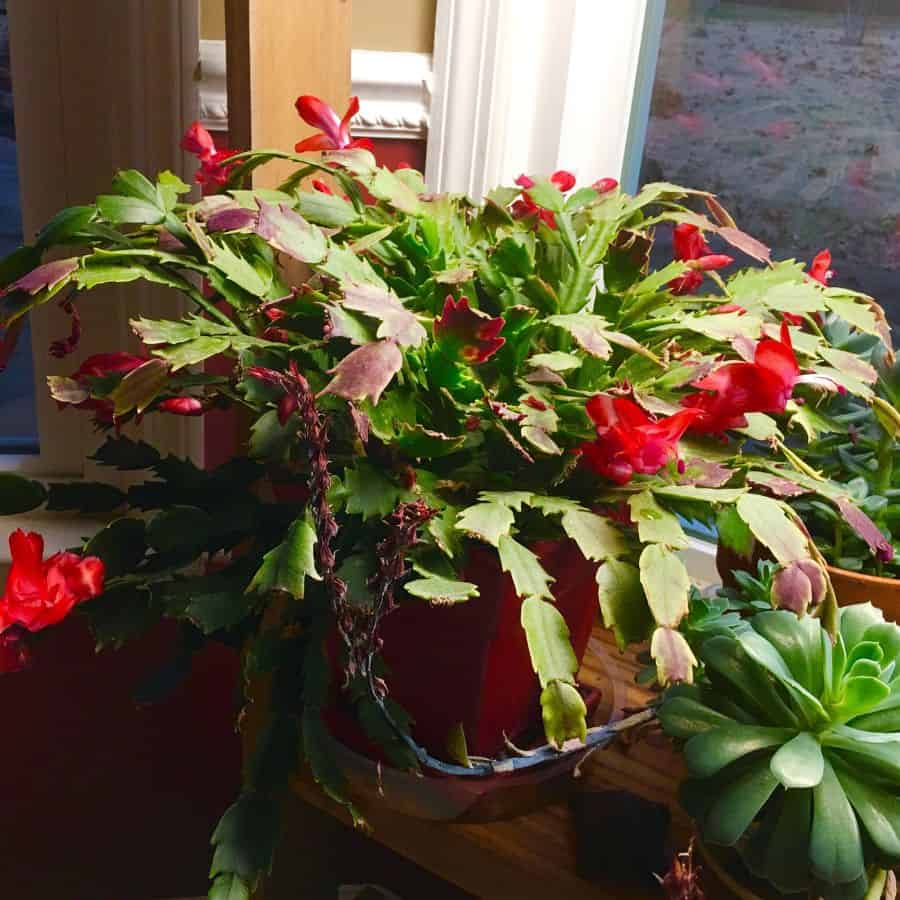
Remember that these plants can live for decades. Some have been passed down for over 100 years, becoming more spectacular with each season.
The journey from struggling to thriving isn’t instant, but with a little patience and these targeted strategies, your Christmas cactus will reward you with a breathtaking holiday display that outshines even your Christmas tree!