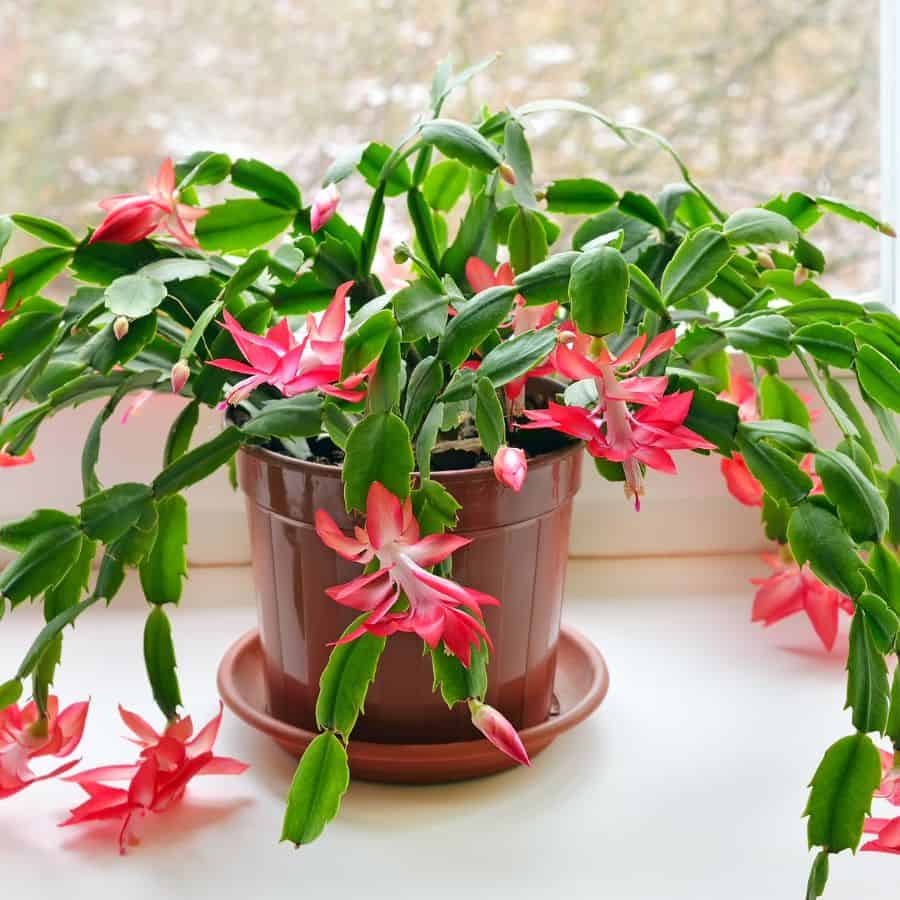
Is your Christmas cactus looking more like Charlie Brown’s Christmas tree than the full, cascading plant you wanted? You’re not alone.
Despite being one of the most popular holiday plants (they bloom for 4-6 weeks when everything else looks dormant), many Christmas cacti end up sparse and leggy.
The good news is that with a few simple changes, you can turn your thin plant into something you’ll actually be proud to display.
Why Your Christmas Cactus Looks Like It Needs a Sandwich
Before we get into solutions, let’s talk about why your plant might be looking thin. Unlike desert cacti, Christmas cacti are rainforest dwellers that naturally grow on tree branches in Brazil. When they look sparse, something’s off with their care.
The real trick to helping your Christmas cactus isn’t what most people think. It’s understanding what the plant needs in nature.
The most common mistake is treating it like a desert plant when it actually needs rainforest conditions.
Your plant is likely dealing with one or more of these problems:
- Years of growth without any pruning
- Not enough light, making it stretch toward brightness
- Watering issues that stress it out too much to branch
- Not enough nutrients to support new growth
- Cramped roots from staying in the same pot too long
Trick #1: Prune Like You Mean It (But Gently)
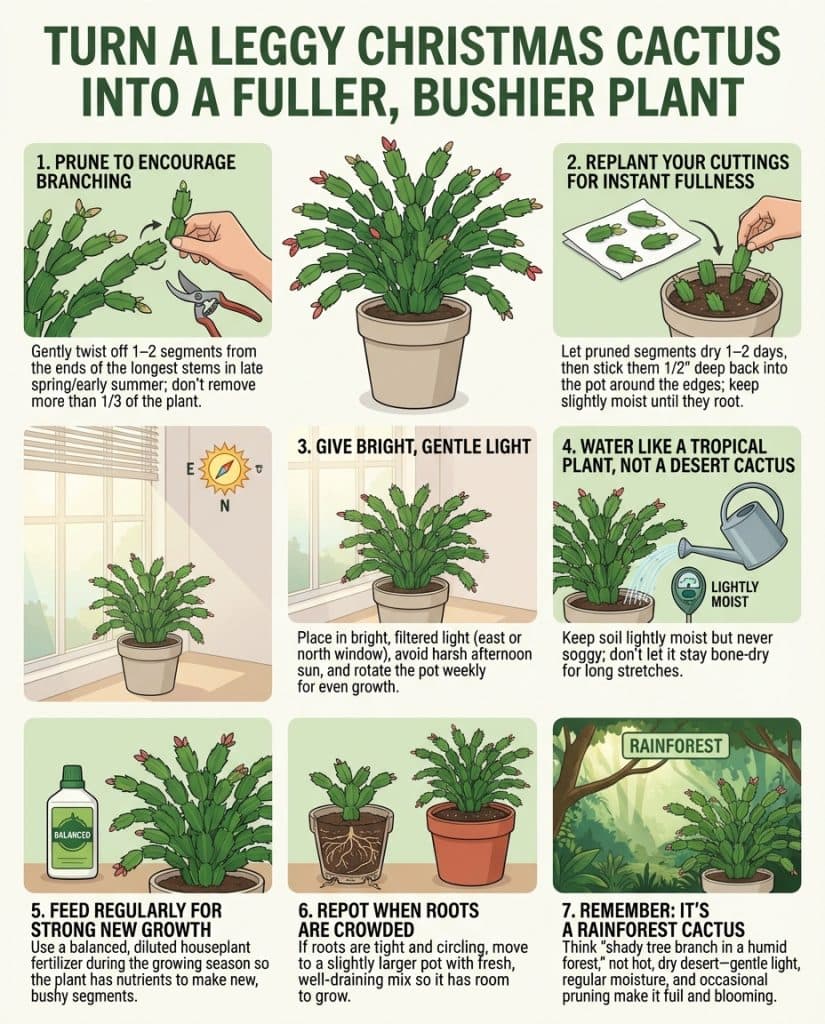
I was surprised to learn that pruning is the single most effective way to fix a leggy Christmas cactus. Think of it as giving your plant a helpful push to grow fuller.
When you snip off 1-2 segments from the end of each stem, you trigger a response that forces the plant to branch out.
One stem becomes two or three. Research shows that pruned Christmas cacti produce up to 30% more segments than unpruned plants in a single growing season.
The right way to prune:
- Timing matters: Prune in late spring or early summer after blooming
- Use your fingers to gently twist and snap (scissors can spread disease)
- Focus on the longest, leggiest stems first
- Remove no more than 1/3 of the plant total
Don’t toss those trimmings. They’re about to become useful.
Trick #2: Plant Your Cuttings Back for Instant Fullness
Here’s something that often gets overlooked: you can fill out your plant faster by replanting those cuttings you just pruned. Those pieces are free plants waiting to happen.
This approach is simple. Within 3-4 weeks, those cuttings will root and blend in with the mother plant.
- Let cuttings dry for 1-2 days (this prevents rot)
- Stick them about 1/2 inch deep around the edges of the pot
- Keep slightly moist until you see new growth (about 3-4 weeks)
Quick tip: Want faster results? Dip cuttings in rooting hormone before planting. Studies show this can speed up rooting by up to 50%.
Trick #3: Light It Up (But Not Too Much)
Your Christmas cactus stretches when it doesn’t get enough light. Without adequate brightness, new growth becomes weak and spindly.
The difference between new and experienced plant owners often comes down to understanding light needs.
Perfect light conditions:
- Bright, filtered light (east or north-facing windows are ideal)
- No harsh afternoon sun (which can burn segments)
- Consistent light from all angles (rotate your pot weekly)
Did you know? Christmas cacti can detect light differences as small as 30 minutes, which is why consistent light matters so much for healthy growth and blooming.
Trick #4: Master the Watering Sweet Spot
Forget what you’ve heard about cacti needing barely any water. Christmas cacti are tropical plants that need regular moisture. But drowning them is just as bad as letting them dry out.
Think of watering your Christmas cactus like Goldilocks; not too much, not too little. When watered properly, segments should feel firm and plump, not wrinkled or mushy.
The watering basics:
- Water thoroughly when the top inch of soil feels dry
- Reduce frequency in fall/winter (every 2-3 weeks)
- Increase in spring/summer during active growth (weekly)
- Always empty the drainage tray (standing water leads to root rot)
Pro tip: If your segments look shriveled, your plant is thirsty. If they’re turning yellowish and soft, you’re overwatering.
Trick #5: Feed Your Plant to Fuel the Fullness
A hungry Christmas cactus won’t reach its full potential. Just like you can’t build muscle without protein, your plant can’t create new growth without nutrients.
What matters most is that Christmas cacti need regular feeding during their growth phase. A well-fed plant can produce twice as many new segments as an unfed one in a single season.
Fertilizing basics:
- Use balanced liquid fertilizer (10-10-10) diluted to half strength
- Feed every 4-6 weeks from April through August
- Stop feeding in September to prepare for blooming
- Add a pinch of crushed eggshells to the soil for calcium (creates stronger stems)
Trick #6: Give Your Plant Room to Grow
Is your Christmas cactus still in the same pot from three years ago? Those cramped roots can’t support full, bushy growth. Repotting refreshes your plant.
Research shows that Christmas cacti grow 40% faster in the year after repotting than those left in old soil. Fresh dirt = fresh start.
Repotting basics:
- Repot every 2-3 years in spring
- Choose a container only 1-2 inches larger (too big leads to root rot)
- Use cactus/succulent soil mixed with perlite and orchid bark (1:1:1)
- Gently loosen the root ball before replanting to encourage outward growth
Trick #7: The Power Nap That Transforms Your Plant
The best thing for your Christmas cactus might just be a good rest. In nature, these plants undergo seasonal changes that trigger major growth and flowering cycles.
This dormancy period resets the plant’s growth hormones and prepares it for new branches and blooms. Skip this step, and you won’t see your plant’s full potential.
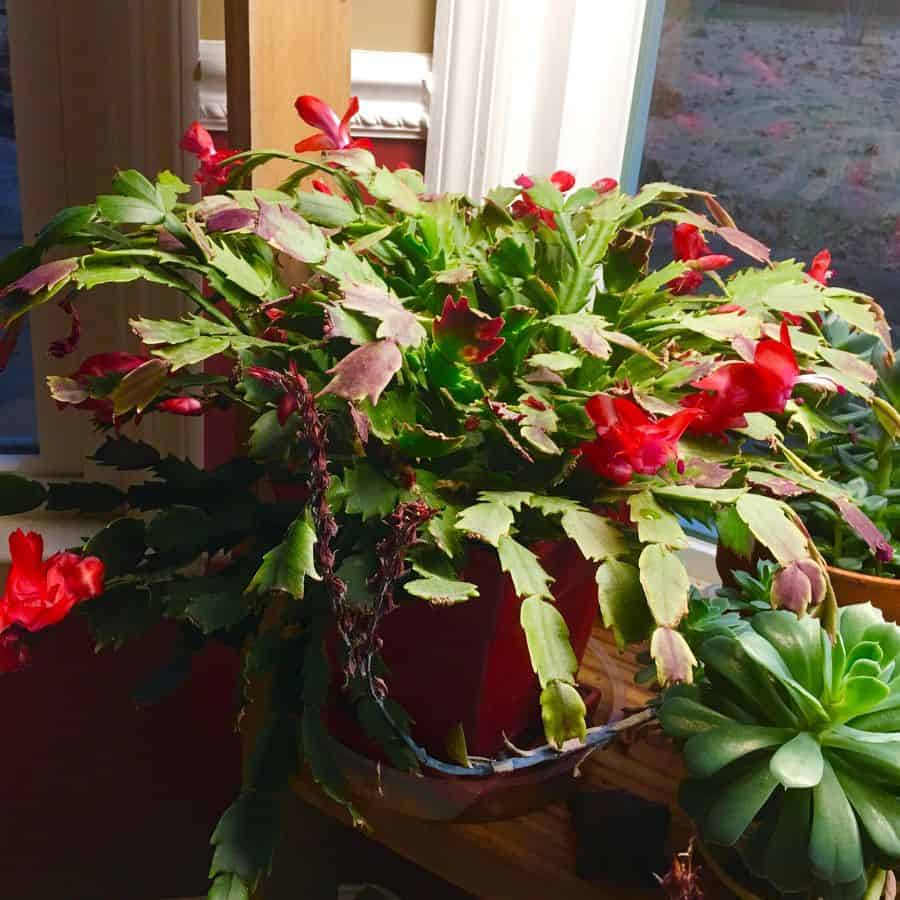
How to give your plant a rest period:
- In October, move to a cooler spot (55-60°F)
- Reduce watering by half
- Provide 12-14 hours of darkness daily for 6 weeks
- Avoid disruptions (even brief light exposure can reset the clock)
After this rest period, your plant will reward you with not only nice blooms but a surge of branching growth that makes it much fuller.
Your Bushy Christmas Cactus: The Reward
With these seven tricks, you’ll turn your thin plant into a full, cascading beauty within 3-6 months.
The best part is that once you establish this care routine, your Christmas cactus can live for decades. Some have been passed down for over 100 years.
Remember that consistency matters. Your Christmas cactus wants to be bushy and full.
It just needs the right conditions. With a little patience and these techniques, you’ll have a plant that blooms faithfully every holiday season.
Your future self will thank you when you’re showing off a full, healthy Christmas cactus that has friends and family asking for advice.