Ever stared at your stubborn Christmas cactus in mid-December, wondering why it’s still all green when your neighbor’s plant is covered in blooms?
I’ve been there. The good news is that you can get those blooms weeks before everyone else.
This Brazilian plant can be coaxed into flowering early with a few strategic moves that mimic its rainforest home.
Why Your Christmas Cactus Is Being Stubborn (And How to Fix It)
Christmas cacti aren’t actually desert plants. They’re rainforest dwellers. In nature, they bloom when specific environmental triggers align: shorter days, cooler nights, and a touch of water stress.
Miss even one of these signals, and your plant might stay flowerless through the holidays.
Most people make this mistake with their Christmas cactus: treating it like an ordinary houseplant year-round. But these Brazilian plants need a strategic approach to produce those tubular blooms that can last for weeks.
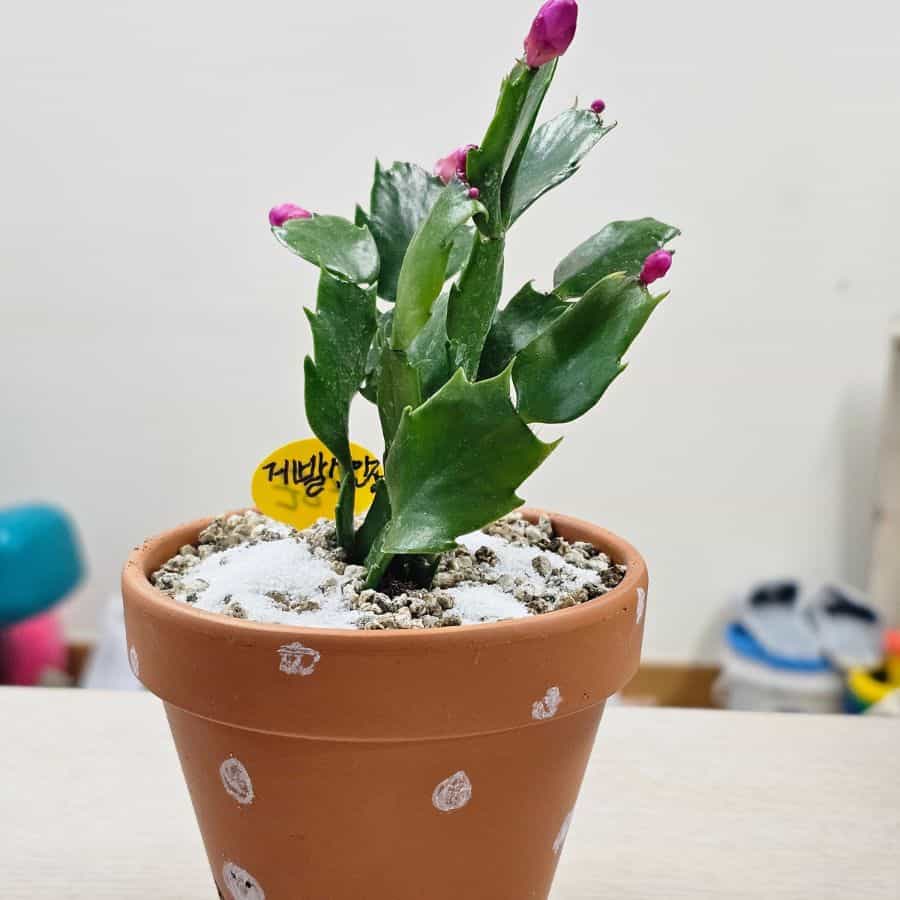
Here’s something interesting: an estimated 75% of Christmas cactus owners have experienced their plants refusing to bloom at least once. You’re not alone in this frustrating experience.
The 3-Step Early Bloom Plan That Actually Works
The real trick for your Christmas cactus isn’t complicated equipment or expensive fertilizers. It’s simply understanding its biological clock and resetting it. Here’s your strategy:
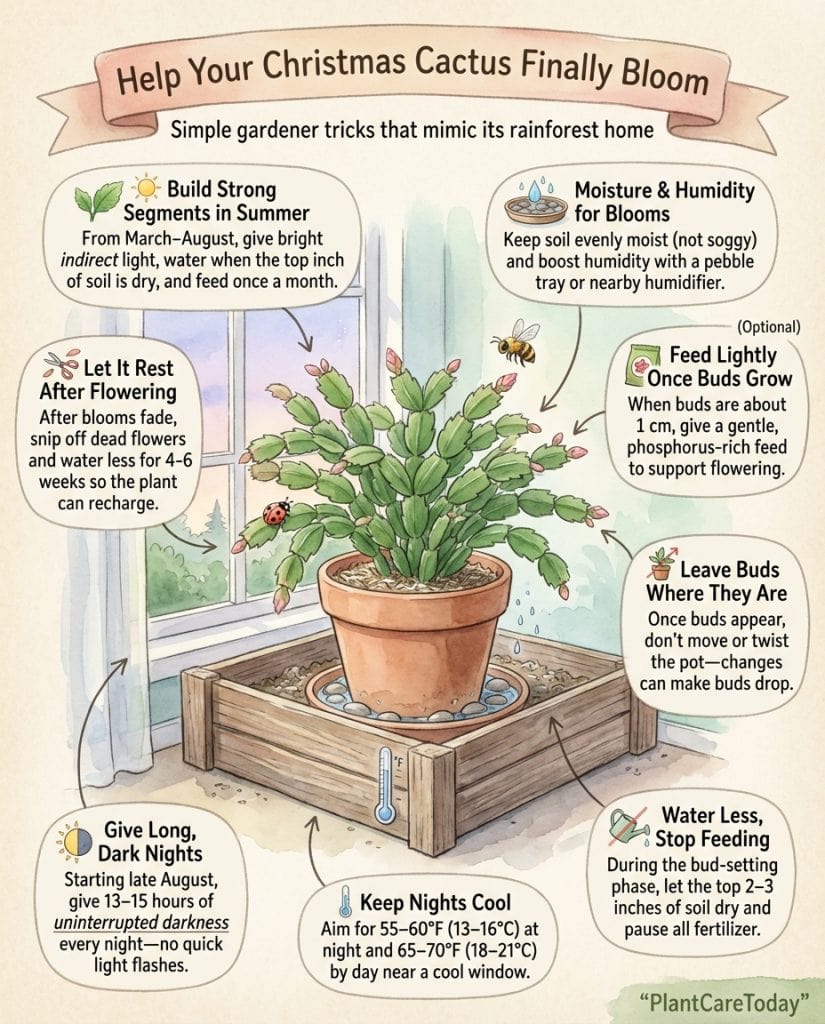
Step 1: Summer Prep (The Foundation for Success)
Think of summer as your Christmas cactus’s energy-building phase. The healthier your plant is now, the better its early flowering will be.
• Post-bloom recovery: After January flowering, remove dead blooms and reduce watering for 4-6 weeks
• Growing season boost: From March to August, water when the top inch of soil dries and fertilize monthly with balanced 10-10-10 fertilizer
• Light matters: Provide bright, indirect light (no harsh direct sun) to build strong segments
• Summer vacation: Consider placing it outdoors in a sheltered, shady spot to encourage growth
Those plump, healthy segments are future bloom sites. Each green pad represents potential flowers if given the right signals.
Step 2: The Early Bloom Trigger (Your Secret Weapon)
Here’s where things get interesting. Starting in late August instead of October, you’ll create conditions that convince your plant it’s time to bloom.
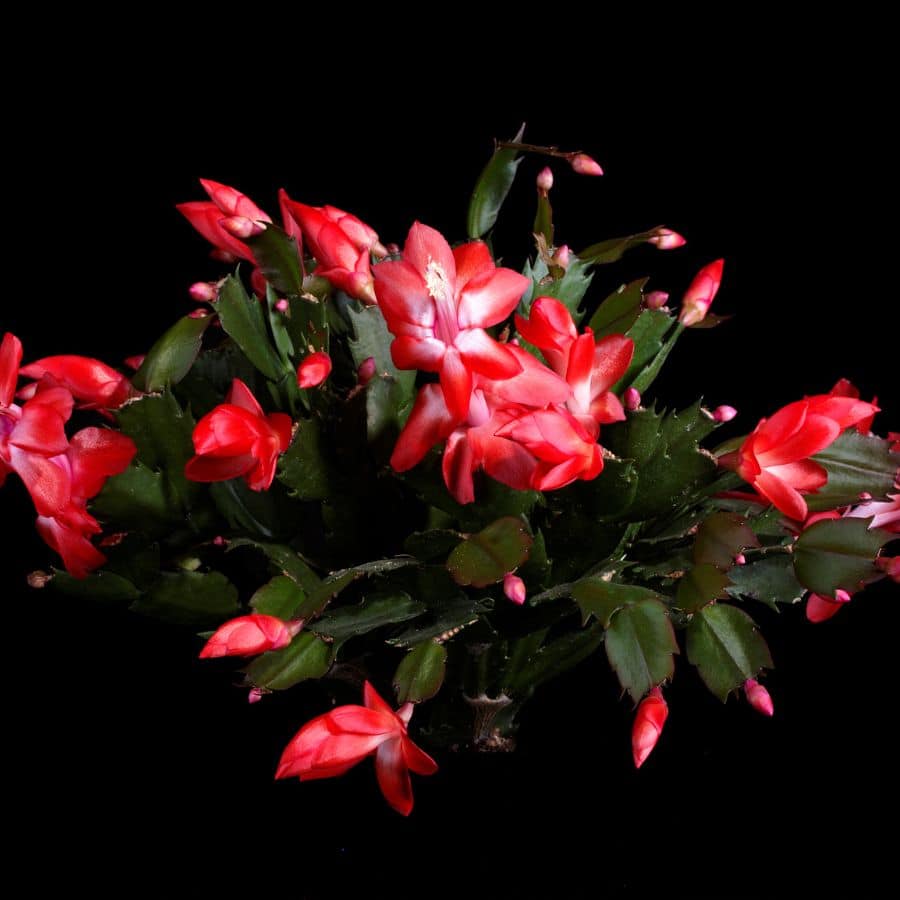
The difference between new and experienced plant parents is understanding these three critical bloom triggers:
1. The Darkness Treatment
• Begin in late August (not October like most people wait for)
• Give your plant 13-15 hours of complete, uninterrupted darkness every night
• Place in a closet or under a lightproof box from 6 pm to 8 am
• During daylight hours, provide bright indirect light
2. The Temperature Trick
• Keep nighttime temperatures between 55-60°F (13-16°C)
• Allow daytime temps around 65-70°F (18-21°C)
• A cool windowsill away from heaters works well
3. The Stress Strategy
• Gradually reduce watering (let top 2-3 inches dry between waterings)
• Stop fertilizing completely during this period
• This mild stress is like flipping your plant’s reproductive switch
Here’s what surprised me: even a brief flash of light during the dark period, like flipping on a bathroom light for just seconds, can reset your plant’s internal clock and delay blooming. These plants need their uninterrupted beauty sleep.
Step 3: From Buds to Blooms
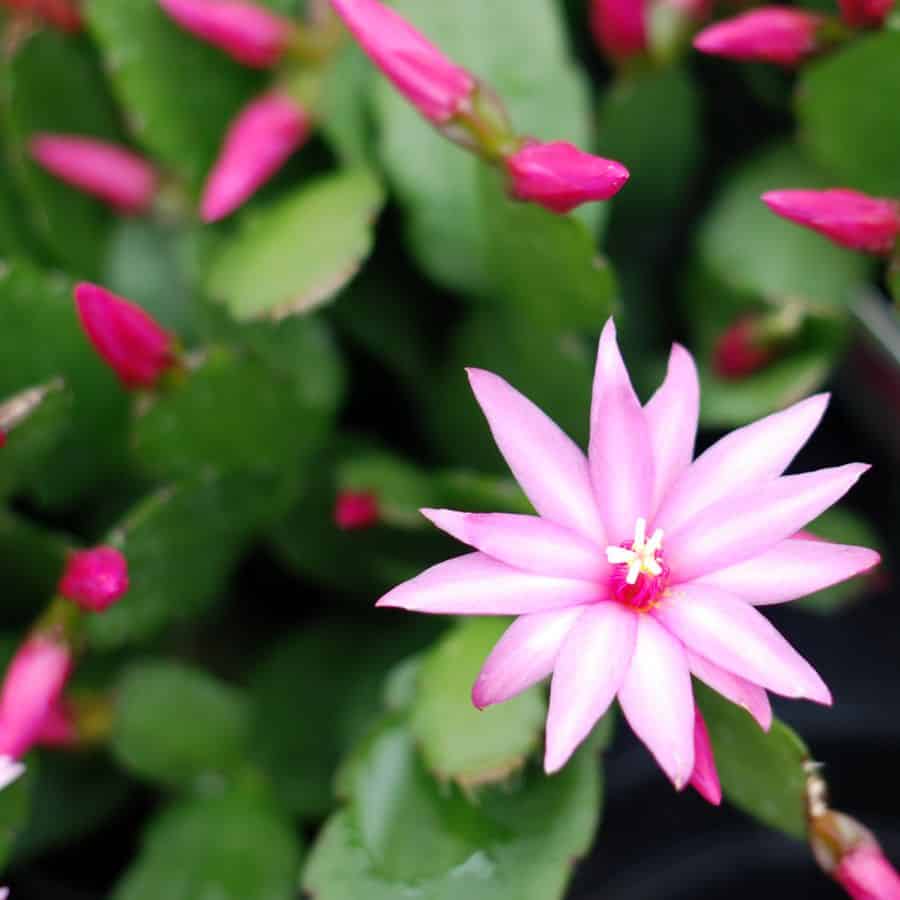
Within 4-6 weeks of starting this regimen, tiny buds should appear at the tips of leaf segments. This is when most people accidentally mess up their success.
Once buds form:
• Do not move the plant. Changes in position can cause bud drop.
• Keep soil consistently moist (not soggy)
• Boost humidity with a pebble tray or nearby humidifier
• Resume light feeding with phosphorus-rich fertilizer when buds reach 1cm
Advanced Techniques for Earlier Blooms
For even earlier results, blooms as early as late October, these advanced techniques can help:
• Staggered darkness: Start the dark treatment in mid-August instead of late August
• Perfect sync: Maintain precise 55-58°F nights with 14-hour darkness periods
• Light boost: Use LED grow lights during daylight hours to maximize energy production
• Root restriction: Keep your plant slightly root-bound. Mild root restriction encourages flowering.
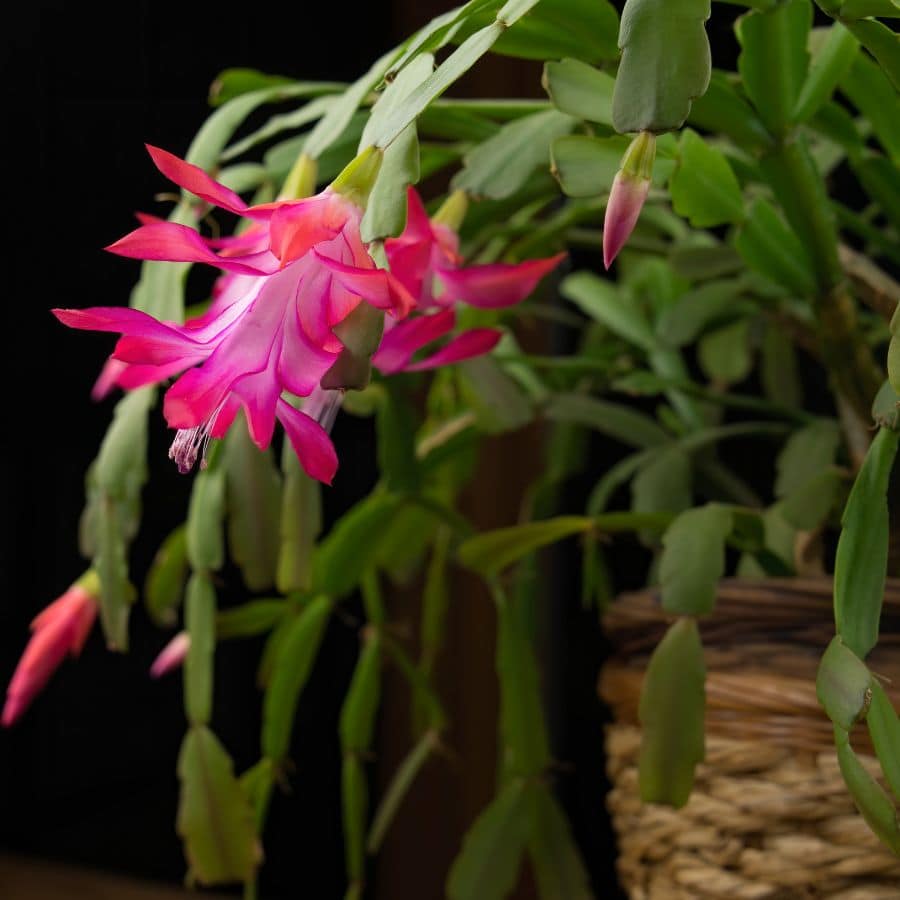
Troubleshooting Guide
When your plant refuses to bloom, it’s usually one of these fixable issues:
• Light leaks: Even streetlight through windows can disrupt the darkness cycle
• Too warm: Nighttime temps above 68°F prevent bud formation
• Fertilizer overload: Too much nitrogen creates beautiful foliage but no flowers
• Youth issues: Plants under 2 years old may not bloom consistently yet
• Water problems: Inconsistent watering confuses your plant’s flowering signals
Give your Christmas cactus the right combination of darkness, coolness, and slight stress, and it will reward you with weeks of blooms.
Your Early Bloom Countdown Calendar
For blooms 3-5 weeks before Christmas, follow this simple timeline:
• January-February: Deadhead and rest period
• March-August: Growth phase with regular water and fertilizer
• Late August: Begin darkness treatment and temperature control
• September-October: Continue treatment until buds form
• Late October-November: Enjoy early blooms while everyone else waits
The best part about early Christmas cactus blooms isn’t just following rules. It’s about understanding this plant’s natural rhythms. With these techniques, you’ll transform your holiday displays weeks ahead of schedule and enjoy those blooms long before the gift-wrapping begins.