Your garden is sending out an SOS right now. Those gorgeous perennials that have faithfully returned year after year?
They’re silently suffocating, competing for space and nutrients as we speak. September isn’t just pumpkin spice season.
It’s actually the perfect moment to perform garden surgery that will transform your plants from stressed to spectacular by spring.
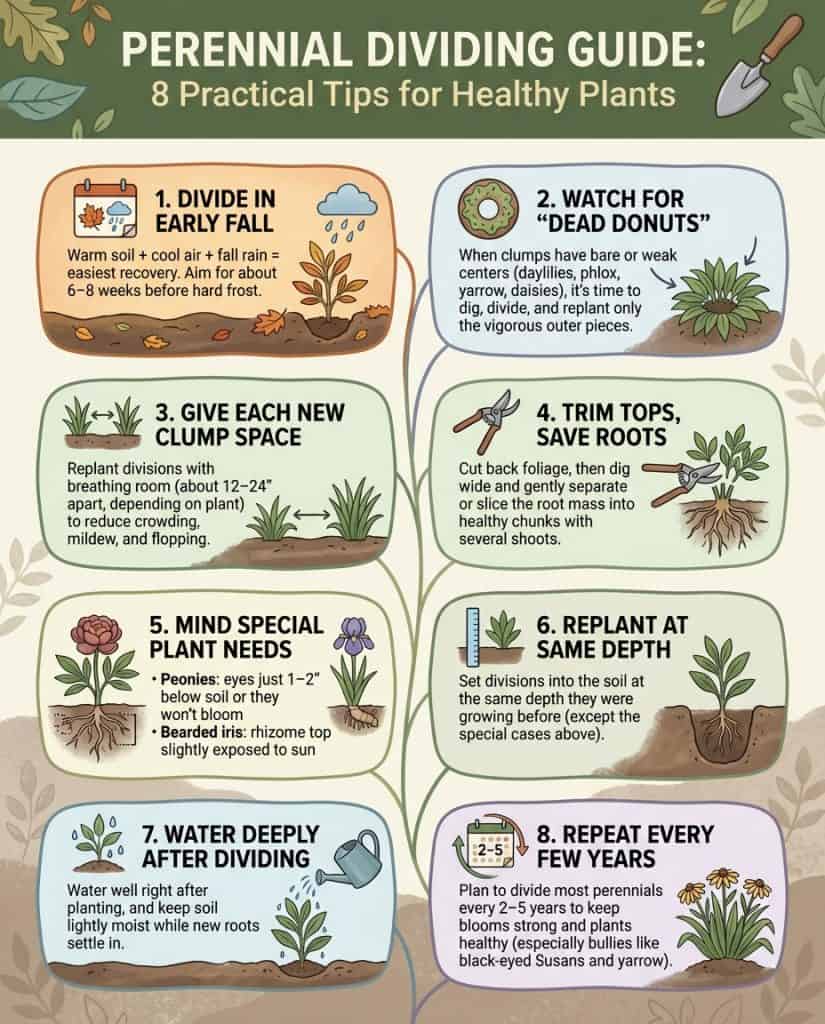
Why September Is Your Perennials’ Secret Savior
Forget what you’ve heard about spring being the only time to divide plants! September offers a magical sweet spot that your perennials are literally dying for. Think of it as the plant equivalent of a spa weekend after a stressful summer.
- Warm soil + cool air = Perfect recovery conditions (like healing with a cozy blanket, but your face isn’t too hot)
- Plants have finished their bloom cycle and can focus 100% on root development
- Fall rains provide natural irrigation when roots need it most
- Divisions have 6-8 weeks to establish before winter dormancy
I was shocked to discover that divided perennials can produce up to 3-5 times as many flowers the following season as overcrowded clumps! That’s free flowers, people!
10 Plants Practically Begging for Your Knife This Month
1. Daylilies: The Drama Queens
These flashy performers turn into divas when overcrowded. After 3-5 years, they develop “dead zones” in the center like a plant donut. Division isn’t optional. It’s a full-blown intervention.

How to divide: Cut back foliage, dig up the clump, separate fans that have healthy roots, and replant 18-24 inches apart. Water deeply after the operation.
(Trust me on this. I once ignored a daylily clump for 7 years and got exactly THREE blooms the final summer. After division? Fireworks!)
2. Hostas: The Sleeping Giants
These shade superstars may start slow, but given time, they transform into massive clumps that eventually suffocate themselves. Dividing every 4-6 years keeps them in check.
How to divide: Dig up the entire clump, slice into sections with a sharp spade (each with 2-3 shoots), and replant at the same depth. The game-changer for your hostas isn’t what you think. It’s giving them breathing room!
3. Peonies: The Centenarians
Unlike attention-seeking plants, peonies can thrive for decades undisturbed. But when blooms diminish, or you need to relocate, September is your golden opportunity.
How to divide: Cut stems back, dig around the crown, clean roots, and slice divisions with 3-5 “eyes” (buds).
The secret most plant experts won’t tell you is that planting depth is critical. Eyes must be just 1-2 inches below the soil surface, or they’ll give you gorgeous leaves but zero flowers.

4. Bearded Irises: The Root Sunbathers
These architectural beauties need division every 3-4 years when their rhizomes become crowded or damaged. Their bizarre growth habit, rhizomes that prefer tanning above soil, makes proper division crucial.
How to divide: Lift clumps, trim foliage to 6 inches, cut healthy rhizomes (discard old, woody sections), and replant with tops exposed above soil in a fan pattern.
5. Coneflowers: The Self-Propagators
These native powerhouses self-seed AND form thick clumps. Dividing every 3-4 years prevents them from exhausting themselves (and your patience).
How to divide: Lift clump, split crowns into sections with healthy shoots, and replant 18 inches apart. Your pollinators will thank you with increased activity next year!
6. Black-Eyed Susans: The Garden Bullies
These sunny favorites spread with the determination of a toddler reaching for cookies. Without division every 2-3 years, they’ll take over your garden faster than gossip spreads at a family reunion.
How to divide: Dig out clumps, split with a spade, and only replant the vigorous outer sections. The difference between amateur and pro plant parents is simply knowing when to be ruthless with these aggressive spreaders.
7. Garden Phlox: The Mildew Magnets
Over time, phlox develops bare centers and becomes increasingly susceptible to powdery mildew, like a balding man with dandruff. Division every 3-4 years restores density and vigor.
How to divide: Lift carefully, cut into sections with multiple shoots, and replant with generous spacing of 18-24 inches to improve air circulation.

8. Sedum: The Flop-Prone Succulents
These drought-tough plants eventually split open in the middle like they’re doing the plant version of the splits. Division keeps them compact and upright.
How to divide: Dig carefully, slice the root ball into chunks, and replant in sunny, well-drained spots. These divisions root so easily they’re practically the rabbits of the perennial world!
9. Yarrow: The Aggressive Mat-Formers
Yarrow forms dense mats that can become invasive or develop sparse middles. Dividing every 2-3 years keeps these medicinal beauties in bounds and blooming vibrantly.
How to divide: Dig up a clump, remove dead centers, and replant only the vigorous edge sections. Most people make this mistake with their yarrow: replanting the tired middle portions that will never perform well.
10. Shasta Daisies: The Floppy Favorites
These cheerful bloomers become increasingly pathetic and floppy when overcrowded. Division every 2-3 years transforms them from sad to stunning.
How to divide: Lift clumps after flowering, divide into sections with roots and shoots, and replant 12-18 inches apart with stems cut back.
Your Foolproof Division Method (That Even Plant-Killers Can Master)
- Pre-game prep: Water thoroughly the day before to reduce shock
- Careful extraction: Dig wide around the clump to protect roots
- Root inspection: Shake or wash off soil to see what you’re working with
- The separation: Pull apart or cut into smaller sections with healthy roots and shoots
- Immediate replanting: Get divisions back into the soil at the same depth as before
- Recovery support: Water deeply and apply 2-3 inches of mulch
Your plants are trying to tell you something important: division isn’t plant torture. It’s plant rescue! Just as pruning a hedge stimulates growth, dividing perennials triggers their survival instinct, leading to more vigorous growth.

The Critical Aftercare That Most Gardeners Skip
Division is like surgery for your plants, and the recovery period matters just as much as the procedure. After dividing:
- Keep soil consistently moist until frost (but not soggy)
- Apply 2-3 inches of mulch for winter protection
- Wait until spring to fertilize (plants need rest, not a gym membership)
- Cut back dead foliage after frost to prevent disease
This simple aftercare routine means the difference between divisions that merely survive and those that thrive and flourish next season.
The Dramatic Transformation You’ll See Next Spring
By making September division part of your garden routine, you’re not just maintaining plants. You’re completely reviving them. Imagine stepping into your garden next April to find:
- Double or triple the number of plants you started with (free plants!)
- Significantly larger flower displays with more vibrant colors
- Healthier plants with better resistance to pests and diseases
- Perfectly spaced perennial beds that look professionally designed
All from a single afternoon of playing plant surgeon this September. Now that’s what I call a spectacular return on investment!