Your vegetable garden might be sending you an SOS right now, and you don’t even know it.
Those tomatoes, peppers, and cucumbers are silently screaming for some flowery companions!
I was shocked to discover that adding specific flowers to my vegetable patch didn’t just make it prettier. It completely transformed my harvest.
Ready for your garden glow-up? These 11 flowering superheroes are about to rescue your struggling vegetables.
Nature’s Pest Control Squad: Flowers That Fight Back
Forget what you’ve heard about chemical pesticides! These flowering warriors are nature’s own defense system, and they work like a charm.
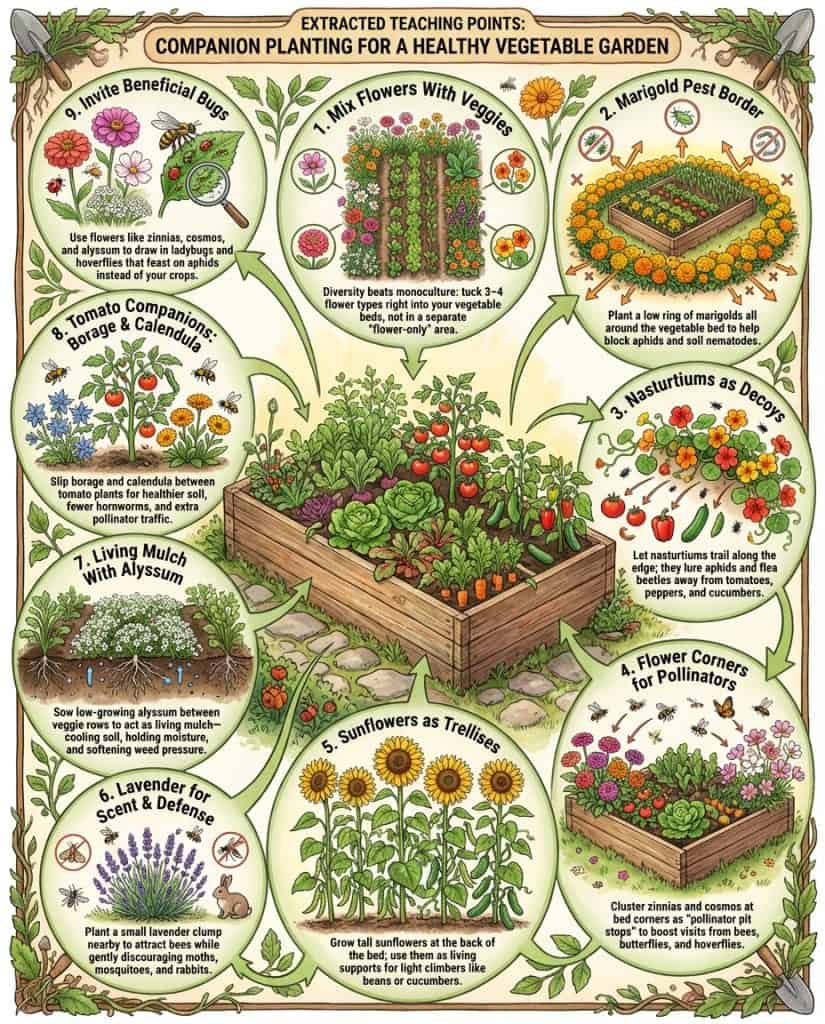
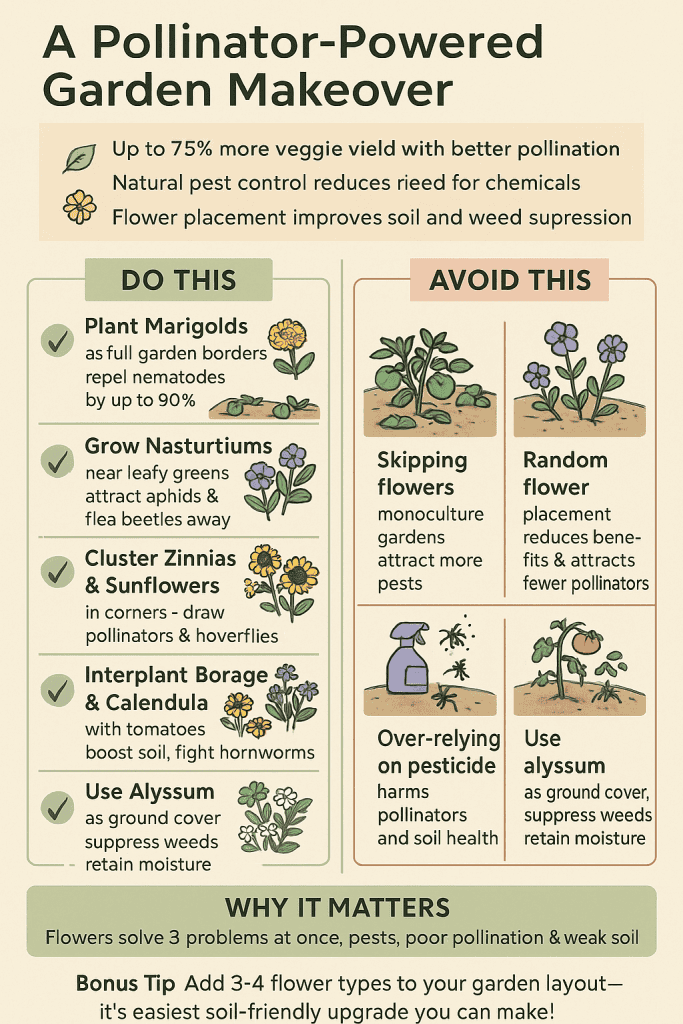
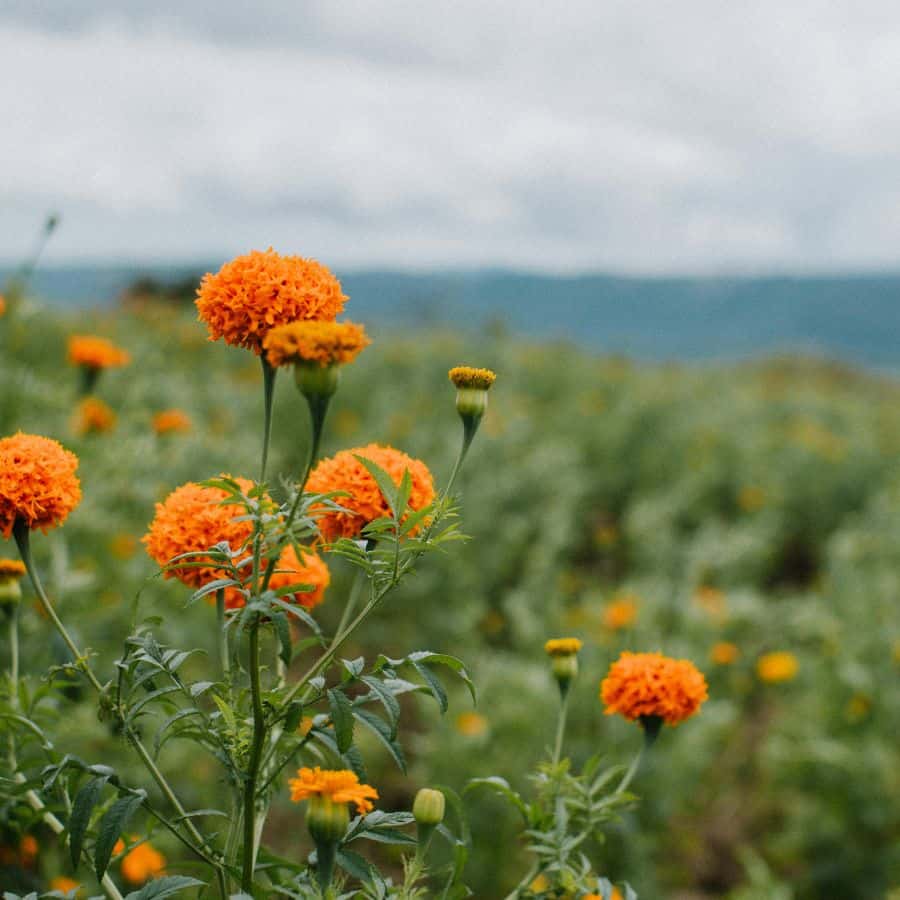
- Marigolds: These vibrant guardians are the bouncers of your garden party, turning away unwanted guests like aphids and nematodes. Their roots release compounds that can reduce nematode populations by up to 90% in just one growing season! Plant them as a border around your entire vegetable plot for maximum protection.
- Nasturtiums: Think of these as the ultimate sacrifice play. They act like pest magnets, drawing aphids and flea beetles away from your precious vegetables. It’s like setting up a decoy buffet that keeps pests distracted while your veggies thrive undisturbed.
- Petunias: These aren’t just pretty faces! Petunias are secretly working security, repelling squash bugs, aphids, and beetles. Their sticky stems are like natural flypaper for smaller insects.
- Chrysanthemums: The secret weapon most plant experts won’t tell you is that mums contain pyrethrin, the same compound used in many commercial insecticides. They’re like having a 24/7 pest control service that also looks stunning.
Pollination Powerhouses: Your Vegetables’ Best Friends
Did you know that poor pollination can reduce your vegetable yields by up to 75%? These flowering champions bring in the cavalry of bees, butterflies, and other helpful insects.
- Sunflowers: These towering beauties aren’t just for show. They’re pollinator magnets! Plus, they double as natural trellises for climbing vegetables. Talk about multitasking!
- Lavender: This aromatic superstar attracts bees while simultaneously repelling moths, mosquitoes, and rabbits. The difference between amateur and pro plant parents is simply knowing that lavender’s fragrance is actually a sophisticated pest management system.
- Zinnias: These colorful blooms are like an all-you-can-eat buffet for beneficial insects. They bring in bees, butterflies, and ladybugs that will handle your pollination needs. Your tomatoes will thank you!
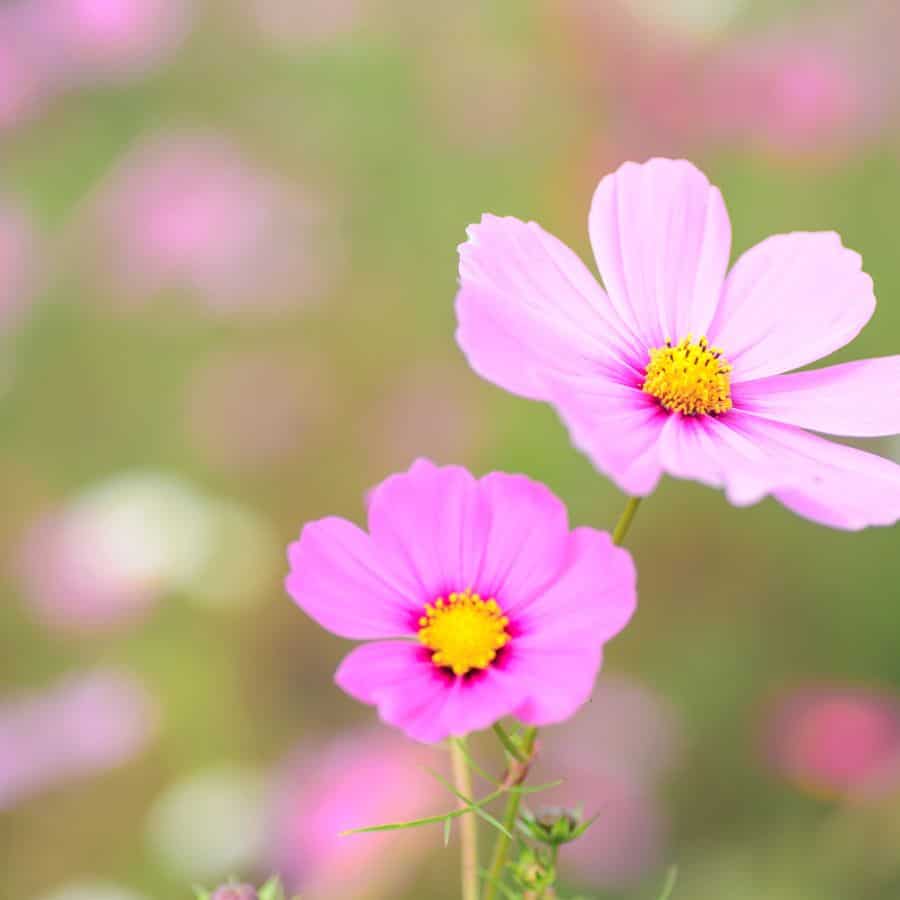
- Cosmos: These delicate flowers are hoverfly magnets, and those hoverflies are aphid-destroying machines! One hoverfly larva can devour up to 400 aphids in its lifetime. Nature is wild, isn’t it?
The Soil-Improving Superstars: Underground Magic
Your vegetable garden is trying to tell you something important: it needs better soil! These flowers work their magic below the surface.
- Borage: With roots that improve soil structure and flowers that repel tomato hornworms, borage is the unsung hero your garden desperately needs. The vibrant blue flowers are edible too, like nature’s sprinkles for your salads!
- Calendula: These bright orange blooms don’t just look pretty. They’re soil healers that release beneficial compounds into your garden. My personal calendula patch has transformed my mom’s garden from struggling to spectacular.
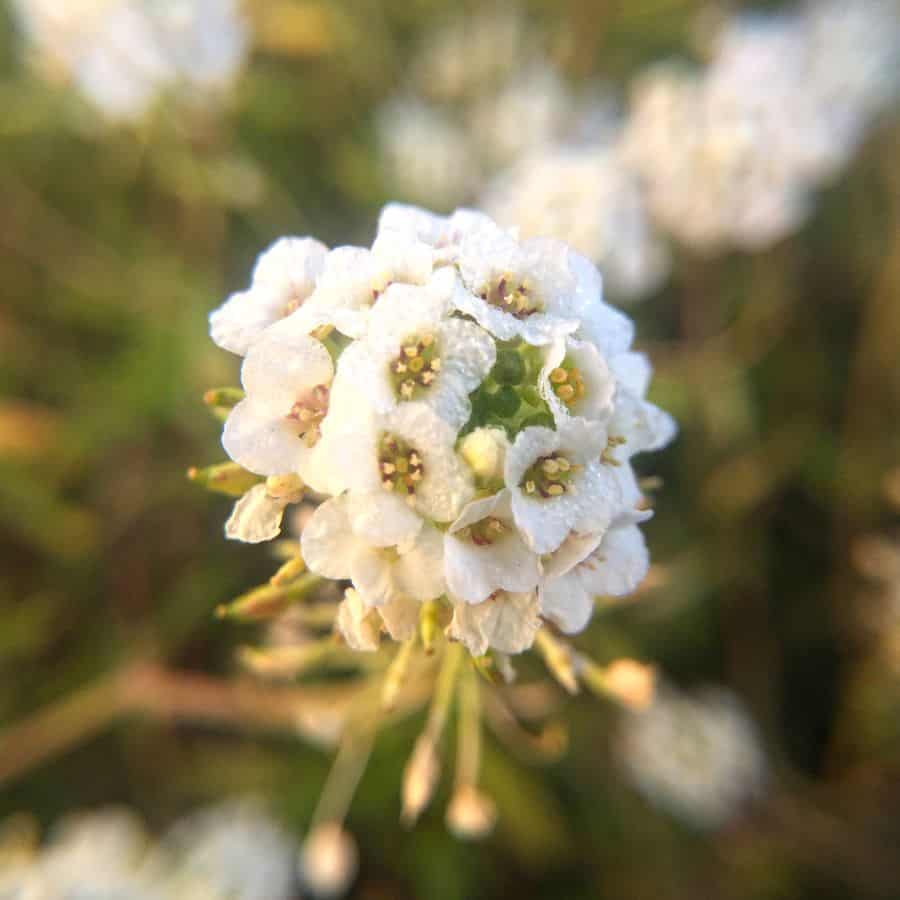
- Alyssum: The game-changer for your vegetable garden isn’t what you think. It’s this humble ground cover! Alyssum acts as a living mulch, suppressing weeds, retaining moisture, and attracting beneficial insects. It’s like laying down a protective carpet that works 24/7.
Strategic Flower Placement for Maximum Impact
Don’t just toss these flowers randomly around your vegetables! For dramatic results, try these proven arrangements:
- Border Protection: Create a marigold perimeter around your entire garden to form a pest barrier.
- Companion Planting: Nestle calendula and borage between tomato plants for targeted pest control.
- Pollination Stations: Cluster zinnias and cosmos at the corners of your garden to create “pollinator pit stops.”
- Ground Cover Strategy: Plant Alyssum between rows of vegetables to suppress weeds and retain moisture.
Most people make this mistake with their vegetable gardens: they create sterile monocultures. But nature doesn’t work that way! The secret to a flourishing vegetable patch is diversity.
These flowering plants don’t just coexist with your veggies. They create a thriving ecosystem that benefits all the plants growing in it.
Ready to transform your sad vegetable patch into a lush, productive paradise? Start with just 3-4 flower types this season.
Your vegetables will grow more vigorously, with fewer pests and more pollinators. And hey, your garden will look absolutely stunning too!