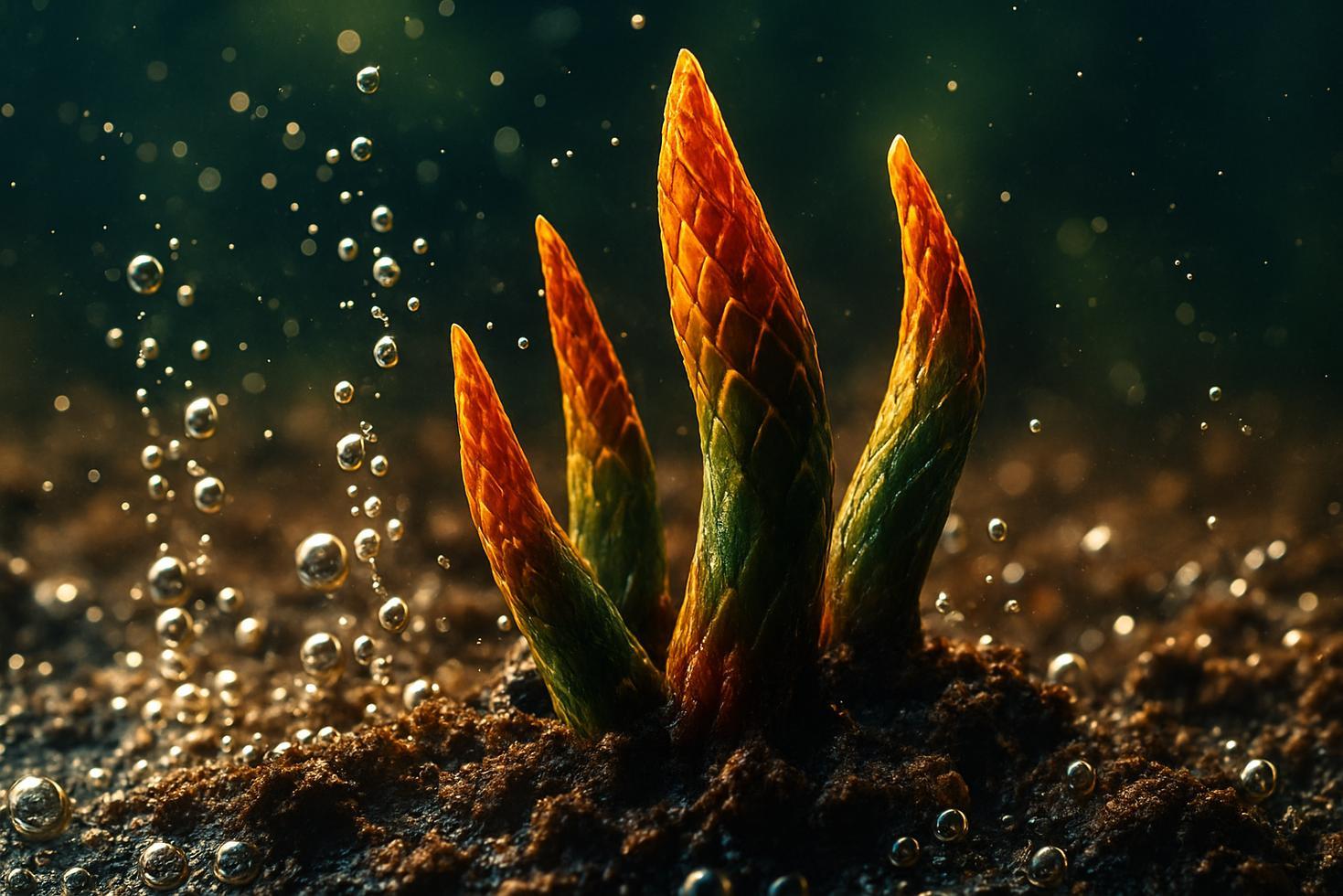
800 ppm H2O2 in irrigation water measurably raised oxygen in heavy clay soil — decomposed by microbes before it ever reached the roots.
When hydrogen peroxide contacts soil, it decomposes into water and oxygen — driven by microbial enzymes like catalase and peroxidases — releasing visible bubbles in the process. That fizz is not the hydrogen peroxide doing something to the soil. It is the soil doing something to the hydrogen peroxide.
The reaction happens fast. The moment H2O2 meets organic matter or living microbes, it breaks apart. What enters the root zone is not hydrogen peroxide. It is water and a pulse of molecular oxygen.
That distinction matters more in flooded or compacted soil, where oxygen has already been squeezed out and roots are running on fumes.
Why Waterlogged and Compacted Soil Runs Out of Oxygen
Roots are not passive absorbers. They run active transport systems that pull mineral nutrients across cell membranes — and those systems are powered by ATP generated through aerobic respiration. Oxygen is the fuel.
In waterlogged or compacted soil, water fills the air pockets that normally carry oxygen. ATP production drops as roots turn hypoxic, and nutrient uptake stalls even when nutrients are sitting millimeters away.
Clay soil is the hardest case. Its fine particle structure holds water tightly and resists aeration. The 800 ppm oxygation study measured a meaningful increase in bulk soil oxygen concentration in clayey soil treated with H2O2 compared to an untreated control — demonstrating the decomposition reaction can move the needle even in that environment.
What Actually Happens When H2O2 Enters the Root Zone
The hydrogen peroxide never accumulates. Soil enzymes dismantle it on contact, and the released oxygen temporarily raises dissolved oxygen levels in the soil solution around the root zone.
This is also why dilution matters. At 3% straight from the bottle, hydrogen peroxide generates enough reactive oxygen species to damage root-tip cells and harm mycorrhizal fungi and rhizosphere bacteria. Practitioners use working solutions between roughly 0.25% and 1% H2O2 — typically 1 tablespoon of 3% H2O2 per liter of water for a soil drench, or 1 part 3% to 2 parts water for a short root soak of around 5 minutes.
Diluted solutions stabilize quickly. One guide notes that mixed solutions should not be stored longer than a few hours because the peroxide continues decomposing and loses effectiveness as it reverts to water and oxygen.
Closing
The fizz disappearing into the dirt is the reaction completing itself — microbes converting a reactive molecule into something roots can use. It is a temporary correction, not a permanent fix. Plant Doctor is explicit: hydrogen peroxide addresses a symptom of waterlogging or compaction, and the underlying drainage problem still needs solving.
The oxygen pulse is real. The window is short.
Frequently Asked Questions
What causes hydrogen peroxide to fizz in soil?
Contact with microbial enzymes, primarily catalase and peroxidases, triggers decomposition of H2O2 into water and molecular oxygen. The bubbles are oxygen being released.
Does hydrogen peroxide actually raise oxygen levels in soil?
Yes. An 800 ppm H2O2 irrigation study measured increased oxygen concentration in clayey soil compared to an untreated control, though the effect is transient.
Can hydrogen peroxide damage roots or beneficial microbes?
At high concentrations or with repeated use, yes. Reactive oxygen species generated during decomposition can injure root-tip cells and harm mycorrhizal fungi and beneficial bacteria.
What dilution is used for a soil drench?
A common guideline is 1 tablespoon of 3% hydrogen peroxide per liter of water, producing approximately 0.25% H2O2, applied as a single drench rather than a repeated treatment.