I’ll admit it: I’ve killed more hydrangeas with “kindness” than I care to admit. (By kindness, I mean drowning them in fertilizer, thinking more equals better.)
But after years of trial, error, and some truly sad plant casualties, I’ve figured out the right approach to hydrangea fertilizing that turns average plants into something really special.
Why Your Hydrangeas Need the Right Food
The real trick with hydrangeas isn’t what most people think. These flowering plants aren’t just pretty faces. They have specific nutritional needs that directly affect their ability to produce those big, beautiful blooms.
Think of your hydrangeas like athletes. Without the right nutrition, they’ll still show up, but they won’t perform their best.
They need nitrogen, phosphorus, potassium, and magnesium to go from mediocre to really impressive.
Here’s something interesting: Over 80% of struggling hydrangeas aren’t suffering from disease or pests. They’re simply not getting enough nutrients.
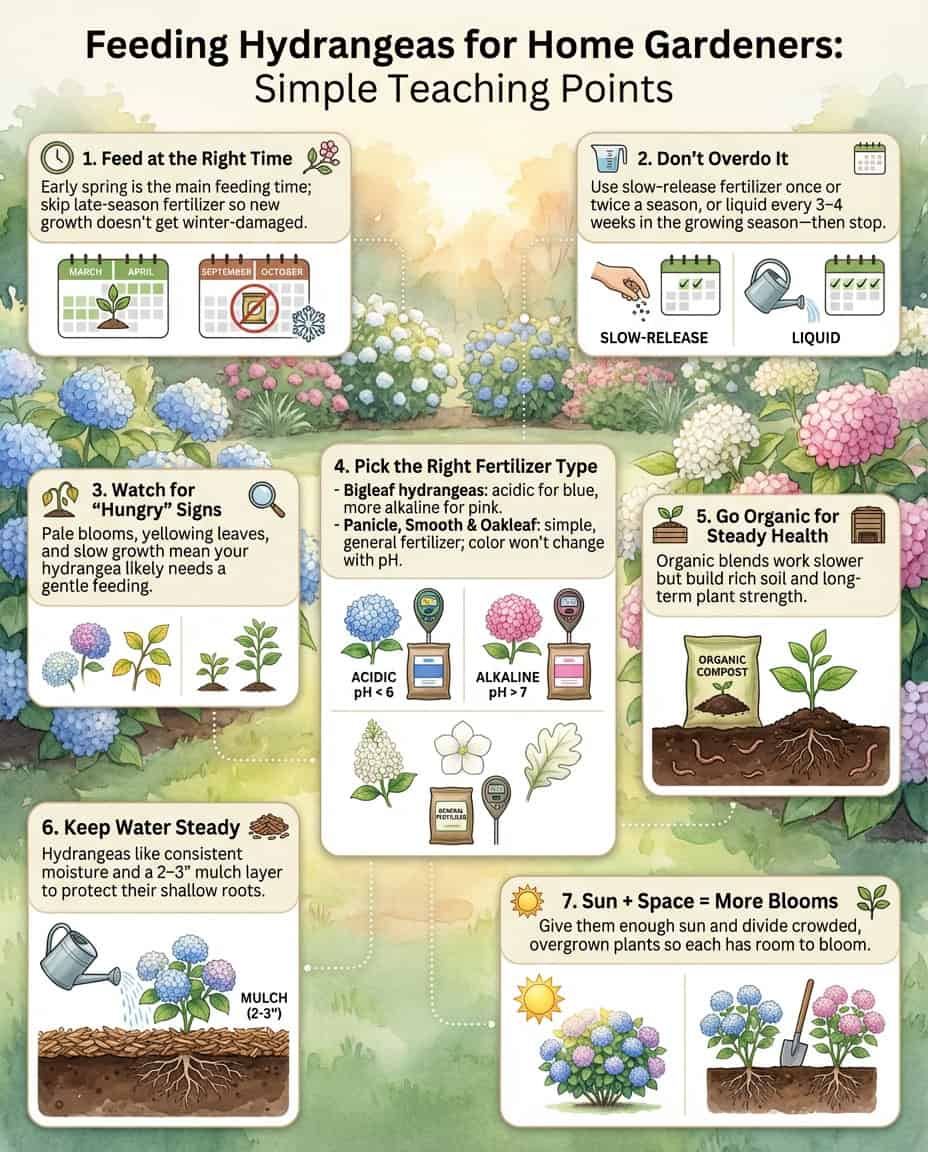
Signs Your Hydrangea Needs Fertilizer
Your hydrangea will show these signs when it needs fertilizer:
• Slow growth when it should be growing quickly
• Small or pale blooms that don’t look quite right
• Yellowing leaves or stems changing color
Here’s the good news: Hydrangeas aren’t actually difficult plants. They just show you pretty clearly when something’s off.
When to Fertilize Your Hydrangeas
Most people fertilize their hydrangeas whenever they remember. But timing really matters.
Hydrangeas have specific times of year when they use nutrients most effectively:
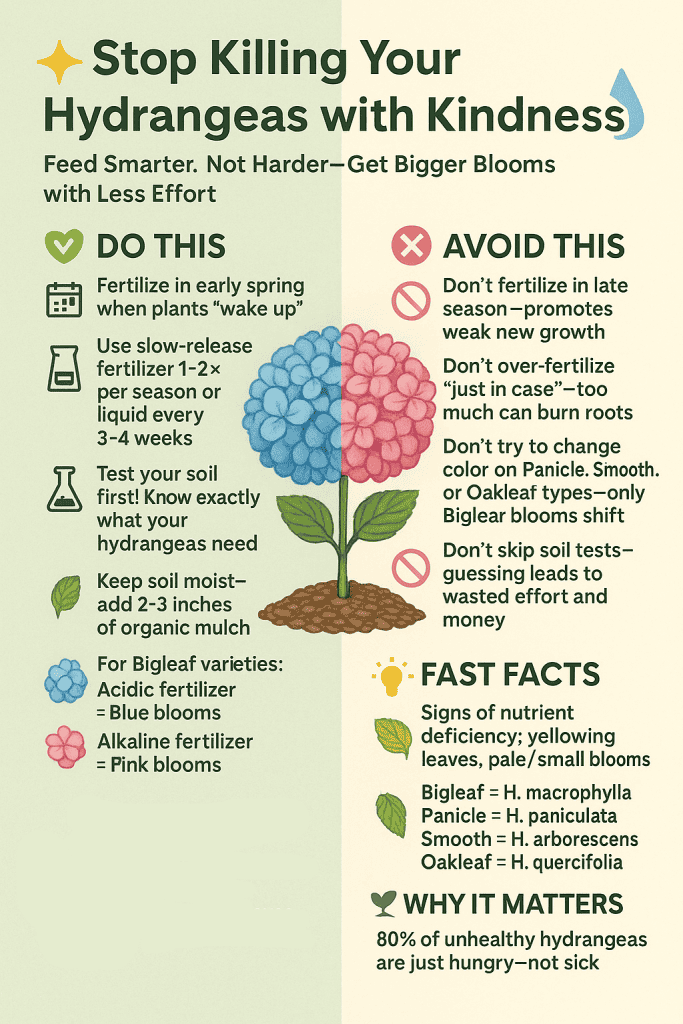
• Early spring: When plants are waking up and preparing for the growing season
• Mid-season: Only if your plant looks like it needs a boost
• Late season: Avoid fertilizing late in the year. It stimulates new growth that won’t survive winter.
How Often Should You Fertilize?
More isn’t better when it comes to hydrangea fertilizing. In fact, over-fertilizing can actually damage your plants.
For healthy hydrangeas:
• Slow-release fertilizers: Apply 1-2 times per season (these work like time-released vitamins)
• Liquid fertilizers: Every 3-4 weeks during growing season (these work faster but need more frequent application)
The difference between new and experienced gardeners is knowing when to stop. Your hydrangeas don’t need constant feeding. They need the right amount at the right times.
Choosing the Right Fertilizer
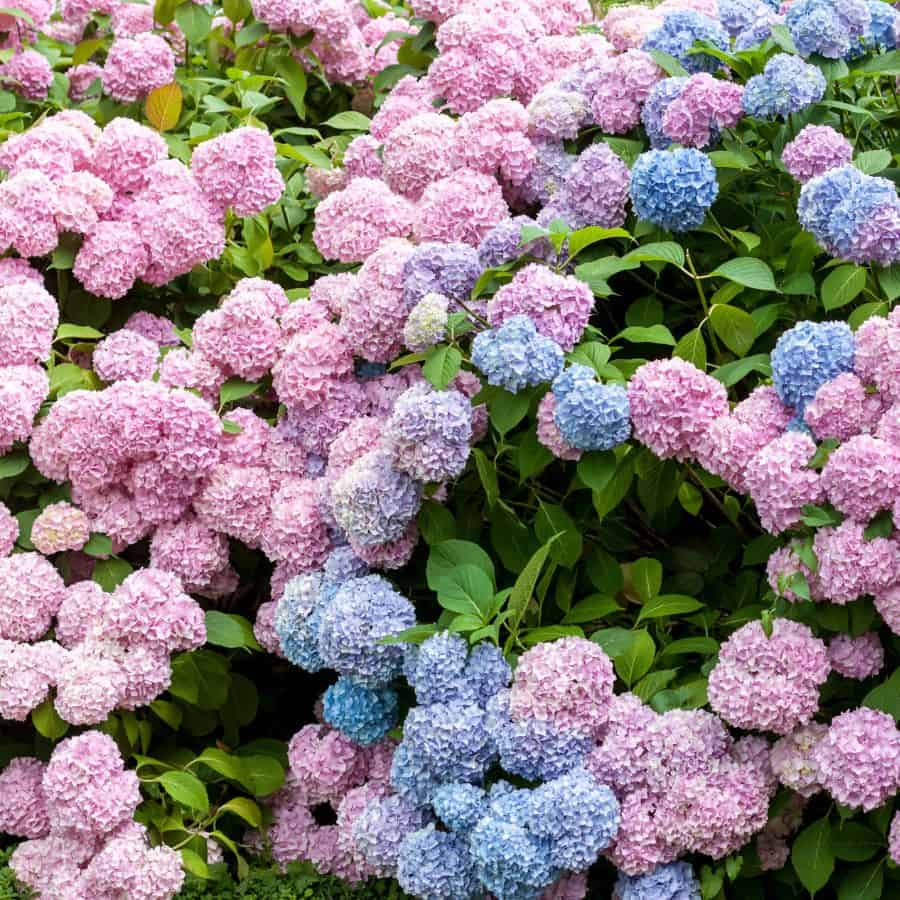
Here’s where hydrangeas get interesting. For Bigleaf (Macrophylla) varieties, you can actually change their bloom color:
• For blue blooms: Use acidic fertilizers (lower pH)
• For pink blooms: Use alkaline fertilizers (higher pH)
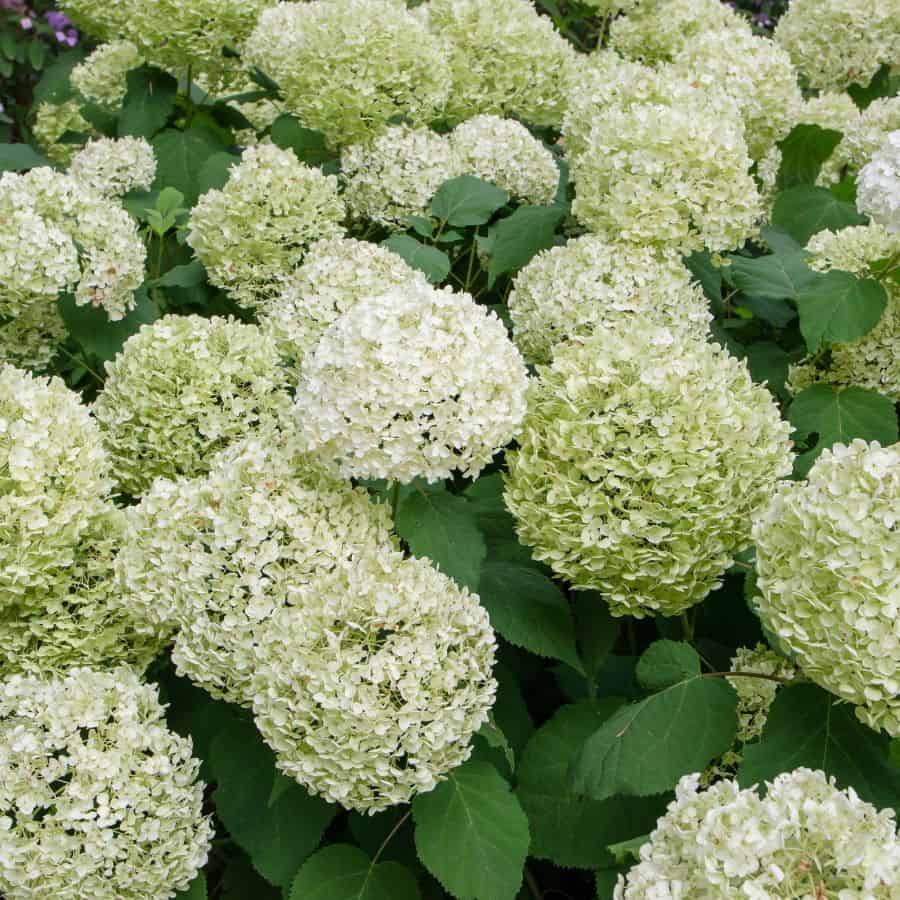
For Panicle, Smooth, and Oakleaf varieties, stick with general-purpose or low-nitrogen options. These varieties won’t change colors based on soil pH, so don’t try to make that happen.
Organic vs. Synthetic Fertilizers
You have two main options for fertilizer. Here’s what you need to know:
• Organic: Slower results but builds soil health over time
• Synthetic: Faster results with precise control
After years of trying both, I’ve found that organic fertilizer blends create great results without chemical concerns. My hydrangeas went from struggling to thriving in just one season after I switched.
5 Tips for Better Hydrangeas
These strategies will help you get the most from your plants:
- Divide overgrown plants: Splitting large hydrangeas actually leads to more blooms
- Keep moisture consistent: These plants need reliable watering
- Give them enough sun: Most varieties need substantial sunlight
- Add mulch: A 2-3 inch layer of organic mulch helps retain moisture for shallow roots
- Test your soil: Testing before fertilizing ensures you’re giving your plants what they actually need

The Bottom Line
Fertilizing hydrangeas isn’t just about following a schedule. It’s about understanding these plants and responding to what they need.
The key is this: Hydrangeas don’t need constant feeding. They need the right nutrients, at the right time, in the right amounts. Get these three things right, and you’ll have healthy, beautiful blooms all season long.