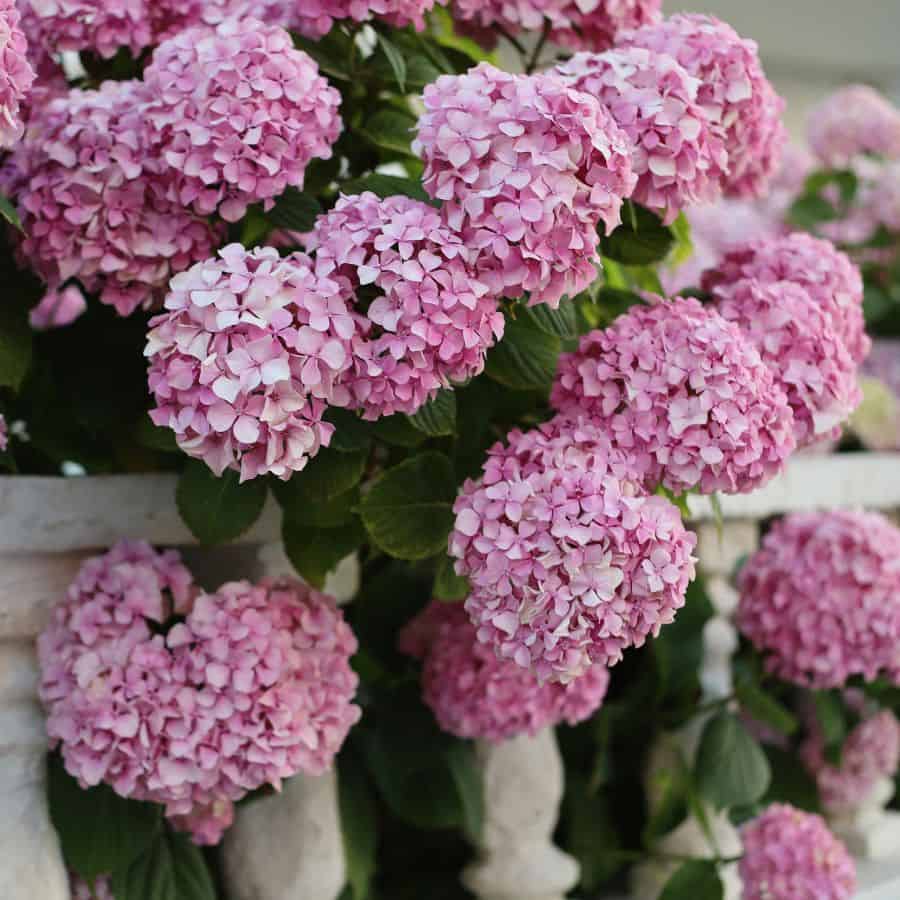
Want to fill your garden with stunning hydrangeas without emptying your wallet? I was shocked to discover that those $30+ hydrangea plants at the nursery can be multiplied at home for FREE with a simple cutting technique.
In just minutes, you can create genetic clones of your favorite varieties with nothing more than scissors and a pot.
It’s like having a magic wand that turns one plant into dozens!
Why Smart Gardeners Never Buy More Than One Hydrangea
Let’s be real. Garden centers are counting on you not knowing this secret. The game-changer for your garden isn’t spending more money; it’s learning to multiply what you already have.
- Save serious cash: Why buy 10 plants when you can grow them from one?
- Clone your favorites – That spectacular blue hydrangea? Make exact genetic copies
- See results fast: Cutting-grown plants bloom 2-3 years faster than seed-grown ones
- Garden sustainably: Create a lush landscape without the environmental footprint
(Between us plant lovers, there’s something deeply satisfying about growing something from “nothing,” like you’ve unlocked a gardener’s superpower!)
Timing Is Everything: When to Snip for Success
The difference between amateur and pro plant parents is simply knowing WHEN to take their cuttings. Grab those clippers at the wrong time, and you’ll wonder why nothing’s happening.
- Softwood cuttings (late spring-early summer): Think of these like teenage plants, flexible, fast-growing, and quick to adapt. PERFECT FOR BEGINNERS!
- Semi-hardwood cuttings (late summer-early fall): More like young adults, tougher but still able to transform into new plants with proper care.
Forget what you’ve heard about waiting until fall! Research from North Carolina State University shows that spring cuttings have nearly 25% higher success rates than fall cuttings for most hydrangea varieties.
Your Step-by-Step Hydrangea Cloning Formula
Ready to become a plant multiplication wizard? Here’s your foolproof system:
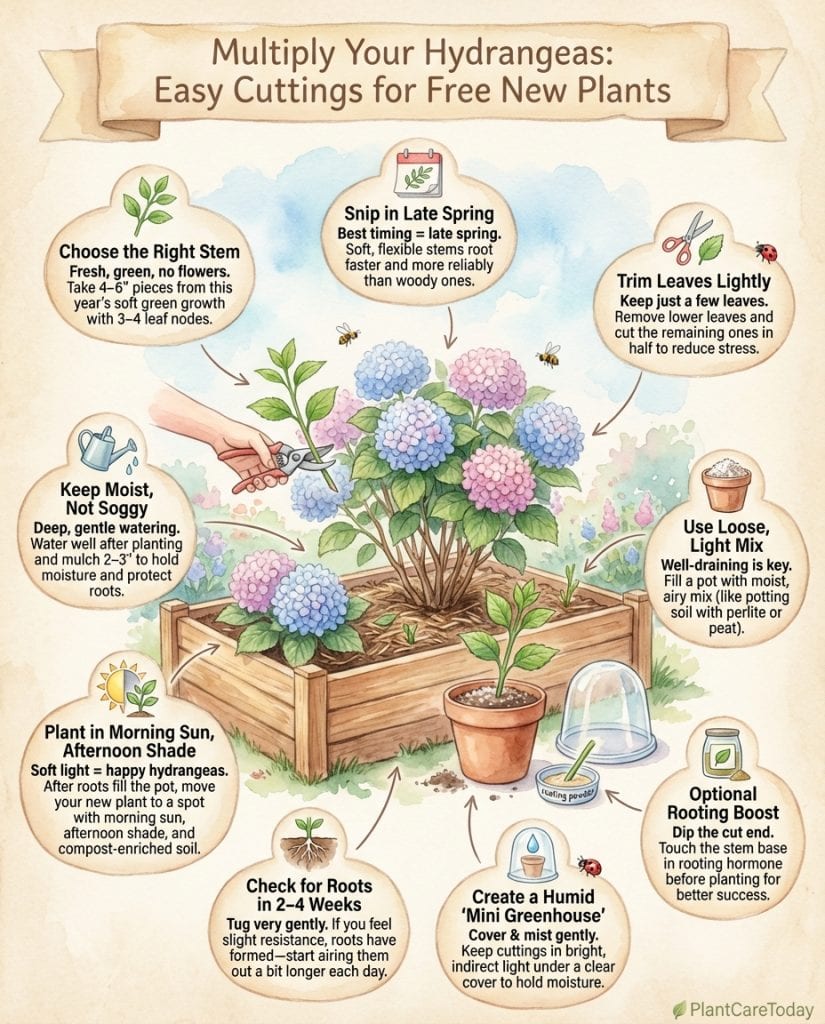
1. Gather Your Plant-Making Arsenal
- Sharp, clean pruning shears (dull blades = struggling cuttings)
- Small pot with drainage holes
- Well-draining potting mix or 50/50 perlite and peat moss
- Rooting hormone (optional, but gives you a 40% better success rate!)
- Spray bottle with water
- Clear plastic bag or humidity dome
2. Select Like a Pro
Your hydrangea is trying to tell you something important about which stems will succeed.
Look for this year’s growth (green, not woody) with no flowers or buds. The perfect cutting has at least 3-4 leaf nodes; those little bumps where leaves emerge.
3. Make The Perfect Cut
Cut 4-6 inches of stem at a 45-degree angle just below a leaf node. This isn’t just a fancy technique; that angle creates more surface area for roots to emerge!
Remove lower leaves, keeping only 2-3 at the top, then trim remaining leaves in half.
Most people make this mistake with their cuttings: leaving all the leaves on. This forces the cutting to support too much foliage before roots develop. It’s like asking someone to run a marathon while fasting!
4. Dip & Plant
Dip the cut end into rooting hormone (this miracle powder dramatically increases success rates).
Make a hole in your moistened soil mix with a pencil, insert the cutting with 1-2 nodes buried, and gently firm the soil around it.
5. Create a Mini-Greenhouse
This is where the magic happens! Mist your cutting and cover the pot with a clear plastic bag to create a humid paradise.
It’s like a spa treatment for your future plant! Keep it in bright, indirect light; direct sun will cook it like an ant under a magnifying glass.
Pro tip: Remove the cover for 5 minutes daily to prevent mold; cuttings need to breathe, too!
The Shocking Truth About When Roots Form
After about 2-4 weeks, give your cutting the gentlest tug. Feel resistance? CONGRATULATIONS! You’ve officially created life!
Those baby roots are your signal to start gradually removing the plastic covering (add 30 minutes each day) to harden off your new plant.
The secret most plant experts won’t tell you is that you can drastically improve your success rate by “bottom heating” your cuttings.
Studies show that providing soil 5-10°F warmer than air temperature can speed up rooting by up to 2 weeks!
Transplanting: Sending Your Babies Out Into the World
Once your cuttings have developed a strong root network (usually 3-4 weeks after you first feel resistance), they’re ready for their forever home:
- Select a spot with dappled sunlight (morning sun/afternoon shade is the sweet spot)
- Mix compost into your planting hole to create a 5-star resort for your new hydrangea
- Water deeply right after planting
- Apply 2-3 inches of mulch to maintain moisture and protect from temperature swings
When Things Go Wrong: Cutting Rescue 911
Don’t panic if your cutting looks sad; plant propagation is like raising temperamental teenagers!
- Wilting drama queen? Your cutting needs more humidity. Mist more frequently and ensure the plastic cover isn’t touching any leaves.
- Mold appearing? Too much moisture with poor air circulation. Remove the cover longer each day and cut back on misting.
- Is nothing happening after a month? Your cutting might have been too mature. Try again with fresh, green growth from the tips.
The Takeaway: Your Hydrangea Empire Awaits
Growing hydrangeas from cuttings isn’t just easy. It’s revolutionary for your garden and wallet. In one season, you can transform a single plant into a flourishing collection of spectacular blooms, each genetically identical to your favorite original.
Remember: the key to success is starting with healthy stems, creating the right humid environment, and practicing a little patience.
Your reward? A lush, vibrant garden that will have neighbors wondering how you afford so many gorgeous hydrangeas!
Ready to get snipping? Your garden’s dramatic transformation is just a few cuts away!