Ever noticed how a tiny $3 mint plant at the grocery store gives you barely enough for one mojito?
That same plant could actually produce enough mint to supply your kitchen for years without taking over your entire garden.
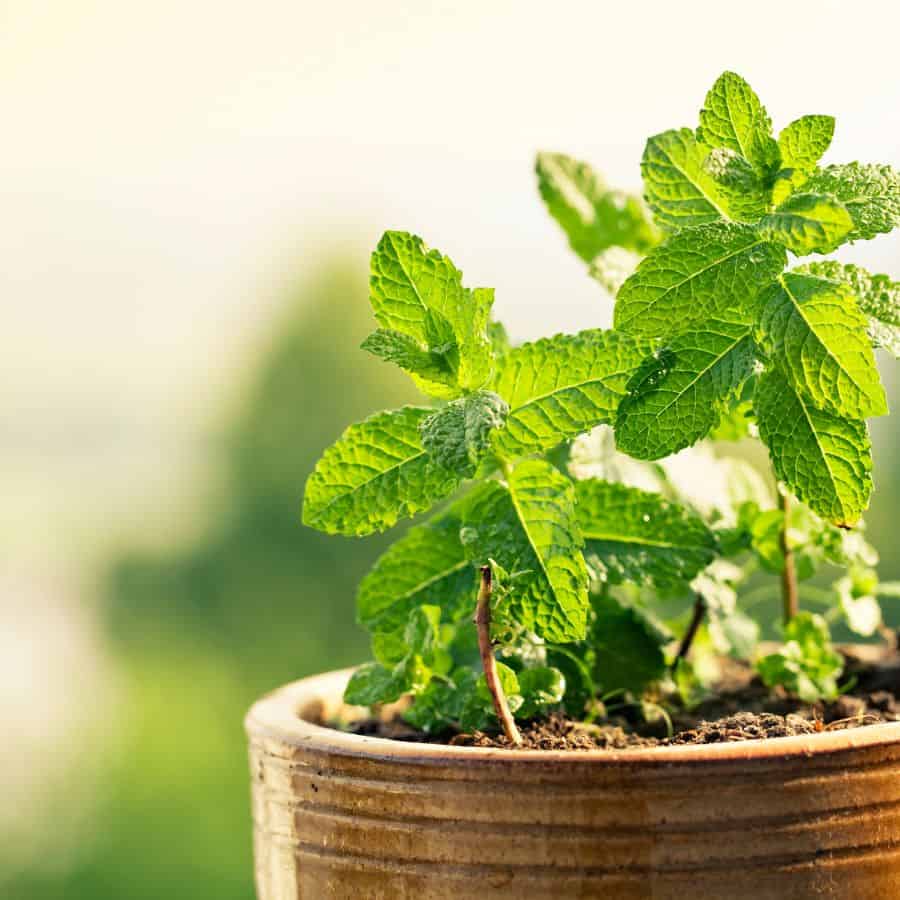
The real trick is that mint actually grows better in containers than in the ground. And with a few simple techniques, you’ll have more fresh mint than you know what to do with.
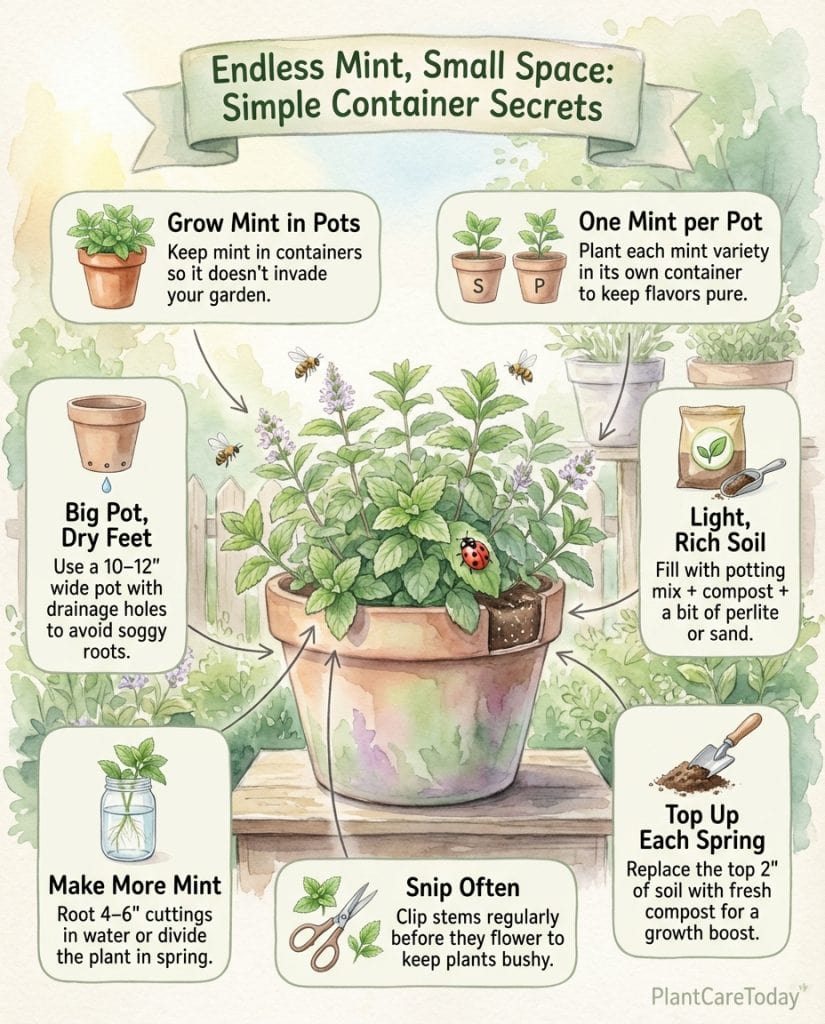
Why Your Mint Needs to Be in a Container
Mint is basically the Genghis Khan of herbs. Left in open soil, its underground runners will take over your entire garden.
I once saw a single mint plant spread across a 10×10-foot garden bed in just one season.
Container growing isn’t just convenient. It’s the only way to keep this plant in check. The best part is that when mint’s growth is contained, it actually produces more usable leaves.
• Space-saving: Grow on balconies, windowsills, or indoor countertops
• Total control: You manage soil quality, drainage, and moisture
• Weather protection: Simply move containers when conditions change
• Extended harvests: With proper pruning, container mint provides 3x longer harvests
• Year-round potential: Easily transition indoors when temperatures drop
Choose Your Flavor (There Are 600+ Options)
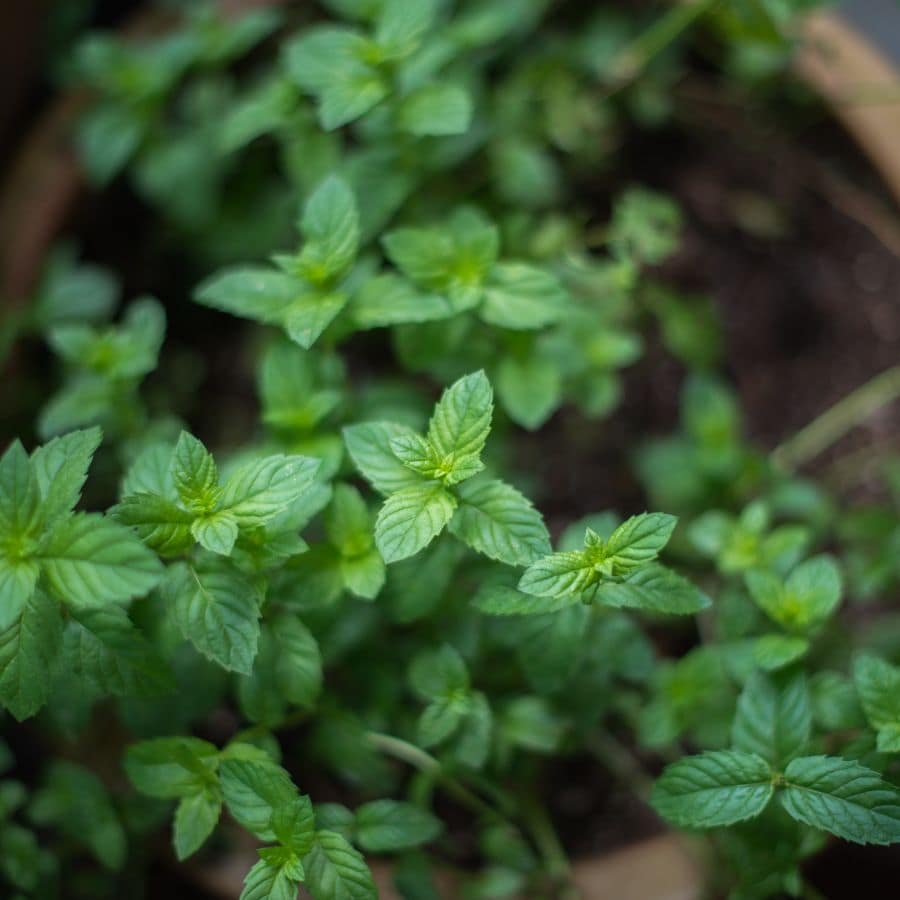
Did you know there are over 600 varieties of mint? While the classics never disappoint, exploring different types is pretty fun.
Most garden centers only stock spearmint, but these alternatives will transform your cooking:
• Peppermint: The cooling menthol powerhouse (40% higher in essential oils than spearmint)
• Chocolate Mint: Yes, it actually smells like an Andes mint
• Apple Mint: Fuzzy leaves with a gentle fruity aroma
• Mojito Mint: The authentic Cuban variety for perfect cocktails
• Pineapple Mint: Pretty variegated leaves with tropical notes
Keep varieties in separate containers. Mint cross-pollinates quickly, and you’ll end up with some weird hybrid flavors.
The Container That Will Make or Break Your Mint
The most important factor for your mint isn’t fancy fertilizer or rare seeds. It’s the pot you choose. Too small and it gets stunted, too poorly designed and it literally drowns.
Mint produces up to 70% more growth when given the right container. Here’s what it needs:
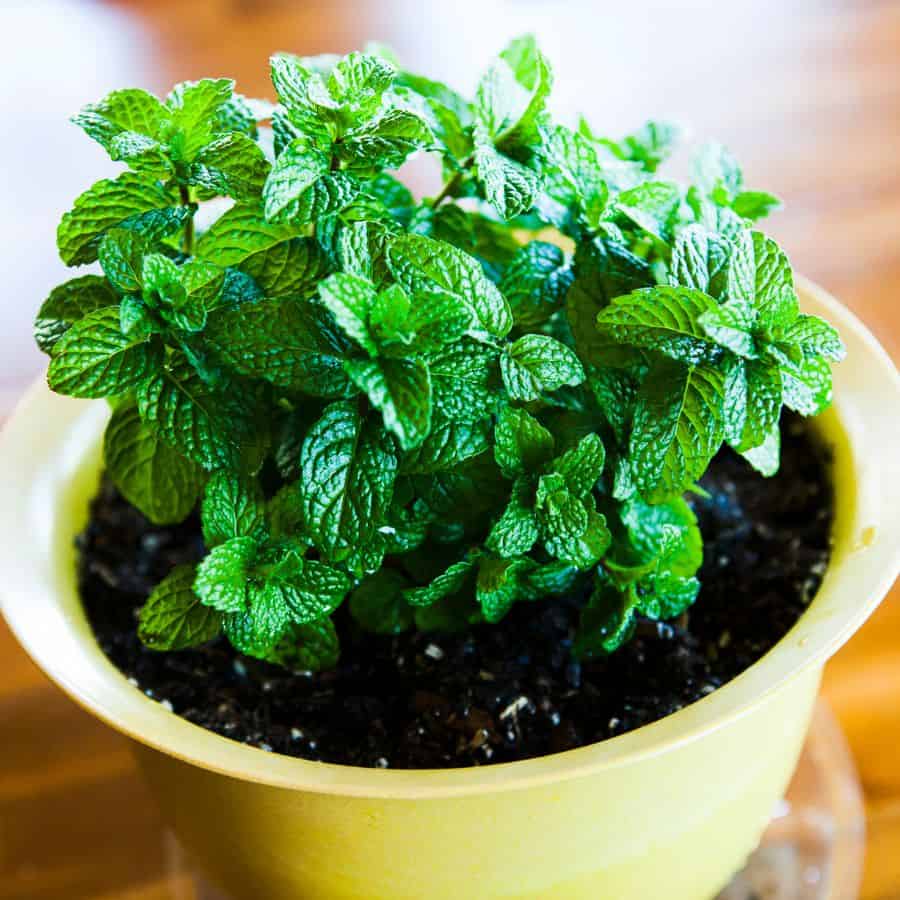
• Size: Minimum 10-12 inches deep and wide (bigger = bushier plants)
• Material choices:
• Terracotta: Breathable but dries quickly (great for humid climates)
• Plastic/resin: Retains moisture (perfect for forgetful waterers)
• Fabric grow bags: Better root aeration and drainage (my personal favorite)
• Drainage holes: Non-negotiable. Mint hates wet feet more than humans hate stepping in puddles with socks on.
Soil Secrets for Better Mint Growth
The difference between new and experienced gardeners lies in understanding what lies beneath the surface. Regular garden soil in containers isn’t ideal. It compacts too much and drains poorly.
Create this mint-friendly mix instead:
• 60% high-quality potting mix (not garden soil)
• 30% compost
• 10% perlite or coarse sand (for drainage)
Aim for a slightly acidic to neutral pH (6.0-7.0). Mint will tolerate other levels but does best in this range. Here’s a trick professional growers use: refresh the top 2 inches of soil with fresh compost each spring for a nice growth boost.
The Propagation Hack That Turns One Plant into Twenty
Why buy more mint plants when you can clone your existing ones for free? Mint propagates so easily that it practically does the work itself. Here’s how you can turn one plant into a small mint farm:
1. Water propagation: Snip a 4-6 inch stem, remove lower leaves, and place in water. Roots form in 7-10 days.
2. Division: Every spring, split your mint plant into 2-3 sections and repot them separately.
3. Layering: Bend a low-growing stem to touch soil in another pot. Secure with a small rock. Cut free once rooted.
One mint plant can easily grow into 20+ plants through these methods over a single growing season. I’ve personally grown over 30 plants from a single original plant in just one year.
The Pruning Secret No One Tells You
Most people make this mistake with their mint: they treat it like a delicate flower, afraid to cut it. But mint is more like hair; the more you trim, the thicker and fuller it grows back.
The reality is that unpruned mint becomes a sad, leggy mess with weak flavor. Here’s your pruning routine:
• Start harvesting once plants reach 6 inches tall
• Pinch growing tips regularly to force bushy growth
• Cut stems just above a leaf node (where leaves attach to the stem)
• Every 3-4 weeks, cut back 1/3 of the plant
• Always remove flower buds. Once mint flowers, leaf production, and flavor decline
Morning harvests contain up to 30% more essential oil, giving you more flavor. Worth setting your alarm for.
Year-Round Mint: Bringing Your Container Indoors
Your mint doesn’t have to die or go dormant when temperatures drop. The key to continuous harvests is moving containers indoors before the first frost.
For indoor mint success:
• Place in your brightest window (south-facing is ideal)
• Add grow lights if leaves start stretching (12-14 hours daily)
• Reduce watering by about 30% compared to summer
• Keep humidity up by misting or using a pebble tray
• Continue light pruning to encourage compact growth
Even in winter, indoor mint can provide weekly harvests for teas and cooking. And come spring, your established plants will take off with new growth, giving you a head start on the season.
From Garden to Kitchen: Creative Uses for Your Mint
With these growing techniques, you’ll soon have a lot of mint to use. Beyond the obvious teas and mojitos, here are some ways to use your harvest:
Preservation methods:
• Mint ice cubes: Chop and freeze in water or olive oil
• Dried mint: Hang small bundles in a dark, dry space
• Mint extract: Infuse in vodka for homemade flavoring
Other uses:
• Natural moth repellent for closets (dried bundles)
• Aromatherapy shower: Hang a bundle from your shower head
• Homemade mint sugar scrub (mix with sugar and coconut oil)
• Natural mosquito repellent (studies show mint oil is 85% effective)
With these container-growing techniques, you’ll never buy those sad, wilting grocery store herb packets again. Your mint empire awaits.