Did you know that a simple 5-minute pruning routine can extend your mum’s blooming season by up to 4 weeks?
Those pretty chrysanthemums lighting up your fall garden can actually bloom a lot longer.
The key is deadheading. Let me show you how this technique helps ordinary mums keep blooming well into fall.
Why Your Mums Need Regular Trimming
Here’s what’s happening with your mums: they’re splitting their energy between making new flowers and creating seeds from old blooms. That’s a lot of work for one plant.
Deadheading tells your plant to forget about those seeds and focus on flowers instead. When you remove spent blooms, you redirect your mum’s energy toward creating more flowers instead of producing seeds.
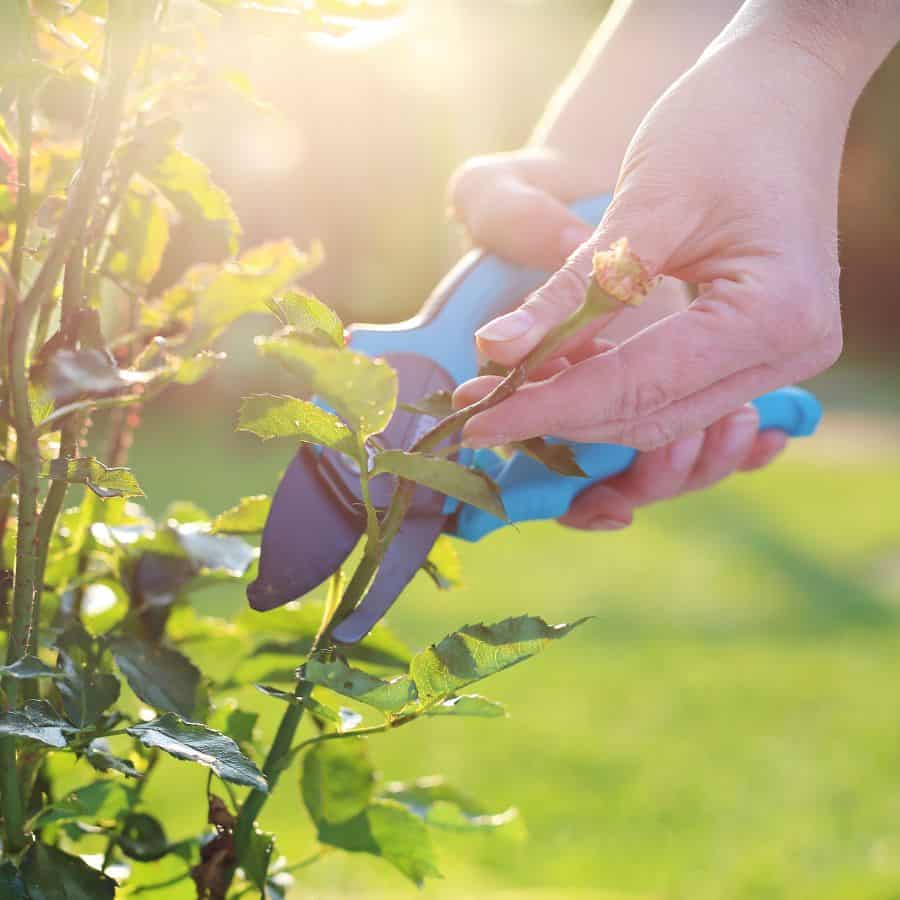
The difference between new and experienced gardeners is understanding this simple trick. When you deadhead regularly, you’re not just tidying up. You’re helping your plant’s growth cycle produce more blooms.
The Benefits of Deadheading
With proper deadheading, mums can bloom much longer than you’d expect. Here’s what happens when you cut:
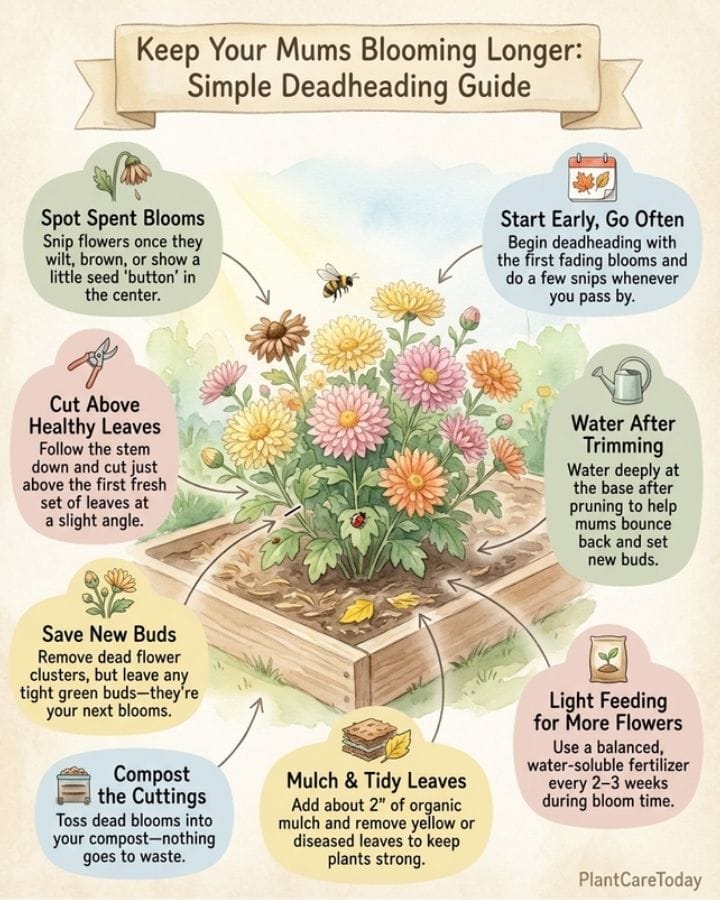
• More flowers: Removing spent blooms triggers the plant to produce more buds, often doubling your flower count
• Longer season: Regular deadheading can stretch your mum’s blooming period by 3-4 additional weeks
• Better appearance: No more scraggly, half-dead flowers bringing down your garden’s look
• Healthier plants: Less seed production means more energy for the plant overall
The 5-Minute Deadheading Method
Many home gardeners never deadhead their mums, then wonder why they look tired by mid-October.
Here’s a simple method that takes less time than brewing your morning coffee:
1. Find the spent flowers: Look for blooms that have wilted, turned brown, or dropped most petals. If you see a tiny seed head forming in the center (looks like a small button), that bloom is ready to go.
2. Make the cut: Follow the spent bloom’s stem down to the first set of healthy leaves. Snip just above this point at a 45-degree angle.
3. Handle clusters carefully: For stems with multiple spent blooms, trace back to where you see fresh buds forming and cut just above that point.
4. Protect unopened buds: Be careful not to snip unopened buds—they’re your next wave of blooms.
5. Compost the trimmings: Toss those spent blooms in your compost pile.
Here’s a helpful tip: Keep a small pair of scissors or pruners right by your back door. This makes it easy to snip a few spent blooms every time you walk by. No special gardening session needed.
When to Deadhead
The real trick isn’t how you deadhead, but when you do it. Most people wait until half the plant looks dead before taking action.
Start deadheading as soon as the first blooms begin to fade, typically early September for most regions. Continue through mid-fall, gradually tapering off as temperatures drop and new bud formation slows.
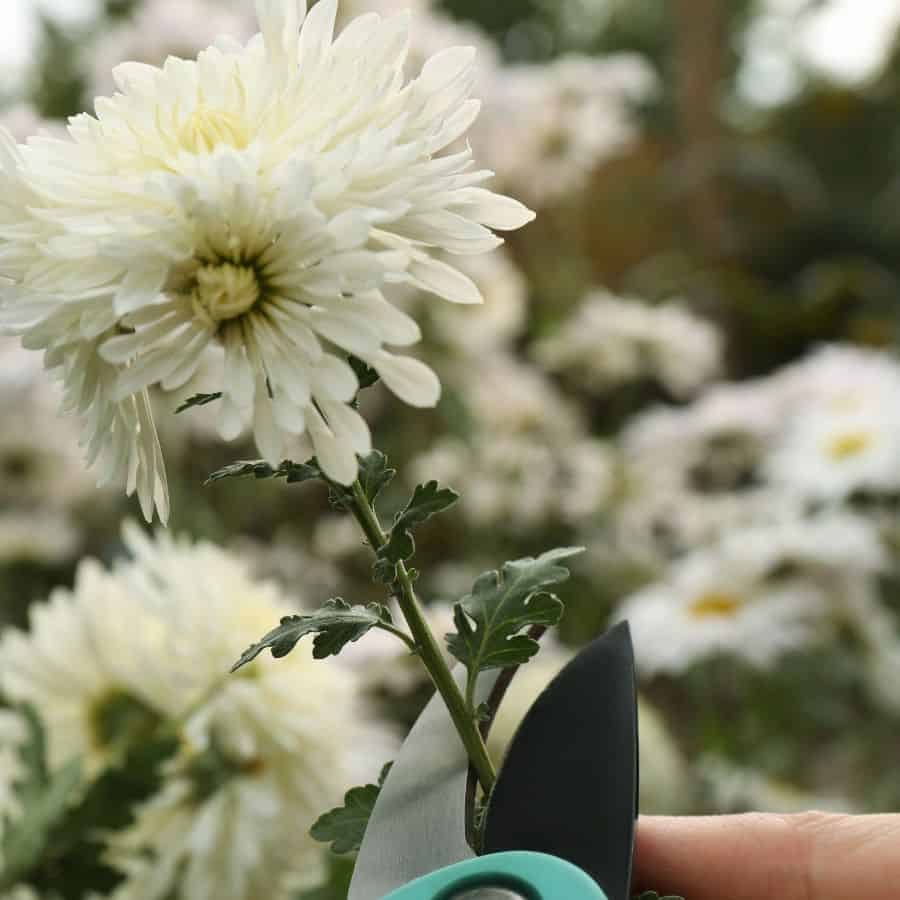
Think of deadheading like washing dishes. Do a little every day, and you’ll never face a huge cleanup. Your mums will reward your consistent attention with waves of color that last until the first hard frost.
What to Do After Deadheading
After your deadheading session, give your mums this care to help them produce more blooms:
• Water deeply: Water at the base (avoiding wet foliage) to help plants recover from pruning
• Add fertilizer: Apply a balanced, water-soluble fertilizer every 2-3 weeks to fuel new bloom production
• Mulch the base: Add a 2-inch layer of organic mulch around plants to regulate soil temperature and moisture
• Remove damaged leaves: Take off any yellow or diseased leaves while you’re at it. They drain energy
This after-care is just as important as the deadheading itself. Think of it as helping your plant recover and get ready for the next round of blooms.
A Few Minutes Well Spent
Deadheading isn’t just about plant health. It’s a chance to slow down and connect with your garden. Those few minutes spent examining your mums up close let you catch potential problems early while giving you a quiet moment outside.
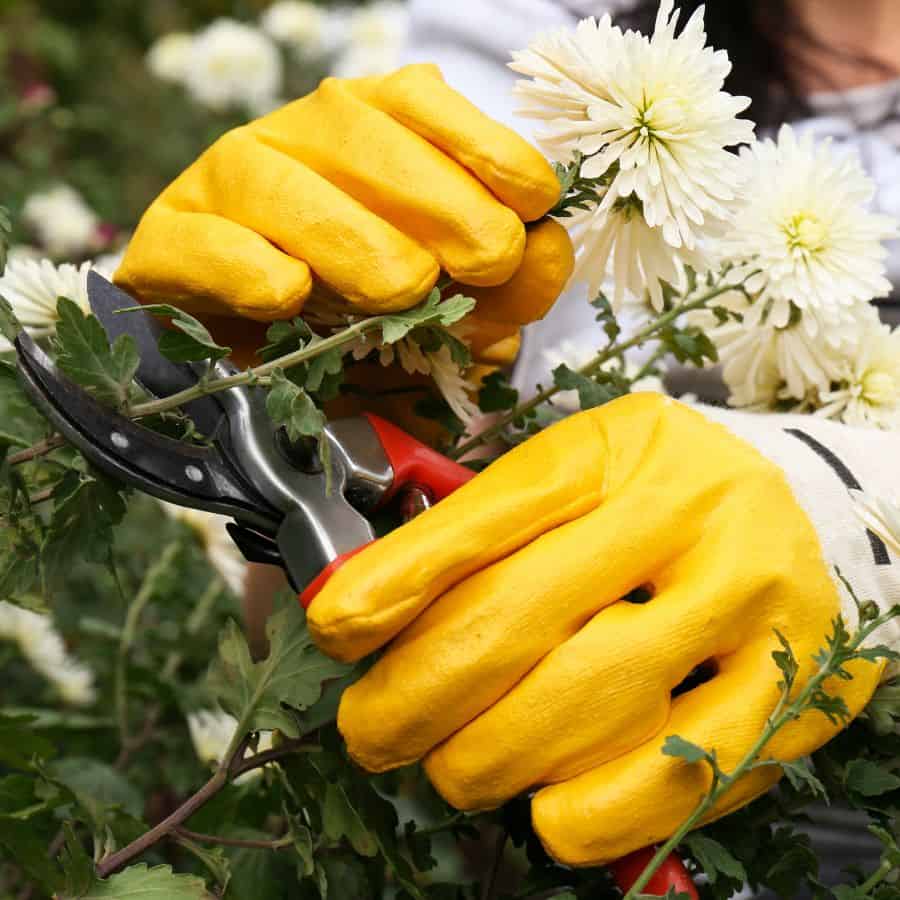
When you step back and see how your simple cuts transform tired mums into a bright display of fall color, you’ll understand why experienced gardeners love this small but effective technique.
So grab those pruners and give your mums some attention. Your reward? A colorful fall garden that keeps blooming long after your neighbors’ mums have faded away.