Did you know that most tomato plants grown in isolation face more pest problems than those with companions?
The secret most plant experts won’t tell you is that your tomatoes are desperate for some specific plant friends.
These aren’t just random garden buddies. They’re strategic allies in your quest for a spectacular harvest!

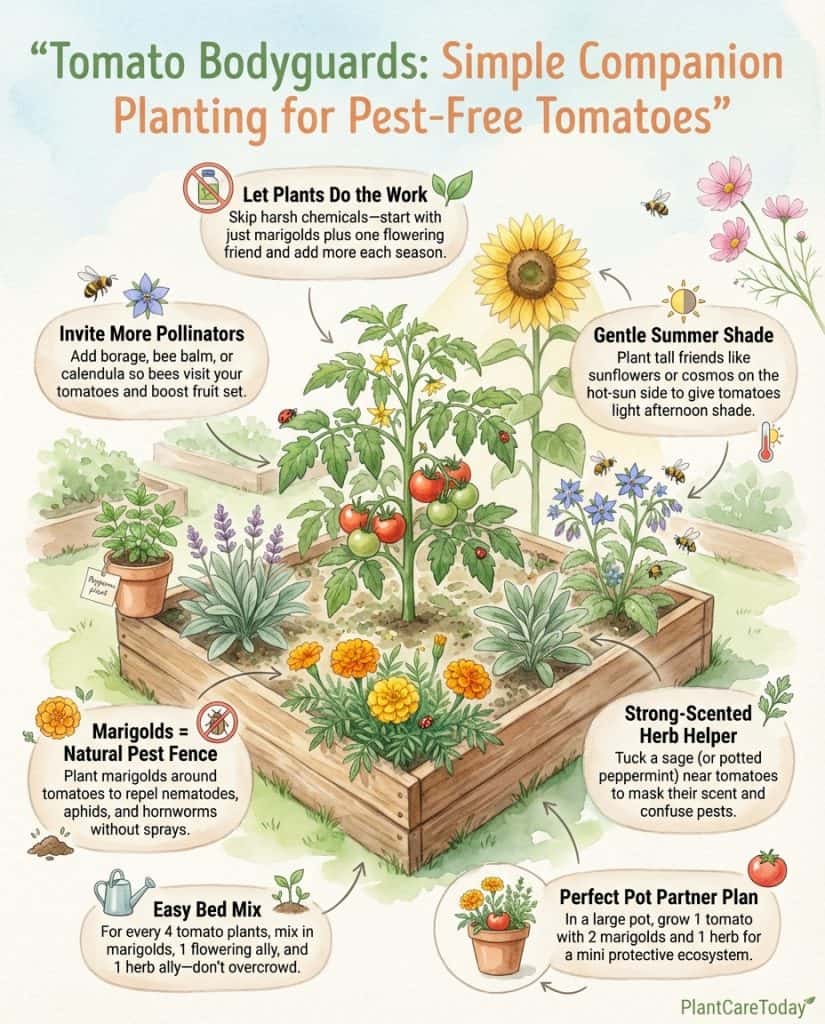
Tomato Bodyguards: The Pest-Fighting Dream Team
Your tomato plants are trying to tell you something important: they’re tired of fighting pests alone! These three powerhouse companions create a natural shield that chemical sprays can’t match.
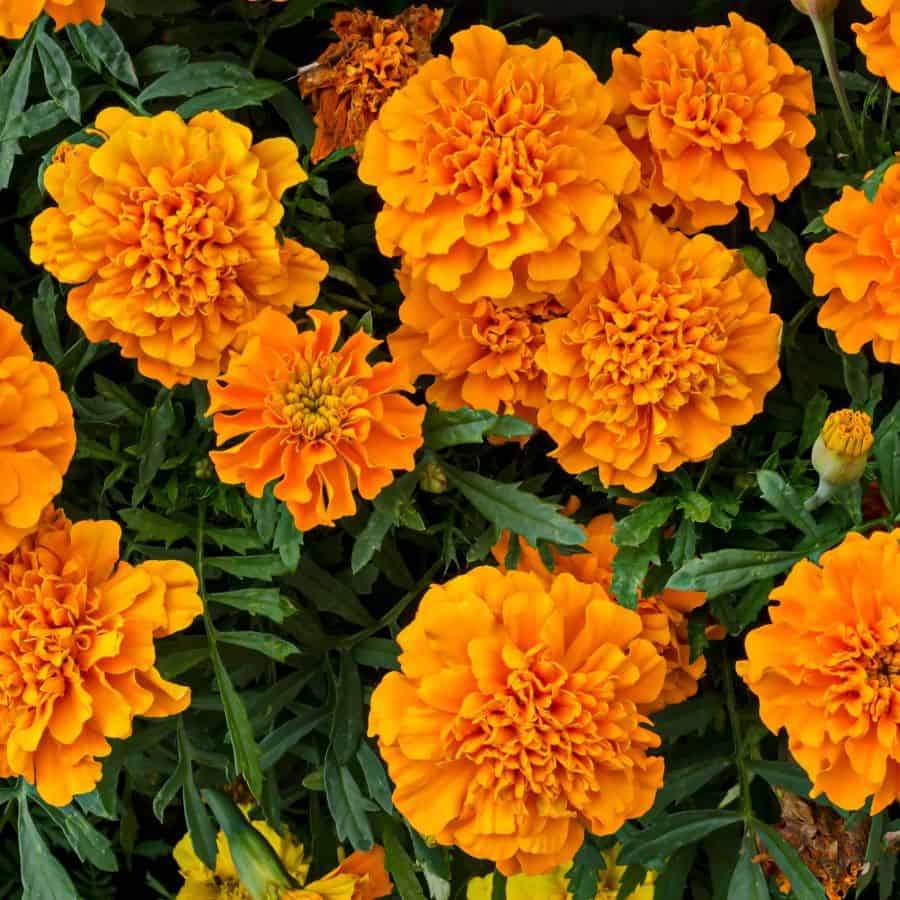
Marigolds: The undisputed champions of pest control. Their roots release compounds that kill nematodes in the soil (the invisible terrorists attacking your tomato roots), while their distinctive scent repels aphids, whiteflies, and tomato hornworms.
Think of marigolds as the bouncer at your tomato’s exclusive club. No destructive pests getting past this security detail!
Peppermint: This aromatic defender creates what I like to call a “scent forcefield” around your tomatoes. Most garden pests can’t stand the potent menthol aroma.
Just be careful. Peppermint spreads like gossip in a small town! Keep it contained in pots or borders to prevent it from taking over.
The game-changer for your tomato protection isn’t what you think… It’s often just the simple addition of this humble herb.
Sage: This Mediterranean marvel doesn’t just elevate your pasta sauce. It’s a tomato’s best friend. Its strong fragrance masks the scent that attracts tomato-loving pests while attracting beneficial pollinators.
I was shocked to discover that gardens with sage planted near tomatoes report up to 60% fewer pest problems!
The Pollinator Magnets: Bloom-Powered Production Boosters
Forget what you’ve heard about tomatoes being self-pollinating. While they can self-pollinate, they produce more fruit with insect help.
These flowering companions turn your garden into a pollinator paradise.
Borage: The blue starflowers of borage are like neon “OPEN” signs for bees and butterflies. These pollinators can’t resist the sweet nectar, and while they feast, they’ll make pit stops at your tomato blossoms too.
As a stunning bonus, borage leaves enrich your soil when they break down. It’s like getting a free soil amendment and pollinator service in one plant!
Bee Balm: If your garden were a nightclub, bee balm would be the dance floor. This vibrant flowering perennial doesn’t just attract bees.
It’s a magnet for hummingbirds, butterflies, and beneficial predatory insects. Its unique scent also confuses pests hunting for your tomatoes.

Plant bee balm, and watch your garden transform into a thriving ecosystem.
Calendula: These bright orange blooms are working overtime for your tomatoes. They attract lacewings and hoverflies, natural predators that devour aphids, mealybugs, and other tomato terrorizers.
Plus, their cheerful flowers make your vegetable garden Instagram-worthy. (Who says vegetable gardens can’t be stunning showstoppers?)
The Strategic Partners: Space-Saving & Soil-Supporting Allies
Some companions contribute by simply being good neighbors—sharing space efficiently or improving growing conditions.
Asparagus: This unlikely tomato partner creates a perfect vertical/horizontal garden combo. Asparagus sends roots deep while tomatoes spread outward.
The difference between amateur and pro plant parents is simply knowing these spatial relationships!
Plus, tomatoes release solanine, which repels asparagus beetles. It’s a mutual protection agreement that benefits both plants.
Cosmos: These delicate flowers might look purely decorative, but they’re secretly hard at work.
Their long stems and airy structure provide light shade during scorching summer days without competing for nutrients.
They also attract tiny parasitic wasps that lay eggs on tomato hornworms; nature’s most disturbing form of pest control (but incredibly effective!).
Sunflowers: These gentle giants serve as living trellises and partial shade providers for your tomatoes during the hottest part of summer.
Plant them on the west side of your tomato patch, and they’ll shield your plants from the harshest afternoon sun.
Most people make this mistake with their tomatoes: planting them in full, unrelenting sun without considering how much they appreciate afternoon shade in hot climates.
The Strategic Planting Formula
For container gardeners: The perfect tomato pot trio includes one tomato plant, two marigolds, and either sage or peppermint. This combination creates a miniature ecosystem that maximizes production while minimizing problems.
For garden beds: For every four tomato plants, add:
- Marigolds dispersed throughout
- flowering companion (borage, bee balm, or calendula)
- herb companion (sage or peppermint)
The secret to success? Don’t overcrowd. Your companion plants should complement, not compete with, your tomatoes.
Think of them as backup dancers who make the star look good, not scene-stealers fighting for the spotlight.
Your Tomato Transformation Action Plan
Ready to revolutionize your tomato growing? Start small with just two companion plants this season.
Marigolds are the no-brainer first choice (they’re cheap, effective, and easy to grow), then add one flowering companion that matches your garden aesthetic.
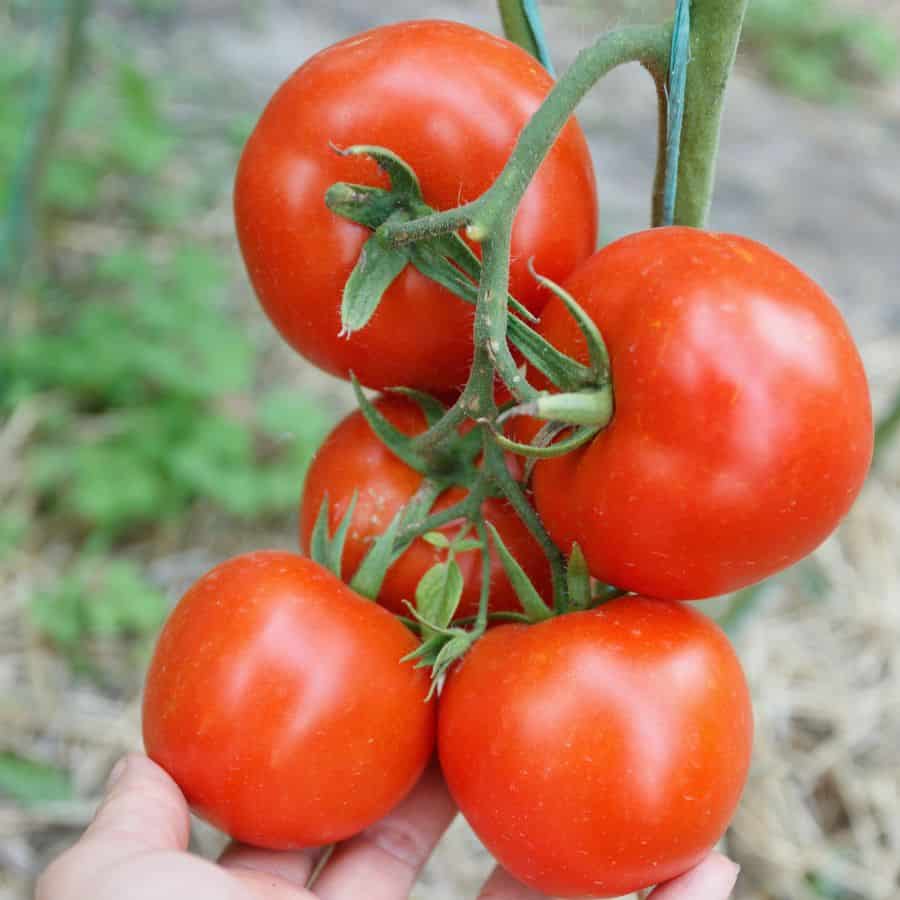
Remember: companion planting isn’t just garden folklore. It’s backed by science. Studies show properly paired plants can increase yields by up to 25% while reducing pest problems without chemicals.
Your garden isn’t just growing vegetables; it’s creating a flourishing ecosystem where everything works together.
So what are you waiting for? Give your lonely tomatoes the companions they’re desperately craving!