
There’s a long list of reasons why you should avoid chemical insecticides. Superbugs, risks to beneficial insects, and other consequences often outweigh the benefits.
However, neem oil is a natural alternative that has proven effective against a wide range of pests while posing minimal risk.
When applied as a soil soak, this already amazing extract becomes a superweapon with all sorts of effects.
Here’s everything you need to know about neem oil for plants and how to make and use your own neem oil soil drench.
What is Neem Oil?
Neem oil is the extract of Azadirachta indica. The oil is produced by cold-pressing the seeds, fruit, and other parts of this tree.
In its raw state, neem oil contains a wide range of active ingredients, most notably Azadirachtin.

When azadirachtin is removed, the resulting clarified hydrophobic neem oil is typically used for topical applications.
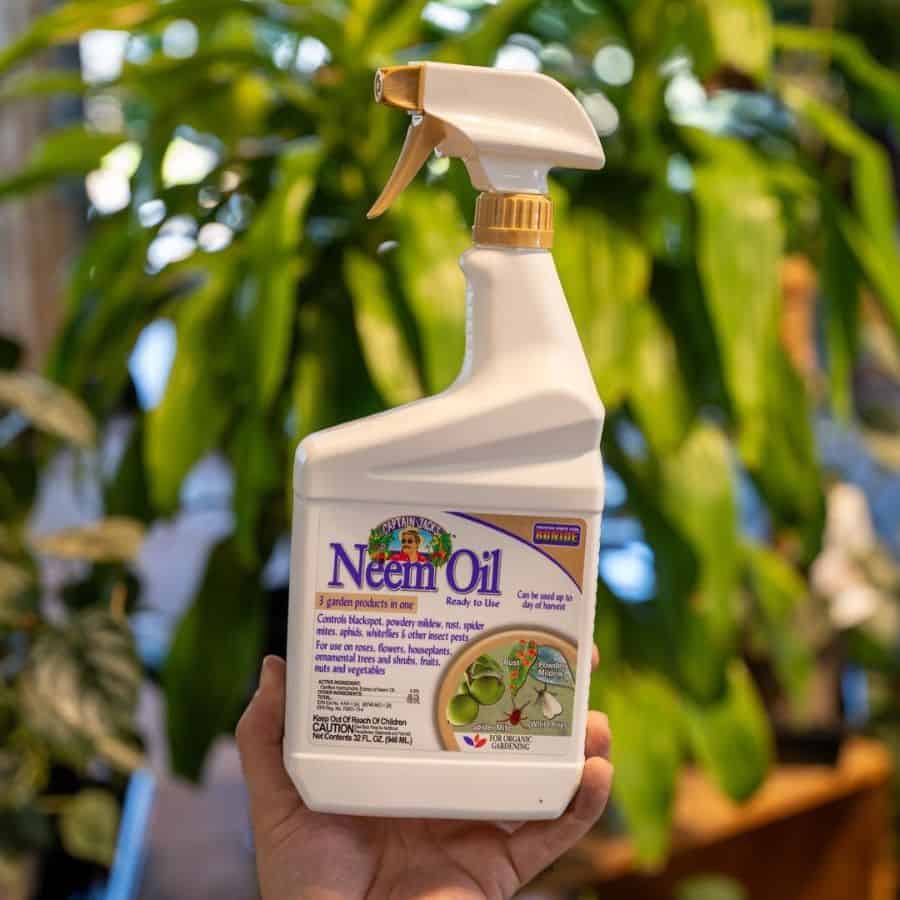
Raw neem oil is best used as a soil soak because of its higher concentration of natural compounds, which can cause burns on sensitive plants.
How Does Raw Neem Oil Work?
Azadirachtin is a systemic toxin that affects insects once ingested.
The chemical compound has very similar properties to the insect’s own hormones.
As a result, it tricks the pest into thinking it’s full, causing it to slowly starve itself.
Additionally, it disrupts growth hormone signaling, preventing instars from advancing to the next stage.
Finally, it causes infertility in many species, preventing future generations from being laid.
Types of Bugs Neem Oil Kills
Neem oil affects dozens of different insect pests, including:
- Aphids
- Beetles and their larvae (AKA grubs)
- Grasshoppers
- Mealybugs
- Scale
- Spider Mites
- Thrips
- Whiteflies
In addition, it has some fungicidal and antibacterial properties.
Using a Neem Soil Soak
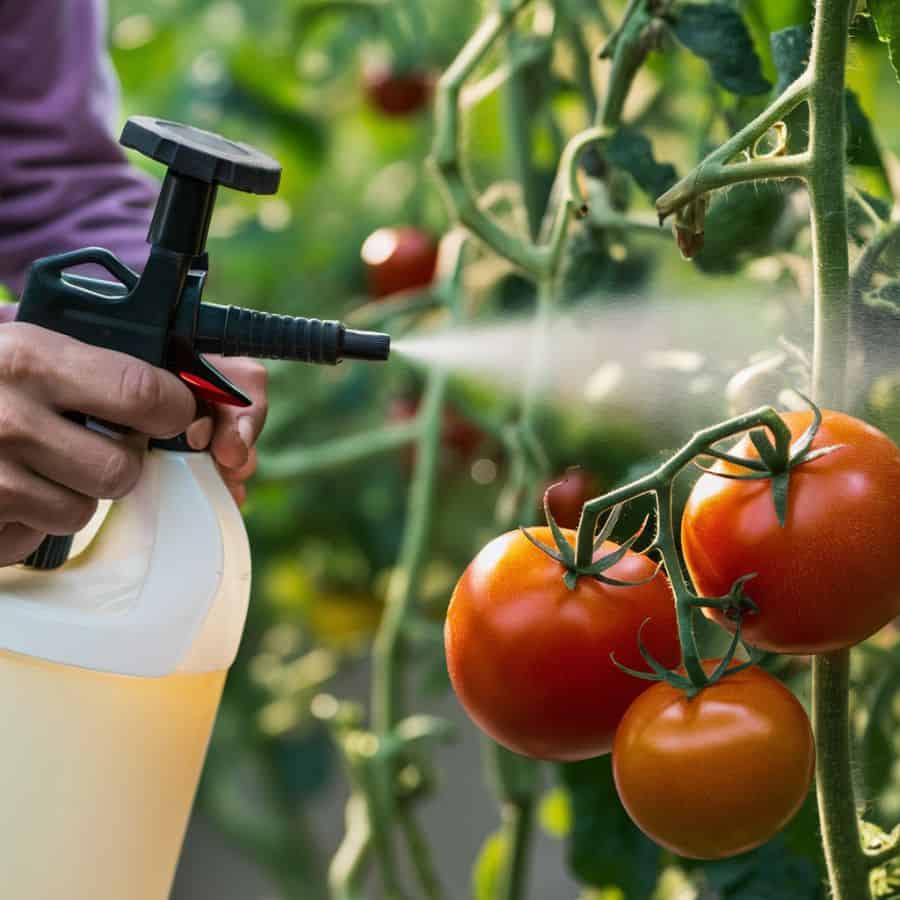
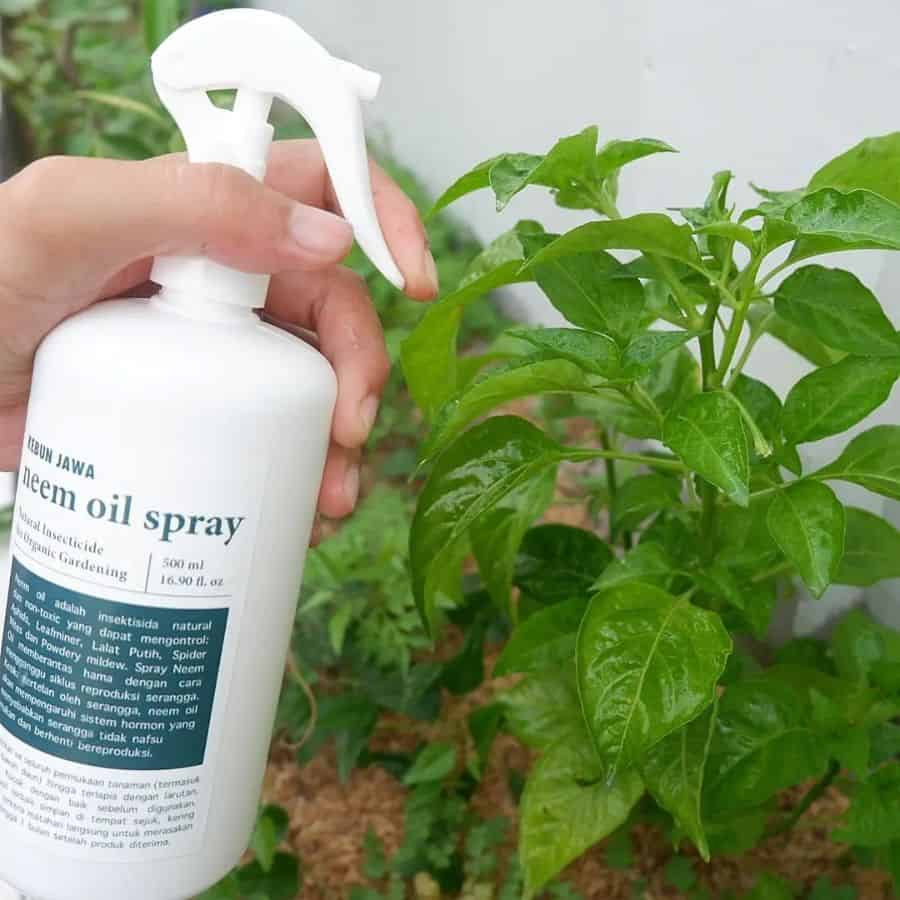
There are three ways to apply neem: foliar neem oil spray, neem cakes, and soil drenches.
Of these, soil drenches are typically the most effective and are easy to mix and apply.
Why Use Neem Oil Insecticide Soil Soak?
Soil soaks (sometimes referred to as neem oil soil drenches) are perhaps the most effective neem oil treatment. A neem oil spray is great for maintenance.
The neem soaks into the soil, where plants absorb it through their roots.
Once inside the plant, the neem oil becomes a systemic insecticide.
Unlike topical applications, there’s no risk of bees or other beneficial insects coming into contact with it.
Instead, grubs and insects that pierce the plant’s leaves are the only ones affected.
Soil drenches are far more effective and easier to apply to trees and large shrubs than foliar sprays, saving significant time and effort.
Even more beneficial, the neem oil boosts your plant’s immune system, effectively fighting some bacteria and fungi.
Best of all, it will remain in your plants for up to 22 days and is non-toxic, so you can use it on crops within a few days of harvesting.
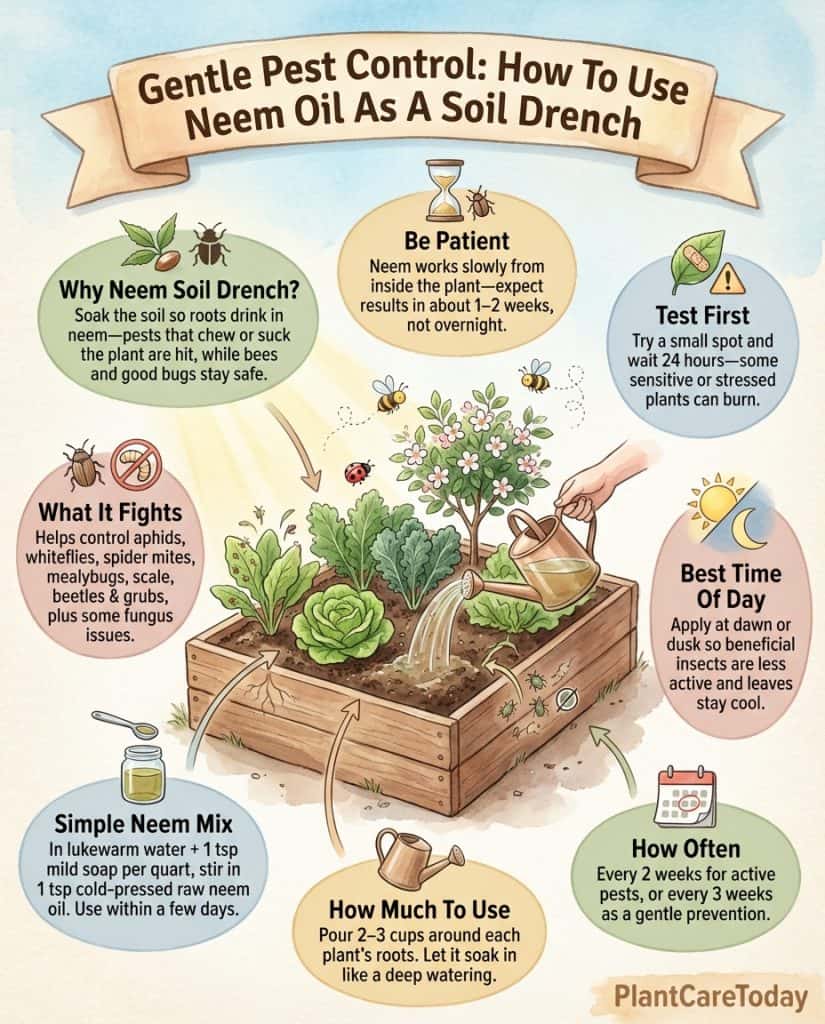
Neem Oil Soil Drench Recipe
Neem soil soaks are quick and easy to make, requiring only three ingredients.
Begin by emulsifying water to break the surface tension and allow mixing with oil.
Simply add one teaspoon of Dawn dish soap or pure castile soap to lukewarm water.
You can use the same amount for either a quart or a gallon.
Next, add 1 teaspoon of 100% cold-pressed raw neem oil to a quart of emulsified water, or 2 tablespoons to a gallon.
Remember to make only what you need, as the mixture will spoil after a few days.
Applying Neem Soil Soak
Pour 2 to 3 cups of your neem soil drench around the roots of each plant.
Repeat every two weeks to combat an existing infestation.
If you are fighting powdery mildew or root rot, monitor the plant closely until symptoms disappear.
You may also choose to apply the soil soak every three weeks as a preventative.
It’s usually best to apply neem oil at dusk or dawn when treating outdoor plants to minimize the risk of beneficial insects coming in contact with it.
Note that you can use the same recipe in a sprayer to treat your lawn against grubs.
Neem Oil Insecticide Soil Drench Tips
Always Test First
Neem oil is potent and contains natural compounds that can cause burns on sensitive plants.
Always apply a small amount to the plant 24 hours before the main application to ensure it isn’t sensitive or allergic to neem.
Plants With Known Issues
Carnivorous plants are sensitive to soap, so you will need to add the neem oil directly to the water and shake well before using.
Chances are, picky plants will be more sensitive to neem oil, so be especially careful to test them.
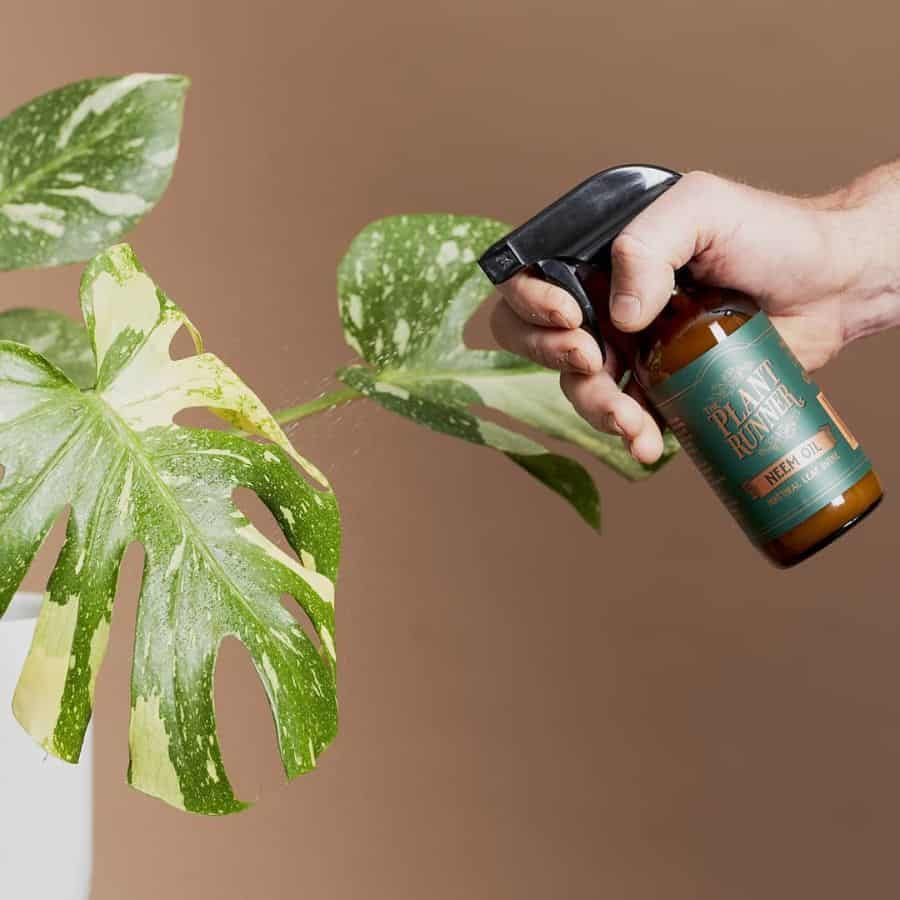
Check the label on your neem oil for any plants that are confirmed to be intolerant.
Avoid using on stressed or recently transplanted plants, as they may suffer additional damage.
Help! The Neem Oil Isn’t Working!
Neem soil-soaking works by disrupting insects’ natural biology.
As a result, it’s easy to get frustrated when you’re used to seeing instant results from chemical solutions.
When applied as a soil soak, neem oil may take up to two weeks to take effect.
However, once those results become visible, an infestation is well on its way to extinction.