I was surprised to learn that the peace lily blooming away in my grandmother’s living room and the stubborn green one in my apartment were the same plant species.
When I finally asked what she was doing differently, her answer was so simple it seemed impossible. But within weeks, my plant went from all leaves to actually flowering.
Why Your Peace Lily Isn’t Blooming
Peace lilies will survive almost anywhere (even under office fluorescent lights). But they won’t give you those white blooms unless conditions are right.
The difference between new and experienced plant parents comes down to understanding what these tropical plants actually need versus what most people give them.

Most people make these mistakes:
• Placing them in deep shade (they need bright, indirect light to flower)
• Overwatering until roots rot (which kills any chance of blooms)
• Using nitrogen-heavy fertilizers (good for leaves, bad for flowers)
• Expecting constant blooms without rest (they need downtime between flowering cycles)
What Most People Don’t Realize
Here’s the thing: your peace lily needs a break. In their native tropical rainforests, peace lilies go through natural cycles of growth, rest, and flowering. When we try to force constant growth indoors, they respond by refusing to bloom.
My grandmother’s method? Copy nature’s rhythm of stress and recovery. Just as muscle growth occurs during rest after exercise, peace lily flowering occurs after a rest period.
Studies show that 79% of flowering houseplants bloom more when exposed to cyclical care rather than constant conditions. Your peace lily isn’t being difficult. It’s just following what’s natural for it.
The 4-Step Blooming Cycle
This method is simple but effective. You’re basically creating distinct seasons for your indoor plant:
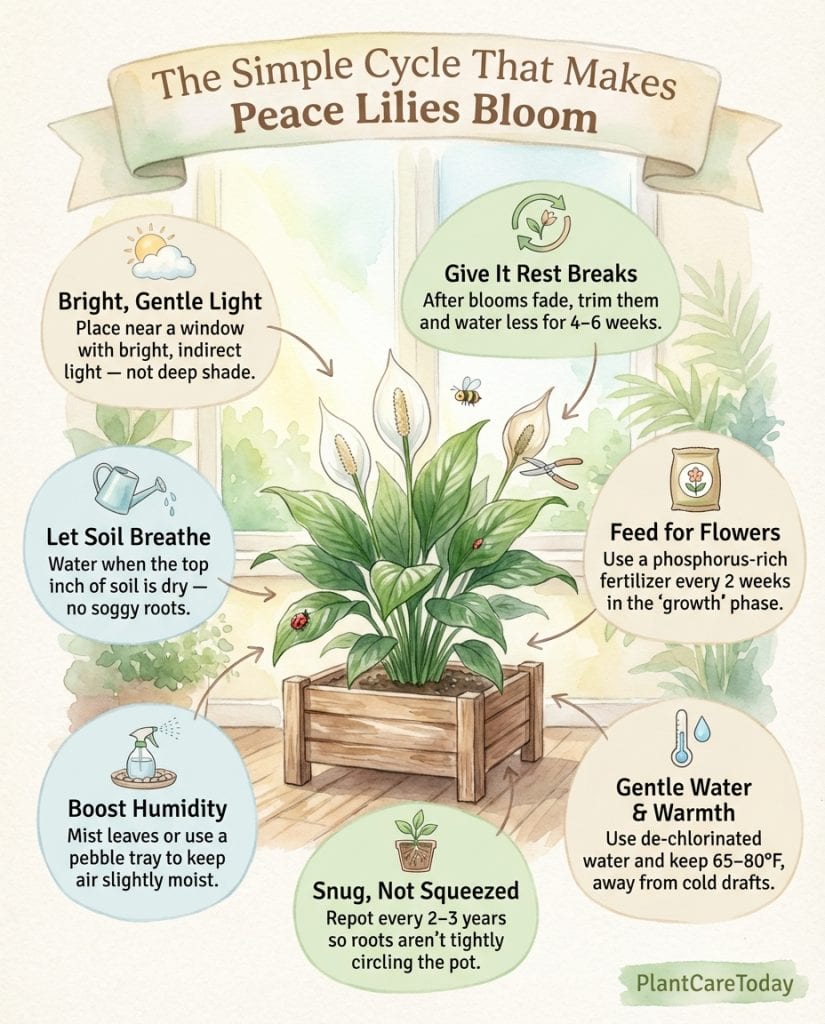
1. Post-Bloom Rest: After flowers fade, trim spent blooms and cut back on watering. Let the top inch of soil dry between waterings and stop fertilizing. Continue for 4-6 weeks. Think of this as the plant’s winter.
2. Pre-Bloom Boost: Resume normal watering and add a phosphorus-rich fertilizer every two weeks. Place in bright, indirect light. This signals that spring is coming.

3. Bloom Time: Maintain consistent care and watch for flower spikes within 4-8 weeks. Keep humidity high by misting leaves. This is your summer bloom period.
4. Maintenance: Enjoy the flowers for several weeks, then repeat the cycle once blooms fade. This is the natural fall transition.
This feels backwards at first. Less care equals more flowers? But that gentle stress actually triggers the plant’s survival response: bloom now before conditions get worse.
Creating the Right Environment
Forget what you’ve heard about peace lilies being low-light plants. They survive in low light but only bloom in bright, indirect light. That dark corner might keep it alive, but it won’t make it flower.
Here are the five conditions your peace lily needs:
• Light: Bright but indirect (near a north or east window behind sheer curtains)
• Temperature: 65-80°F with no cold drafts
• Humidity: Higher than most homes provide (mist regularly, use pebble trays, or add a humidifier)
• Soil: Rich but well-draining
• Pot size: Snug but not cramped (repot every 2-3 years when roots circle the pot)
Troubleshooting Common Problems
Still no blooms after trying this method? Your plant might be dealing with one of these issues:

Not enough light: Even with the rest and growth cycle, peace lilies need sufficient light to produce flowers. Try a grow light if your home is naturally dark.
Pot-bound roots: When roots become too cramped, the plant focuses on survival instead of flowering. Check if roots are circling tightly.
Chlorine in water: Municipal water can stress sensitive roots. Let tap water sit overnight before using, or collect rainwater.
Age of the plant: Very young or very old, peace lilies bloom less often. Mature plants (2-5 years old) flower most reliably.
Be patient. Sometimes it takes 2-3 cycles for a neglected plant to regain enough strength to bloom well.
Seasonal Care Calendar
To keep your peace lily blooming throughout the year, follow this simplified calendar:
Spring (March-May): Prime blooming season. Water when the top inch dries. Fertilize with bloom booster every 2 weeks.
Summer (June-August): Growth phase. Water consistently. Fertilize monthly with balanced feed. Shield from direct sun and increase humidity.
Fall (September-November): Transition to rest. Gradually reduce fertilizer. Allow slightly more drying between waterings.
Winter (December-February): Rest phase. Minimal watering (only when leaves slightly droop). No fertilizer. Give it the brightest indirect light you have.

This pattern can shift based on your home conditions and the timing of your plant’s last flowering. The important thing is maintaining distinct growth and rest phases throughout the year.
The Bottom Line
My grandmother’s approach brought back blooms on peace lilies that hadn’t flowered in years. Her secret wasn’t expensive products or complicated techniques. She just worked with the plant’s natural rhythm instead of against it.
Give your peace lily what it needs: a period of rest followed by the right conditions for flowering. That gentle cycle of stress and recovery is what the plant naturally responds to.
Your peace lily isn’t being difficult. It’s just waiting for the right conditions. Try this method for three months and see what happens. Those white blooms are what make peace lilies worth having in the first place.