Ever stared at your peace lily, wondering why it’s not blooming? You’re not alone.
After killing my first peace lily, I learned that most peace lily owners are making the same few care mistakes.
Here’s what I’ve learned about getting these plants to actually flower.

The Secret Watering Ritual Your Peace Lily is Begging For
Peace lilies are pretty particular about water. The difference between new and experienced plant parents is knowing when to water.
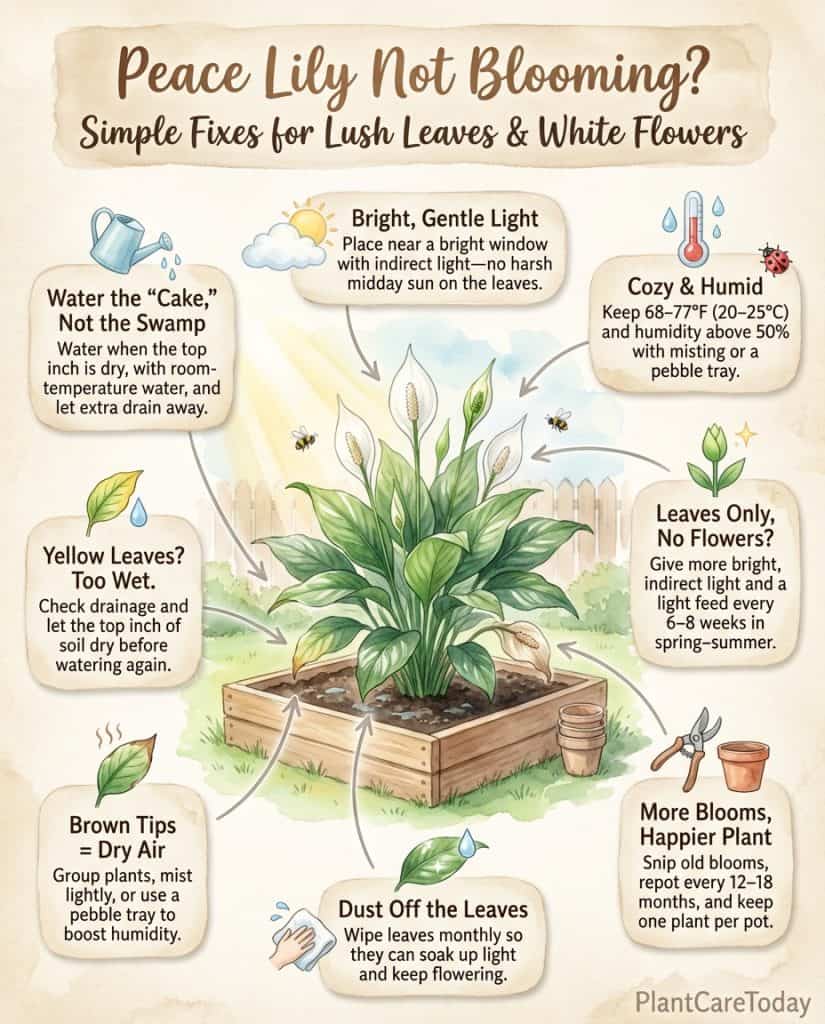
Think of your peace lily’s soil like a chocolate cake. You want it moist, not soggy or dry. When the top inch feels dry to the touch, it’s time to water.
Here’s something that really matters: use room-temperature water. Cold or hot water can shock the plant.
• The Finger Test: Stick your finger an inch into the soil. If it’s dry, water thoroughly
• Drainage matters: No holes in your pot means the roots are sitting in water
• The Droop Detector: Slight wilting means it’s thirsty, but complete collapse means you’ve waited too long
Peace lilies are a bit dramatic and will droop when thirsty, but they usually perk up quickly after watering.
The Light Sweet Spot: Where Peace Lilies Actually Flourish
Peace lilies can survive in low light, but they’ll give you much better blooms in bright, indirect light. They like brightness but don’t want direct sun.
North or east-facing windows work well. A south-facing window with direct sun will scorch the leaves and turn them yellow.

Here’s a common mistake: moving the plant around too much. Peace lilies do better when you find a good spot and leave them there.
The Temperature & Humidity Breakthrough
Peace lilies come from tropical rainforests, which explains why they like warmth and humidity.
Keep temperatures between 68ºF to 77ºF (20° to 25°C) for the best growth. Sudden temperature changes will stress them out.
Here’s what really matters: humidity might be more important than your watering schedule. Below 50% humidity, your peace lily’s leaf tips will turn brown no matter how well you water.
• Mist regularly: A light spray in the morning helps
• Pebble tray: Put the pot on a tray of pebbles and water to add moisture to the air
• Bathroom placement: If you have good light, bathrooms make great spots because of the humidity
Rescue Your Struggling Peace Lily: Problem-Solving Guide
If your peace lily looks unhappy, here’s how to figure out what’s wrong.
Yellowing Leaves = Too Much Water
Yellow leaves mean the roots are drowning. Overwatering kills more peace lilies than anything else.
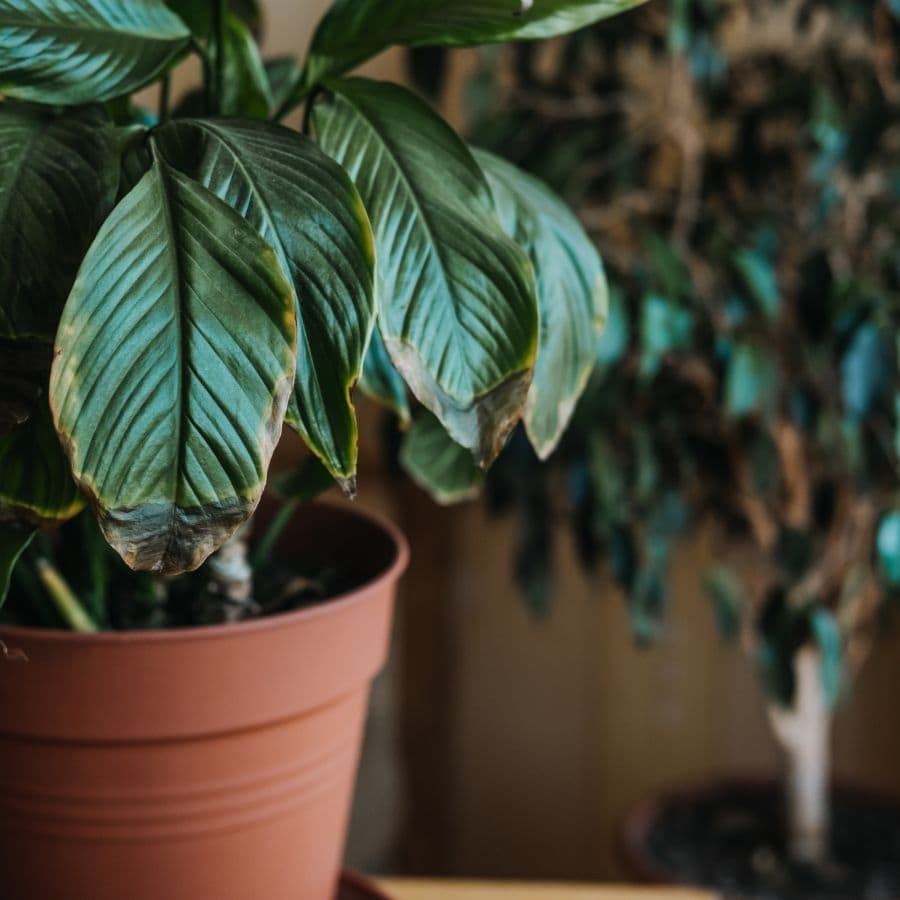
Make sure your pot has drainage holes and let the top inch of soil dry out between waterings.
Wilting Drama
Wilting looks the same whether the plant is underwatered or overwatered, but there’s a difference.
If it’s underwatered, it’ll just droop. If it’s overwatered, it’ll droop, and the leaves will turn yellow. Check the soil before you water.
No Blooms
If your peace lily has lots of leaves but no flowers, it probably needs more light. They can handle low light, but they only bloom well with bright, indirect light.
You can also lightly fertilize every 6-8 weeks during spring and summer with a balanced fertilizer at half-strength.
Brown Crispy Tips
Brown tips mean the air is too dry. Group plants together, use a humidifier, or try a pebble tray to increase air moisture.
Transform Your Peace Lily Into a Blooming Machine
Want more flowers? Here’s what actually works:
• Deadhead spent blooms: Remove old flowers so the plant puts energy into making new ones
• Repot every 12–18 months: Crowded roots mean fewer blooms
• Clean the leaves monthly: Dust blocks light, so wipe leaves down so they can photosynthesize better
• One plant per pot: Peace lilies don’t like sharing space
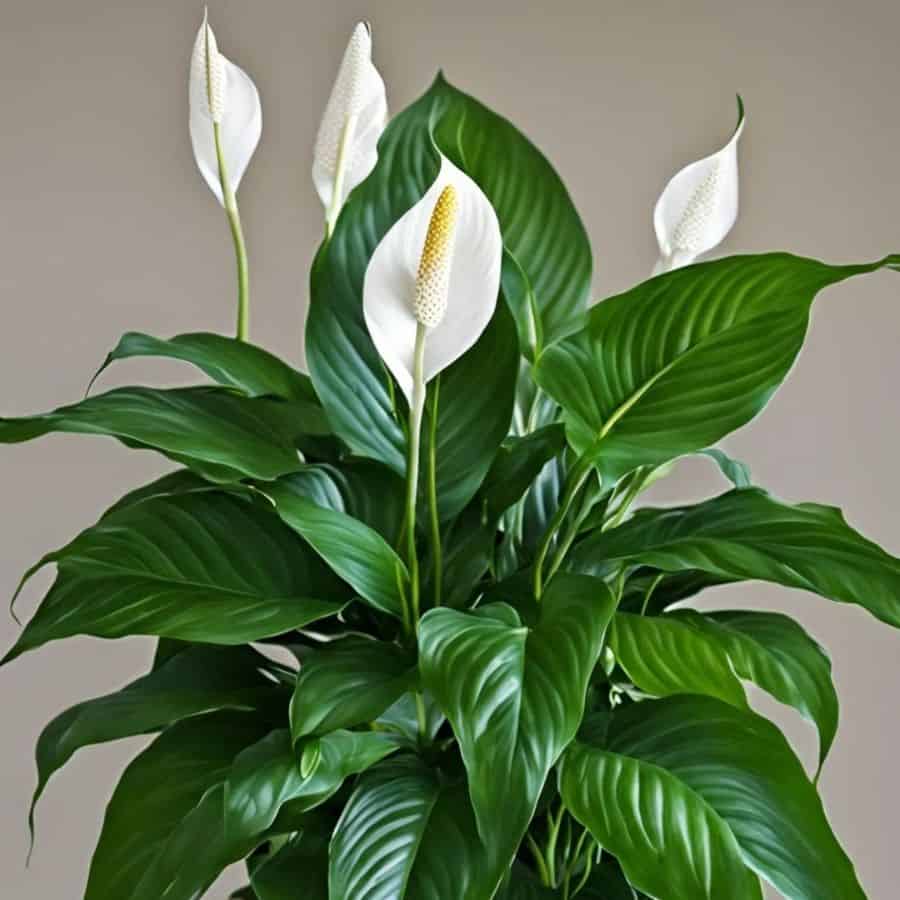
The best thing I did for my peace lily was just being consistent. These plants do better with regular care than sporadic attention.
The Bottom Line: Peace Lily Mastery
Your peace lily should be thriving and flowering regularly. With bright indirect light, careful watering, good humidity, and consistent care, you’ll see a real difference.
Bonus: Peace lilies are also great air-purifying plants, removing toxins like benzene and formaldehyde from your home.
Now go give your peace lily what it needs, and you’ll get those pretty white blooms everyone loves.