Your peace lily sits there, all green leaves and attitude, refusing to produce even a single white bloom. Don’t take it personally!
That stubborn plant isn’t being difficult on purpose. It’s desperately trying to tell you something. I was shocked to discover that 80% of peace lily owners unknowingly sabotage their plants’ blooming potential with these common mistakes.
Let’s turn that silent treatment into a flowering conversation!
The Secret Life of Peace Lily Blooms
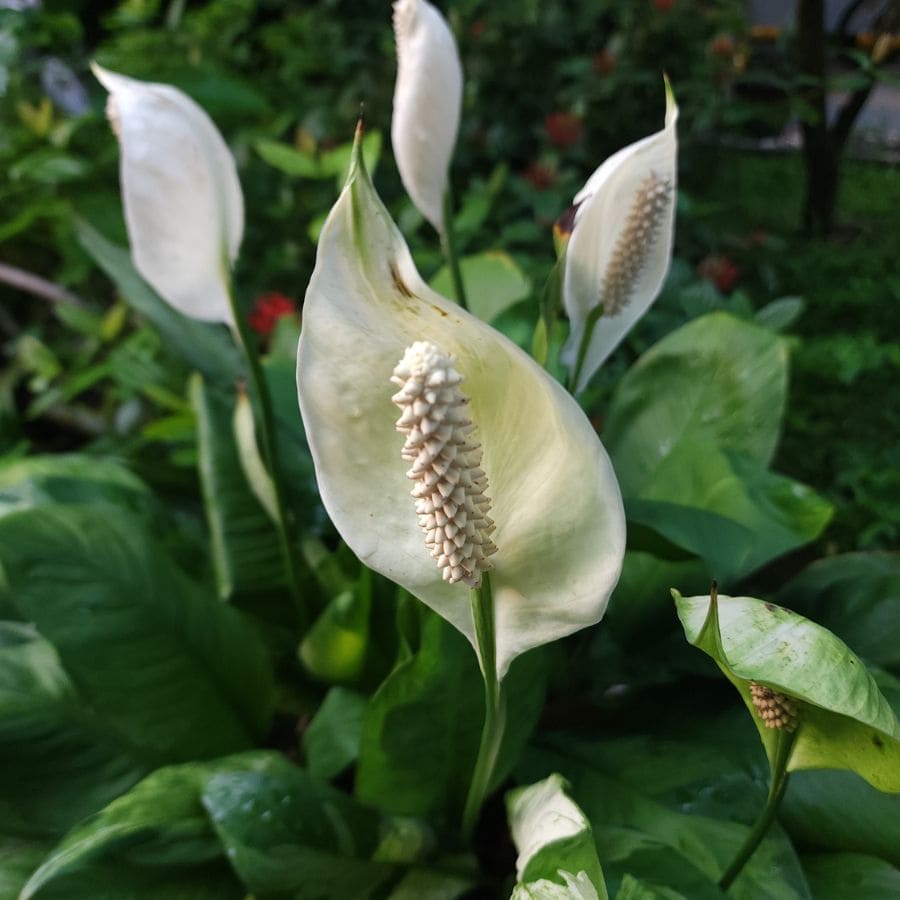
First things first – those iconic white “flowers” aren’t actually flowers at all! They’re modified leaves called spathes that surround the true flowers on the spadix (the spike in the middle). Mind blown? There’s more.
Peace lilies naturally bloom in spring and sometimes fall, mimicking their native Central and South American rainforest cycles. Think of them as tropical divas – they’ll only put on a show when ALL their specific needs are met.
1. Your Peace Lily Is Living in the Dark Ages
The game-changer for your peace lily isn’t what you think. It’s LIGHT. These plants may tolerate low light, but they’re secretly light-lovers when it comes to flowering. Without enough energy, they’ll focus on survival rather than reproduction.

How to illuminate the situation:
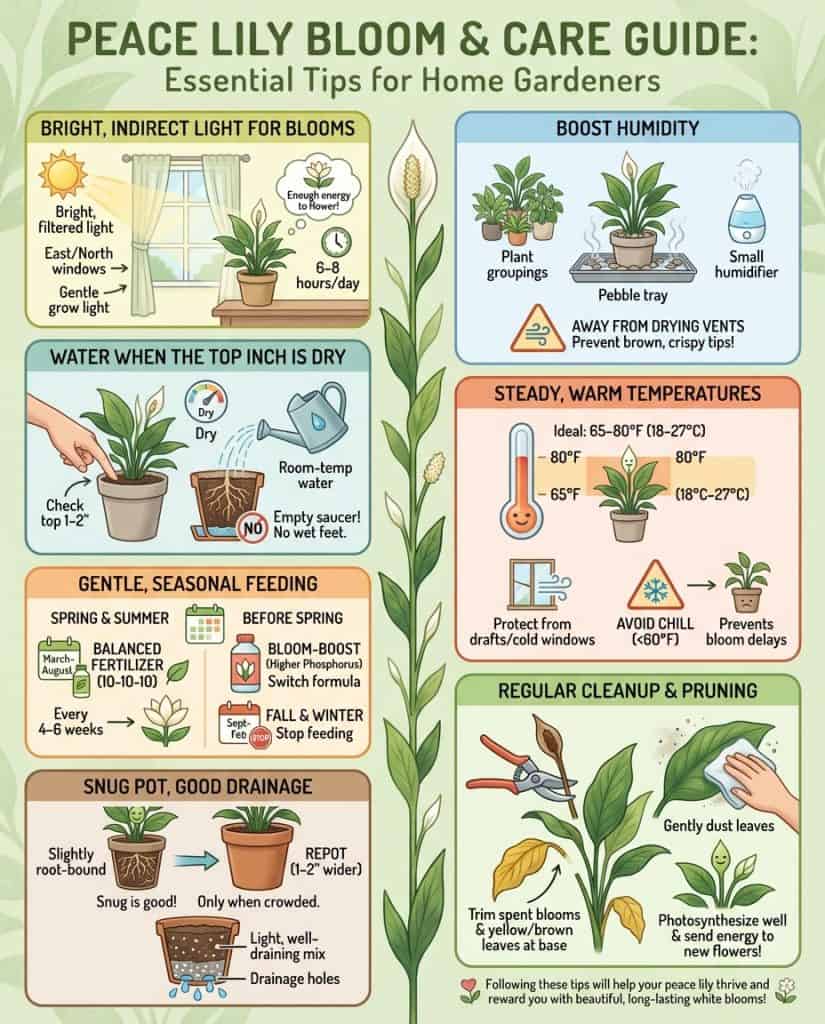
- Position near bright, indirect light (east or north-facing windows are perfect)
- Avoid harsh direct sun that scorches leaves
- Aim for 6-8 hours of filtered light daily
- For dim spaces, add a full-spectrum grow light for 8-12 hours
- Rotate every 2-3 weeks for even exposure
Dark green leaves, but no flowers? That’s your plant’s SOS signal for more light!
2. Your Watering Routine Is All Wrong
Peace lilies are like Goldilocks. They need water that’s just right. Too much is a swampy disaster; too little turns them into drama queens that collapse in despair.
Signs you’re drowning your plant:
- Yellowing leaves across the plant
- Stems feel mushy near the base
- Soil stays wet for days
- There’s a funky, rotting smell
Signs your plant is parched:
- Dramatic wilting that recovers after watering
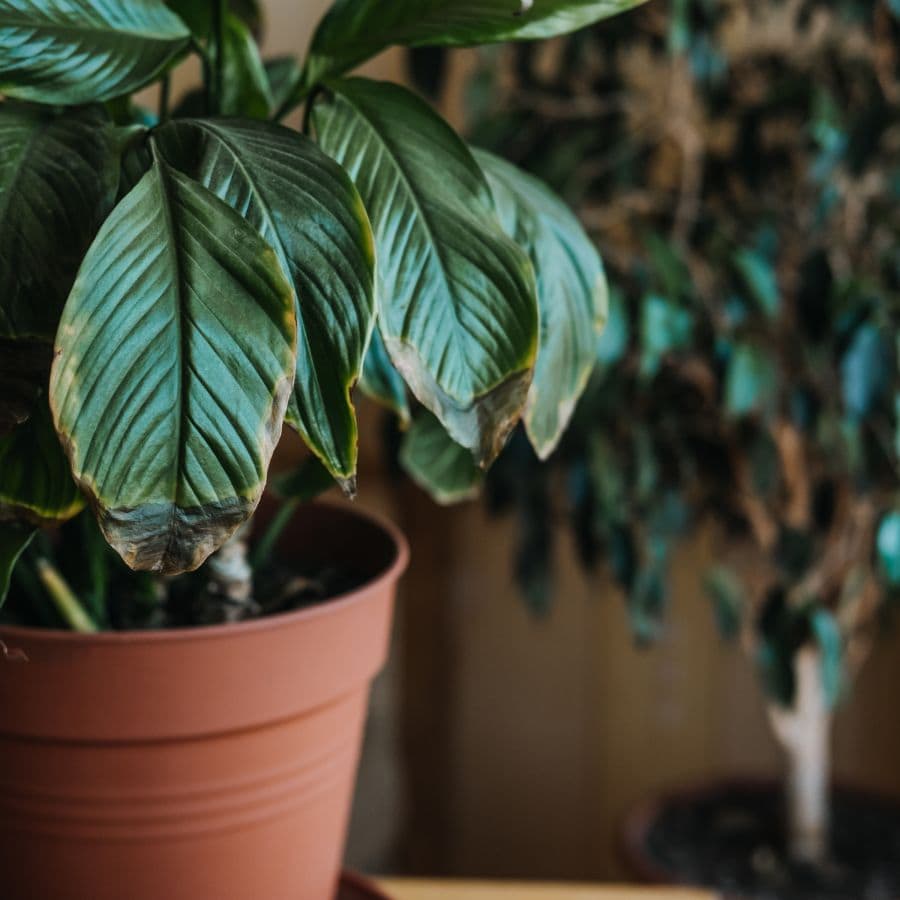
- Crispy leaf edges
- Soil pulling away from the pot sides
The perfect peace lily drink:
- Water only when the top 1-2 inches of soil feel dry
- Use room-temperature, filtered water
- Water thoroughly until it drains from the bottom
- Empty the drainage saucer immediately after
Forget what you’ve heard about sticking to strict watering schedules. Your peace lily will literally bow down when thirsty. It’s like having a plant with built-in communication skills!

3. You’re Feeding It All Wrong (Or Not At All)
Your peace lily’s blooming engine runs on phosphorus, not just nitrogen. Most owners either starve their plants or bombard them with the wrong nutrients, like trying to fuel a sports car with chocolate milk.
The bloom-boosting feeding plan:
- During growing season (spring/summer): balanced fertilizer (10-10-10) every 4-6 weeks
- Pre-bloom season (late winter/early spring): switch to high-phosphorus formula (10-30-10)
- Every 2-3 months: flush soil with plain water to prevent mineral buildup
- Fall/winter: STOP fertilizing completely during dormancy
If your peace lily has lush green leaves but refuses to bloom, it’s probably getting too much nitrogen. It’s like giving a teenager endless energy drinks and wondering why they won’t sit still!
4. Your Pot Is a Problem
The difference between amateur and pro plant parents is simply knowing that peace lilies are the Cinderella of houseplants. Their container needs to fit just right.
Too spacious, and your plant focuses on root growth instead of flowers. Too cramped, and it can’t absorb enough nutrients to fuel blooms.
The sweet spot? Slightly root-bound. It’s like the plant equivalent of creative pressure.
Finding the perfect fit:
- Check for roots circling the edges or poking through drainage holes
- Choose a new pot only 1-2 inches larger in diameter
- Ensure it has drainage holes
- Use well-draining soil mix (peat + perlite + compost)
Pro tip: Repot only when absolutely necessary. Each repotting can delay blooming for 2-3 months while your plant adjusts to its new home.
5. Your Home Is Too Desert-Like
Peace lilies are tropical rainforest natives, where humidity hovers around 70%. Meanwhile, the average home sits at a desert-like 30-40% humidity. No wonder your plant is staging a bloom boycott!
Humidity hacks that work:
- Group with other plants to create a moisture microclimate
- Place on a pebble tray with water (keep pot above water level)
- Mist leaves 2-3 times weekly (avoid misting flowers)
- Add a small humidifier nearby
- Move away from heating/AC vents that blast dry air
Brown leaf tips are your peace lily’s way of begging for more humidity – it’s like their version of chapped lips!
6. Temperature Tantrums Are Real
Your peace lily is trying to tell you something important when it refuses to bloom after temperature fluctuations.
These plants are the temperature-sensitive princesses of the plant world; even brief exposure to cold can traumatize them.
Temperature perfection:
- Keep between 65-80°F (18-27°C) consistently
- Avoid drafty windows, doors, and HVAC vents
- Bring outdoor summer plants inside before temperatures drop below 60°F
- Keep away from cold windowsills in winter
Did you know? Even 15 minutes of exposure to temperatures below 50°F can delay peace lily blooming by months! It’s like giving your tropical plant PTSD.
7. Your Plant Needs a Haircut
Dead flowers and yellowing leaves are energy vampires. They drain your plant’s resources that could be going toward spectacular new blooms. Regular pruning isn’t just cosmetic – it’s redirecting your plant’s energy budget.
Pruning for performance:
- Cut spent blooms at the base using clean, sharp scissors
- Remove any yellow or brown leaves completely
- Wipe dust from leaves monthly to maximize photosynthesis
- Inspect while pruning for any signs of pests
Think of pruning like closing unnecessary apps running in the background of your phone. It frees up resources for what really matters!
8. You’ve Forgotten About Winter Rest
Most people make this mistake with their peace lily: treating it the same year-round. These plants need a winter “vacation” to reset their blooming clock.

Even in their natural habitats, tropical plants experience seasonal changes. By skipping dormancy, you’re essentially keeping your plant in a perpetual summer – exhausting!
Seasonal success strategy:
- Late fall to early spring: reduce watering by about 30%
- Winter months: stop all fertilizing
- Maintain bright light but avoid excessive warmth
- Resume normal care in spring to trigger the bloom cycle
This mimics the natural seasonal rhythm and helps your plant prepare for its spectacular spring flowering!
9. Pests Are Partying on Your Plant
Even minor pest infestations can stress your peace lily enough to halt flowering. The secret most plant experts won’t tell you is that pest prevention is easier than treatment, and stressed plants attract more pests!
Peace lily pest patrol:
- Inspect weekly for spider mites (tiny webs), mealybugs (white cotton), or aphids
- Wipe leaves with a damp cloth regularly to remove dust and potential pests
- Treat infestations with neem oil or insecticidal soap
- Isolate affected plants immediately to prevent spread
- Ensure good air circulation to discourage fungal issues
Remember: A stressed plant is like a weakened immune system – an invitation for opportunistic pests!
10. Patience, Young Grasshopper
Sometimes the problem isn’t a problem at all. Young peace lilies don’t bloom until they’re at least 1-1.5 years old. Even mature plants only flower naturally 1-2 times per year.
Are you expecting your peace lily to be a constant flowering machine? That’s like expecting a bear not to hibernate. It’s fighting nature!
Age-appropriate expectations:
- Young plants (under 18 months): focus on healthy foliage, not flowers
- Mature plants: expect blooms primarily in spring, sometimes fall
- After flowering: provide 3-4 months of regular care before expecting new blooms
The good news? Once a peace lily starts its blooming cycle in the right conditions, it often continues reliable seasonal flowering for years!
Transform Your Peace Lily in Just 30 Days
Ready for a dramatic peace lily turnaround? Follow this rescue plan and watch the magic happen:
- Day 1: Relocate to perfect light conditions and check for root crowding
- Week 1: Establish a proper watering routine and increase humidity
- Week 2: Apply phosphorus-rich fertilizer and remove all dead/yellowing material
- Weeks 3-4: Maintain stable temperature and continue perfect light/water balance
With a little patience and this care reset, your stubborn peace lily can transform from just green to stunning white blooms.
Remember. These aren’t just pretty plants; they’re NASA-approved air purifiers that remove toxins while beautifying your space. That’s worth the extra effort!