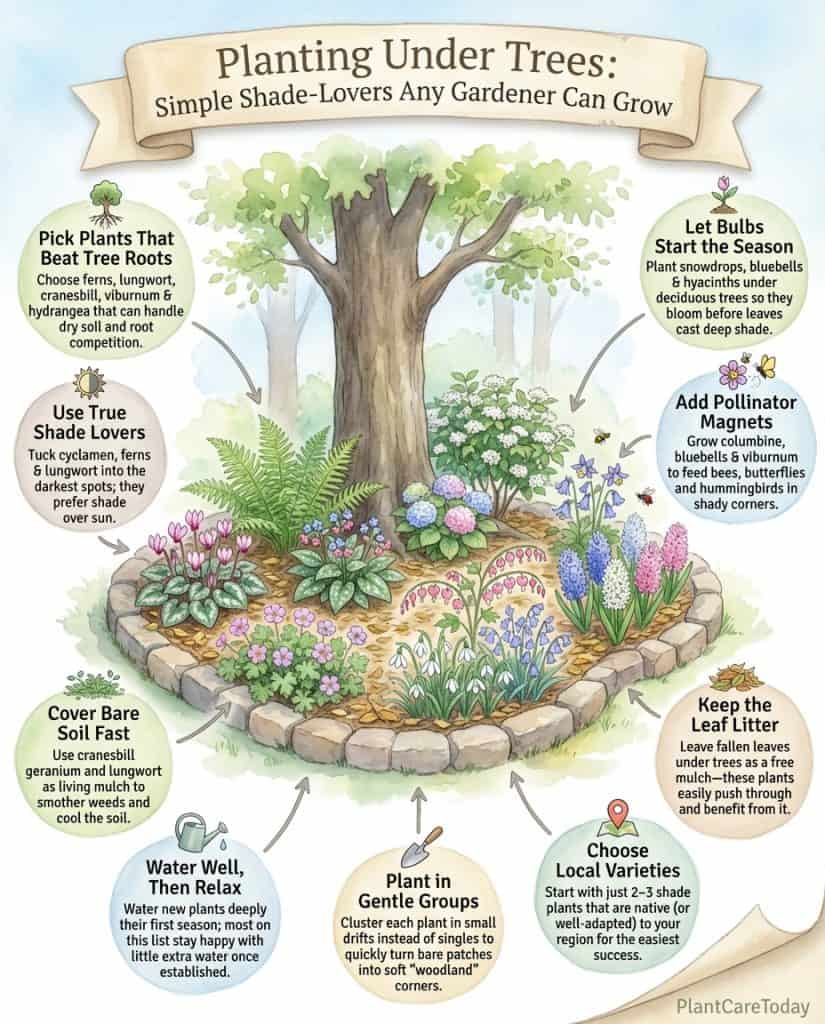
That sad, bare patch beneath your trees doesn’t have to stay empty. Less than 30% of gardeners make good use of the space under their trees, but you can change that.
I’ve found 11 plants that don’t just tolerate shade, they actually do well in it. These low-maintenance options will turn those neglected spots into some of the nicest corners of your garden.
Shade-Loving Classics: Ferns & Lungworts
Ferns actually prefer shade to direct sun. Their feathery fronds unfurl in the cool, moist environment under trees, creating a woodland feel with almost no effort from you.
Lungworts (Pulmonaria) are remarkably adaptable. With spotted leaves and flowers that transition from pink to blue, these perennials do well in conditions that would make sun-lovers struggle.

The real trick is that lungworts actually show more colorful leaf patterns when grown in deeper shade.
Early Bloomers That Start the Season
Snowdrops are delicate-looking but surprisingly tough. These bulbs will push through snow to bloom.
Plant them under deciduous trees, and they’ll flourish before the trees leaf out in spring. Your neighbors will wonder how you managed to get flowers while winter is still around.
Bluebells create a carpet effect that looks almost magical. A single bluebell bulb can produce up to 100 seeds plus offsets, meaning they’ll spread to fill that empty tree space without much help from you.
Bold & Beautiful: Statement-Making Shade Dwellers
Bleeding Hearts bring drama with their dangling heart-shaped blooms in bright pinkish-red.
These perennials know how to get attention even in shade. Their arching stems create a fountain-like effect that softens the base of trees.
Columbines offer a burst of multi-colored blooms on delicate stems. These native wildflowers attract bees, butterflies, and even hummingbirds to your garden.
The best part is that columbines self-seed, creating new color combinations each year without you doing a thing.
Groundcovers for Tree Understories
Cranesbill (Hardy Geranium) forms a dense, weed-suppressing carpet that’s tougher than it looks. These aren’t your typical geraniums.
These low-growing perennials, with their delicate star-shaped flowers, do well in places where the sun rarely reaches and will happily fill in around tree trunks.

Hydrangeas bring large blooms and a solid presence to those awkward spaces beneath trees. These woody shrubs return year after year with minimal fuss, offering increasingly lovely displays as they mature.
The same hydrangea can produce different colored flowers depending on your soil pH, which gives you some flexibility.
The Unexpected Winners in Deep Shade
Viburnum shrubs offer year-round interest with spring flowers, summer berries, and often nice fall color. These adaptable shrubs can withstand the formidable combination of root competition and shade at the base of trees.
Cyclamen might look delicate, but they’re actually quite hardy in shade. Most people give their cyclamen too much sun.
These jewel-toned plants need deep shade to thrive and will reward you with upswept blooms that look like tiny shooting stars among their marbled foliage.
Hyacinths bring their strong fragrance to the bases of trees, especially when planted beneath younger trees that allow dappled light. Their concentrated spikes of flowers bring color back to the world after winter.
Why These Plants Actually Succeed Where Others Fail
What makes these 11 plants special isn’t just their shade tolerance. It’s their ability to handle the challenging combination of factors under trees:
• Root competition: These plants can establish despite tree roots competing for water and nutrients
• Reduced rainfall: They can thrive even when tree canopies block precipitation
• Dry soil conditions: Many have adapted to need less water once established
• Leaf litter: Most can push through or benefit from the natural mulch of fallen leaves

The difference between new and experienced gardeners is knowing which plants are truly adapted to these conditions, not just those that are temporarily surviving there.
Ready to fill those bare spaces? Start with just 2-3 plant types from this list, focusing on varieties native to your region for the best results.
Your trees aren’t obstacles to a lovely garden. There are opportunities for creating woodland corners that practically maintain themselves.