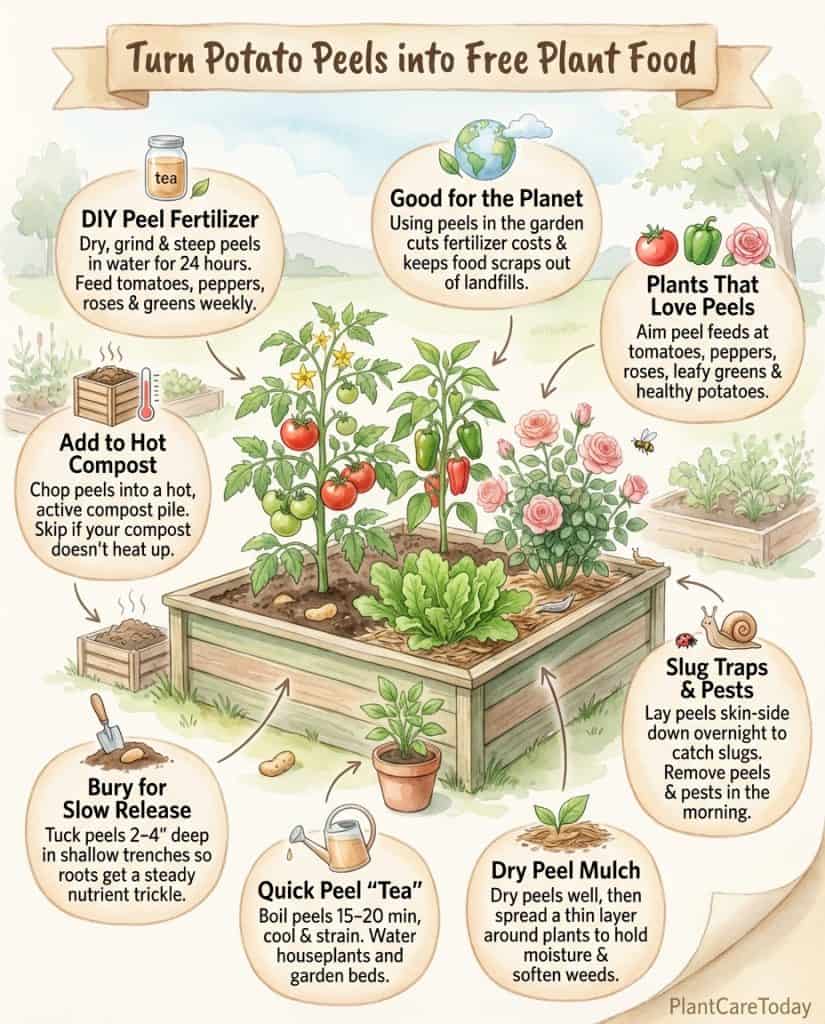
I was surprised to learn that potato peels I’ve been throwing away are actually really useful for the garden.
They contain nutrients that plants need, and using them is a simple way to reduce waste while saving money on fertilizer.
Here’s what I’ve learned about putting potato peels to work.
Nature’s Perfect Fertilizer (Hiding in Your Kitchen!)
Potato peels contain several nutrients your plants can use: potassium for roots and flowers, phosphorus for healthy growth, nitrogen for green leaves, plus calcium and magnesium.
Potato peels contain roughly 2% potassium by dry weight. That’s similar to some organic fertilizers, except these are free.
6 Ways to Use Potato Peels in Your Garden
1. Create DIY Potato Peel Fertilizer
This liquid fertilizer is pretty simple to make.
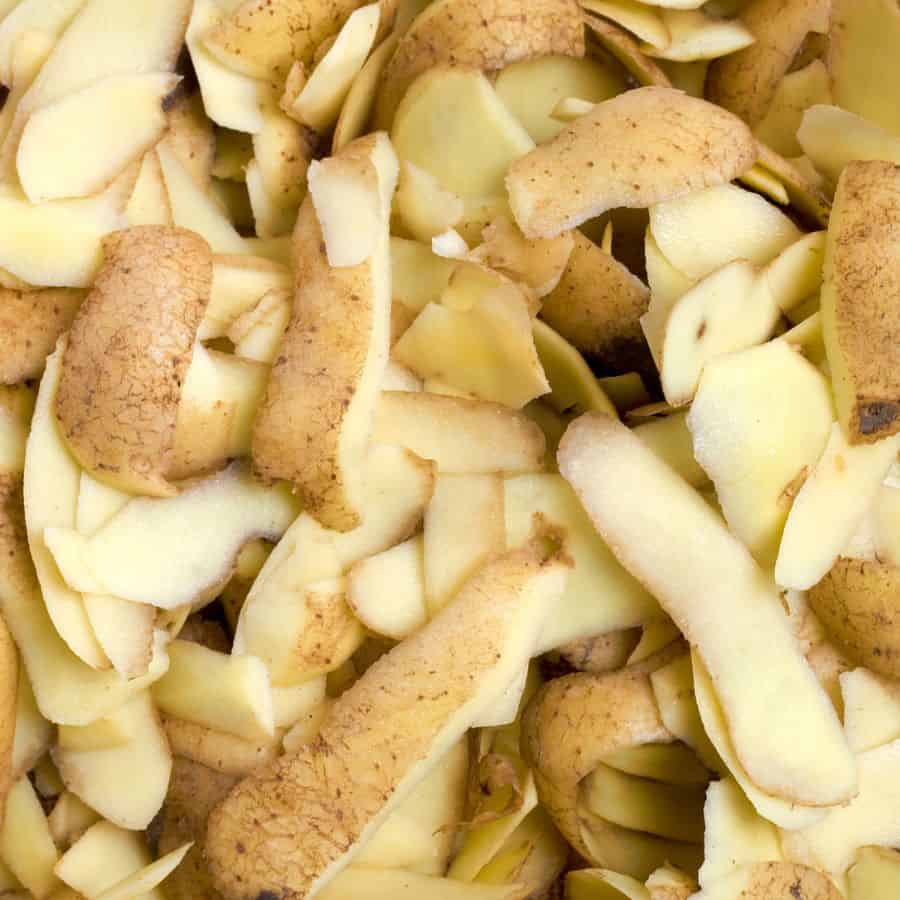
• Dry your peels completely (sun-dry or oven-dry)
• Grind them into powder (a blender works fine)
• Mix with water and steep for 24 hours
• Feed your plants weekly
Best for: Tomatoes, peppers, roses, and leafy greens respond well to this treatment.
2. Add to Your Compost Bin
Potato peels break down quickly and add nitrogen to your compost pile, which helps it heat up properly.
• Chop peels into smaller pieces for faster decomposition
• Mix with brown materials (leaves, cardboard) for balance
• Turn regularly to prevent mold
Warning: If your compost doesn’t reach high temperatures, skip this method. Peels might carry blight spores that could survive and spread.
3. Bury Peels for Slow-Release Nutrition
As peels break down in the soil, they release nutrients gradually right where plant roots can access them.
• Dig a 2-4 inch trench in your garden bed
• Place peels inside and cover with soil
• Water lightly to start decomposition
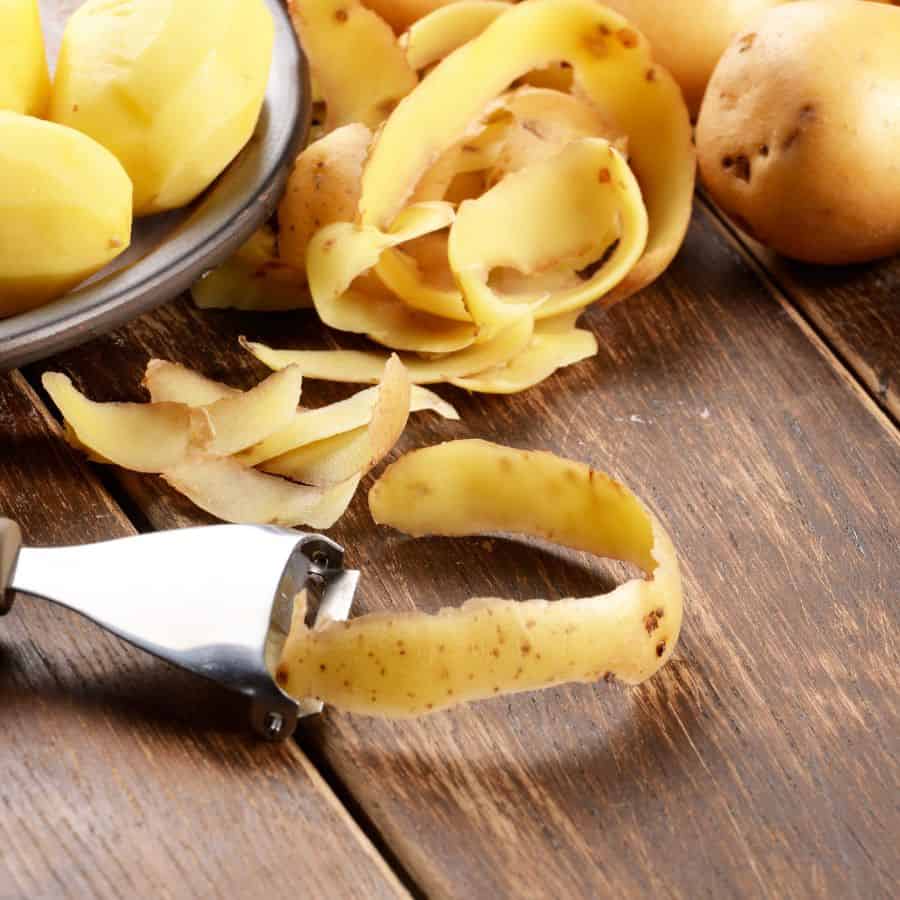
Tip: Bury peels deeper or mix with other organic matter to avoid attracting rodents.
4. Brew Potato Peel Tea
This liquid fertilizer is the easiest method to try first.
• Boil peels for 15-20 minutes
• Let cool completely
• Strain out solids and water plants with the liquid
Houseplants respond especially well to this treatment.
5. Use as Garden Mulch
Dried potato peels can help retain soil moisture and suppress weeds.
• Thoroughly dry peels first (this step matters)
• Spread in a thin layer around plants
• Reapply as they break down
Good mulch can significantly reduce your watering needs.
6. Natural Pest Management
Potato peels can help with some common garden pests.
• Trap slugs & snails: Place peels skin-side down overnight, collect in the morning
• Repel aphids: Sprinkle crushed dried peels around plants
• Deter deer & rodents: Mix peels with cayenne pepper
Plants That Respond Best to Potato Peels
Some plants benefit more from potato peel fertilizer than others:
• Tomatoes: The potassium helps produce bigger fruit
• Peppers: More flowers and fruit
• Roses: Stronger stems and better blooms
• Lettuce & Leafy Greens: Good color and steady growth
• Potatoes: They respond well (use only disease-free peels)
Avoid using with: Plants prone to fungal infections, if your potato peels might carry disease.
The Environmental Benefit
Recycling potato peels does more than save money. Every pound of potato peels kept out of landfills prevents approximately 0.5 pounds of methane from entering the atmosphere.
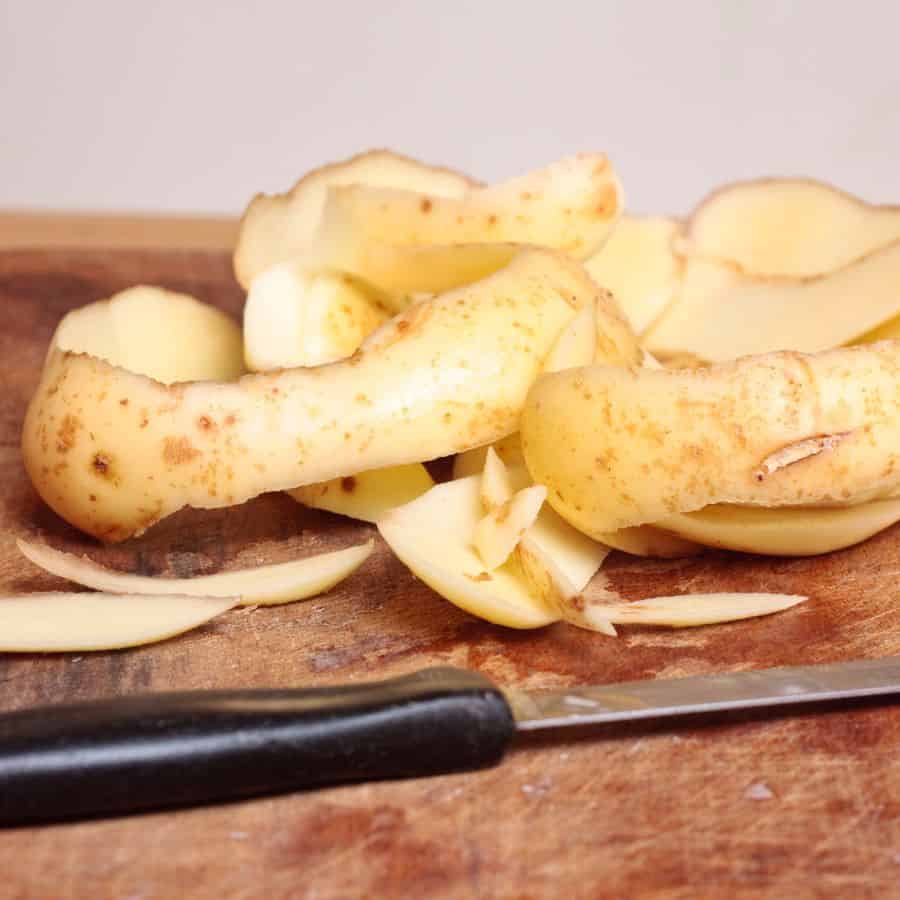
By using potato peels in your garden, you’re:
• Reducing landfill waste and greenhouse gas emissions
• Creating a closed-loop system
• Decreasing dependency on synthetic fertilizers
• Building healthier soil over time
Your Action Plan: Getting Started
Start by collecting this week’s potato peels in a container by your sink. Try the potato tea method first since it’s the simplest, and see how your plants respond. Then you can try the other methods to find what works best for your garden.
Those peels you’ve been tossing are actually free fertilizer and pest management. Worth saving, right?