The first job during late October and early November, if not already attended to, is to check the “plant”—the greenhouse itself, that is. See that everything is in perfect order.
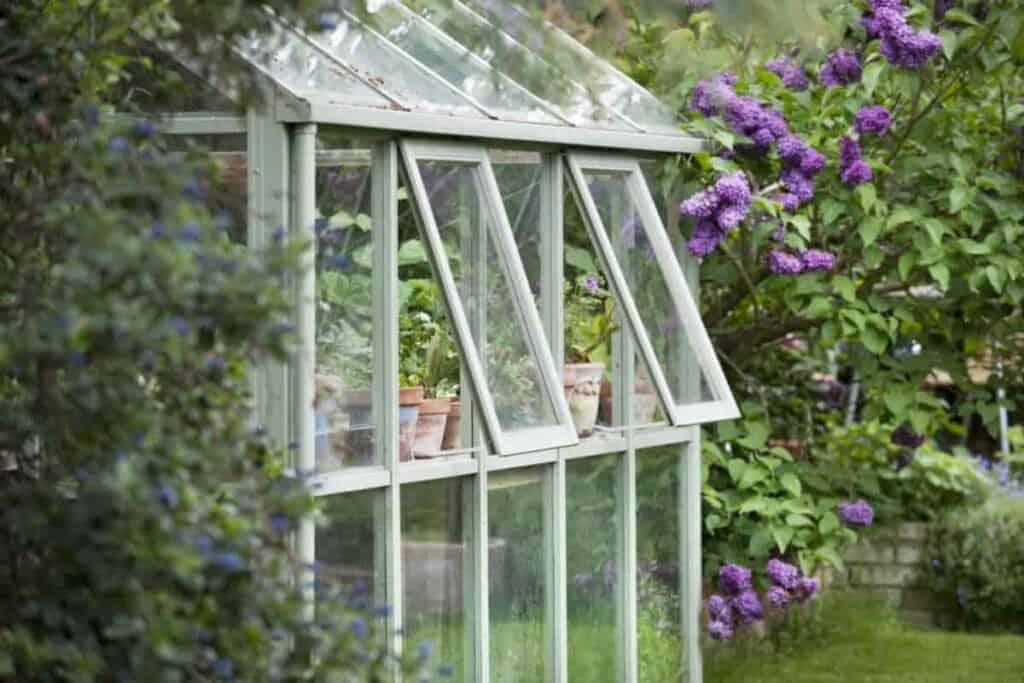
Dinghy roof glass, for instance, due to incomplete removal of whitewash shading or debris that collects under a cloth or slat shading—may decidedly cut down the amount of sunshine getting through to flowering plants. For the next five or six months, your plants will benefit from every bit of sun they can absorb.
Get the glass clean, even if it means using a scrubbing brush and detergent. We have found the rotating, long-handled car-washing brush that attaches to the hose, combined with a good car cleaner, does a good job. When hosed off, the glass dries clear without hand drying.
Check For Leaks
Now is a good time to ensure no air leaks have developed since the heating system was shut down last spring.
A simple way to check this is to make a smudge fire (damp newspaper will serve), close everything up tight, and then watch to see if smoke escapes anywhere.
Leaks lower the inside temperature and considerably add to the expense of heating.
Timesavers
We have found one of the most convenient and timesaving adjuncts to our greenhouse is a built-in soil bin near each door. These are filled with screened and fertilized compost.
The soil inside them stays moist but never gets soaking wet and can be conveniently removed as needed through the small door in the bottom.
The soil is banked against the greenhouse wall so it does not readily freeze. With temperatures down to 8° degrees Fahrenheit above zero last winter, we needed no extra protection to keep out frost; in colder climates, a few burlap bags or a tarpaulin may be needed.
Another great convenience is an extra spigot in the greenhouse. Two hoses, one with a regular spray and the other with a mist nozzle can be left permanently attached.
A misting nozzle, incidentally, should be a part of the regular equipment of any greenhouse or conservatory.
Under-bench Space
While discussing equipment, a word about utilizing under-bench space may be in order. We are often surprised that so few home greenhouse owners realize the room under raised benches may be put to good use.
If your greenhouse has a dirt door, you can install ground beds with suitable edges of cypress boards, asbestos, or metal strips to hold the soil in place.
Adequate drainage must be assured, of course. On cement floors, galvanized iron trays 2” or 3” inches deep and of suitable size may be placed under the benches for sub-irrigating pots or flats.
Under-bench space may also be utilized for starting many tender bulbous plants such as amaryllis— which should be planted this month or early in December—and for drying off others after flowering.
An example of this is the Amazon lily (Eucharis Grandiflora), which begins its rest period in early winter.
Bulbs such as tulips, daffodils, and crocus brought in from the frame or outdoor trench may be kept under a bench until top growth has taken on normal color and has developed well. Newly sown seeds, too, may be placed there until they begin to germinate—but not a day longer!
Mrs. Rockwell Speaks
“It would seem to me that rather than recommending more use of under-bench space, restraint should be advised. Greenhouse owners like my good husband find this area convenient for the storage of many strange objects better consigned to the trash heap.
Empty cartons, boxes filled with packing material that ‘may come in handy someday, empty flats, and dried-up specimens representing unsuccessful experiments are among the items 1 often find under our benches.”
Note on clay pots. With the advent of plastic flower pots—which have several obvious advantages over clay pots in that they are lighter, non breakable, more easily stored, etc.—the idea seems to have developed that plants grow better in them.
We confess to being among the old-timers who prefer clay pots for some purposes—forcing bulbs for winter bloom is one.
Fragrant House
Each fall when we bring in the scented geraniums, rosemary, and tender salvias for their winter sojourn under glass, we are impressed by the charm of a fragrant house.
No sooner is the door opened than the moist, caressing air inside wafts to our nostrils the scents of these cold-weather visitors together with that of the sweet olive (Osmanthus fragrans), and the blossoms of orange, lemon, gardenia, jasmine, and lemon verbena.
Clerodendrum fragans, Tabernaemontana coronaria (described last month), and Daphne odora are three new plants for us that will also contribute to the fragrance in our greenhouse.
Two salvias that must spend the winter indoors are S. dorisiana, with large, heart-shaped leaves deliciously reminiscent of the scent of clary sage, and another with long tassel-like sprays of gray-blue flowers, most decorative, but which we have not identified to our satisfaction.
Other possibilities for fragrance under glass are lilies, freesias, Amaryllis belladonna, lily-of-the-valley, and hemerocallis among the tender bulbs and carnations, stocks, bouvardia, stephanotis, sweet peas, and violets in other greenhouse flowers.
44659 by F. F. Rockwell And Esther C. Grayson