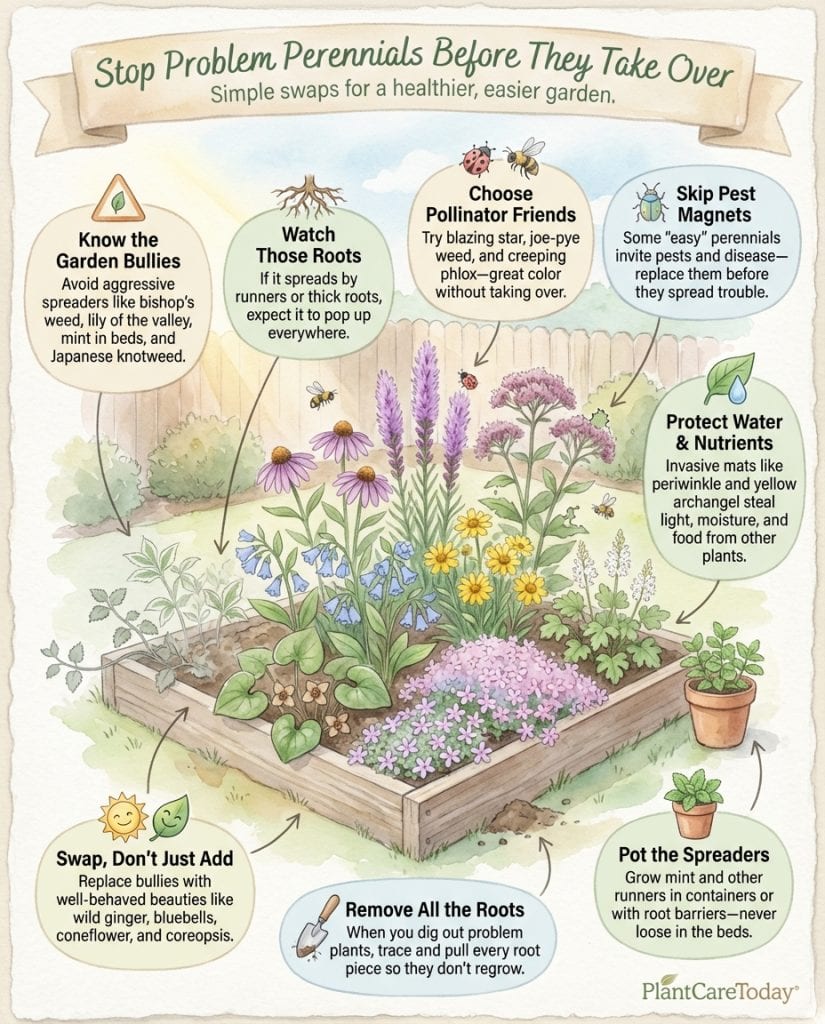
That pretty perennial you just planted? It might be slowly taking over your entire garden.
While you’ve been enjoying those blooms, some of these plants have been spreading underground, crowding out neighbors, and attracting pests to your yard.
About 70% of common garden problems come from planting the wrong perennials in the first place.
The real trick isn’t adding more plants. It’s getting rid of the troublemakers. Let’s look at which perennials cause problems and what to plant instead.
Why Some “Easy-Care” Plants Cause Problems
Not all low-maintenance perennials are actually low-maintenance. Some behave more like weeds, taking over wherever they can.
These problematic perennials cause issues in three main ways:
- They spread too aggressively, popping up everywhere and crowding out other plants
- They attract pests that then damage everything else in your garden
- They steal nutrients and water from plants around them
9 Perennials That Cause More Trouble Than They’re Worth
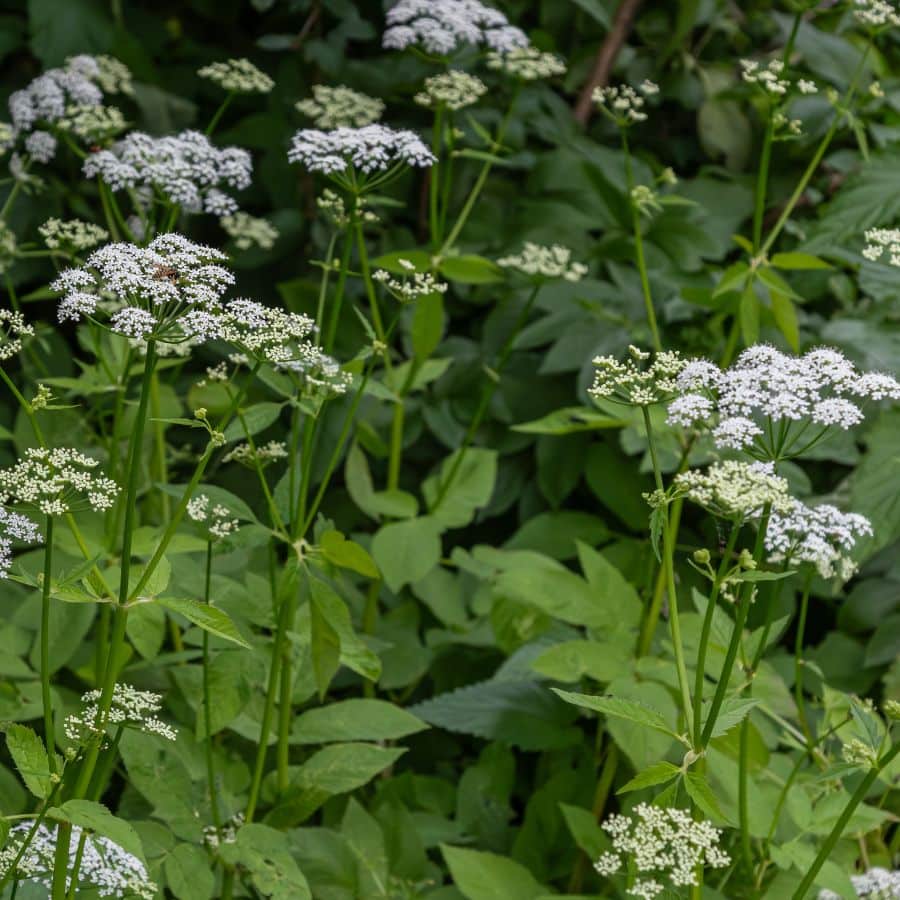
1. Bishop’s Weed (Aegopodium podagraria)
This plant looks innocent with its pretty variegated leaves, but it’s one of the most invasive plants you can grow. Once it’s established, you’ll be fighting it for years.
Plant instead: Wild ginger, which has nice heart-shaped leaves and stays where you put it.
2. Lily of the Valley (Convallaria majalis)
Those delicate white flowers are lovely, but the plant sends out aggressive underground roots that take over quickly. What starts as a small patch can become a serious problem.
What to Plant Instead: Virginia bluebells, which offer similar charm without spreading everywhere.
3. Purple Loosestrife (Lythrum salicaria)
This purple beauty is actually illegal in many states because it’s so destructive. It can take over wetland areas in just a few seasons. The seeds stay viable for decades.
Plant instead: Blazing Star, which attracts butterflies and grows tall without the environmental damage.
4. Mint (Mentha spp.)
Planting mint directly in your garden is a mistake even experienced gardeners regret. One small plant can quickly spread throughout your entire bed, and you’ll be pulling runners for years.

Plant instead: Keep mint in containers, or try lemon balm or mountain mint for flavor without the spreading.
5. Obedient Plant (Physostegia virginiana)
The name is misleading. There’s nothing obedient about this aggressive spreader. It will quickly colonize every available inch of soil if you let it.
Plant instead: Coneflower, which attracts pollinators without taking over.
6. Periwinkle (Vinca minor)
This common ground cover forms a dense mat that prevents anything else from growing through it. Its woody stems also make it really hard to remove once it’s established.
Plant instead: Creeping Phlox, which offers bright spring color without being so aggressive.
7. Japanese Knotweed (Fallopia japonica)
This is probably the worst one on the list. It can damage building foundations, break through concrete, and lower property values. In the UK, it causes over $200 million in property damage every year.
Plant instead: Joe-Pye weed, which grows tall and supports pollinators without the destructive habits.
8. Tansy (Tanacetum vulgare)
Those cheerful yellow flowers hide a problem—this plant is not only invasive but toxic to humans, pets, and livestock.
Plant instead: Coreopsis for similar sunny blooms without the toxicity and spreading.
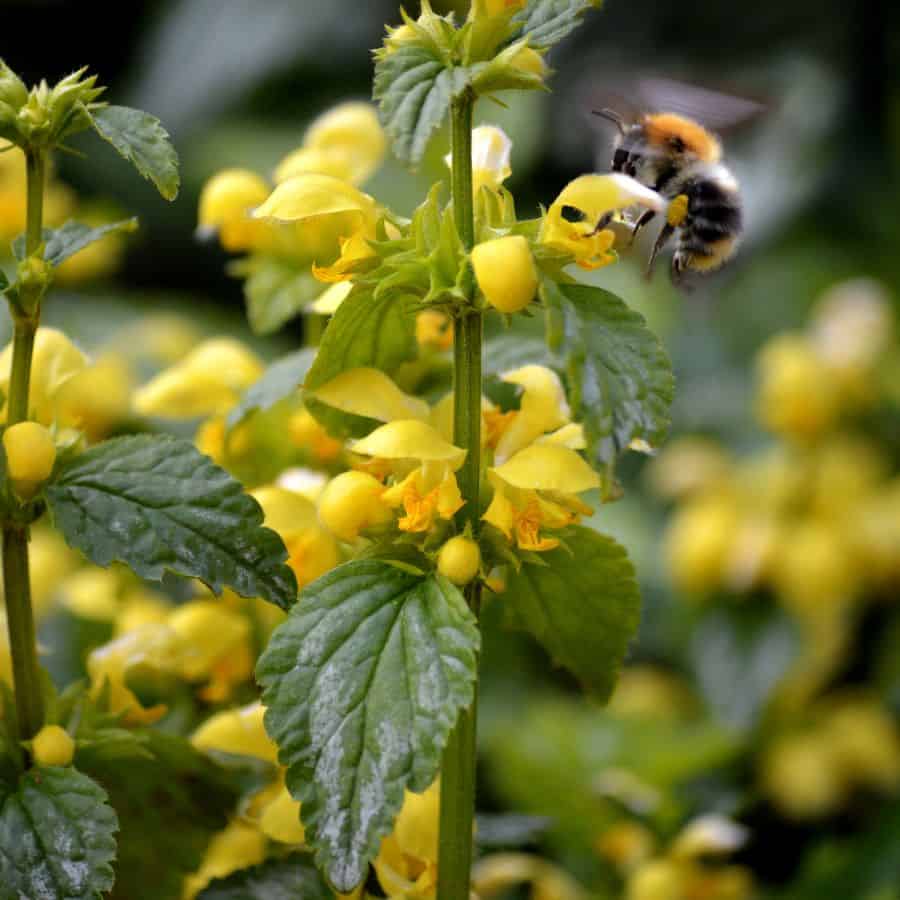
9. Yellow Archangel (Lamiastrum galeobdolon)
Experienced gardeners know that this “shade solution” is actually a garden disaster waiting to happen. The variegated leaves look nice at first, but they’ll eventually be everywhere.
Plant instead: Foamflowers, which provide similar interest without the aggressive spreading.
How to Fix the Problem
If you already have these plants, here’s what to do:
- Act quickly: The longer invasive perennials stay, the harder they are to remove
- Be thorough: Remove all roots and runners, since even tiny pieces can regrow
- Use barriers: If you must keep mint or similar plants, put them in containers or use underground barriers
- Replace thoughtfully: Use the suggested alternatives for similar looks without the problems
A good garden isn’t about constantly fighting invasive plants. It’s about choosing plants that work well together from the start. Removing these troublemakers is one of the best ways to improve your garden.
Have you dealt with any of these plants? Getting rid of them takes some work, but your other plants will do much better once they’re gone.