Forget everything you thought you knew about pruning. Those random snips you’ve been making? They might be silently sabotaging your garden’s potential.
I was shocked to discover that proper pruning isn’t just about keeping things tidy. It’s literally plant medicine that can transform a struggling shrub into a spectacular showpiece.
Let me show you how to wield those pruners like the garden whisperer you were born to be.
Why Your Plants Are BEGGING You to Prune Them Right
Pruning isn’t just a haircut for your plants. It’s life support. When done correctly, those strategic cuts redirect energy like a garden superhero, sending growth exactly where it’s needed most.
Your plants are trying to tell you something important: they WANT to be pruned! Each carefully placed cut triggers a cascade of healing responses that can:
- Supercharge growth: Redirect energy to healthy new shoots (like upgrading your plant’s engine)
- Boost flowers and fruit: Studies show properly pruned fruit trees can produce up to 30% more harvestable fruit!
- Create a defensive shield: Improve air circulation to prevent fungal diseases and pest invasions
- Prevent dangerous failures: Remove hazardous branches before they become threats
- Create garden harmony: Allow sunlight to reach smaller plants below
The secret most plant experts won’t tell you is that unpruned plants are often working twice as hard for half the results. Think of pruning as removing the energy vampires from your plant’s life!
The Timing Game-Changer: When to Make the Cut
Timing isn’t just important. It’s everything. Cut at the wrong time, and you might as well be taking scissors to next year’s flower display.
The difference between amateur and pro plant parents is simply understanding these crucial timing windows:
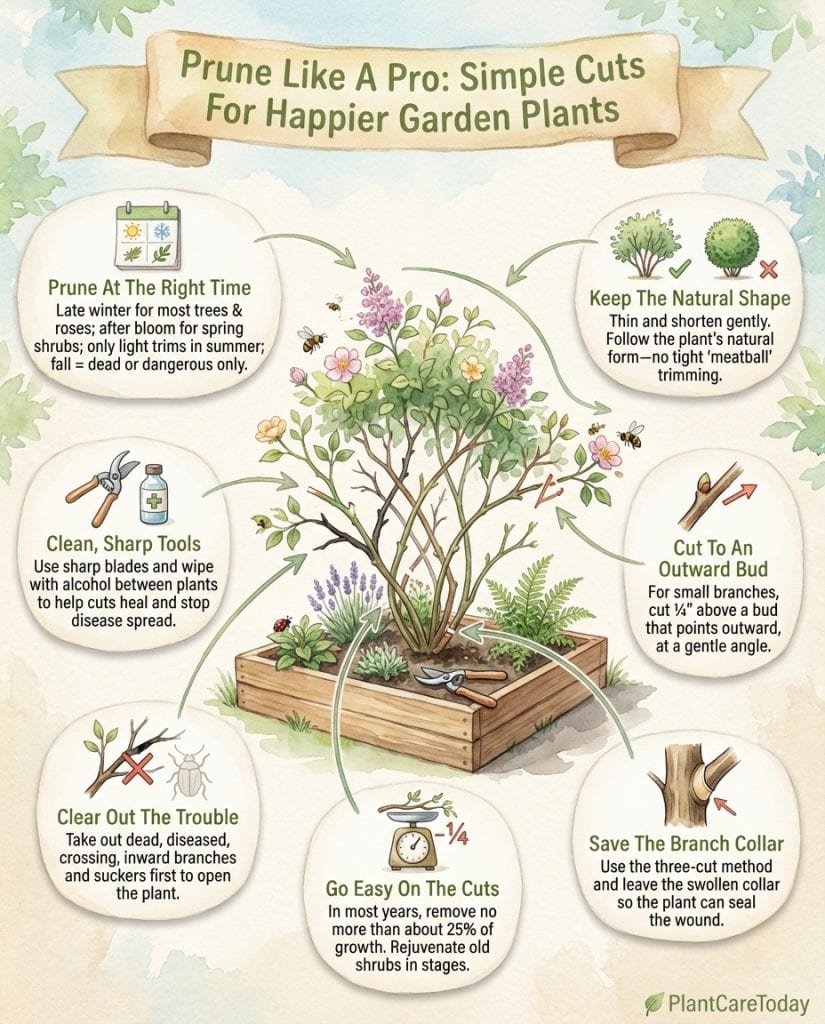
Late Winter to Early Spring: The Pruning Sweet Spot
This is prime time for most deciduous trees and shrubs. With leaves gone, you can see exactly what you’re working with.
Plus, plants heal faster when they’re just waking up from dormancy, like how you recover better from surgery when you’re young and healthy.
Perfect for: Maples, oaks, fruit trees, roses, and most deciduous plants that lose their leaves
Right After Flowering: For Your Bloomers
Most people make this mistake with their flowering shrubs: they prune at the wrong time and wonder why they get no flowers! If it blooms in spring, wait until those flowers fade before pruning.
Perfect for: Lilacs, azaleas, rhododendrons, forsythias (anything that flowers before June)
Summer: Light Touch-ups Only
Think of summer pruning like maintenance trimming, not major surgery. Heavy summer cuts can trigger soft new growth that winter will mercilessly kill.
Perfect for: Boxwoods, yews, and light shaping of ornamentals
Fall: The Danger Zone
Forget what you’ve heard about fall being good for garden cleanup.
Fall pruning is like sending your plants into winter wearing a t-shirt instead of a coat. Only prune if something is dead or dangerous.
Your Step-by-Step Pruning Blueprint for Success
The game-changer for your trees and shrubs isn’t what you think. It’s not about having expensive tools. It’s about these five simple steps:
1. Arm Yourself Properly
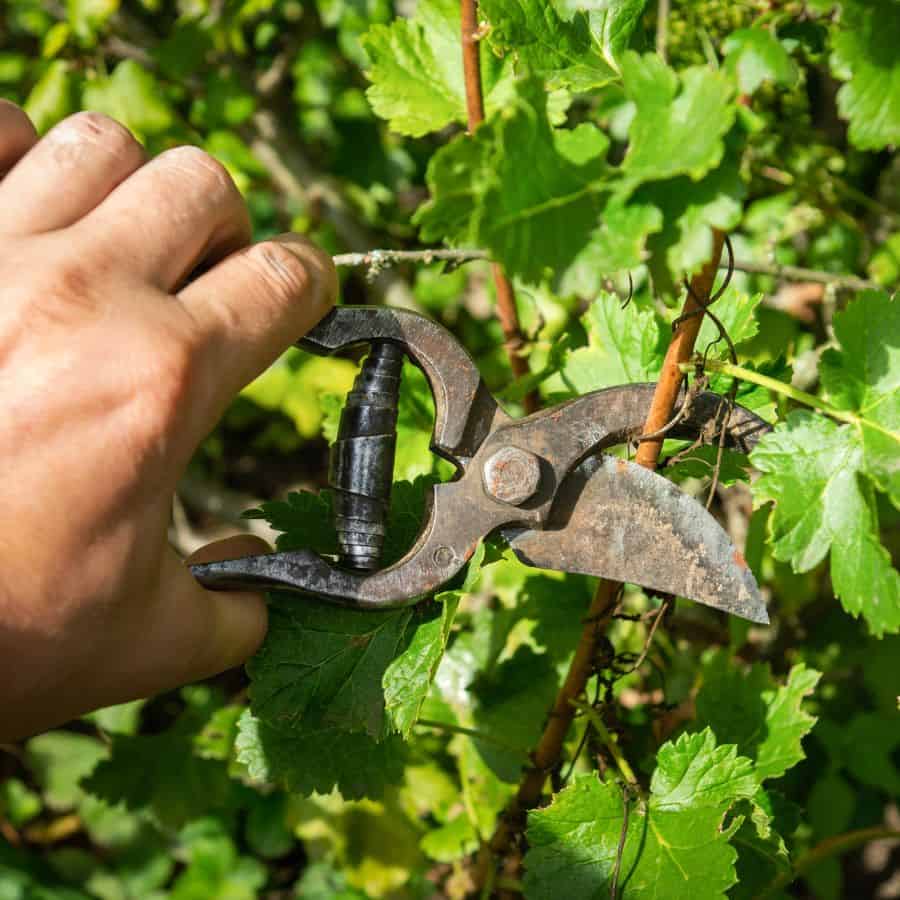
Your tools should be clean and sharp. Dull pruners create jagged wounds that heal slowly and invite disease, like trying to perform surgery with a butter knife!
Disinfect between plants with rubbing alcohol to prevent the spread of problems.
2. Have a Clear Mission
Random snipping is the gardening equivalent of driving without a destination.
Before making a single cut, decide: Are you maintaining? Thinning? Controlling size? Rejuvenating?
3. Identify Your Targets
Study your plant like a detective and prioritize removing:
- Dead or diseased branches (they’re just deadweight)
- Crossing branches (they wound each other like feuding siblings)
- Suckers and water sprouts (the energy thieves of the plant world)
- Inward-growing branches (they create congestion in your plant’s “lungs”)

4. Make Perfect Cuts
For larger branches, use the three-cut method to prevent bark tearing:
- Make an undercut 6-8 inches from the trunk
- Cut through from the top slightly farther out
- Remove the stub just outside the branch collar (that swollen area where the branch meets the trunk)
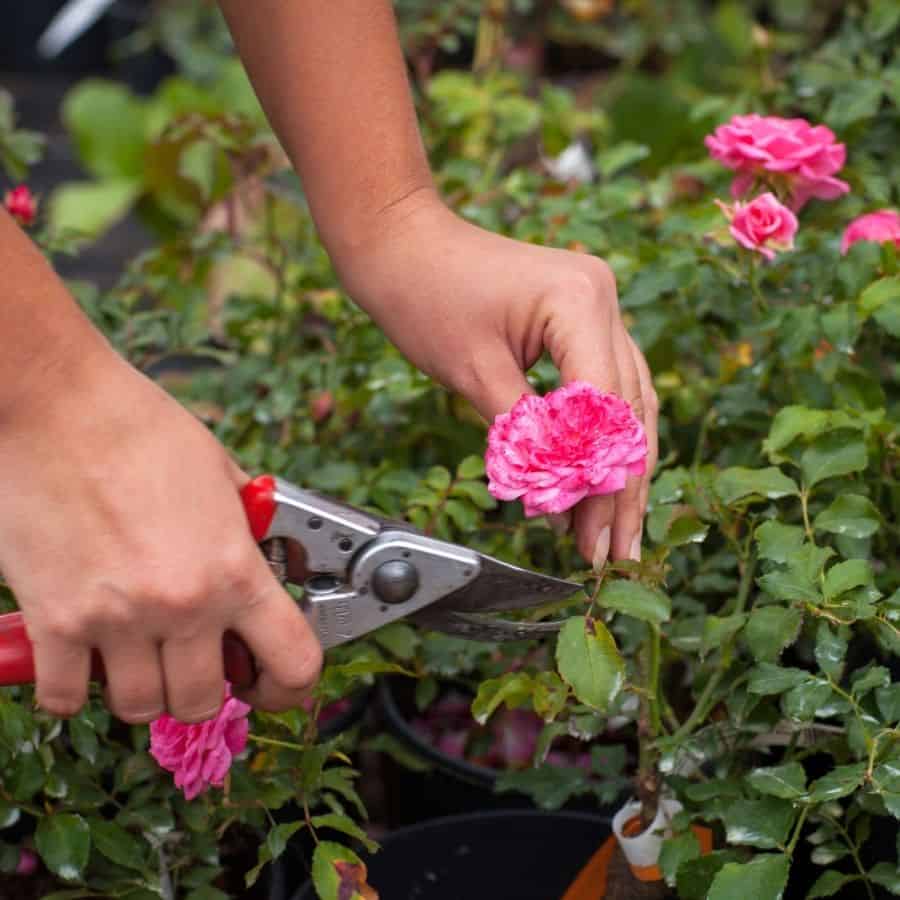
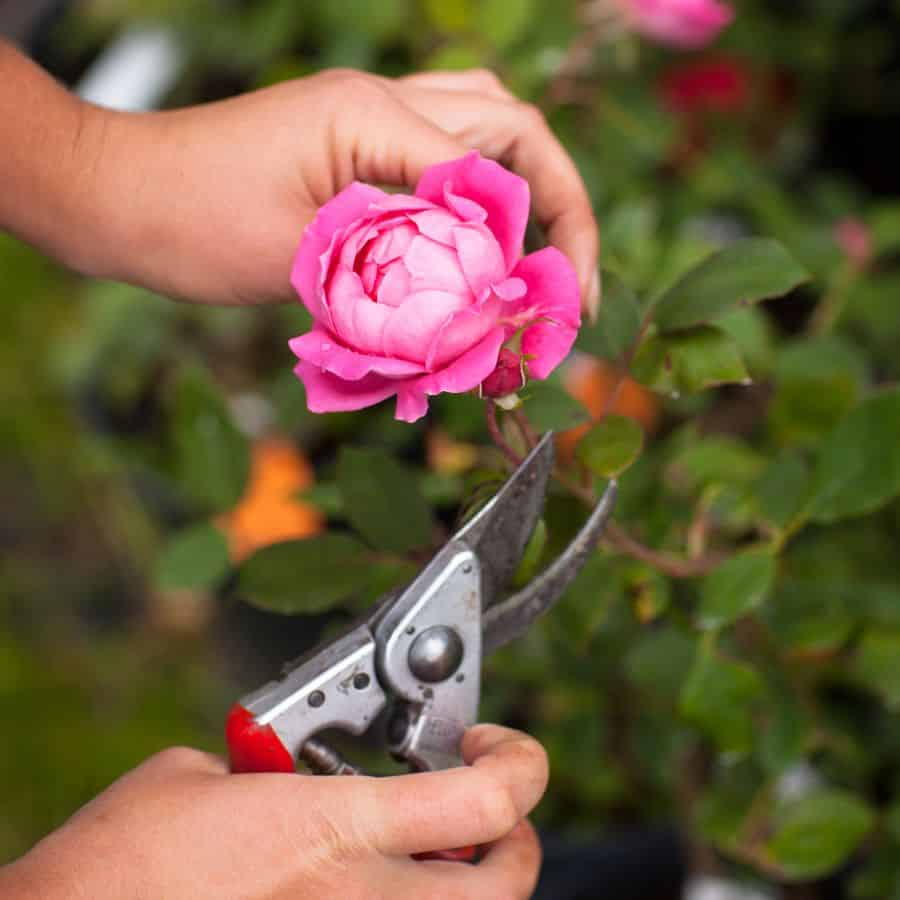
For smaller cuts, position your snip about ¼ inch above an outward-facing bud at a 45° angle. This directs new growth outward instead of creating a tangled mess inside.
5. Respect Natural Form
Work with your plant’s natural architecture, not against it. Those perfectly round “meatball shrubs” might look tidy, but they’re actually stressed and weakened. Aim to enhance, not fight, your plant’s natural growth habit.
Rescue Mission: Bringing Neglected Plants Back to Life
Have plants that look like they’re on life support? Rejuvenation pruning can work miracles, but approach with care:
- The Gradual Approach: Remove ⅓ of the oldest stems at ground level each year for three years (best for most flowering shrubs)
- The Bold Reset: Cut everything back to 6-12 inches above ground in late winter (perfect for dogwoods, butterfly bushes)
- The Selective Method: Remove only the oldest branches while preserving the overall shape
Remember: Never remove more than 25% of the plant in one season unless you’re doing intentional rejuvenation pruning.
Even then, prepare to provide extra water and care afterward. Your plant will be working hard to recover!
The Most Dangerous Pruning Mistakes
These pruning sins can turn your garden paradise into a plant hospital:
- Over-pruning: Removing too much at once sends plants into shock
- Bad timing: Pruning spring bloomers in winter eliminates all your flowers
- “Topping” trees: Creates weak, dangerous growth and permanent damage
- Flush cutting: Cutting too close to the trunk removes the plant’s natural healing collar
- Pruning during stress: Never prune during drought or extreme heat
When in doubt, step back and prune less. You can always remove more later, but you can’t glue branches back on!
Your Pruning Power Move
Pruning isn’t just a garden chore—it’s a superpower. Each thoughtful cut is like a conversation with your plants, directing their energy and shaping their future. Master this skill, and your garden will transform from merely surviving to absolutely thriving.
Your pruners aren’t just tools—they’re magic wands. Use them wisely, and watch your garden flourish like never before.