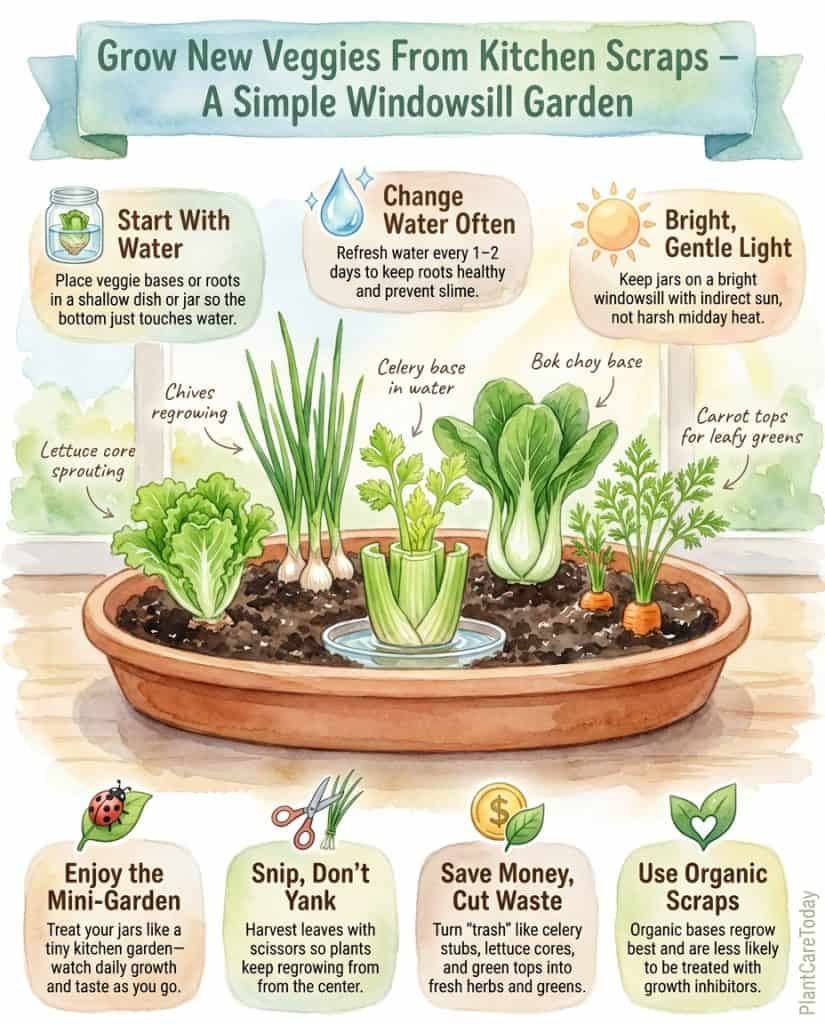
Did you know that vegetable “trash” can actually grow into fresh produce? I was surprised to learn that those bits we usually toss can regrow with nothing but water and a sunny windowsill.
You don’t need fancy equipment or a green thumb. These vegetables naturally regenerate themselves. It’s like having a small vegetable garden right in your kitchen.
Nature’s Amazing Comeback Artists: 10 Self-Regenerating Veggies
Here’s what matters most: vegetables are designed to grow. While seed companies want you to buy new packets, these kitchen scraps can easily get a second life.
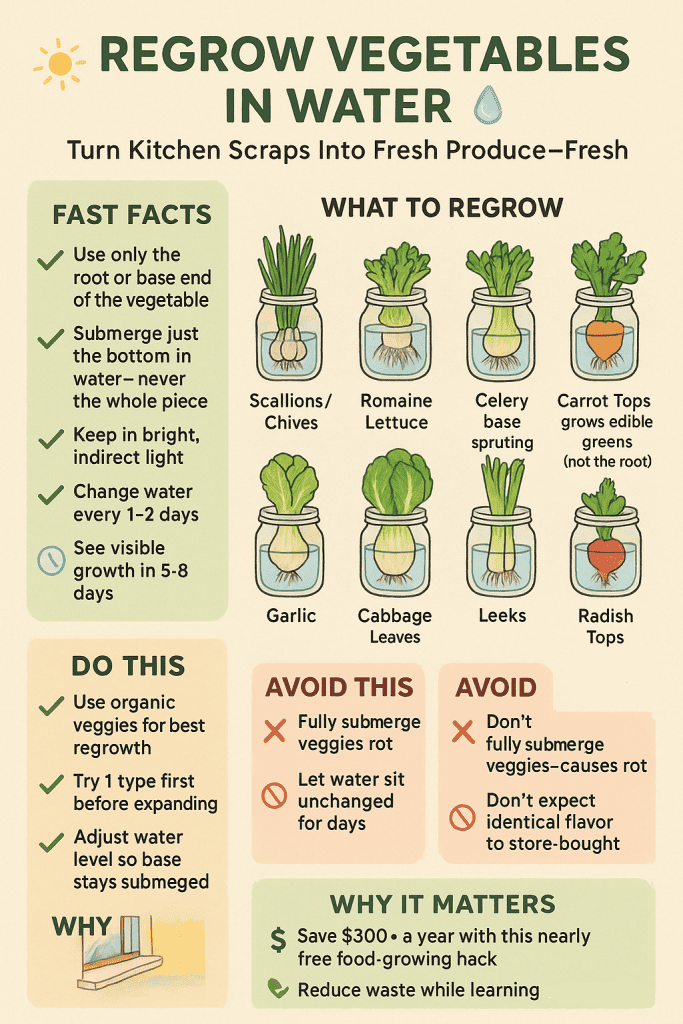
Studies show that regrowing vegetables can save the average household over $300 a year on grocery bills.
Ready to give it a try? Here are 10 vegetables that keep growing:
1. Chives: The Never-Ending Flavor Boost
Chives keep giving you fresh leaves. Simply cut the leaves and place the roots in water. Within days, you’ll see new growth. Keep the water fresh, and you’ll have flavor for months.

2. Celery: From Stub to Fresh Stalks
That celery base you normally toss can become a whole new plant. Place it in water with about half submerged in a sunny spot.
In 7-8 days, you’ll see the first shoots appear. Your celery stub will transform into a growing plant.
3. Lettuce: Infinite Salads Await
Take that core you always throw away and submerge it in water to about 1cm. Change the water daily and place it in a spot with bright, indirect light. In about a week, fresh lettuce leaves will emerge.
4. Carrot Tops: The Surprise Grower
Most people toss the leafy carrot tops. Place the cut top in water (cut-side down) and watch what happens.
Those feathery greens that sprout are edible and packed with nutrients. Change the water every couple of days for best results.
You won’t grow new carrots, but these greens make nice garnishes and work well in pesto.
5. Bok Choy: Asian Greens on Repeat
Place the bok choy base in shallow water. This Asian veggie will show new growth in about 5 days. Once your new shoots look strong, you can plant them in soil for continued growth.
6. Leeks: The Lazy Gardener’s Dream

Leeks regrow with very little effort. Put the root end in water in a well-lit spot. The white base with small roots will start growing almost right away.
7. Garlic Sprouts: Flavor Factories
Got a garlic clove that’s started sprouting? Place it in water, with only the bottom covered, and change the water daily. Those sprouts taste milder than garlic but have a fresh flavor that works well in cooking.
8. Fennel: The Fragrant Reviver
Use the fennel base with roots intact. Submerge in water and refresh regularly. New growth will appear from the center. Before long, you’ll have fresh fennel for teas, salads, and fish dishes.
9. Cabbage: The Robust Regenerator
Place that dense cabbage center in water, find a sunny spot, and change the water every two days. This veggie will start growing new leaves that work well in slaws and stir-fries.
10. Radish: The Rapid Rebloomer
Radishes might be the fastest growers on this list. Cut off the top portion and place the bottom in contact with water. Provide indirect light. In just a few days, new leaves will emerge. These peppery greens are edible, too.
Your Zero-Waste Garden Starts Now
The best part of water propagation isn’t just the money you’ll save. It’s watching plant regeneration happen right on your windowsill.
What was once headed for the trash becomes living food. It’s a small but meaningful step toward sustainability.

Here are some simple rules for success:
• Change water regularly (every 1-2 days) to prevent bacterial growth
• Place containers in bright, indirect light—direct sun can be too harsh
• Once plants develop strong roots and new growth, many can be moved to soil for continued growing
• Start with organic vegetables when possible—they’re less likely to be treated with growth inhibitors
Ready to turn your kitchen scraps into an indoor garden? Start with just one vegetable this week. Once you see that “trash” transform into fresh produce, you’ll probably want to try more. Your wallet and the planet will both benefit.